

If you think the universe is a tidy, sensible place, quantum physics is here to gently wreck that illusion. You live in a world where two tiny particles can act like a single system, even if you fling them to opposite sides of the galaxy. Stranger still, those particles can end up linked in a way that no signal can explain, no matter how fast you imagine it traveling.
This is not a sci‑fi idea, and it is not just a wild theory sitting on a chalkboard. You can build real devices that depend on this spooky link, and people around the world already do exactly that in laboratories and early quantum technologies. Yet when you ask physicists what is actually going on under the hood, many of them will shrug and admit that your intuition is supposed to fail here.
The Mind-Bending Core Idea: Quantum Entanglement
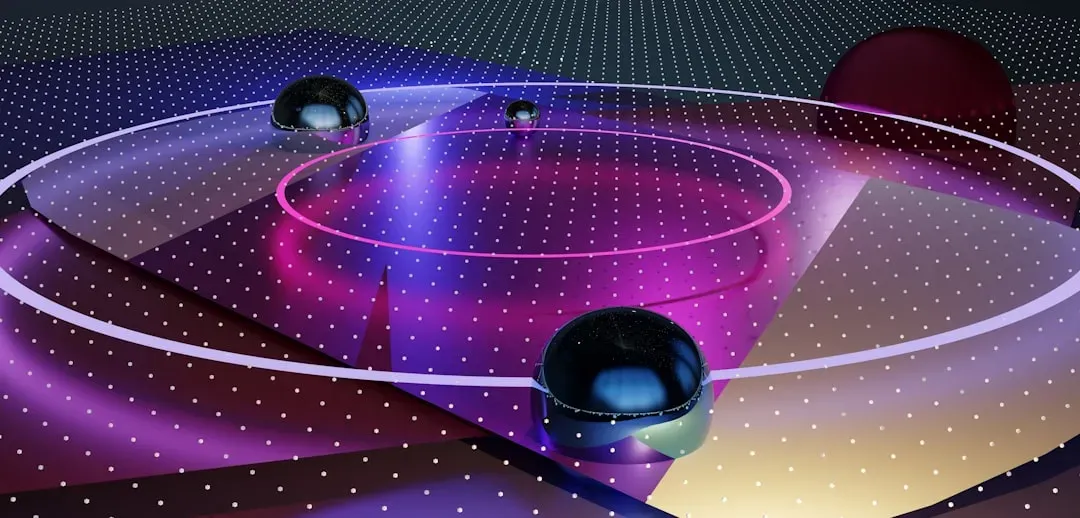
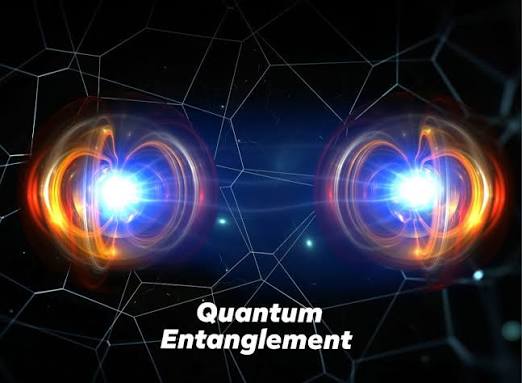
Start with the heart of the weirdness: entanglement. When two particles are entangled, you cannot describe one of them without talking about the other, no matter how far apart they are. It is as if you tried to describe your left shoe without ever mentioning that there is also a right one that came in the same box.
In everyday life, you expect things to have their own separate properties, like positions, colors, or spins that belong just to them. In quantum mechanics, an entangled pair shares a joint state that only makes sense when you treat both particles as one combined system. When you finally measure one, you suddenly get a corresponding result for the other, and experiments show this happens in a way that cannot be explained by pre‑loaded, hidden instructions.
Why Einstein Called It “Spooky Action” (And Why That Still Stings)
You might feel an immediate sense of resistance to this whole idea, and you would be in good company. Albert Einstein looked at entanglement and argued that it could not be the full story, because it looked like one particle was somehow influencing another instantly at a distance. To him, that clashed with relativity, which says nothing can send a signal faster than light.
To rescue common sense, he suggested that particles must carry some hidden information that predetermines the outcomes, so no faster‑than‑light magic is needed. You probably feel the same way at first: surely the particles just know in advance what to do. Decades of experiments, though, show that this comforting picture does not match what nature actually does, forcing you to give up either local realism, your usual picture of cause and effect, or both.
Bell’s Theorem: How You Can Test Reality’s “Cheat Codes”

If you want to see where the universe really breaks your expectations, you need Bell’s theorem. It gives you a way to test whether the world can be explained by hidden local rules, where each particle has its own secret script that never needs faster‑than‑light influence. Bell turned philosophy into a practical checklist: if those rules exist, the statistics of many measurements must obey certain limits.
When you actually perform those experiments with entangled particles, you find that nature calmly violates those limits. Over and over, with tighter controls and fewer loopholes, the results match quantum predictions instead of the local‑hidden‑variable story. That means you are living in a universe where either influences are nonlocal in some deep sense, or your idea of an objective, observer‑independent reality needs serious revision.
How You Can Entangle Particles That Have Never Met

Things get even stranger when you realize you can entangle particles that never directly interacted. In the lab, you can start with two separate entangled pairs: call them A‑B and C‑D. Particles B and C meet and undergo a special joint measurement, while A and D stay far away and never share any physical contact.
After that measurement on B and C, something remarkable happens: particles A and D end up entangled with each other. You have effectively swapped the entanglement, linking two particles that are complete strangers. If you are used to thinking of entanglement as a mystical thread created by physical contact, this forces you to switch to a more abstract view where what really matters is the whole quantum state and how you choose to measure it.
No, You Still Cannot Use This to Send Faster-Than-Light Messages

At this point you might be tempted to turn entanglement into an interstellar messaging app. After all, if measuring one particle seems to affect another instantly, why not wiggle the second one on purpose and send Morse code? The catch is that, from your local perspective, each measurement outcome looks random, with no way to control the specific result you get.
Because of that randomness, you cannot encode a chosen message into those outcomes. To see the correlations that reveal the entanglement, you still have to compare notes using a normal, slower‑than‑light channel. So you get a kind of connection that is real, testable, and stronger than any classical link, yet still refuses to let you cheat relativity and send usable information faster than light.
What This Means for You: Quantum Technology in the Real World

Even if the underlying mystery bugs you, you can still put it to work. Entanglement underpins quantum key distribution, where you and a partner share entangled particles and use your correlated results to build encryption keys that reveal any attempt at eavesdropping. It also plays a central role in quantum computing, where many qubits in entangled states let you explore an enormous space of possibilities in ways that classical bits never could.
In quantum networks, you can use techniques like entanglement swapping to extend secure links over longer distances, chaining together segments like optical repeaters do in today’s internet. Step by step, you are moving toward a “quantum internet” that distributes entanglement as a resource, much like power grids distribute electricity. You may not fully grasp the deep why, but you can still harness the how.
Why Nobody Agrees on What Quantum Mechanics Is Really Saying
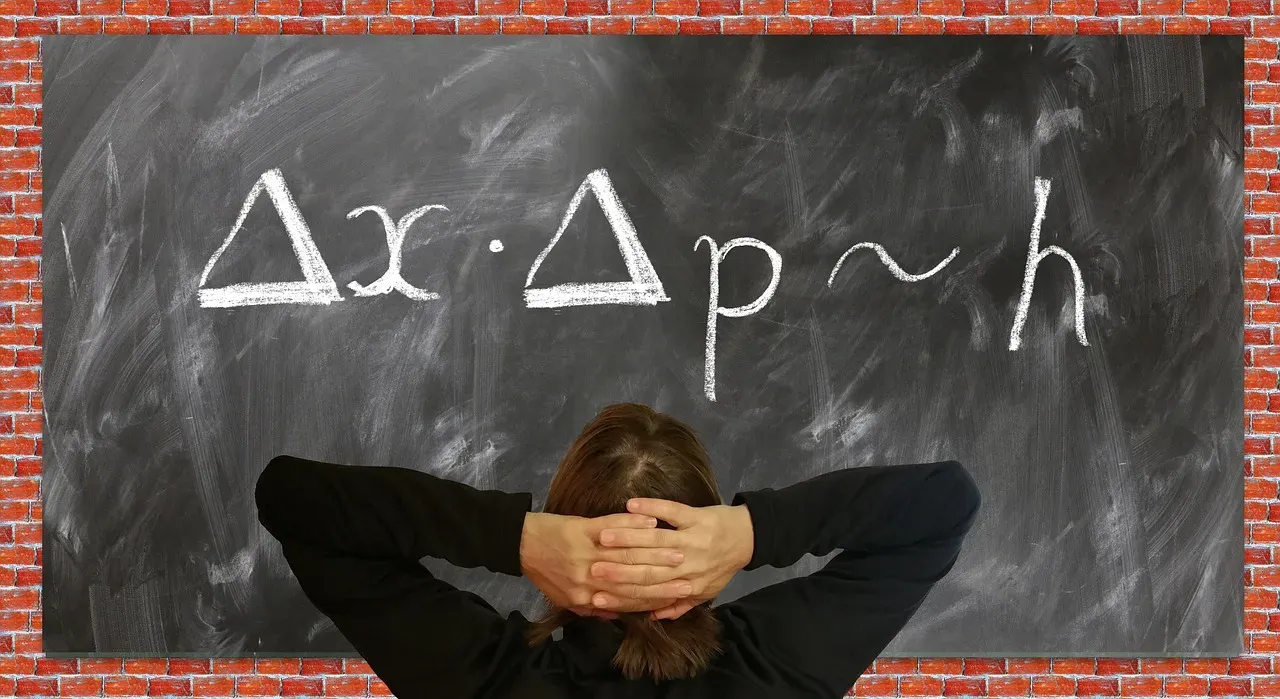
Here is the truly humbling part: quantum theory lets you predict experimental results with stunning accuracy, yet it does not force you into a single, clear picture of what is fundamentally going on. Depending on how you like to think, you can choose interpretations that keep one reality with some nonlocal features, or interpretations that talk about branching worlds, or approaches that emphasize information rather than particles themselves.
All of these interpretations agree with the same equations and experimental outcomes, but they tell very different stories about what is real. When you confront entanglement, you are not just facing a quirky detail of physics; you are bumping into the edges of your own concepts of space, time, and cause. The fact that brilliant people still argue about the meaning shows you that understanding is more than just getting the math right.
Living with a Universe That Is Stranger Than You Prefer

If you feel a mix of fascination and discomfort, you are reacting in exactly the way this subject deserves. Entanglement tells you that your everyday instincts, shaped by slow, large‑scale experiences, are not reliable guides to the quantum world. You are forced to accept that particles you never let meet can share a bond no distance can sever, and that the best tested theory you have does not come with a tidy, intuitive story attached.
Instead of waiting for everything to feel normal, you can treat this as a reminder that reality is under no obligation to match your expectations. You can use these strange effects to build new tools, rethink old assumptions, and stay honest about the limits of your own understanding. In the end, maybe the most honest stance is to admit that you are holding a working recipe for a cake whose full flavor you still do not know how to describe.
So the next time you hear that particles that never met can be inseparably linked, you will know that this is not hype, not fantasy, but a real feature of the universe you live in. The question that lingers is simple and unsettling: if this is what reality looks like under the microscope, how many other surprises are still hiding in plain sight?