
Somewhere in a laboratory right now, a scientist is measuring a single particle – and the instant they do, another particle on the other side of the planet instantly “knows” what just happened. No signal was sent. No wire was connected. No message was delivered. It sounds like science fiction, but it’s one of the most rigorously tested phenomena in all of physics.
Welcome to the wild, mind-bending world of quantum entanglement, where the rules you grew up trusting – space, distance, even the very notion of separate objects – seem to quietly dissolve. If you’ve never heard of it, you’re about to have your understanding of reality seriously challenged. Let’s dive in.
What Quantum Entanglement Actually Is (And What It Isn’t)
Let’s be real for a moment. Most popular descriptions of quantum entanglement lean heavily into the mystical, conjuring images of telepathic particles whispering across galaxies. The truth is stranger, more precise, and honestly even more fascinating than that.
Often referred to as “spooky action at a distance,” a term coined by Albert Einstein, entanglement describes a situation where two or more particles become interconnected in such a way that the state of one instantaneously influences the state of the other, regardless of the distance separating them. Think of it less like a phone call between particles and more like two identical dice that, no matter how far apart they are thrown, always land on the same number – simultaneously.
In classical physics, objects have definite properties, and measuring one object doesn’t affect another. However, in the quantum realm, particles like electrons or photons can become entangled through specific interactions. Once entangled, measuring a property, such as spin or polarization, of one particle instantly determines the corresponding property of its partner, even if they are light-years apart.
One of the most far-out phenomena of quantum theory is quantum entanglement, the idea that particles of the same origin, which were once connected, always stay connected. Even if they separate and move far apart in time and space, they continue to share something beyond a mere bond – they shed their original quantum states and take on a new, united quantum state which they maintain forever. This means if something happens to one particle, it affects all the others with which it’s entangled.
Einstein’s ‘Spooky’ Objection and the Historic Debate It Sparked
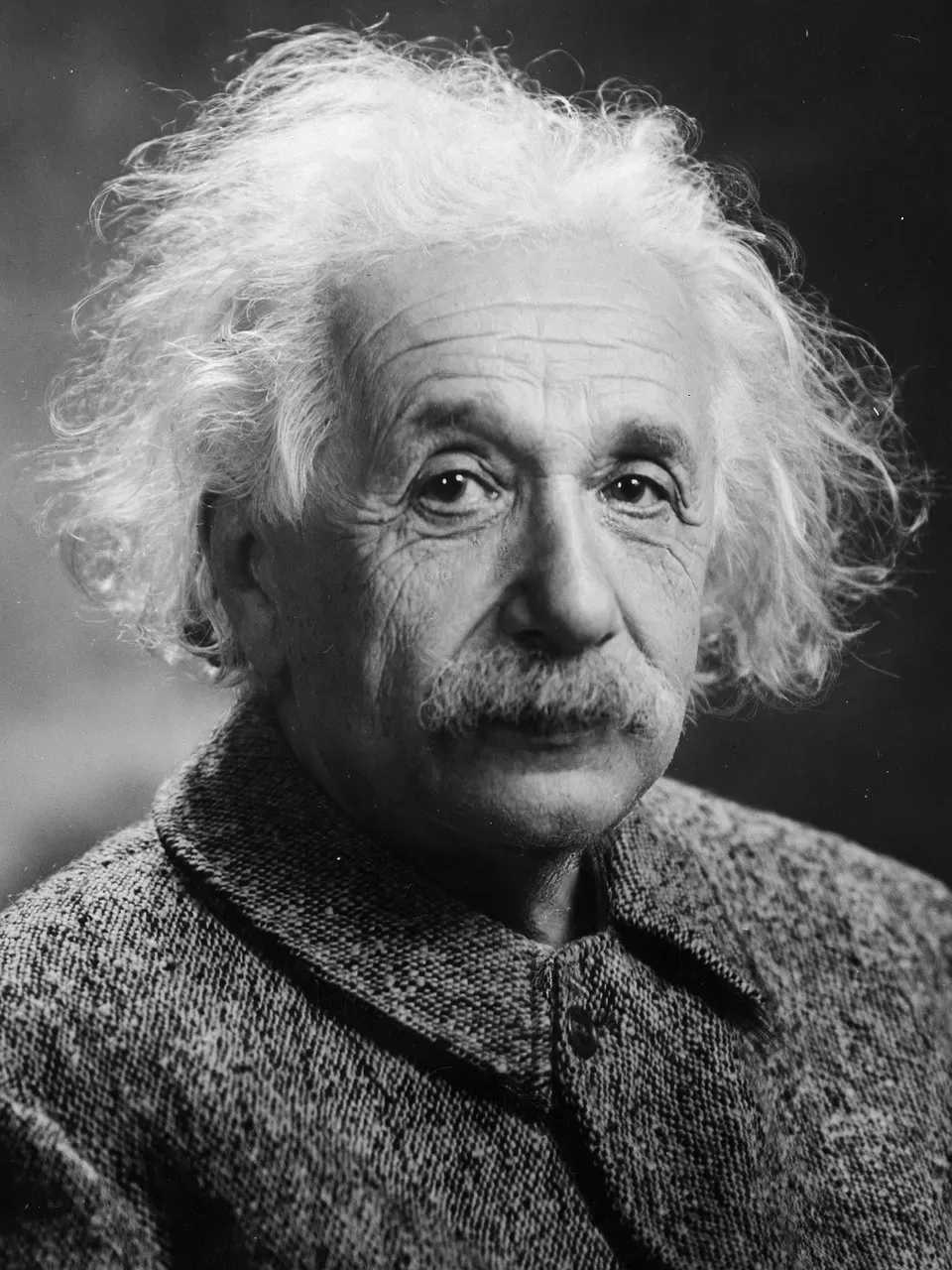
Here’s the thing: Einstein absolutely hated this idea. Not because he was narrow-minded, but because he had very good reasons rooted in his own theory of relativity. In 1935, Albert Einstein and colleagues first pointed out the “spooky” action of quantum entanglement. Quantum entanglement, however, appeared to conflict with Einstein’s theory of special relativity, which postulates that nothing can travel faster than the speed of light.
The concept of entanglement gained prominence through the Einstein-Podolsky-Rosen (EPR) paradox in 1935. Einstein, along with his colleagues Boris Podolsky and Nathan Rosen, presented a thought experiment challenging the completeness of quantum mechanics. They argued that if quantum mechanics were complete, it would imply “spooky action at a distance,” which seemed implausible. This paradox spurred debates about the nature of reality and locality in quantum mechanics. Honestly, that debate lasted decades and drew in some of the sharpest minds of the 20th century.
In 1964, physicist John Bell formulated Bell’s theorem, providing a way to test the validity of entanglement through inequalities that classical systems must satisfy. Quantum systems, however, can violate these inequalities. Subsequent experiments, notably those by Alain Aspect in the 1980s, confirmed these violations, reinforcing the reality of entanglement and challenging local hidden variable theories. Einstein was, it turns out, wrong on this one.
Einstein was so bothered by this non-intuitive behaviour that he strongly believed quantum mechanics must be incomplete, and that a better theory would contain hidden variables that determine the outcome of the measurements before the pair is even separated. However, experiments in the 1980s have definitively ruled out such local hidden-variable theories. For their demonstration that Einstein was wrong, three physicists were awarded the Nobel Prize in 2022.
How Entanglement Shows Up in Real Experiments
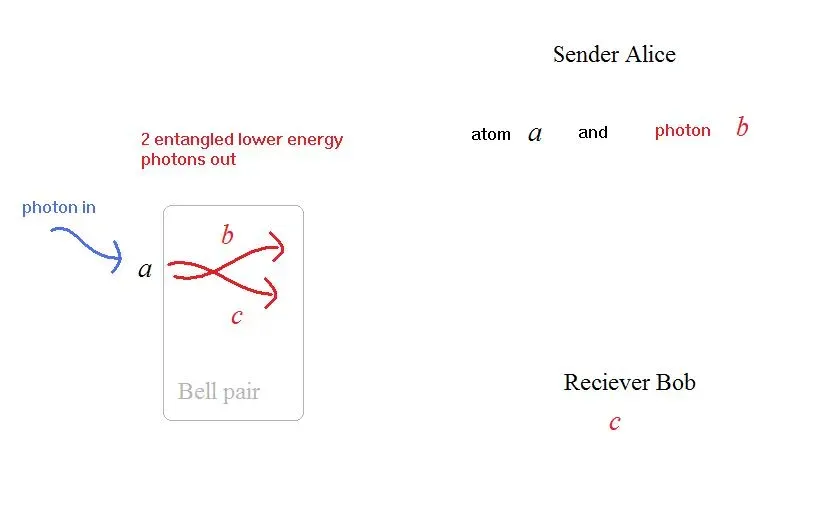
I know it sounds crazy, but you can actually visualize how entanglement works through a fairly simple thought experiment. Imagine two quantum engineers – call them Alice and Bob – who each take one particle from an entangled pair and travel to opposite ends of the world.
When they measure their qubits, they’ll both obtain a 0 or a 1 with equal probability. If they repeat this experiment with many other entangled qubit pairs and record their results, both will find a random series of 0s and 1s. But when they compare their lists, they will find something astounding: every time Alice measures a 0, Bob will have also measured 0 for his corresponding qubit, and vice versa. The results are perfectly correlated, even though both their states are undetermined prior to the measurement.
Measuring properties like position, momentum, or spin of one of the separated pair of particles instantaneously changes the results of the other particle, no matter how far the second particle has drifted from its twin. In effect, the state of one entangled particle, or qubit, is inseparable from the other. There’s no hidden handshake happening between them. The correlation simply exists, baked into the fabric of quantum reality itself.
Entanglement Found Deep Inside Protons – A Stunning Recent Discovery
You might assume entanglement is something scientists observe only between carefully prepared particles in pristine laboratory conditions. What researchers discovered recently takes that assumption and completely flips it on its head.
The results reveal that quarks and gluons, the fundamental building blocks that make up a proton’s structure, are subject to quantum entanglement. This quirky phenomenon holds that particles can know one another’s state – for example, their spin direction – even when they are separated by a great distance. In this case, entanglement occurs over incredibly short distances – less than one quadrillionth of a meter inside individual protons – and the sharing of information extends over the entire group of quarks and gluons in that proton.
Mapping out the entanglement among quarks and gluons inside protons could offer insight into other complex questions in nuclear physics, including how being part of a larger nucleus affects proton properties. This will be one focus of future experiments at the Electron-Ion Collider (EIC), a nuclear physics research facility expected to open at Brookhaven Lab in the 2030s. In other words, what lives inside the very atoms that make up your body might be far more deeply entangled than anyone ever imagined.
Quantum Entanglement and the Race to Build a Quantum Internet

Here’s where things get genuinely exciting. Scientists aren’t just studying entanglement as a curiosity – they are actively trying to harness it to build entirely new kinds of global communication networks. The ambition is nothing short of spectacular.
Scientists at Fermilab and Caltech have demonstrated the feasibility of their method of using squeezed light to dramatically increase the rate at which quantum networks can generate entangled particle pairs over long distances. This “squeezed light” approach is particularly clever because quantum networks over fiber optic cable face challenges such as signal loss, memory decoherence, and delays. A new study led by Fermilab shows the potential of a quantum network protocol that can overcome these challenges by using squeezed light, a special state of light with reduced noise and enhanced sensitivity, to pick up faint signals.
China’s Micius satellite, launched in 2016, enabled the first demonstrations of quantum-encrypted data sent from space. In 2025, the Jinan-1 microsatellite pushed this work further by establishing a 12,900 km quantum connection between China and South Africa. These aren’t theoretical blueprints anymore – they are real, working demonstrations crossing entire continents.
Researchers have shown that quantum signals can be sent from Earth up to satellites, not just down from space as previously believed. This breakthrough could make global quantum networks far more powerful, affordable, and practical. The quantum internet isn’t a fantasy from a sci-fi novel anymore. It’s being built, right now, piece by piece.
What Entanglement Means for Computing, Cryptography, and Our Future
If the quantum internet sounds dramatic, wait until you hear what entanglement is doing to computing and security. The implications for everyday life, even if you never touch a quantum device yourself, are profound and accelerating fast.
Quantum computing allows qubits, the fundamental units of quantum computers, to perform complex calculations at unprecedented speeds. Unlike classical bits, qubits can represent both 0 and 1 simultaneously, allowing for parallel processing and solving problems deemed intractable for classical computers. Think of it this way: where a classical computer solves a maze by trying one path at a time, a quantum computer explores all paths at once.
Entanglement forms the basis of quantum key distribution protocols, such as BB84, ensuring secure communication. Any eavesdropping attempt disrupts the entangled state, alerting parties to potential security breaches. This is fundamentally different from today’s encryption, which can theoretically be cracked with enough computing power. Quantum cryptography, by contrast, is secured by the laws of physics themselves. You simply cannot spy on it without leaving a trace.
Researchers developed a room-temperature quantum communication device, removing the need for super-cooling and enhancing practical applications. The device utilizes twisted light from molybdenum diselenide to entangle photons and electrons. A tiny device that entangles light and electrons without super-cooling could revolutionize quantum tech in cryptography, computing, and AI. That last part matters enormously – until recently, quantum hardware had to operate near absolute zero, making it impractical for widespread use.
Conclusion: A Universe More Connected Than We Ever Dared to Imagine

Quantum entanglement began as a thought experiment meant to expose a flaw in physics. Instead, it turned out to be one of the deepest truths about how our universe is actually stitched together. From the quarks trembling inside your atoms to photons bouncing off satellites thousands of kilometers overhead, the universe is quietly, persistently connected in ways that still feel miraculous to contemplate.
Quantum entanglement challenges our classical notions of reality, locality, and information. Its verification through rigorous experiments has not only deepened our understanding of the quantum world but also unlocked transformative technologies. As research progresses, entanglement promises to be at the forefront of innovations that could reshape computing, communication, and our grasp of the universe’s fundamental workings.
The spooky action Einstein so famously dismissed is now the foundation of technologies that may define the next century. It’s a reminder that the universe doesn’t owe us intuition. Sometimes, reality is just stranger – and far more wonderful – than our comfortable assumptions allow. So here’s a question worth sitting with: if two particles separated by kilometers can share an instant, invisible bond, what does that really tell us about the nature of connection itself?
What do you think – does quantum entanglement change the way you see the universe around you? Tell us in the comments below.