
Imagine changing something in one place and having it instantly affect something else on the other side of the universe. That sounds like mystical fantasy, but it’s very close to what quantum entanglement actually looks like when you strip away the math and weird jargon. For a long time, even some of the greatest physicists thought this was too strange to be real.
Yet over the last few decades, experiment after experiment has confirmed that entanglement is not a glitch in our understanding of nature – it’s one of its core features. And once you take that seriously, you’re almost forced to ask a bigger, slightly uncomfortable question: how separate are things in this universe, really?
What Quantum Entanglement Actually Is (Without the Hype)
At its heart, quantum entanglement is simply a special kind of correlation between particles. When two particles become entangled, their properties are linked so tightly that if you learn something about one, you immediately know something about the other. It’s like rolling two dice in different rooms but somehow always getting outcomes that match a hidden pattern you agreed on beforehand.
Here’s the part that makes it feel almost spooky: these correlations show up even when the particles are separated by huge distances, and they appear instantly when one of them is measured. That doesn’t mean information is traveling faster than light, but it does mean that the idea of each particle having its own completely independent, pre-set properties doesn’t match what experiments see. Nature seems to care more about the relationship than the individual pieces.
Einstein’s “Spooky Action” And Why He Was So Bothered
Albert Einstein famously rejected the strange implications of quantum mechanics, especially entanglement. He thought the theory had to be incomplete, that there were hidden variables secretly determining what happens to each particle, so that everything would still be local and independent at its core. To him, the idea that a choice of measurement here could instantly affect something there sounded like a direct challenge to relativity.
He and his colleagues posed a clever argument to show how absurd the quantum view seemed, using what’s now known as the EPR paradox. Ironically, this “argument against” entanglement laid the groundwork for the very experiments that later confirmed it. In trying to protect a picture of a clean, separable universe, Einstein helped design the tools that revealed just how deeply woven together things really are.
Bell’s Theorem: The Moment the Universe Chose Sides
In the 1960s, physicist John Bell came up with a way to test whether the world is truly local and independent in the way Einstein hoped. He derived mathematical limits, now called Bell inequalities, that any theory with hidden local variables must obey. Quantum mechanics predicts that entangled particles should break those limits under specific experimental setups.
Over the following decades, increasingly precise experiments were done with photons, electrons, and even larger systems. The results consistently violated Bell’s inequalities in exactly the way quantum theory predicts. By the time recent experiments closed major “loopholes” in the setup, the verdict was pretty clear: if you want to cling to a picture of a strictly local, separately defined universe, you have to twist yourself into knots. The universe seems to have chosen entanglement over comforting separateness.
From Lab Tricks to Everyday Reality: Entanglement Is Not Rare
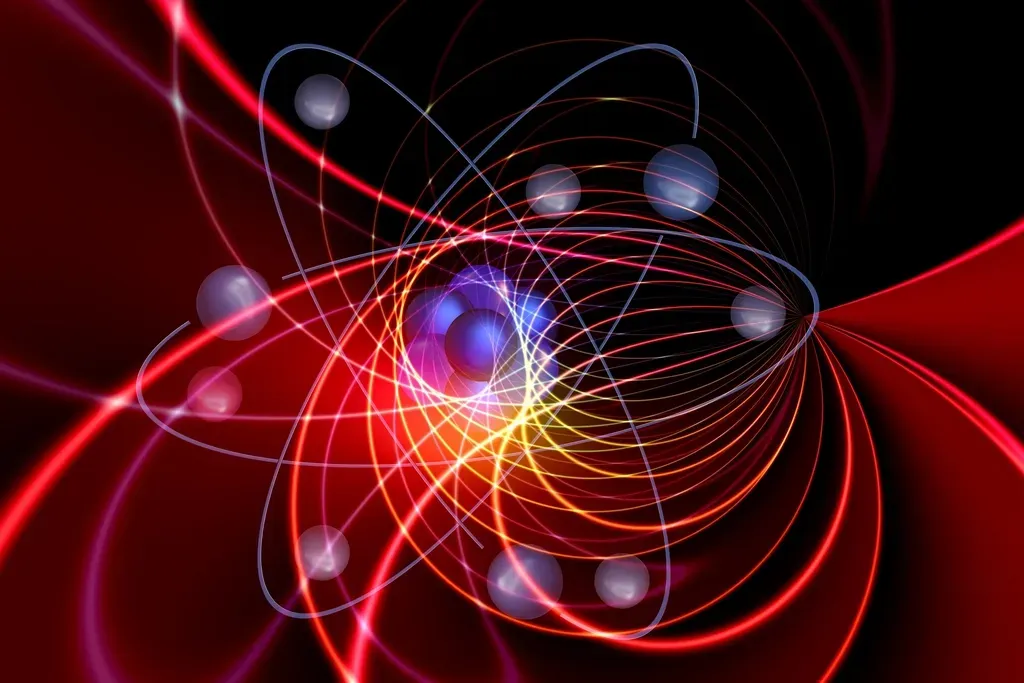
It’s easy to think of entanglement as some fragile lab trick that only appears in super-controlled conditions, like keeping particles colder than deep space behind heavy shielding. But in reality, the building blocks of matter are constantly interacting, and every interaction has the potential to generate entanglement. The real challenge isn’t making entanglement – it’s preserving it long enough to use or observe it before the environment scrambles it.
Decoherence, the process where a system becomes entangled with countless other particles around it, doesn’t destroy entanglement so much as spread it out until it becomes invisible to us. In that sense, the everyday, classical world we experience is more like the blurry shadow of a vast entangled web. We just see the averaged-out, stable patterns, not the underlying quantum relationships stitching everything together.
Quantum Information: When Relationships Matter More Than Things
Modern physics has started to shift its language from talking about particles and waves to talking about information and correlations. In quantum information science, entanglement is treated as a kind of resource, like energy or money, that can be used to do things that would otherwise be impossible. Quantum computers, for instance, rely on entangled states to perform many calculations in parallel in a way that has no classical counterpart.
The more you think about it, the more this makes the universe feel like a network of relationships rather than a pile of separate objects. A particle’s meaning, in a sense, is defined by how it’s correlated with other particles across space and time. Instead of a world built from isolated bricks, it starts to look more like a woven fabric where the pattern of connections is what truly matters.
Cosmic Entanglement: Is the Entire Universe Linked?
On the largest scales, cosmology and quantum physics are beginning to collide in surprising ways. The early universe, when everything was packed together incredibly tightly, would have been a chaotic playground of interactions and entanglement. As space expanded, those correlations would have been stretched out across enormous distances, potentially leaving subtle fingerprints in things like the cosmic microwave background.
Some researchers have proposed that entanglement might help explain why distant regions of the universe look so similar, or how gravity and spacetime geometry might actually emerge from underlying quantum correlations. While many of these ideas are still speculative, they share a common theme: the universe may not just contain entangled systems here and there; it may itself be an entangled whole, with apparent separations being more like convenient illusions of scale.
Philosophical Shockwaves: What Does Interconnectedness Really Mean?
It’s tempting to leap from quantum entanglement straight to big poetic claims that “everything is one” in a spiritual sense. Reality is more subtle and less tidy than that. Entanglement is a precise, testable physical phenomenon with very strict rules: it doesn’t let you send messages faster than light, and it doesn’t mean your thoughts are magically linked to distant galaxies. But it does crack the simple story that the world is built from little independent chunks with pre-defined, private properties.
On a more human level, there’s something quietly unsettling but also strangely comforting in knowing that the universe is less like a collection of lonely islands and more like an ocean of relationships. When you look at your own body as a swirling, ever-changing system of particles that have collided, interacted, and shared quantum histories with matter across the cosmos, individual boundaries start to feel less absolute. The physics doesn’t tell you how to live, but it does whisper that isolation might be more of a psychological story than a fundamental feature of nature.
A Universe Woven, Not Assembled
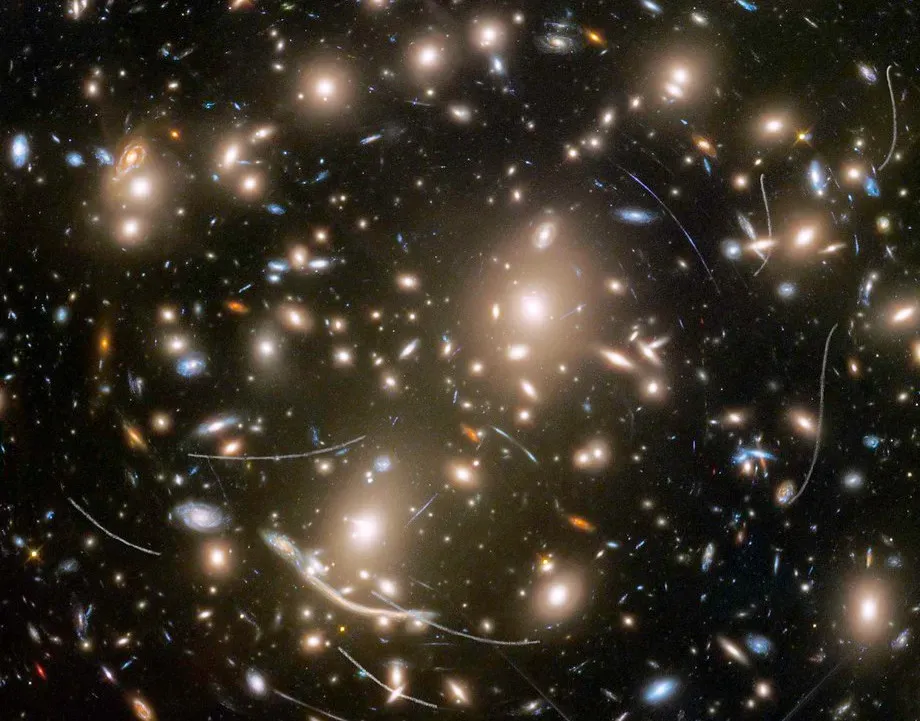
Quantum entanglement forces us to let go of some deeply rooted intuitions about separateness. Experiments have shown that the universe stubbornly refuses to fit into a picture where each piece carries its own fully independent script, untouched by distant choices. What we see instead is a reality where connections, correlations, and shared histories are baked into the most basic level of how matter behaves.
Whether we’re talking about tiny particles in a lab or the vast structure of the cosmos, the same hint keeps appearing: the universe is less a stack of building blocks and more a web of relationships. That doesn’t turn physics into mysticism, but it does make the world feel far less divided than our everyday experience suggests. In a cosmos stitched together by invisible threads of entanglement, how separate were you expecting anything to be?