
Imagine two particles, born together in a single fleeting moment, then flung to opposite ends of the universe. You measure one. Instantly, the other responds. No message is sent. No signal travels between them. Nothing about this moment obeys the rules you were taught in school. Yet it happens. Over and over. Confirmed in lab after lab, on continent after continent. This isn’t science fiction. It’s quantum entanglement, and it may be telling us something profound about the very nature of reality itself.
In the heart of modern physics lies a strange, counterintuitive phenomenon where two particles, once entangled, remain mysteriously connected, their states influencing each other instantly, regardless of the distance separating them. When one changes, the other reflects the change as if they were one, defying our classical understanding of space and time. Honestly, the more you sit with that idea, the more it starts to feel like the universe has been keeping a very big secret. Let’s dive in.
What Quantum Entanglement Actually Is (And Why It’s Not Magic)
Let’s be real: quantum entanglement sounds like something pulled straight from a fantasy novel. Two particles sharing information instantaneously across billions of light-years? It strains the imagination. Quantum entanglement is a phenomenon where two or more quantum particles become linked in such a way that the state of one particle instantly determines the state of the other, no matter how far apart they are. Think of it like two identical twins separated at birth who somehow, against all odds, make the exact same decision at the exact same moment every single day.
This strange connection doesn’t involve any signal traveling between the particles. Instead, it’s as if the entangled system behaves like a single, unified whole, even when the parts are separated by light-years. Here’s the thing though: it’s not communication in any traditional sense. A common misconception about entanglement is that the particles are communicating with each other faster than the speed of light, which would go against Einstein’s special theory of relativity. Experiments have shown that this is not true, nor can quantum physics be used to send faster-than-light communications. The universe, it seems, plays by deeply strange rules.
Einstein’s “Spooky Action” and the Debates That Changed Physics
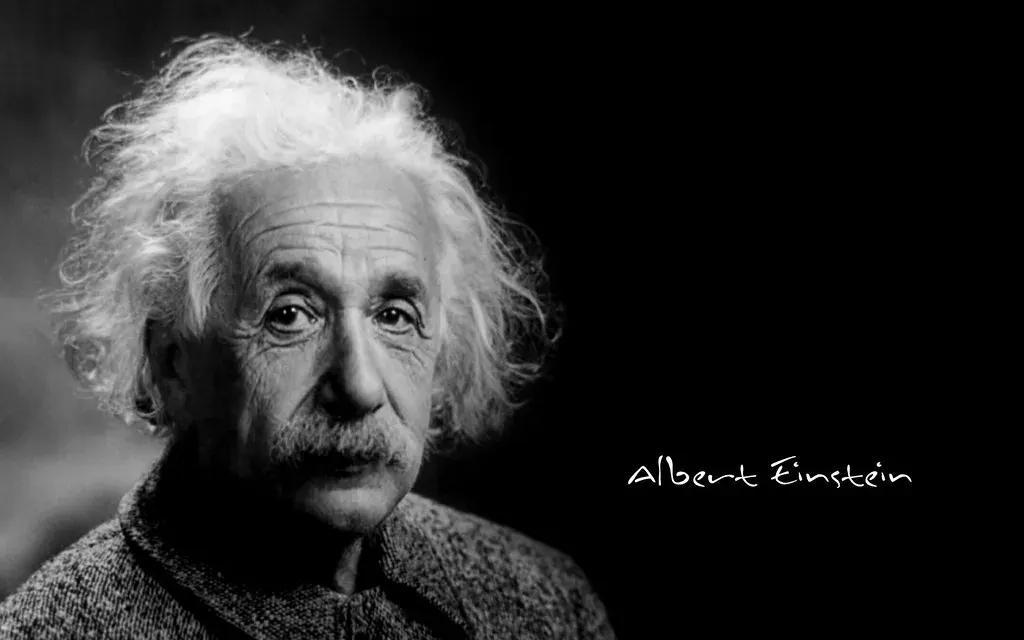
Quantum entanglement is a phenomenon Albert Einstein famously called “spooky action at a distance.” Entanglement allows particles to share information via subtle quantum features that power quantum encryption and boost the sensitivity of instruments like LIGO, which detects ripples in spacetime. Einstein hated the idea. Not because he was closed-minded, but because it violated something he held sacred: the idea that reality is local, that distant objects cannot influence one another without some physical connection passing between them.
In 1935, Albert Einstein, Boris Podolsky, and Nathan Rosen published a paper that describes a thought experiment designed to illustrate a seeming absurdity of quantum entanglement. A simplified version, attributed to David Bohm, considers the decay of a particle called the pi meson. When this particle decays, it produces an electron and a positron that have opposite spin and are moving away from each other. Therefore, if the electron spin is measured to be up, then the measured spin of the positron could only be down, and vice versa. This is true even if the particles are billions of miles apart. For decades, scientists debated whether this was real or just a gap in human understanding. The verdict? It’s very, very real.
Bell’s Theorem and the Experiments That Settled the Score
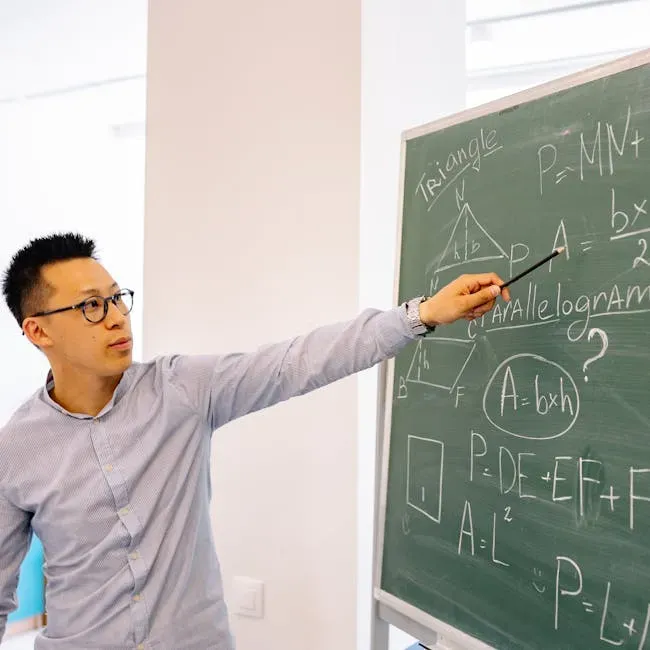
In 1964, physicist John Bell formulated what became known as Bell’s Theorem, showing that if quantum mechanics is correct, such correlations cannot be explained by any hidden local variables. This was a turning point. Bell gave science a way to test whether the universe was truly as strange as quantum mechanics suggested, or whether some hidden, undiscovered classical mechanism was lurking behind the scenes.
In 2015, three separate research groups, including teams at Delft University of Technology in the Netherlands and NIST in the USA, performed loophole-free Bell tests, simultaneously closing the detection and locality loopholes. These were the most rigorous tests of quantum entanglement to date. The experiments used entangled electron spins and photons with fast, random setting choices and high detector efficiency, ruling out classical explanations once and for all. You can imagine the scientific community at that moment. All those decades of arguing, and the universe had been entangled all along. Its significance was globally acknowledged when the 2022 Nobel Prize in Physics was awarded to Alain Aspect, John Clauser, and Anton Zeilinger for their experimental validation of quantum entanglement.
Entanglement Across Cosmic Distances: From Earth to Space
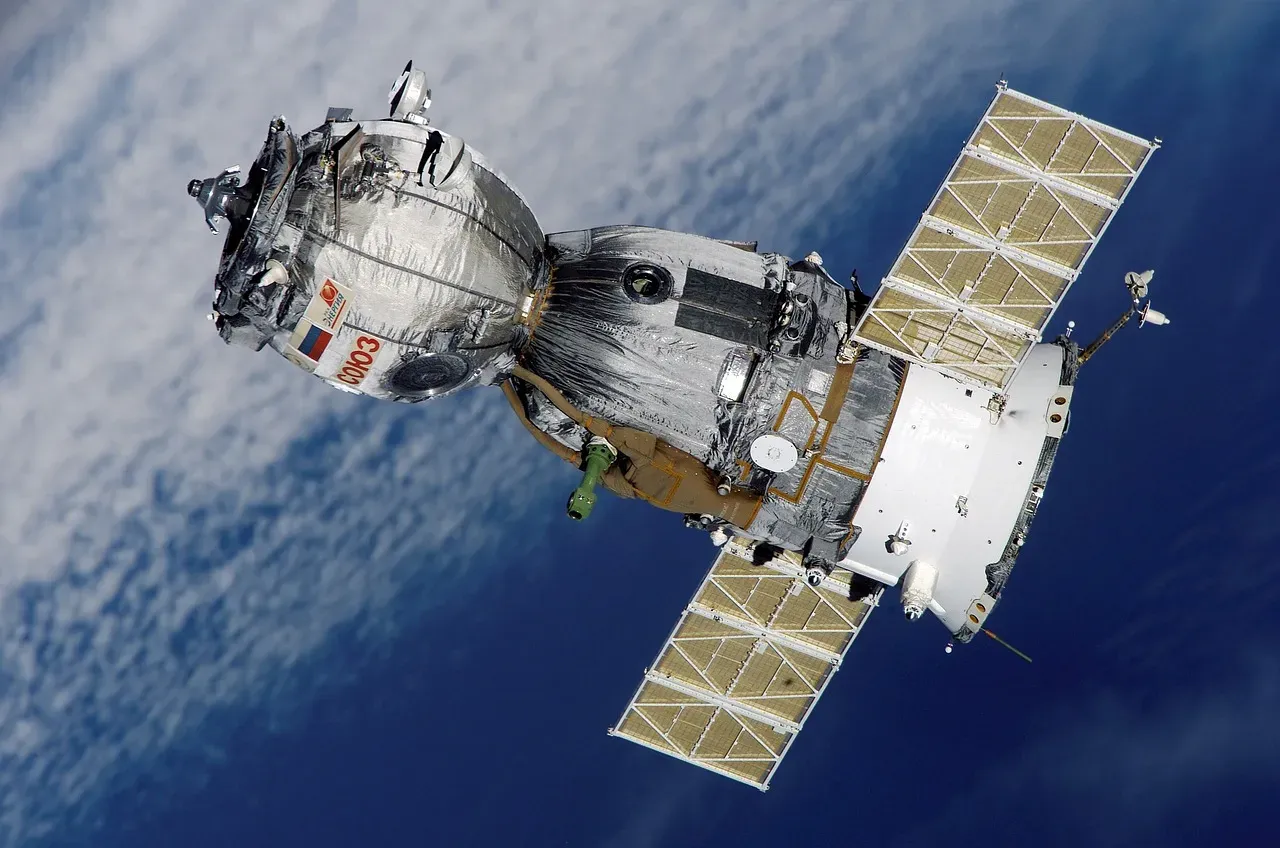
You might think entanglement is purely a lab curiosity, something that exists only under carefully controlled conditions. Think again. Quantum satellite communication has already seen important advances. China’s Micius satellite, launched in 2016, enabled the first demonstrations of quantum-encrypted data sent from space. In 2025, the Jinan-1 microsatellite pushed this work further by establishing a 12,900 km quantum connection between China and South Africa. That’s not a lab bench. That’s two continents, connected through quantum physics.
To capture higher-definition and sharper images of cosmological objects, astronomers sometimes combine the data collected by several telescopes. This approach, known as long-baseline interferometry, entails comparing the light signals originating from distant objects and picked up by different telescopes at different locations, then reconstructing images using computational techniques. Now, researchers are taking that concept even further. Quantum scientists in Innsbruck have taken a major leap toward building the internet of the future. Using a string of calcium ions and finely tuned lasers, they created quantum nodes capable of generating streams of entangled photons with 92% fidelity. This scalable setup could one day link quantum computers across continents, enable unbreakable communication, and even transform timekeeping by powering a global network of optical atomic clocks so precise they’d barely lose a second over the universe’s entire lifetime.
Could Entanglement Be Stitching Spacetime Together?
Here is where things get genuinely mind-bending, even for physicists. Some of the most daring theoretical work in modern science proposes that entanglement isn’t just something that happens inside spacetime. It may actually be what spacetime is made of. Mark Van Raamsdonk suggested that spacetime arises as an emergent phenomenon of the quantum degrees of freedom that are entangled and live in the boundary of the spacetime. In other words, the very fabric of the cosmos might be woven from quantum connections at its most fundamental level.
In an effort to unify quantum mechanics and gravity, researchers have long been on the hunt for a consistent theory of quantum gravity. One tempting solution is rooted in the idea that, perhaps, the very fabric of space-time may be an emergent property of some kind of quantum entanglement, one that ultimately satisfies Einstein’s relativistic field equations. I think this is one of the most staggering ideas in all of science. Some researchers propose a unifying theoretical framework that posits gravity does not arise primarily from spacetime curvature induced by mass-energy, but rather emerges from weak nonlocal entanglement between microscopic spacetime fabrics associated with each particle. This perspective replaces the classical dictum that “mass tells spacetime how to curve” with the foundational postulate that “each mass carries its own spacetime, and gravity emerges when their fabrics entangle.”
Entanglement, Consciousness, and the Bigger Picture
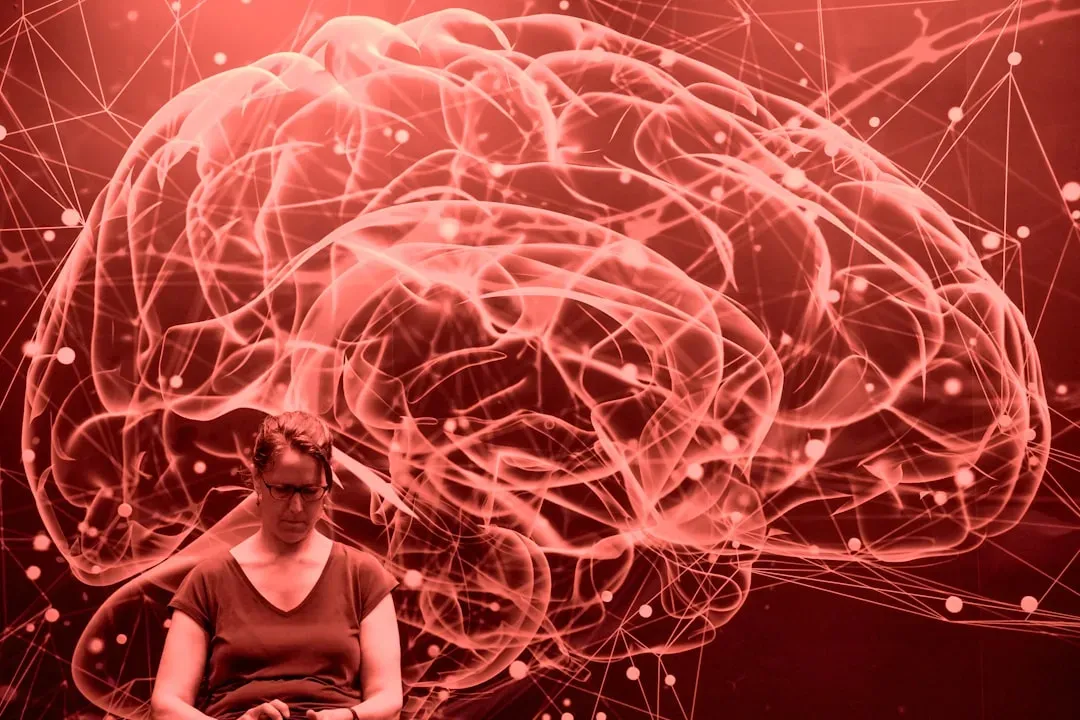
I know it sounds crazy, but some researchers are now asking whether quantum entanglement reaches even further, into the realm of biology and consciousness itself. Our minds feel very private and unique to each of us, yet many researchers suspect our consciousness might plug into something far bigger. A controversial new framework says a quantum entanglement trick could happen inside microtubules, the tiny protein tubes that scaffold every neuron in your head. The idea is that our own awareness might be grounded, at least partly, in quantum processes.
Because quantum entanglement links objects instantly, regardless of distance, every collapse in your cortex might already be braided with particles beyond Earth. Penrose’s equations even allow those linkages to stretch across the cosmos, hinting that subjective experience could share the same physical substrate as spacetime itself. It’s hard to say for sure where this line of research will ultimately lead. The idea that quantum events in the brain drive consciousness still lacks direct confirmation in humans, and many neuroscientists argue that existing brain imaging already maps consciousness without needing quantum physics. Still, the very fact that these questions are being asked by serious scientists says something significant about the depth of entanglement’s reach.
New Breakthroughs and What Comes Next
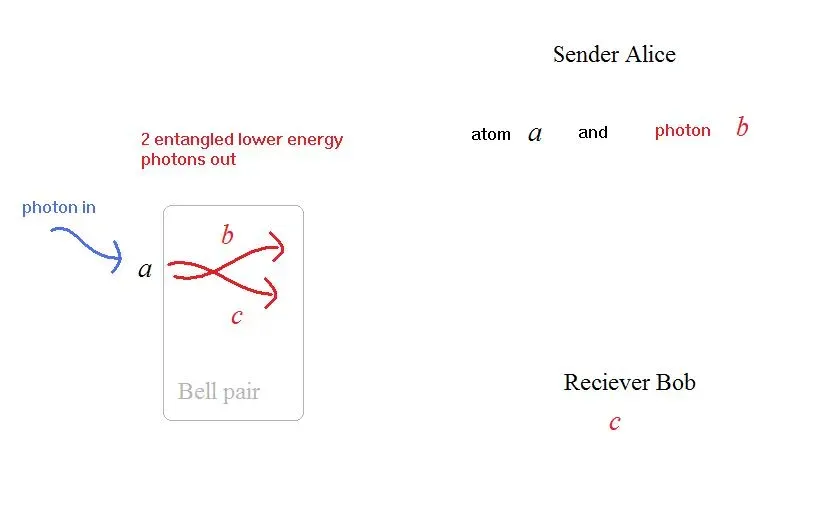
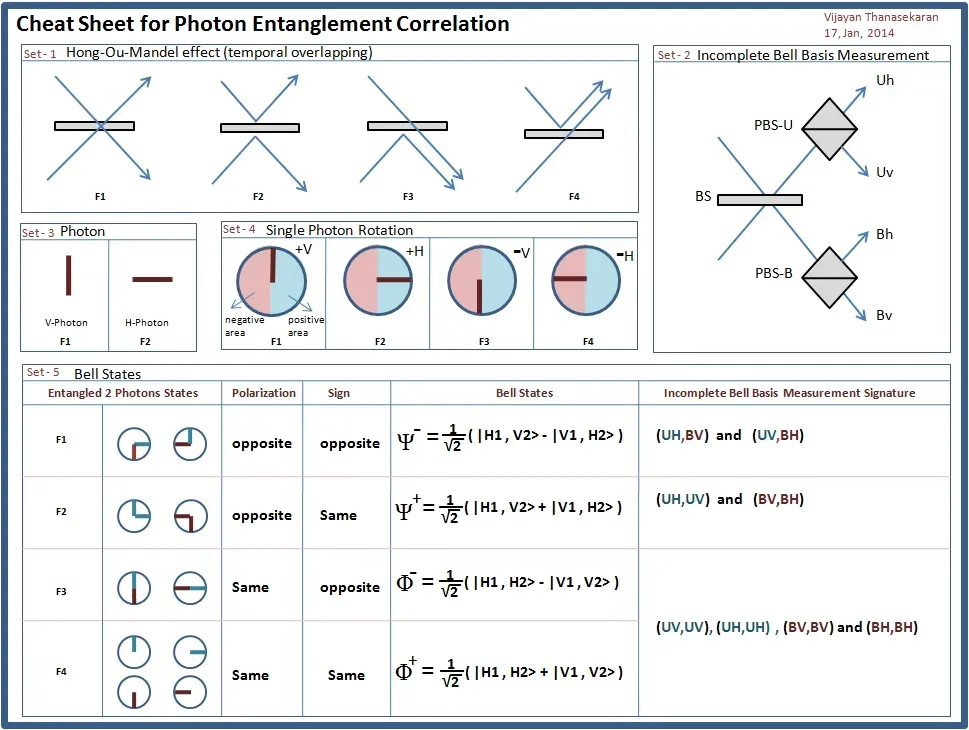
Science in 2026 is not standing still on this front. The pace of discovery is remarkable. Scientists have finally unlocked a way to identify the elusive W state of quantum entanglement, solving a decades-old problem and opening paths to quantum teleportation and advanced quantum technologies. The W state is a specific type of multi-particle entanglement that had resisted experimental measurement for over a quarter century. This achievement opens the door for quantum teleportation, or the transfer of quantum information. It could also lead to new quantum communication protocols, the transfer of multi-photon quantum entangled states, and new methods for measurement-based quantum computing.
Physicists have uncovered how direct atom-atom interactions can amplify superradiance, the collective burst of light from atoms working in sync. By incorporating quantum entanglement into their models, they reveal that these interactions can enhance energy transfer efficiency, offering new design principles for quantum batteries, sensors, and communication systems. Meanwhile, even more ambitious possibilities are being explored. Researchers are exploring treating information, not matter, not energy, not even spacetime itself, as the most fundamental ingredient of reality. This framework, called the quantum memory matrix, holds that spacetime is not smooth, but discrete, made of tiny cells. Each cell can store a quantum imprint of every interaction, like the passage of a particle or even the influence of a force such as electromagnetism or nuclear interactions, that passes through. The universe, by this account, does not just evolve. It remembers.
Conclusion: A Universe That Is Not as Separate as It Seems
Quantum entanglement reminds us that reality is relational, mysterious, and deeper than we can observe. It dismantles the illusion of separation and challenges our linear notions of cause and effect. From the smallest subatomic particles to the broadest structures of the cosmos, something is connecting everything in ways that classical physics simply cannot explain. The deeper science looks, the more it seems that the universe operates as a unified whole, not a collection of isolated, independent parts.
Whether entanglement ultimately turns out to be the thread from which spacetime is woven, a window into the nature of consciousness, or the key to a theory of everything, its implications are genuinely transformative. Entanglement is at the heart of quantum physics and future quantum technologies. We are living in a remarkable moment where the boundary between science and wonder is dissolving. The cosmos is not a cold, indifferent machine. It may be the most intricately connected thing that has ever existed. What does it mean to you that everything in the universe might, at some level, be inseparably linked? Tell us your thoughts in the comments.