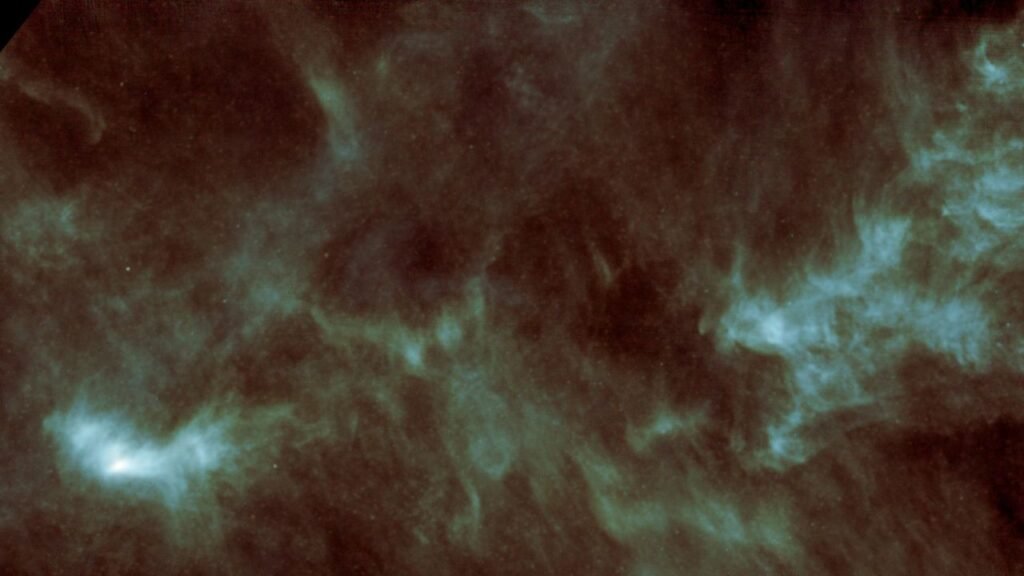

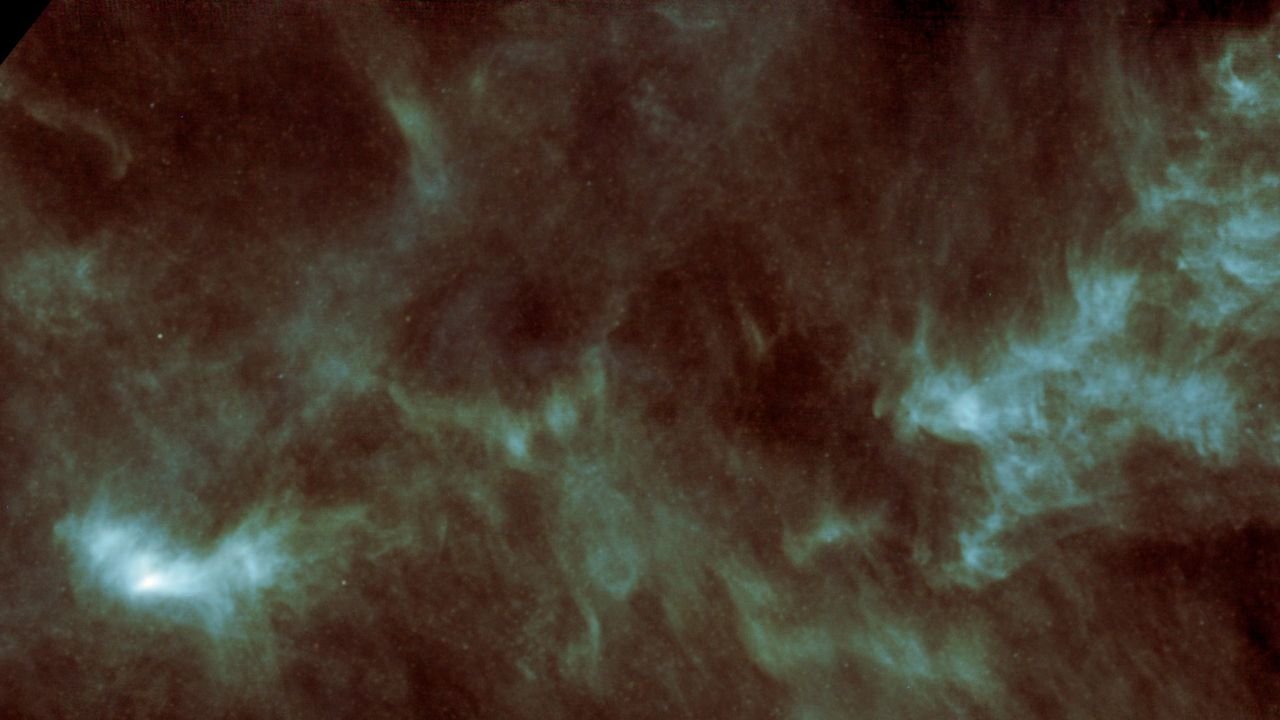
Unexpected Find in a Stellar Cradle (Image Credits: Cdn.mos.cms.futurecdn.net)
Astronomers have identified an organic compound with potential ties to life’s origins nestled within the dense gas surrounding a nascent star.
Unexpected Find in a Stellar Cradle
Researchers pinpointed methanimine, a simple organic molecule, scattered across a compact region of gas and dust enveloping an embryonic star.[1]
This detection marks a significant step in understanding where and when the precursors to life might assemble in the universe. The site lies just 554 light-years from Earth, remarkably close in cosmic terms.[2]
Teams employed advanced telescopes to probe these star-forming environments, revealing chemistry more complex than previously anticipated at such an early stage.
Methanimine: A Building Block Emerges Early
Methanimine, chemically known as CH2NH, serves as a foundational piece for more intricate carbon-based structures essential to biology. Its presence suggests that the raw materials for life could form amid the chaos of star birth.[1]
Previously, similar molecules appeared in interstellar clouds or around mature stars, but this marks their confirmation deep inside a protostellar core. Scientists analyzed spectral signatures at specific wavelengths to confirm the compound’s abundance throughout the clump.
The discovery challenges models of molecular evolution, indicating that organic synthesis accelerates in these extreme conditions of heat, density, and radiation.
- Methanimine detected via infrared spectroscopy.
- Found in a dense gas clump 554 light-years distant.
- Potential precursor to amino acids and other biomolecules.
- Implies early delivery to future planets.
- Observed in a yet-unborn star’s envelope.
Pathways to Planets and Life
As the star develops, surrounding material will coalesce into protoplanetary disks and eventually planets. These organics could incorporate into rocky worlds, providing a head start for prebiotic chemistry.
Similar findings in distant galaxies bolster the idea that life’s ingredients arise universally, not just in our solar neighborhood. This bolsters astrobiology’s quest to gauge life’s prevalence across the cosmos.
However, the harsh environment poses questions about molecule survival during planet formation. Further modeling will clarify their journey from cloud to surface.
Techniques and Next Steps
Astronomers targeted the gas cloud with sensitive instruments capable of distinguishing faint molecular signals amid stellar noise. Data processing revealed methanimine’s unmistakable fingerprints.
Upcoming surveys aim to map more such sites, hunting for additional precursors like formaldehyde or hydrogen cyanide. Enhanced telescopes will refine abundance measurements and distribution patterns.
Collaborations between observatories promise richer datasets, potentially rewriting timelines for cosmic chemistry.
Key Takeaways
- Methanimine, a life-related organic, thrives in protostar cores.
- Discovery 554 light-years away hints at widespread prebiotic potential.
- Pushes origins of life’s chemistry to star formation’s dawn.
This breakthrough illuminates the universe’s capacity to brew life’s essentials from stellar nurseries. It invites speculation on how common habitable worlds might be. What implications do you see for the search for extraterrestrial life? Share your thoughts in the comments.