
Mysterious Dips Reveal Hidden Structures (Image Credits: Unsplash)
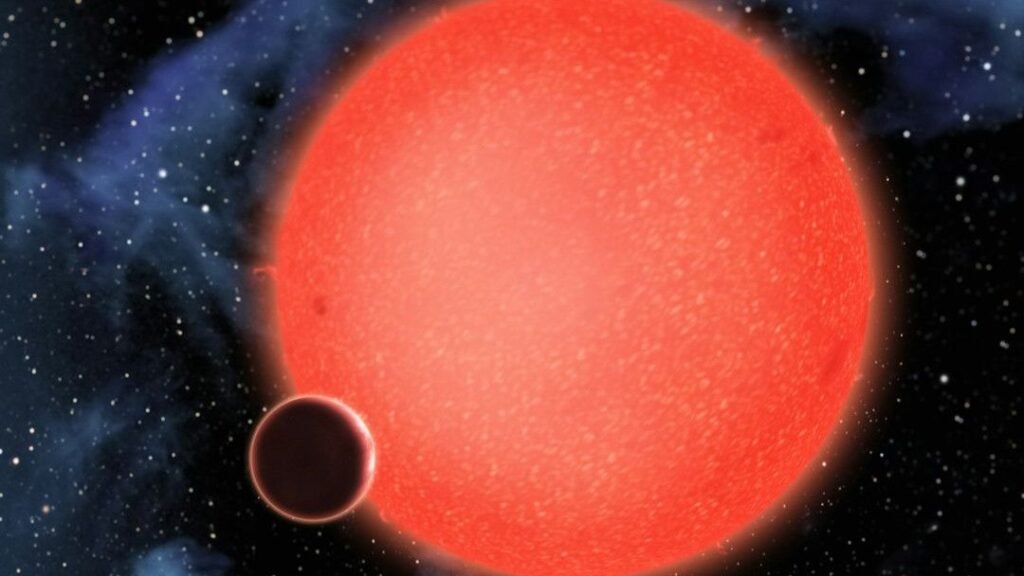
Astronomers identified recurring dips in the brightness of young M dwarf stars as signatures of enormous plasma rings trapped within the stars’ magnetic fields. These doughnut-shaped structures of cool plasma, carried along by stellar rotation, function as built-in monitors for space weather, tracking how energetic particles behave near the star’s surface.[1][2] Researchers presented this discovery at a recent American Astronomical Society meeting, highlighting its potential to assess conditions for planets orbiting these common stars.[3]
Mysterious Dips Reveal Hidden Structures
Young M dwarf stars classified as complex periodic variables long puzzled observers with their rapid spins and repeated brightness fluctuations. Scientists initially debated whether dark spots on the stellar surface or orbiting material caused these odd dimmings. Luke Bouma of the Carnegie Institution for Science, collaborating with Moira Jardine of the University of St Andrews, resolved the enigma through innovative analysis.
The team produced what they termed “spectroscopic movies” of one such star, TIC 141146667. This approach uncovered large clumps of relatively cool plasma confined in the star’s magnetosphere. As the star rotated, its magnetic field sculpted the plasma into a torus – a ring resembling a cosmic doughnut – with dense concentrations on opposite sides.[1] “Once we understood this, the blips in dimming stopped being weird little mysteries and became a space weather station,” Bouma noted.
How Plasma Tori Track Stellar Activity
These plasma rings offer direct insights into the dynamics of material just above the stellar surface. Observers can now map where plasma concentrates, how it moves, and the extent of magnetic field influence. Such data reveal the behavior of stellar particles akin to solar winds and magnetic storms in our own system.
M dwarf stars exert profound effects on their planets through both light and particles. While telescopes excel at measuring light, space weather proves harder to quantify at interstellar distances. The tori bridge this gap, enabling astronomers to study particle impacts without deploying distant instruments.[2] Bouma emphasized that particles sometimes outweigh light in shaping planetary environments, drawing parallels to Solar System phenomena.
M Dwarfs and the Quest for Habitability
M dwarf stars dominate the galaxy, outnumbering Sun-like stars by far. Smaller, cooler, and dimmer, they nonetheless host numerous Earth-sized rocky planets in their habitable zones. Challenges abound: intense flares strip atmospheres, radiation hinders liquid water, and tidal locking exacerbates extremes.
- Most M dwarf planets appear too hot or unstable for life as we know it.
- Frequent stellar outbursts bombard close-in worlds.
- Yet, these systems provide prime labs for star-planet interactions.
- Plasma tori prevalence – at least 10 percent in young phases – amplifies study opportunities.
By gauging space weather via these natural gauges, researchers probe whether atmospheres endure or erode. The findings reshape assessments of exoplanet viability around the galaxy’s most common stars.[3]
Origins and Next Steps
Questions persist about the plasma’s source – stellar ejections or external inflows. Bouma plans targeted observations to clarify this. Their work appeared in The Astrophysical Journal Letters in 2025, detailing the torus around a young low-mass star.[1]
This serendipitous find opens fresh avenues in exoplanet science. “Space weather is going to be an important part of answering” habitability questions, Bouma concluded. Future surveys could catalog more tori, refining models of planetary resilience.
Key Takeaways
- Plasma tori around 10 percent of young M dwarfs monitor space weather effects.
- These structures explain brightness dips in complex periodic variables.
- Insights aid habitability evaluations for rocky exoplanets.
Plasma rings transform enigmatic signals into powerful tools for cosmic exploration. They underscore how stars dictate planetary fates, urging deeper scrutiny of M dwarf systems. What do you think – could space weather ultimately decide where alien life thrives? Tell us in the comments.