
There’s something deeply unsettling about the Higgs boson. Not in a scary way, but in the way a puzzle piece that almost fits keeps nagging at the back of your mind. Physicists have known since 2012 that the Higgs exists, yet one of the most stubborn questions in all of modern physics remains stubbornly unanswered: why does it have the mass it does?
Now, a fascinating new line of thinking is pulling black holes into that conversation. It sounds wild, honestly, like two entirely separate mysteries suddenly deciding to hold hands. Yet researchers are finding real, theoretical connections between the strange physics at the edge of a black hole and the bizarre behavior of the Higgs field. Let’s dive in.
The Higgs Mass Problem Nobody Talks About Enough
Here’s the thing about the Higgs boson’s mass. It sits at roughly 125 gigaelectronvolts, a value that particle physicists find deeply uncomfortable. Quantum field theory predicts that the Higgs mass should be dragged upward by virtual particle interactions to enormous values, yet somehow it remains stubbornly, almost suspiciously, light.
This is called the hierarchy problem, and it has haunted physics for decades. Think of it like trying to balance a pencil on its tip in a hurricane and somehow it just stays there, perfectly still. Something, some mechanism or principle, must be keeping the Higgs mass stable. The question is what.
Black Holes Enter the Picture
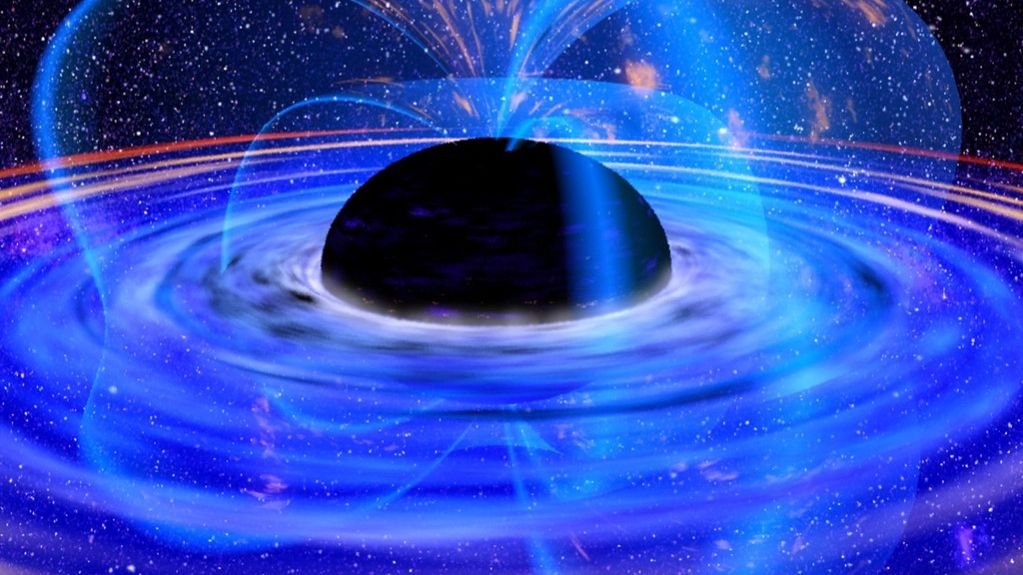
Researchers have begun exploring whether the gravitational physics governing black holes could offer clues about what stabilizes the Higgs mass. The idea draws from the behavior of quantum fields near a black hole’s event horizon, where gravity becomes so extreme that the rules of physics get seriously stretched.
In April 2026, new theoretical work published and discussed at Phys.org pushed this concept forward in a meaningful way. Scientists are examining whether the so-called “gravitational effects” in these extreme environments create conditions that naturally constrain how the Higgs field behaves. It’s a genuinely bold idea, and I think it’s one of the most exciting theoretical directions in years.
The Role of the Higgs Field in the Universe
To understand why this matters, you need to appreciate what the Higgs field actually does. It permeates all of space, and particles gain mass by interacting with it. Without the Higgs field, electrons and quarks would zip around at the speed of light, and atoms as we know them simply would not exist.
The Higgs field’s value today is what physicists call the “electroweak vacuum,” a kind of energetic ground state that the universe settled into. The stability of that ground state is intimately tied to the Higgs mass. So when researchers say the Higgs mass is unusual or finely tuned, they’re really saying the entire structure of matter in the universe is balancing on a knife’s edge.
How Black Hole Physics Could Constrain the Higgs
The connection being explored involves something called “vacuum stability” and how extreme gravitational fields interact with scalar fields like the Higgs. Near a black hole’s event horizon, the quantum fluctuations of fields become enormously amplified. Researchers are asking whether these amplified fluctuations could feed back into the broader Higgs field in ways that set natural boundaries on its mass.
Let’s be real, this is deeply theoretical territory. Nobody is running an experiment at a black hole anytime soon. Still, the mathematical framework being developed could offer what physicists call a “natural” explanation, meaning no bizarre fine-tuning required. That would be a genuinely enormous breakthrough, because it would mean the universe’s structure isn’t as precariously balanced as it currently seems.
Connecting Gravity and Particle Physics
One of the great frustrations of modern physics is that gravity and quantum mechanics simply do not play nicely together. General relativity describes the large-scale universe beautifully. Quantum field theory handles the subatomic world with astonishing precision. Uniting them has been the holy grail of theoretical physics for nearly a century.
This new research sits right at that boundary. By using black holes as a kind of theoretical laboratory, physicists are testing whether gravitational physics, even in this indirect way, can shed light on purely quantum questions like the Higgs mass. It’s hard to say for sure where this leads, but the approach feels genuinely fresh. Rather than forcing a grand unified theory, researchers are looking for smaller, more targeted bridges between the two frameworks, and that kind of pragmatism might actually get us somewhere.
What This Means for the Standard Model
The Standard Model of particle physics is arguably humanity’s greatest scientific achievement. It describes almost everything we observe at the subatomic level with extraordinary accuracy. Yet it famously says nothing about gravity, dark matter, or why the Higgs mass takes the value it does.
If black hole physics genuinely constrains the Higgs mass in the way this research suggests, that would mean gravity is not entirely absent from the Standard Model story after all. It wouldn’t fix everything, obviously. Dark matter would still be a mystery. But it would patch one of the most embarrassing holes in the model, and honestly, that would be a reason to celebrate. The physics community has been waiting a long time for something like this.
A Conclusion Worth Sitting With
What strikes me most about this line of research is the sheer audacity of it. We’re talking about using some of the most extreme objects in the universe, black holes, to explain why a subatomic particle weighs what it weighs. The scale difference alone is mind-bending, from the cosmic to the infinitely small, all connected by the same mathematical fabric.
Science moves slowly, and theoretical ideas like this often take decades before they’re tested or confirmed. There’s every chance this particular approach hits a dead end. Still, the very fact that researchers are finding meaningful mathematical connections between black hole physics and the Higgs mass tells us something important: the universe is more unified than our current theories admit. We’re just still learning how to read it.
What do you think, could the answer to one of particle physics’ oldest mysteries really be hiding inside a black hole? Drop your thoughts in the comments.