
First-of-Its-Kind Autonomous Navigation (Image Credits: Upload.wikimedia.org)
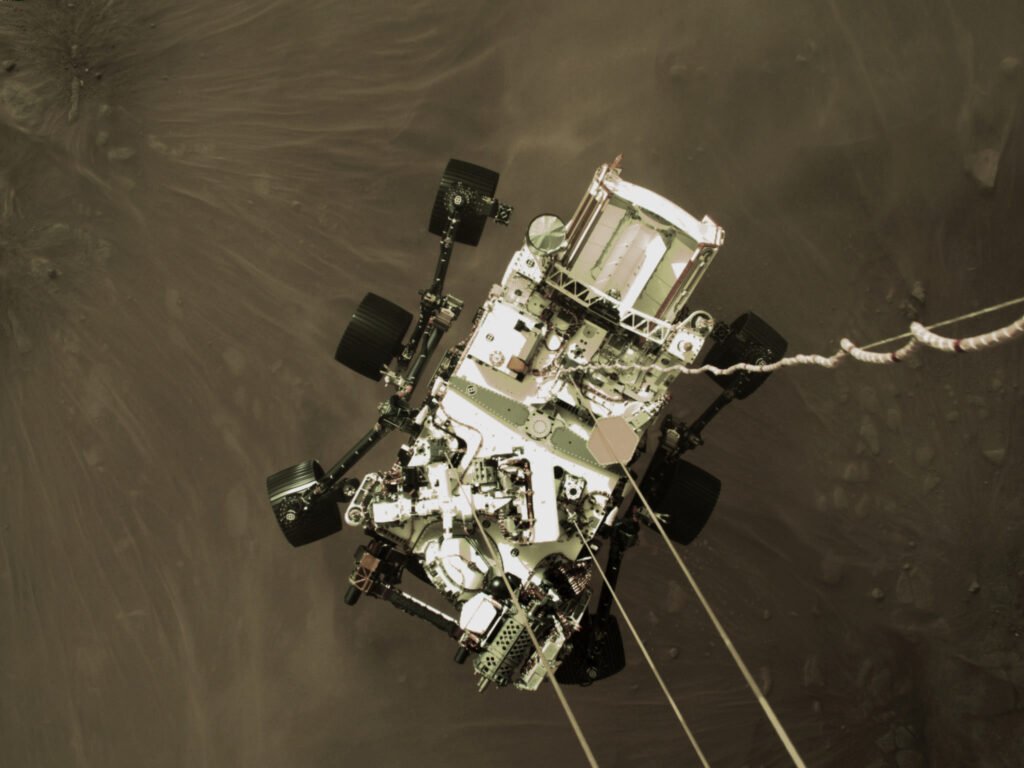
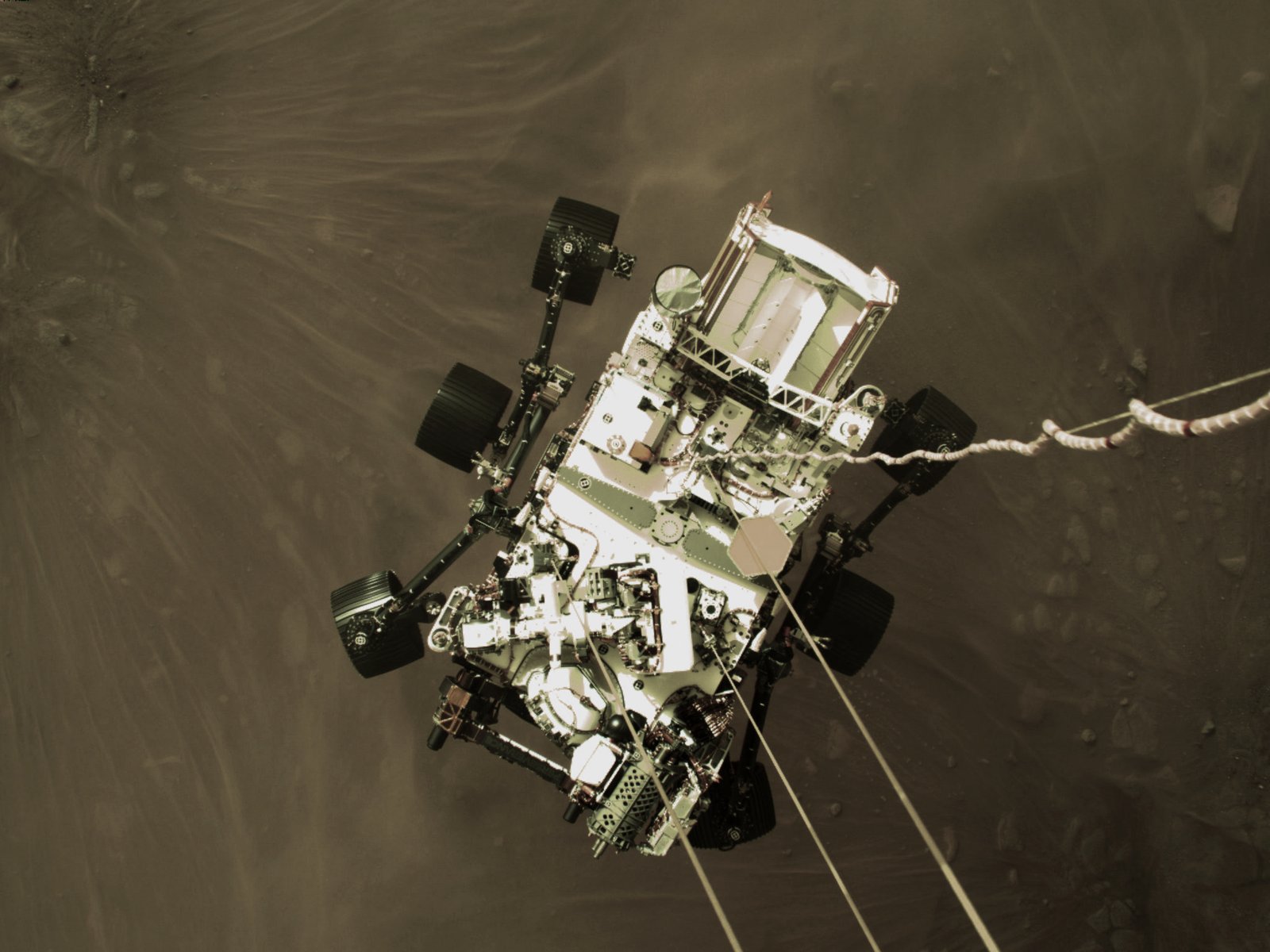
Jezero Crater, Mars – NASA’s Perseverance rover traversed challenging terrain along the crater’s rim using routes generated solely by artificial intelligence, a feat accomplished without traditional human oversight.[1][2]
First-of-Its-Kind Autonomous Navigation
Engineers at NASA’s Jet Propulsion Laboratory orchestrated two groundbreaking drives on December 8 and 10, 2025, during mission sols 1,707 and 1,709. Perseverance covered 689 feet (210 meters) on the first outing and 807 feet (246 meters) two days later.[1] These efforts represented the initial use of generative AI to plot full rover paths on another planet, bypassing the manual waypoint creation long relied upon by mission teams.
The rover executed the plans flawlessly across boulder-strewn landscapes, demonstrating compatibility with its onboard flight software. Teams verified commands through a digital twin – a virtual replica of Perseverance – that scrutinized over 500,000 telemetry variables before uplink via NASA’s Deep Space Network.[3] This rigorous process ensured safety amid the 140 million-mile average distance to Earth, where communication delays preclude real-time control.
How Generative AI Transformed Route Planning
Vision-language models powered the innovation, analyzing high-resolution orbital images from the HiRISE camera on NASA’s Mars Reconnaissance Orbiter alongside digital elevation models. The AI pinpointed hazards and generated continuous paths dotted with waypoints spaced no more than 330 feet (100 meters) apart.
Critical terrain elements included:
- Bedrock exposures
- Outcrops
- Hazardous boulder fields
- Sand ripples
Collaboration with Anthropic integrated its Claude AI models into JPL’s Rover Operations Center workflows, mirroring data human planners traditionally assessed.[4] Perseverance then followed these instructions autonomously, advancing pillars of off-world navigation: perception, localization, and path control.
Voices from the Mission Team
NASA Administrator Jared Isaacman highlighted the milestone’s scope. “This demonstration shows how far our capabilities have advanced and broadens how we will explore other worlds,” he stated. Autonomous tools like these promised greater efficiency and science yields on distant frontiers.[1]
Vandi Verma, a JPL space roboticist on the Perseverance team, elaborated on the technology’s promise. She noted its potential to enable kilometer-scale drives while easing operator burdens and scanning images for scientific targets.[2] Matt Wallace, JPL’s Exploration Systems Office manager, envisioned broader applications in rovers, helicopters, and drones to support human outposts on the Moon and Mars.
Pathways to Tomorrow’s Explorations
The success signaled a shift after 28 years of human-led planning across Mars missions. Future operations could handle longer traverses with reduced Earth intervention, vital as exploration extends beyond the Red Planet.
JPL, managed by Caltech for NASA, oversees Perseverance as part of the Mars Exploration Program. For details on the Rover Operations Center, see the official site.[3]
Key Takeaways
- Generative AI planned and executed safe rover drives over rugged Jezero terrain.
- Drives spanned 1,496 feet total, verified via digital twin simulations.
- Paves way for efficient, autonomous missions supporting human spaceflight goals.
This AI leap redefines robotic exploration, freeing teams for higher pursuits while maximizing discoveries on hostile worlds. What implications do you see for upcoming Mars ventures? Tell us in the comments.