
What if the life you are living right now is just one of an unimaginably vast number of lives you are simultaneously living elsewhere? Not in a dream, not in fiction, but in a real, physical reality running alongside your own. It sounds like the kind of thing reserved for blockbuster movies, yet in 2026, it is a legitimate question that some of the world’s most respected theoretical physicists are wrestling with in earnest.
The idea of parallel universes, or the multiverse, has long been a staple of science fiction, but it is also a serious area of inquiry for theoretical physicists, fueled by groundbreaking concepts in quantum mechanics and cosmology. The deeper you look into modern physics, the stranger reality becomes. So let’s dive in.
The Many-Worlds Interpretation: Where Every Outcome Becomes Real
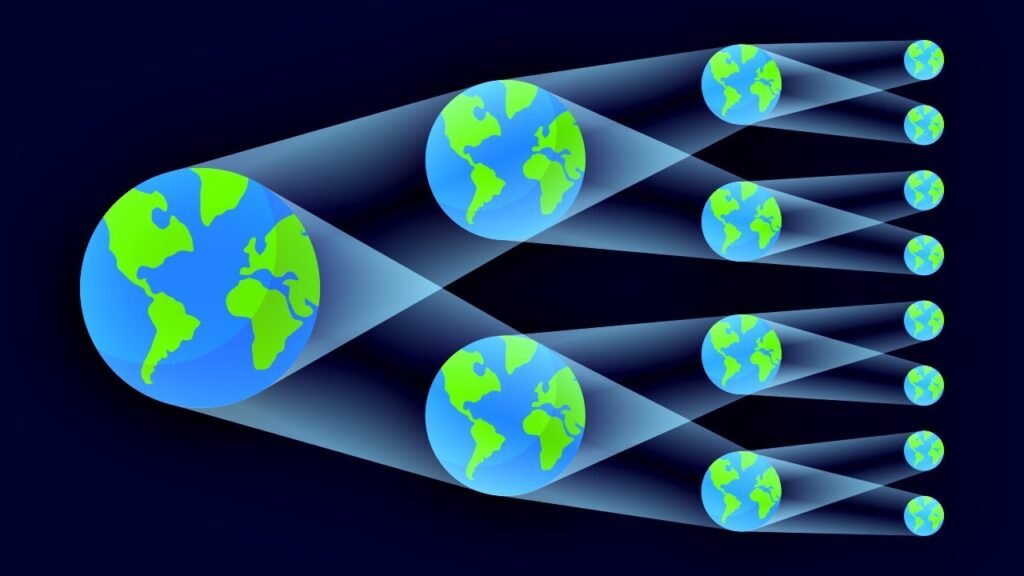
Here’s the thing about quantum mechanics: it does not play by the rules you grew up with. The Many-Worlds Interpretation, or MWI, is an interpretation of quantum mechanics asserting that the universal wavefunction is objectively real and that there is no wave function collapse. This implies that all possible outcomes of quantum measurements are physically realized in different “worlds.” Think about that for a moment. Every quantum event, every tiny flicker of possibility at the atomic level, does not collapse into one outcome. Instead, all outcomes happen.
The Many-Worlds Interpretation challenges the notion that observation collapses reality by proposing that every quantum possibility unfolds in its own parallel universe. Since Hugh Everett III first introduced this radical idea in 1957, it has sparked fierce debates, offering a universe not of singular outcomes but of infinite branching realities where every decision and event spawns new worlds. Honestly, it is the kind of idea that keeps you up at night once you truly start to grasp it.
You, Repeated Across an Uncountable Number of Worlds

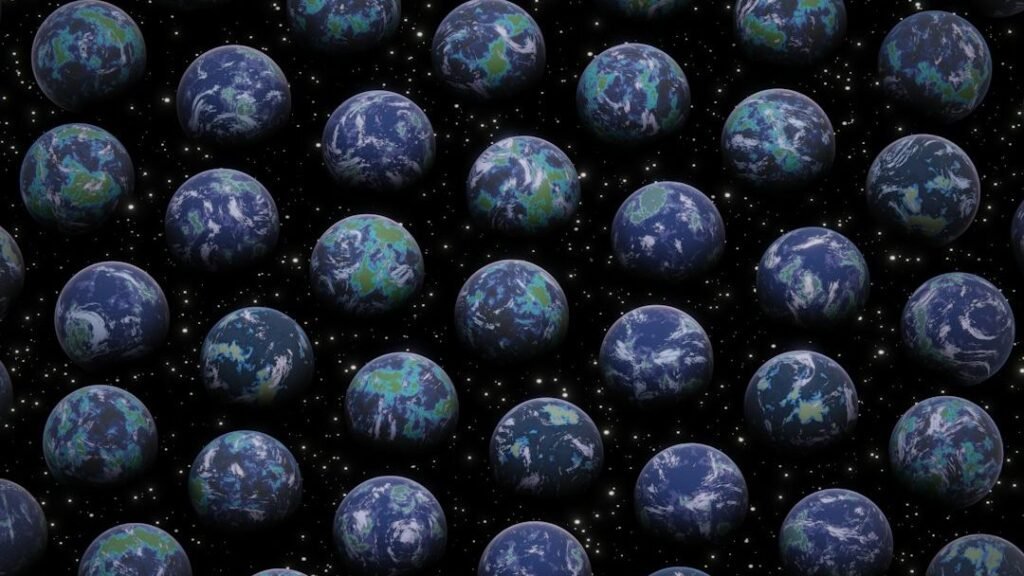
In its most familiar guise, the Many-Worlds Interpretation suggests that you live in a near-infinity of universes, all superimposed in the same physical space but mutually isolated and evolving independently. In many of these universes there exist replicas of you and me, all but indistinguishable yet leading other lives. Imagine that. A version of you who took that job offer you turned down. A version of you who never made that phone call, never moved to that city, never gave up on that dream.
The Many-Worlds Interpretation takes a wildly different approach: it asserts that every possible outcome happens, not by collapsing into one, but by splitting the universe into parallel realities where each possibility plays out. In one reality you are painting masterpieces, and in another you are designing bridges. Both versions of you exist in parallel universes. This applies to every choice you have ever made, no matter how small, and even decisions made by others that affect you. The sheer scale of that idea is breathtaking.
Cosmic Inflation: The Bubble Universe Theory
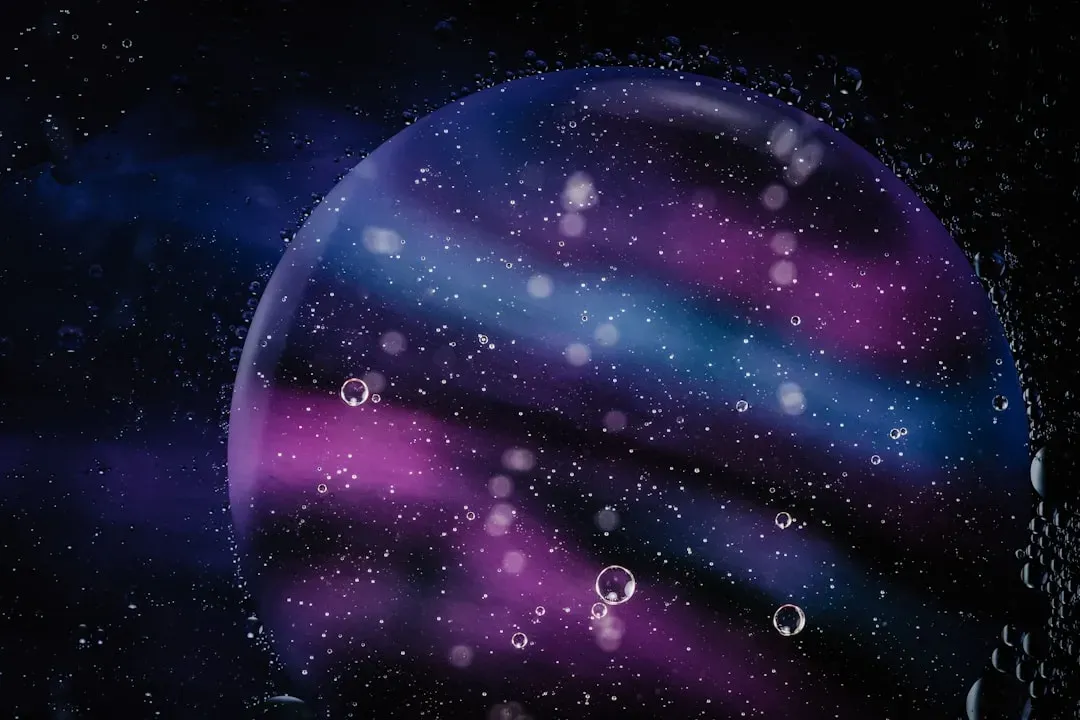
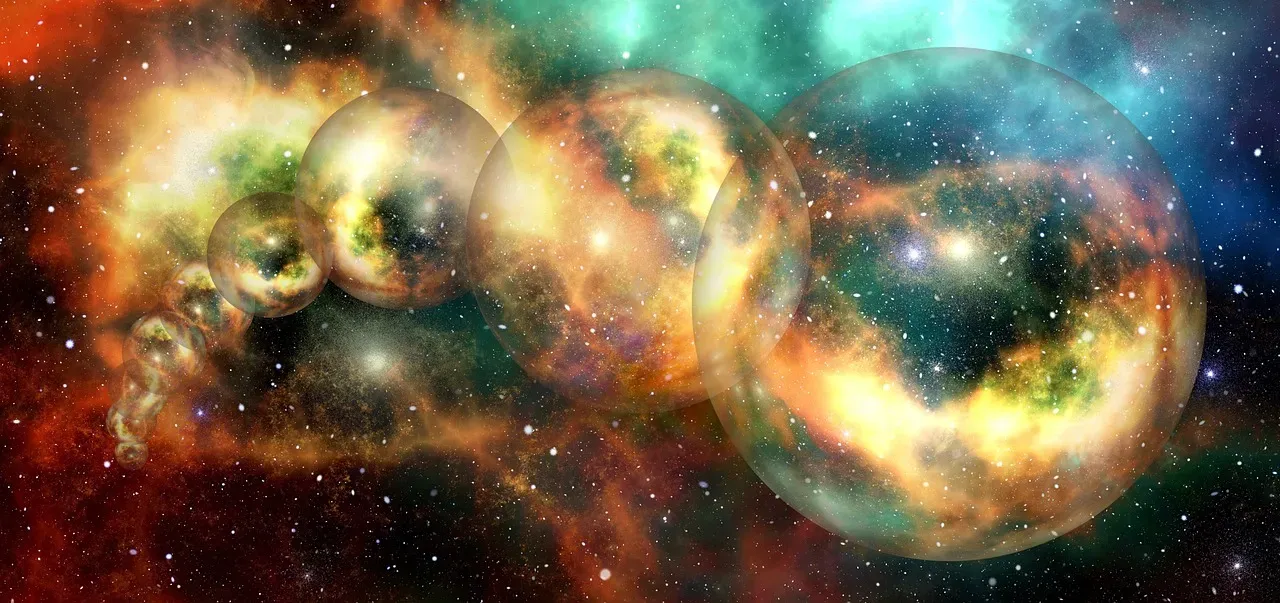
The idea of cosmic inflation, first proposed by Alan Guth in the 1980s, describes a rapid expansion of the universe following the Big Bang. Some models of inflation suggest that this expansion could lead to the formation of multiple, separate regions, so-called bubble universes, that are entirely detached from one another. Each of these bubbles may have different physical constants and structures, giving rise to a multiverse where the fundamental rules of nature can vary. So your universe might literally be a bubble, floating in an ocean of other bubbles. Strange doesn’t even begin to cover it.
These bubble universe models challenge the traditional notion of a singular beginning, instead suggesting that the universe’s birth may be just one event in an eternally inflating multiverse, a continuous process rather than a unique occurrence. As inflation continues, new bubble universes can nucleate and pinch off from this eternally expanding background. Each bubble universe would then undergo its own Big Bang and evolve independently. The energy density and physical constants within these bubbles could differ significantly, leading to a diverse range of cosmic landscapes. You could be living in one tiny bubble among an endless sea of them, each with wildly different versions of physics.
String Theory and the Brane Multiverse
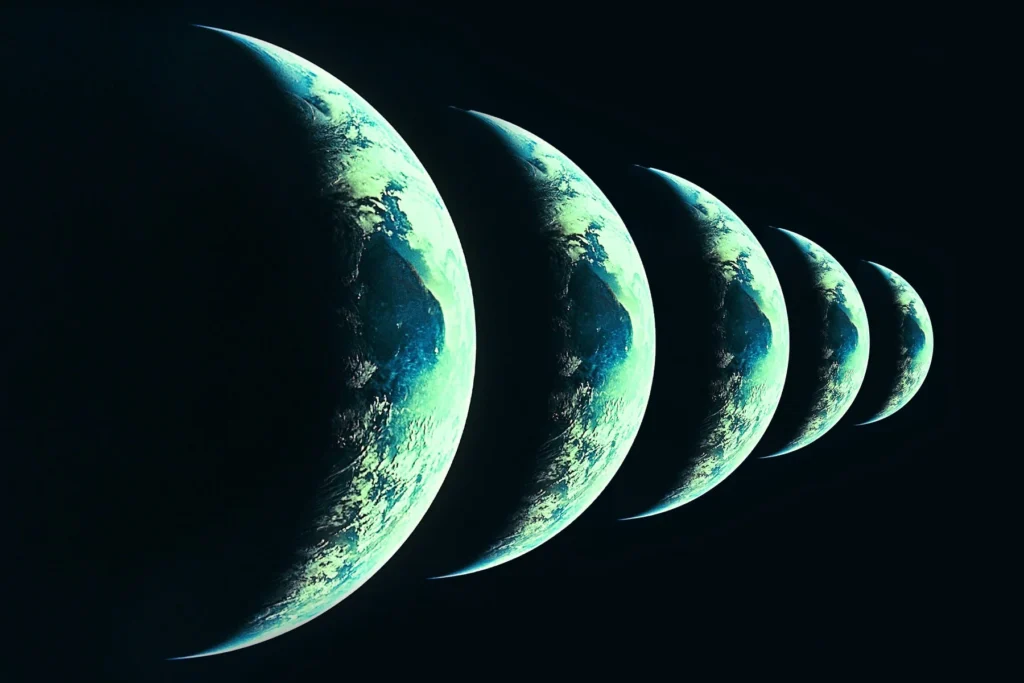
String theory also introduces the possibility of multiple universes through the concept of higher-dimensional space. According to this framework, your universe exists within a multidimensional space known as the “brane,” and other, parallel universes could exist on separate branes, coexisting but largely inaccessible to you. Think of it like sheets of paper stacked endlessly on top of one another. You live on one sheet. Another universe, with entirely different rules, might exist on the sheet just nanometers away, yet completely unreachable.
M-theory, by way of its many possible vacuum configurations in its “landscape,” may give a mathematically sound structure for multiverse cosmology. Around 10 to the power of 500 vacuum states, related to multiple compactification geometries and flux configurations, are indicated by the theory; each might represent a universe with differing physical constants and interaction properties. That number, by the way, is so astronomically vast it makes the number of atoms in our observable universe look trivially small by comparison. I know it sounds crazy, but the math does not lie.
Can We Actually Test Any of This?

Recent scientific developments suggest that observations of the cosmic microwave background radiation may hold the key to detecting evidence of collisions between your universe and other bubble universes within a larger multiverse. This theoretical framework, once relegated to the realm of speculative physics, is gaining traction as researchers explore subtle anomalies in the oldest light in the universe. That is enormous. If you could read the fingerprints of a universe collision in the very oldest light we can detect, that changes everything.
The real significance of this kind of work is as a proof of principle: it shows that the multiverse can be testable. In other words, if you are living in a bubble universe, you might actually be able to tell. Many researchers, including Hartmut Neven, founder and manager of Google’s Quantum Artificial Intelligence Lab, believe that the unprecedented speed of quantum computers is only possible by leveraging computations across parallel universes. Google’s advancements in real-time error correction made it possible for these parallel universes to “work” in your own reality. The conversation has shifted from pure theory toward the edge of something potentially measurable.
What Does a Parallel You Mean for Free Will, Identity, and Morality?
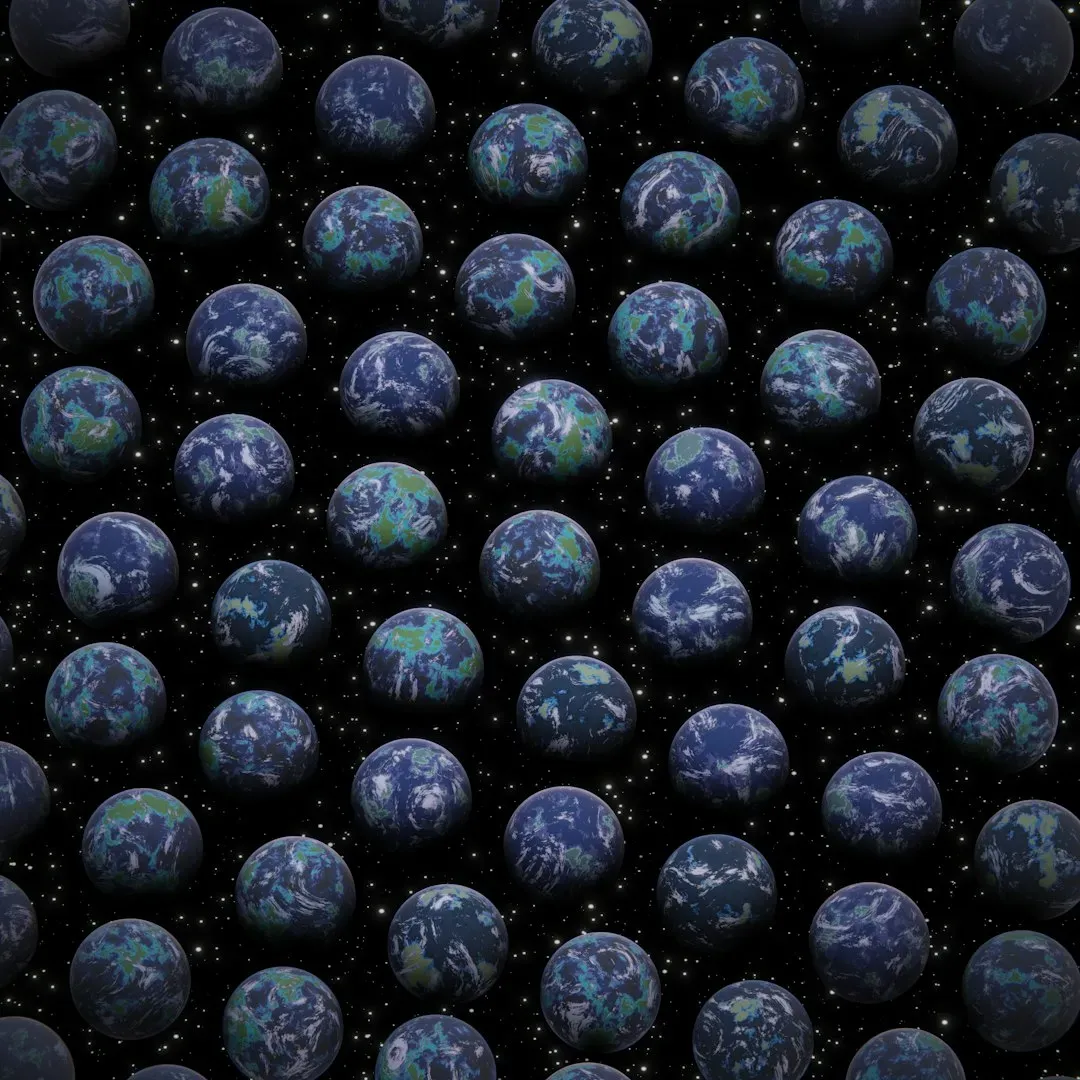
If every possible decision spawns a new universe in which an alternative path is realized, then no choice is truly consequential, as every action, no matter how momentous, is simultaneously undone elsewhere. This fundamentally challenges traditional concepts of moral responsibility, identity, and meaning. It is hard not to feel a little unsettled by that. If a parallel version of you made the opposite choice in every significant moment of your life, what exactly makes your decisions meaningful? That is a genuinely difficult question.
Debates rage over whether the existence of multiple universes undermines the concept of free will or challenges traditional notions of determinism. While some argue that the existence of multiple universes undermines the concept of free will by suggesting that every possible outcome occurs, others contend that free will exists within the framework of quantum probabilities. Philosophical perspectives challenge you to reconsider concepts of identity, reality, and causality in the context of multiple universes. The multiverse, if real, does not just change physics. It reshapes what it means to be you.
Conclusion: The Universe May Be Far Stranger Than You Ever Imagined
What we have explored here barely scratches the surface of one of the most mind-bending scientific conversations of our time. While direct evidence for parallel universes remains elusive, these theories have profound implications. If there are infinite universes each with different physical laws, then it becomes less surprising that your particular universe has just the right conditions for life. You just happen to be in one of the universes where life is possible. That alone is worth sitting with.
The theory of a parallel universe remains one of the most fascinating and controversial topics in modern science. While empirical evidence is still lacking, the theoretical foundations and implications are compelling. As technology advances and your understanding of the universe deepens, you may come closer to uncovering the mysteries of parallel universes. The universe is not just big. It may be boundless, branching, and populated with versions of you making every choice you never made.
The question that lingers is perhaps the most personal one of all: if a parallel version of you truly exists somewhere, living the life you once chose not to pursue, does that make your choices here more meaningful, or less? What do you think? Drop your thoughts in the comments.