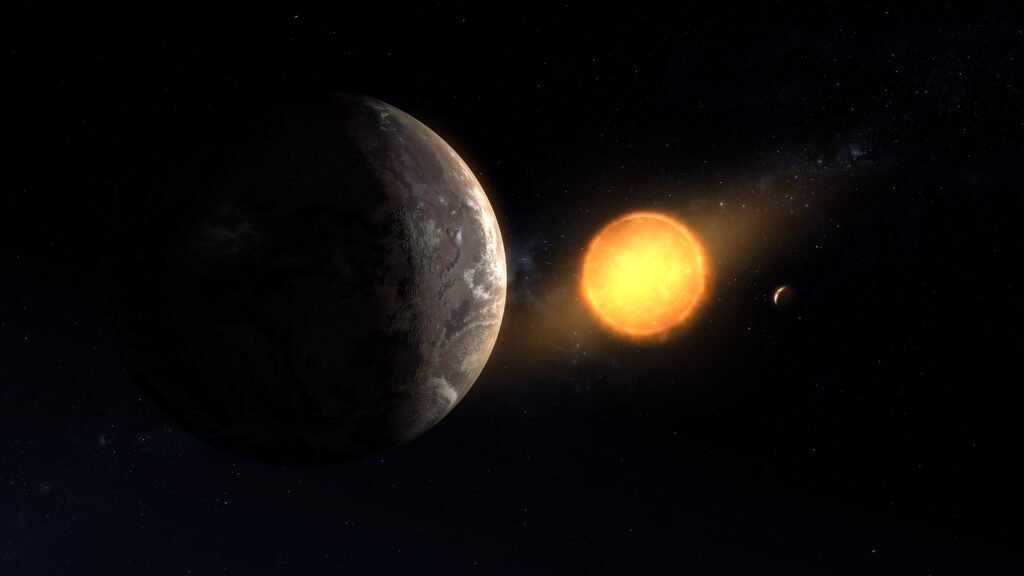

A Startling Revelation in Deep Space (Image Credits: Upload.wikimedia.org)
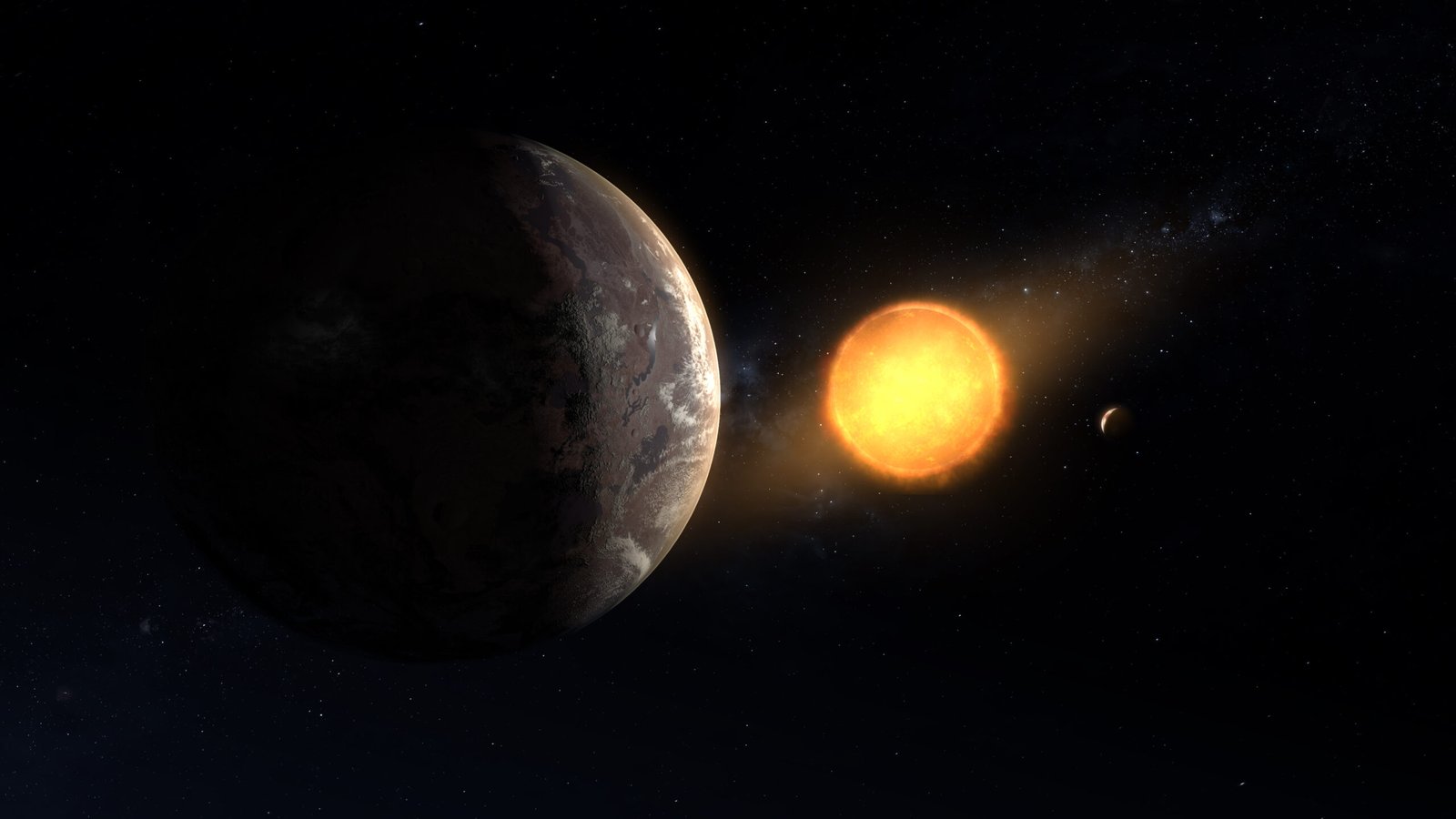
Astronomers recently detected a planetary system orbiting the dim red dwarf star LHS 1903 that defies the typical blueprint for how worlds take shape in the cosmos.
A Startling Revelation in Deep Space
Researchers initially anticipated a familiar setup around LHS 1903, much like the one in our Solar System. Close-in worlds would consist of rock and metal, while larger gas giants would dominate the outer regions. Observations confirmed inner rocky planets as predicted. However, deeper analysis exposed an anomaly: the farthest planet showed signs of being rocky rather than a swollen gas behemoth.
This unexpected find emerged from advanced telescopic data, prompting scientists to reconsider long-held assumptions. The discovery highlighted how red dwarf systems, common in the galaxy, might harbor more variety than previously thought. Teams pored over spectra and orbital data to verify the planet’s composition. The result stood firm, marking a potential shift in understanding distant architectures.
Standard Model Meets Reality
Planet formation theory posits that disks of gas and dust around young stars coalesce differently by distance. Near the star, intense heat vaporizes lighter materials, leaving rocky cores behind. Farther out, cooler temperatures allow gas to accumulate, birthing giants like Jupiter.
LHS 1903 followed this script at first glance. Its inner planets aligned with expectations for compact, terrestrial bodies. Yet the outer one’s rocky nature broke the pattern. Scientists noted this as the first clear example of such an inversion in a red dwarf setup.
Key Features of the LHS 1903 System
The host star, LHS 1903, qualifies as a cool red dwarf, smaller and fainter than the Sun. These stars often host tightly packed planetary systems due to their lower mass and slower disk evolution. Around it, multiple worlds orbit in a compact arrangement.
- Inner planets: Rocky compositions, hugging the star closely.
- Middle regions: Transitional bodies, possibly with thin atmospheres.
- Outermost planet: Surprisingly rocky, lacking the gaseous envelope typical for its position.
This configuration spans a narrow orbital range, emphasizing the system’s uniqueness. Data suggested the outer rock world’s size rivals inner siblings, further fueling debate.
Shaking Foundations of Cosmic Architecture
The finding prompts questions about formation mechanisms in metal-poor environments, common around red dwarfs. Perhaps rapid disk dissipation prevented gas buildup on the outer planet. Alternatively, inward migration could have stripped away a primordial atmosphere.
Experts now call for more surveys of similar stars. Such outliers could reveal hidden pathways in planet assembly. Future missions might target LHS 1903 for atmospheric probes, clarifying its history.
| Expected Pattern | Observed in LHS 1903 |
|---|---|
| Inner: Rocky | Inner: Rocky |
| Outer: Gas Giant | Outer: Rocky |
- The LHS 1903 system matches inner expectations but surprises with a rocky outer planet.
- Red dwarfs may foster atypical planet distributions.
- This challenges models reliant on Solar System analogies.
This discovery underscores the galaxy’s diversity, reminding researchers that no single recipe governs planetary birth. As telescopes grow sharper, more exceptions will likely surface, refining our cosmic playbook. What implications do you see for habitable worlds in such systems? Share your thoughts in the comments.