
Picture the universe as a vast, shimmering balloon, being inflated by invisible hands you cannot see, cannot touch, and cannot fully explain. Every galaxy, every star cluster, every speck of cosmic dust is riding along on this silent journey outward, carried by a force that even the world’s greatest scientific minds have yet to fully decode. It is humbling when you stop and think about it. You are living inside one of the biggest mysteries ever posed by nature itself.
Right now, in 2026, the debate about what exactly is driving our universe’s expansion has never been more electric. New instruments are rewriting what we thought we knew. Old models are cracking under fresh data. What you are about to read may genuinely change the way you look up at the night sky.
The Big Bang: Where It All Began
Before we can talk about where the universe is going, you need to understand where it came from. The Big Bang is a physical theory that describes how the universe expanded from an initial state of high density and temperature. Think of it less like an explosion and more like the sudden awakening of all space, time, matter, and energy simultaneously. Nothing existed before it, and then, without warning, everything did.
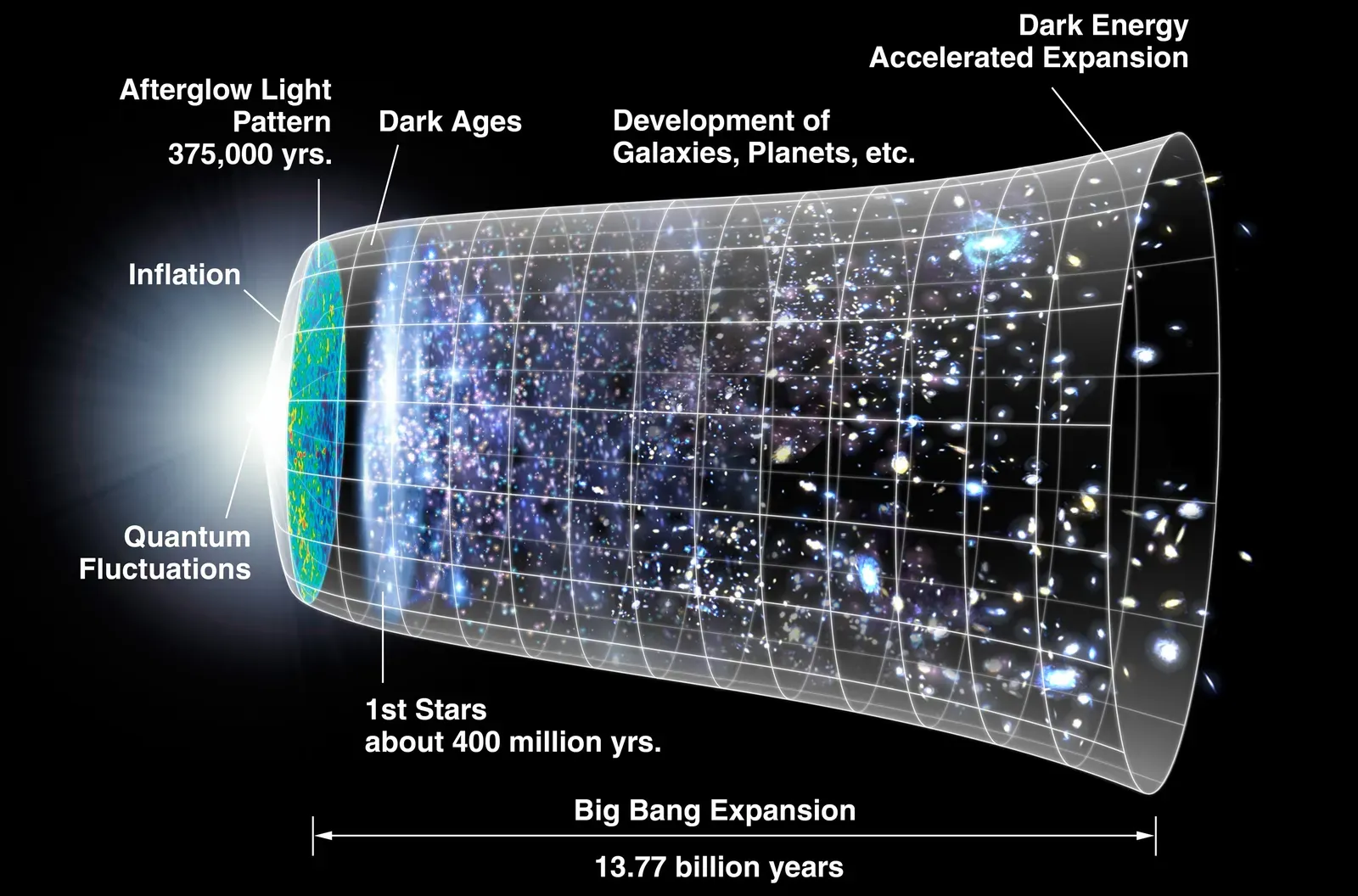
Some 13.8 billion years ago, the universe began with a rapid expansion we call the Big Bang. After this initial expansion, which lasted a fraction of a second, gravity started to slow the universe down. Here’s the thing most people misunderstand: the Big Bang was not an explosion in space. It was an explosion of space itself, and every single piece of the cosmos has been part of that journey ever since.
Cosmic expansion is, in fact, speeding up. In 1998, astronomers found that certain supernovae, bright stellar explosions, were fainter than expected. They concluded this could only happen if the supernovae had moved farther away, at a faster rate than predicted. That discovery, innocent as it may sound, turned cosmology completely upside down.
Cosmic Inflation: The Universe’s Wild First Moments
If the Big Bang was the beginning, then cosmic inflation was its dramatic opening act. Cosmic inflation is the hypothesis that the very early universe expanded exponentially fast. Distances between points doubled every 10⁻³⁷ seconds; the expansion lasted at least 10⁻³⁵ seconds, but its full duration is not certain. Honestly, those numbers are so small and so extreme that they barely register as real. Yet they shaped literally everything around you.
Cosmic Inflation is a theoretical framework that proposes a rapid expansion of the universe occurring shortly after the Big Bang. Initially introduced by physicist Alan Guth in 1980, this theory emerged to address several shortcomings of the Big Bang model, such as the flatness, horizon, and magnetic monopole problems. Unlike the steady expansion suggested by the Big Bang, Cosmic Inflation posits that the universe underwent exponential growth, allowing it to achieve a nearly flat geometry and maintain thermal equilibrium across vast distances. Without this early burst of growth, the cosmos as you see it today simply would not exist in its current form.
Dark Energy: The Universe’s Invisible Engine
Right now, dark energy is just the name that astronomers gave to the mysterious “something” that is causing the universe to expand at an accelerated rate. Let that sink in for a moment. Humanity’s smartest people gave it a name, but they are very upfront about not actually knowing what it is. It is essentially a label for a cosmic blank.
In 1998, two independent teams of cosmologists used distant supernovae to discover that the universe’s expansion is accelerating rather than slowing. To explain these observations, they proposed a new kind of energy that is responsible for driving the universe’s accelerated expansion: dark energy. Astrophysicists now believe dark energy makes up about 70% of the mass-energy density of the universe. Yet, we still know very little about it. You are essentially living in a universe where the dominant ingredient is a mystery. That is not a metaphor. That is literally the current state of science.
Is Dark Energy Changing? The Shocking New Evidence
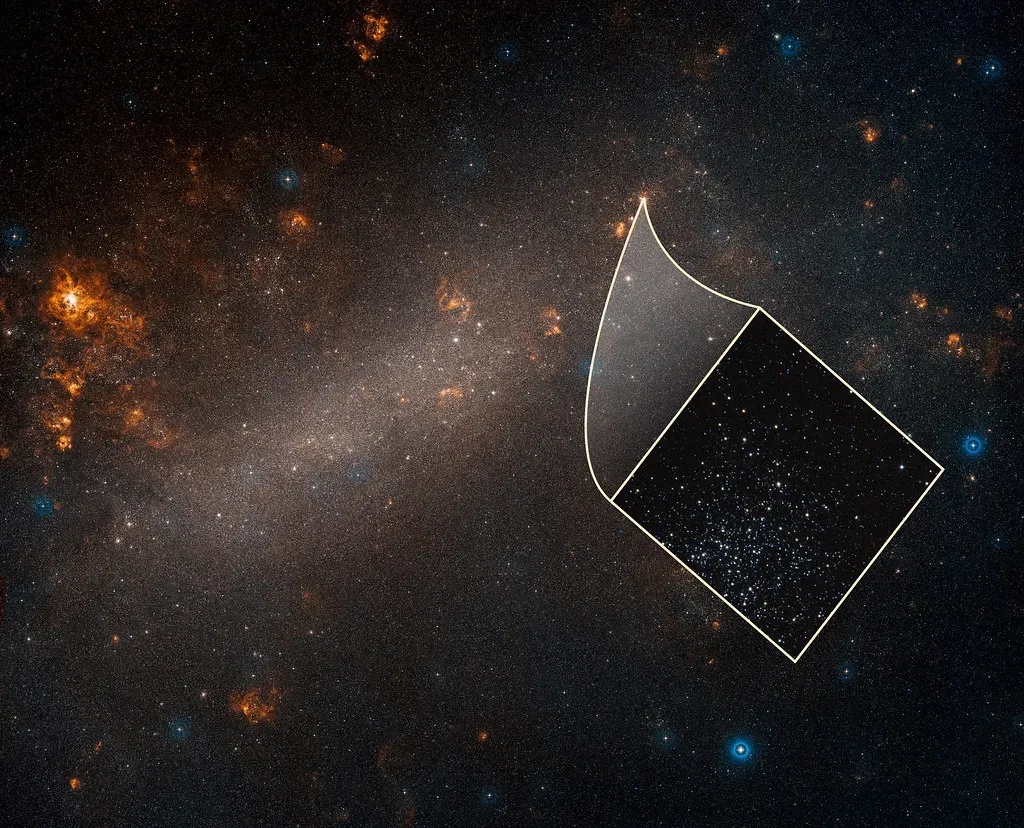
A groundbreaking simulation study has revealed that dark energy, the mysterious force driving the Universe’s accelerated expansion, may not be constant after all. This is a genuinely stunning development. For decades, cosmologists assumed dark energy was fixed and steady, like a background hum. Now, it appears the hum may actually be changing tune.
The corrected supernova data and the BAO+CMB-only results both indicate that dark energy weakens and evolves significantly with time. Researchers began to notice when they combined these observations with other measurements of light across the universe, such as exploding stars, the gravity-warped light of distant galaxies, and the light leftover from the dawn of the universe, called the cosmic microwave background, the DESI data shows that dark energy’s impact could be weakening over time. If that trend continues, the cosmic dance you are part of today could slow down, stop, and even reverse.
The Hubble Tension: Science’s Most Embarrassing Disagreement
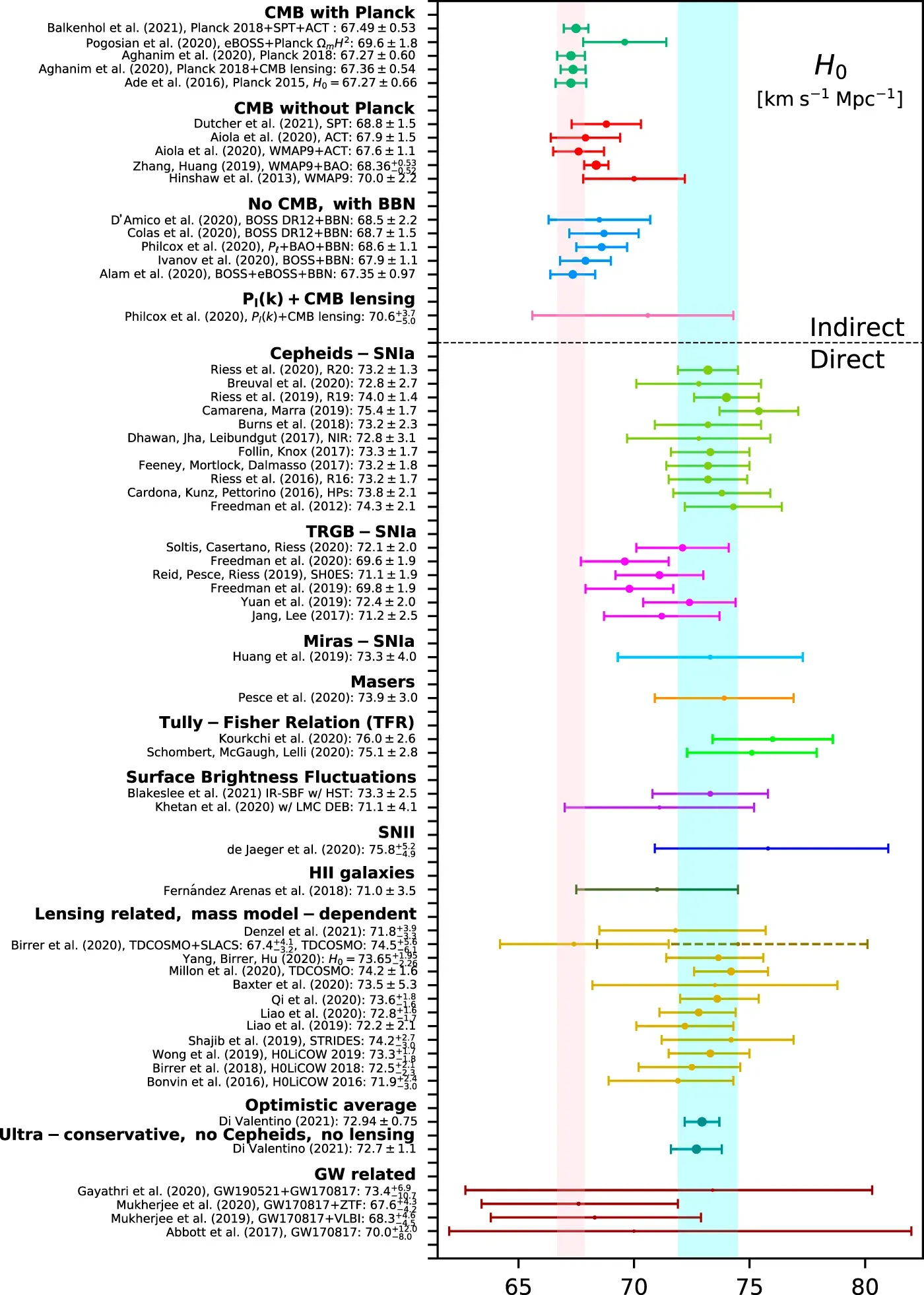
Let’s be real: this one is genuinely awkward for science, and in the best possible way. The value of 73 km/s/Mpc for the Hubble constant agrees with observations of relatively nearby objects. However, there are other ways to infer the cosmic expansion rate that look much farther back in time. One key method uses the radiation that fills the universe and traces back to the Big Bang, known as the cosmic microwave background (CMB). When scientists analyze the CMB to estimate the Hubble constant, they obtain a lower value of 67 km/s/Mpc. This mismatch between 73 km/s/Mpc and 67 km/s/Mpc is called the Hubble tension.
The universe’s expansion rate, known as the Hubble constant, is measured to be faster than predictions, highlighting a growing discrepancy called the Hubble tension. Two methods, observations of distant galaxies and measurements within the local universe, yield conflicting Hubble constant values, challenging existing cosmological models. The finding strengthens what scientists call the “Hubble tension,” a cosmic disagreement that may point to new physics governing the universe. New physics. That phrase alone should send a chill of excitement down your spine.
New Telescopes and the Quest for Answers
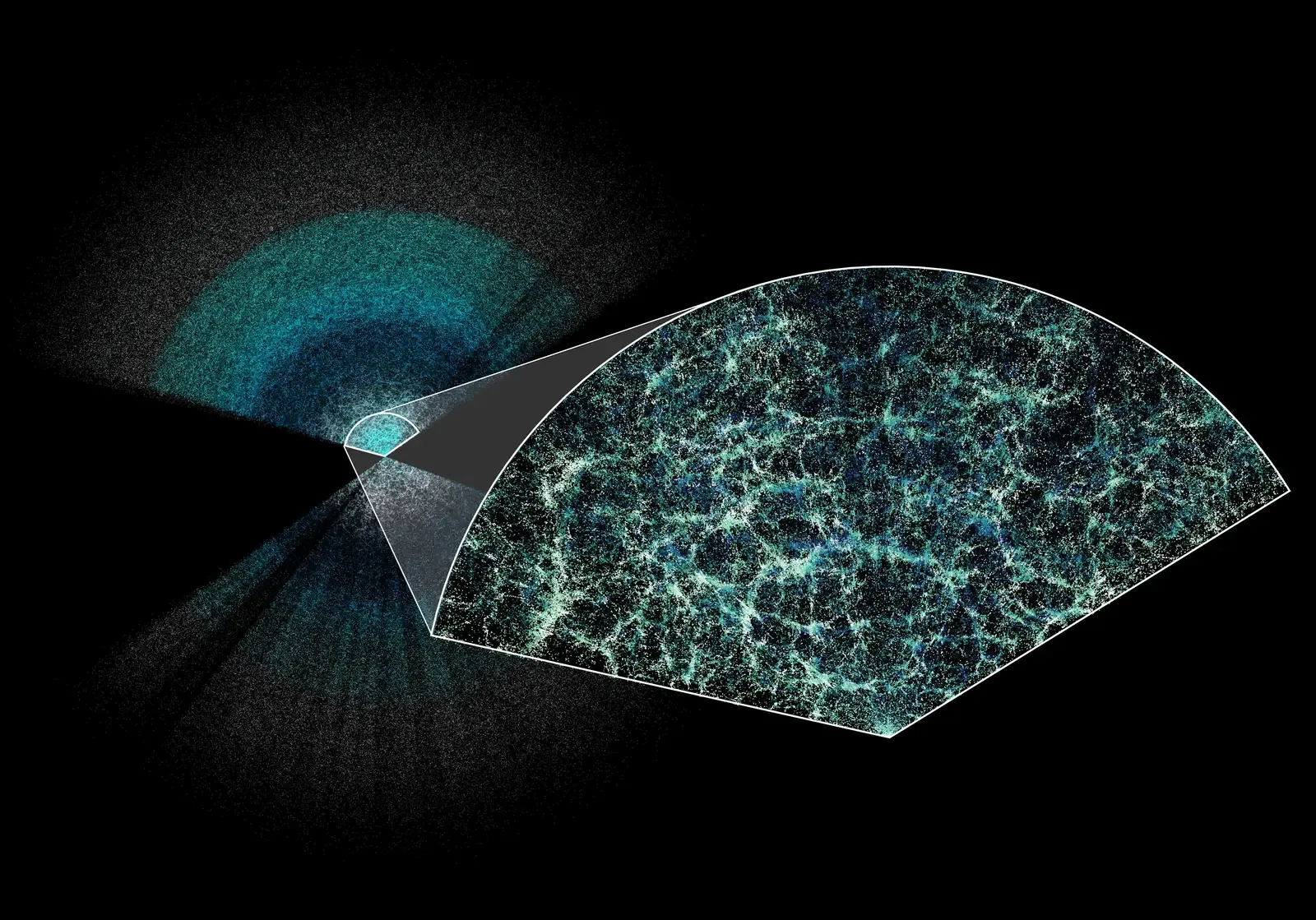
The Dark Energy Spectroscopic Instrument’s 5,000 fiber-optic “eyes” and extensive surveying capabilities are enabling scientists to build one of the largest 3D maps of the universe and track how dark energy has influenced and shaped the cosmos over the past 11 billion years. Imagine having 5,000 eyes trained on the sky at once. That is exactly what humanity has built in the Arizona desert, and it is already producing results that are shaking the foundations of cosmology.
The new Vera C. Rubin Observatory, which started operating this year, is set to help settle the debate with the early 2026 launch of the Legacy Survey of Space and Time, an ultrawide and ultra-high-definition time-lapse record of the universe made by scanning the entire sky every few nights over 10 years to capture a compilation of asteroids and comets, exploding stars, and distant galaxies as they change. Think of it as the ultimate cosmic time-lapse documentary, decades in the making and only just beginning to roll its cameras. The data it collects over the coming years may finally answer some of the most profound questions in human history.
The Fate of the Universe: Big Crunch, Big Rip, or Something Else?
This is where things get genuinely dramatic. The Big Crunch idea suggests the universe will eventually cave in on itself. The Big Freeze says it will expand until everything cools to nearly absolute zero. The Big Rip says the cosmos will violently tear itself apart. Three completely different endings, and right now science cannot definitively tell you which one is correct. It is hard to say for sure, but the answer may depend entirely on whether dark energy is truly weakening.
A Cornell physicist calculates that the cosmos is heading toward a dramatic reversal: after reaching its maximum size in about 11 billion years, it could begin collapsing, ultimately ending in a “Big Crunch” roughly 20 billion years from now. A team of South Korean scientists notes in a study that the universe will likely end in the Big Crunch. This is because dark energy is becoming weaker, and this will hand over power to gravity, which will pull everything together. An ending that was considered completely off the table just a few years ago is now firmly back on it. The universe, it turns out, may have a far more dramatic final act than anyone imagined.
Conclusion: A Mystery Worth Chasing
You are living at one of the most extraordinary moments in the history of cosmological science. The very framework that has guided astronomy for decades is under pressure from multiple directions: dark energy may be changing, expansion may be slowing, and our best models simply do not agree with each other. Rather than being cause for panic, that is actually a reason for tremendous excitement.
Every time science hits a contradiction this profound, it means something genuinely new is waiting to be discovered. The universe’s expansion is not just a cosmic fact. It is an ongoing story, one that new observatories, sharper instruments, and bolder thinking are beginning to decode for us right now, in real time. As one leading scientist put it: “This is significant in that cosmology as we know it may be broken.” Broken models lead to better ones. That is how science works. That is how understanding grows.
The cosmos has been dancing for 13.8 billion years, driven by forces it has never bothered to explain. Now, for the first time, you have front-row seats to watching humanity figure out the steps. What do you think the universe’s final move will be? Tell us in the comments.