
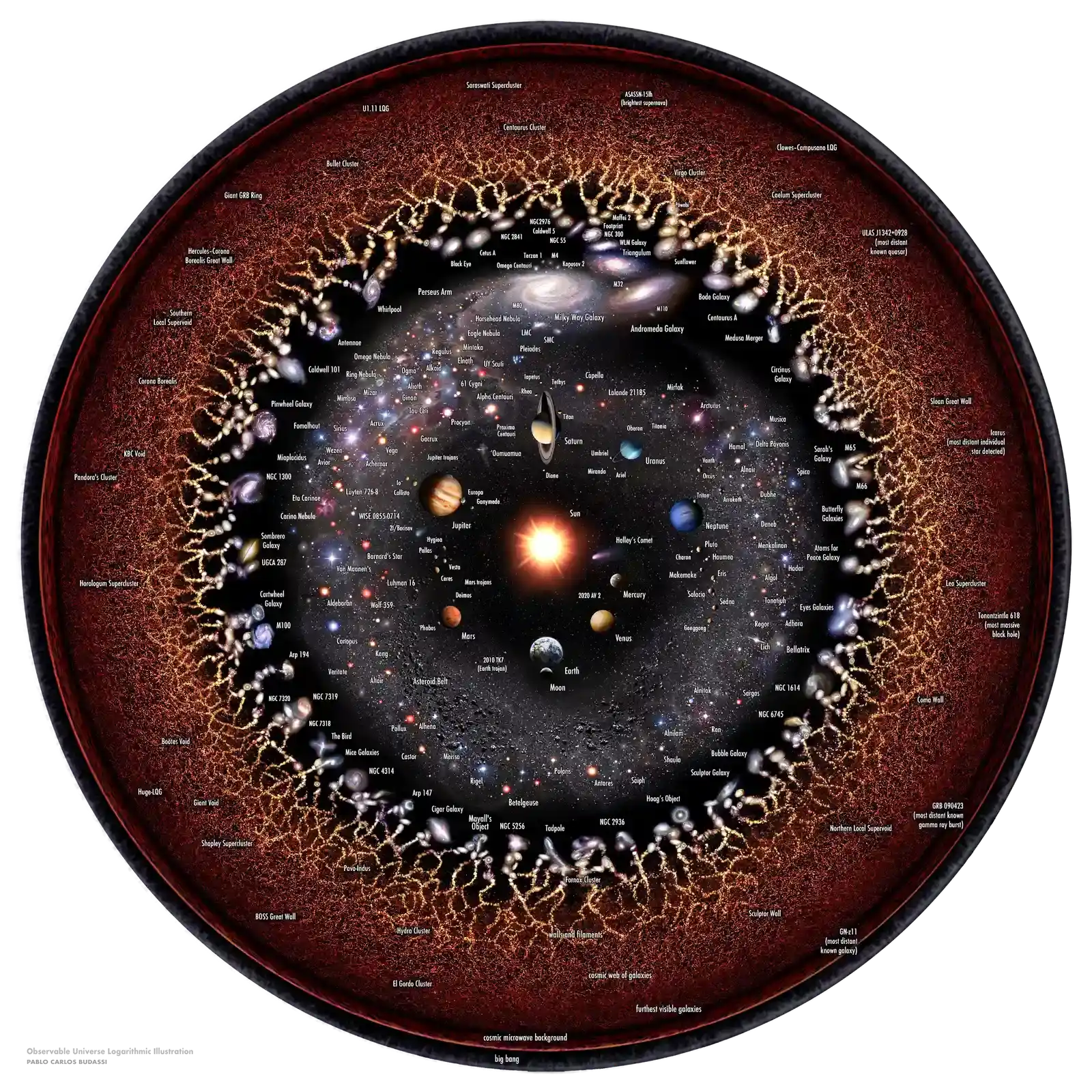
On the largest scales we can map, the universe does not look like a smooth ocean of stars but like a vast, ghostly spiderweb stretching across billions of light‑years. Astronomers now talk seriously about a “cosmic web” of invisible matter and gas that threads galaxies together into filaments, sheets, and nodes, leaving enormous dark voids in between. This is not a poetic metaphor tacked onto old ideas; it is a hard-won picture built from decades of simulations, telescope surveys, and clever tricks for seeing the unseen. In this article, we’ll follow how scientists uncovered this web, what it is physically made of, how it shapes the lives of galaxies, and why it is changing the way we think about our place in the cosmos. Along the way, the universe shrinks in one sense – because it feels more connected than ever – and grows much stranger in another.
The Shocking Realization: Galaxies Live on Cosmic Filaments, Not in Isolation
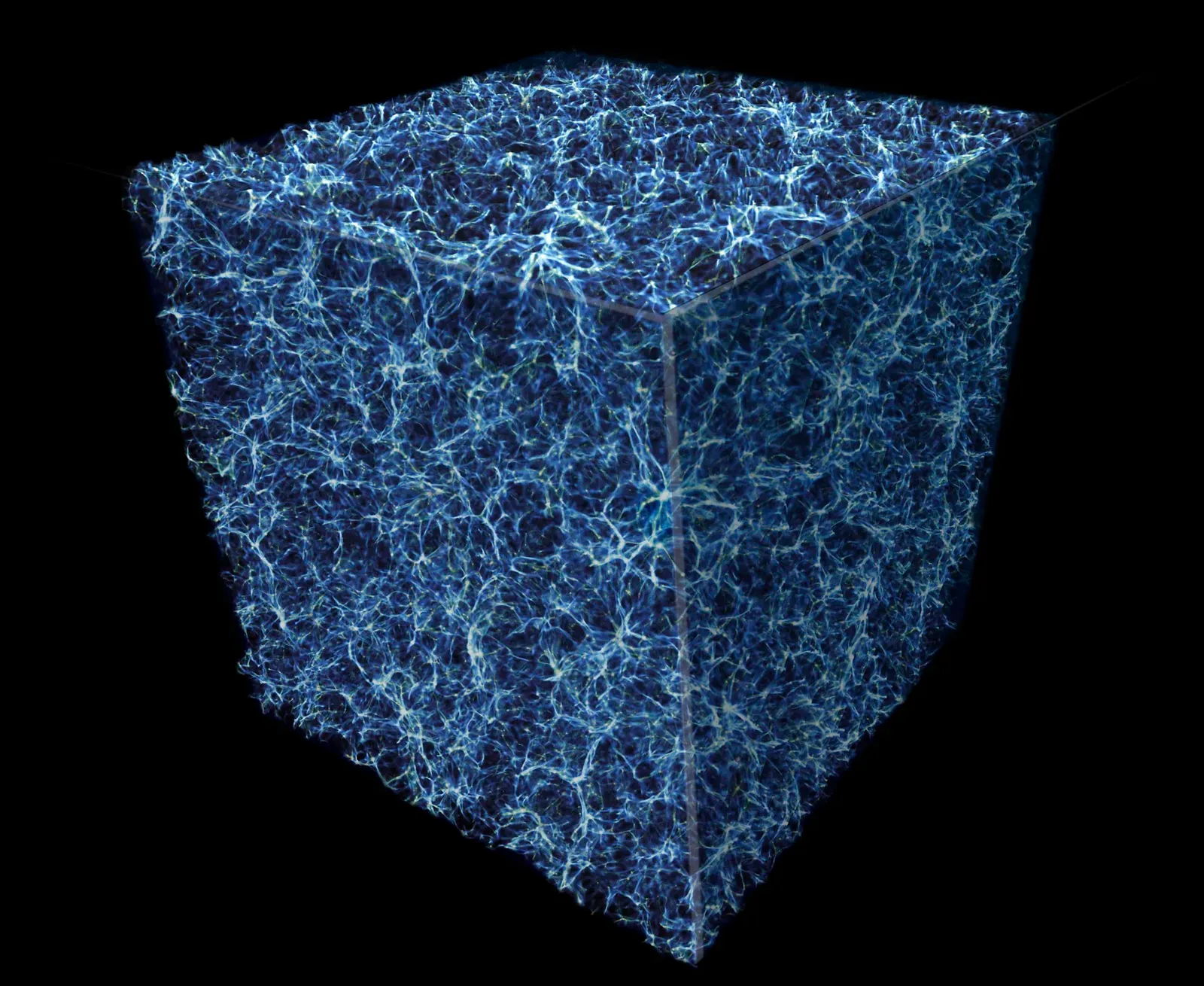
It is easy to imagine galaxies as lonely islands of stars drifting through empty space, but that picture has been quietly dying for decades. Large redshift surveys that measure galaxy distances, like the Sloan Digital Sky Survey and others before it, revealed that galaxies tend to line up in chains and walls, wrapped around huge bubble‑like regions where almost nothing shines. When astronomers plotted these positions in three dimensions, the result looked unnervingly biological – more like a neural network or tangle of veins than a random starfield. Those maps showed galaxy superclusters stitched together by thin bridges, while vast voids spanning hundreds of millions of light‑years yawned between them.
This surprise was not just an aesthetic twist; it forced theorists to confront a universe where structure is fundamentally interconnected at scales our intuition never evolved to grasp. Instead of individual galaxies being the main story, they became beads on filaments of a much grander scaffold. In that view, space is not simply “where galaxies happen to be,” but an active environment whose large‑scale architecture guides where matter can collect in the first place. The cosmic web, once a speculative output of early simulations, suddenly became the organizing principle behind what we actually observe.
What the Cosmic Web Is Really Made Of: Dark Matter, Gas, and Ghostly Light
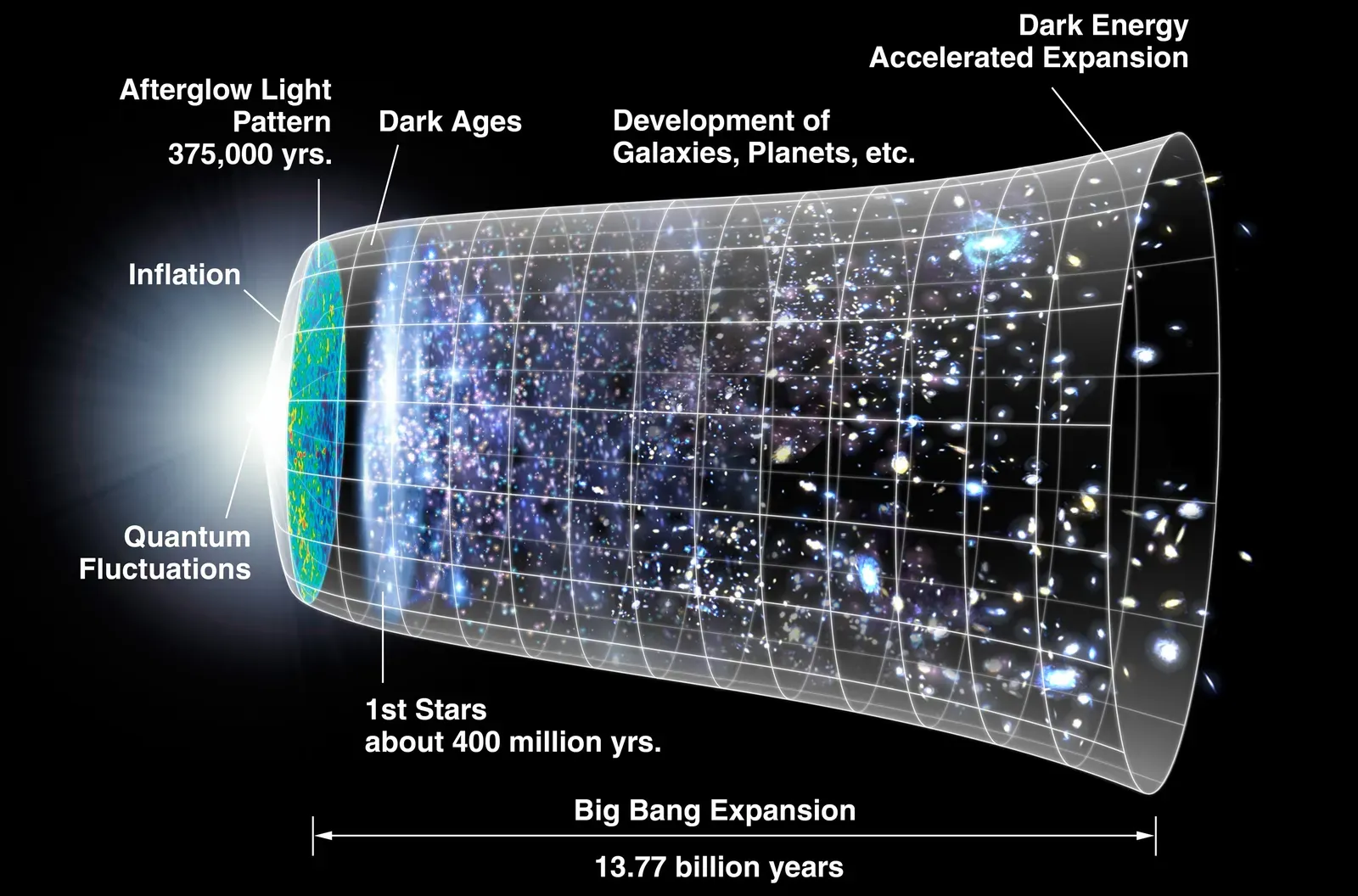
At the heart of the cosmic web is something we cannot see directly: dark matter. According to current cosmology, this non‑luminous matter outweighs the normal atoms in stars, gas, and planets by roughly a factor of five, and its gravity seeds the entire large‑scale pattern. In the early universe, tiny fluctuations in density grew as dark matter clumped, pulling in gas and setting up the basic filamentary skeleton we infer today. Galaxies formed where these filaments intersected – at nodes where the gravitational wells are deepest and matter piles up most efficiently. Without dark matter, the web as we know it simply does not emerge in simulations or in the data.
Threaded along and between these dark structures lies a huge reservoir of normal matter in the form of thin, hot gas. Much of this gas is incredibly diffuse, far below the density of any cloud in our own galaxy, but it adds up across immense distances. Astronomers call part of this component the warm–hot intergalactic medium, a kind of ghostly plasma that likely contains a large fraction of all the ordinary matter in the universe. Only recently have instruments in X‑ray and ultraviolet wavelengths, combined with gravitational lensing techniques, begun to map hints of this hidden component. In some rare cases, telescopes have even caught strands of faint light from stars stripped out of galaxies, stretching along filaments like fireflies marking the path of invisible threads.
Simulations That Predicted the Web Before We Could See It
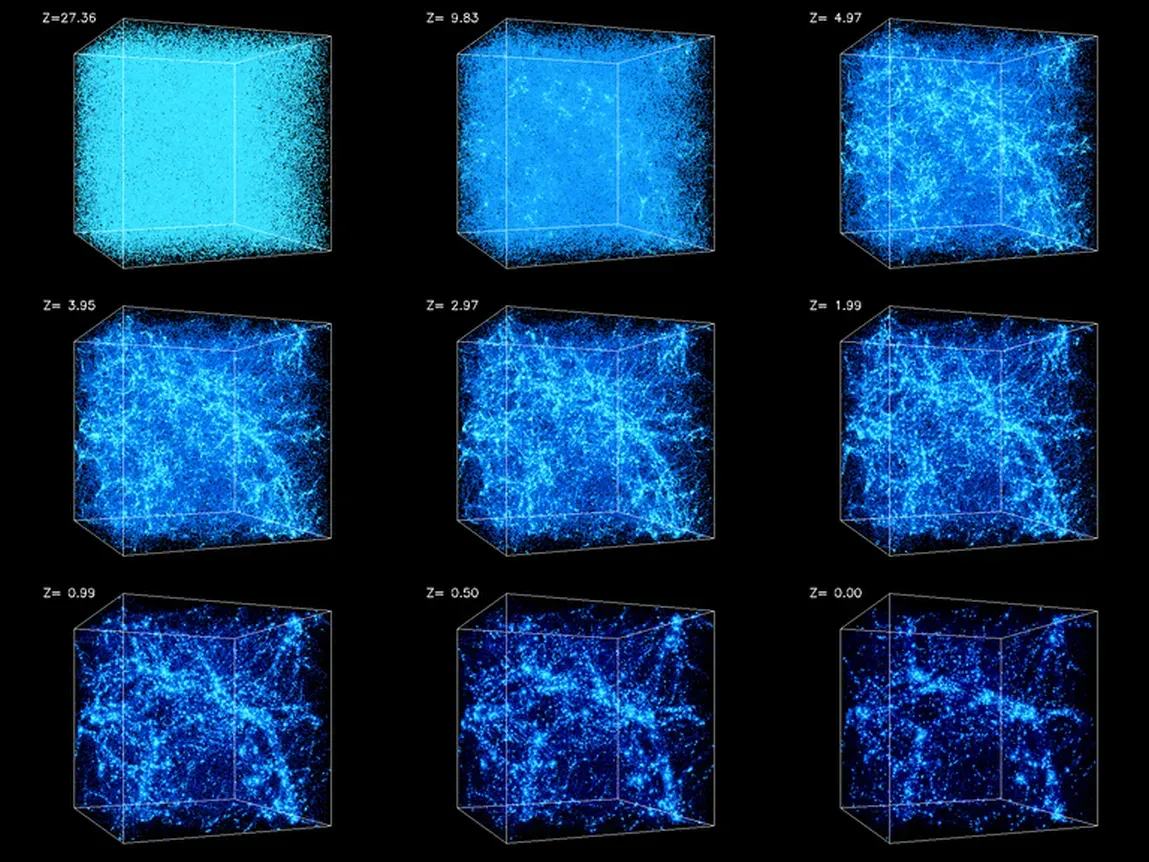
One of the most striking things about the cosmic web is that computer simulations foretold its existence before observations fully confirmed it. As far back as the late twentieth century, cosmologists began running numerical models that followed billions of particles of dark matter evolving under gravity in an expanding universe. Even when they started from only tiny random ripples, those simulations repeatedly turned into a web of filaments, sheets, and clusters. When gas physics and star formation were later added, galaxies naturally formed along these same dark matter highways. The resemblance to later galaxy maps was not just qualitative; it became quantitatively convincing.
This convergence gave researchers confidence that they were not just fitting clever stories to messy data. Instead, the cosmic web looked like a robust outcome of basic ingredients: gravity, expansion, and the mix of matter and energy inferred from the cosmic microwave background. The success also raised the bar, because any alternative cosmological theory must now reproduce the same filamentary structure to be viable. Today’s most advanced simulations track not only dark matter but also gas cooling, black hole feedback, magnetic fields, and cosmic rays, yet the underlying web pattern persists. The result is a rare example in science where theory and observation, though built with very different tools, ended up telling essentially the same grand‑scale story.
How the Web Shapes Galaxies: Cosmic Highways, Fuel Lines, and Starvation Zones
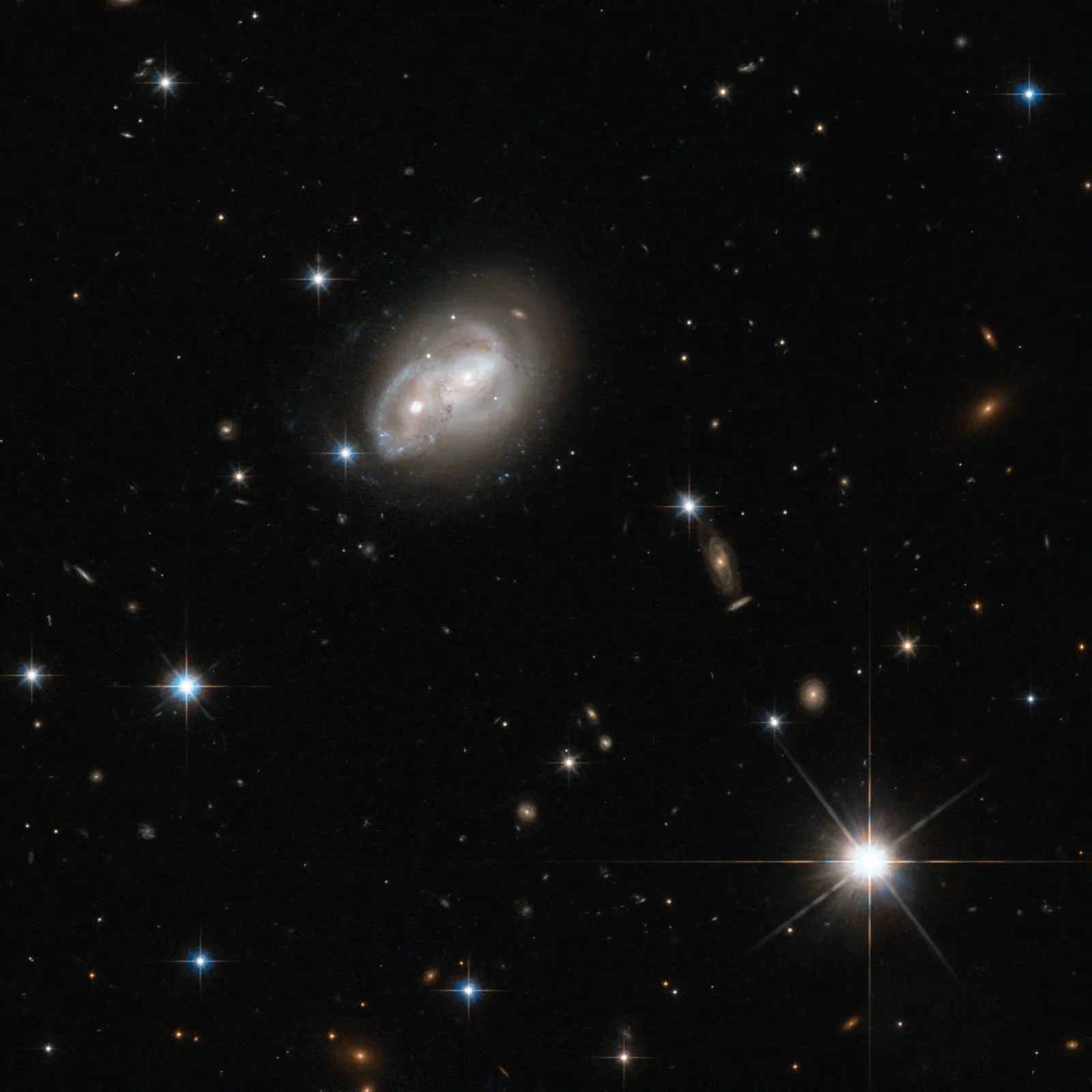
Seeing the cosmic web as a background pattern is one thing; realizing that it actively controls galaxy evolution is another. Filaments act like cosmic highways, funneling gas and smaller galaxies into larger hubs where clusters form and collisions are common. Along these routes, galaxies can be fed with a steady supply of relatively cold gas, which acts as the raw fuel for new stars. Observations and simulations suggest that galaxies embedded deep in filaments tend to grow faster and may form stars for longer than their counterparts stranded in harsh environments. The orientation of galaxies – the way their disks and spins line up – may also carry a memory of the filament directions that fed them.
On the flip side, regions near dense nodes, where filaments intersect, can be so crowded and turbulent that galaxies are effectively strangled. Hot gas and violent interactions there can strip away or heat up the remaining fuel, shutting down future star formation and leaving behind red, quiescent systems. Outside the filaments, in the great cosmic voids, galaxies are relatively isolated and tend to evolve more gently but also more slowly. In this sense, the web acts like a combination of freeway system and climate map, determining which galaxies thrive, which wither, and which drift in quiet backwaters of space. Local properties – like a galaxy’s mass – matter, but they play out against the larger script written by the cosmic web’s geometry.
Seeing the Invisible: Clever Tricks for Mapping the Web Between Galaxies
Because dark matter does not emit or absorb light, and the intergalactic gas is so tenuous, mapping the cosmic web demanded some of the most indirect detective work in modern astronomy. One technique uses the light from extremely distant quasars – brilliant, active black holes – as backlights. As their light passes through intervening hydrogen gas, it picks up a forest of absorption lines whose pattern reveals where filaments of gas lie along the line of sight. By probing many quasars in different directions, astronomers reconstruct a three‑dimensional picture of gas woven across space. This method has turned the random‑looking spectra of quasars into tomographic scans of cosmic structure.
Another approach relies on gravitational lensing, where massive structures slightly distort the images of even more distant galaxies behind them. By carefully measuring these tiny distortions over large areas of the sky, scientists infer where matter – both dark and luminous – is concentrated. Recent surveys have used lensing to detect hints of filaments bridging clusters and groups, matching the shapes predicted by simulations. On smaller scales, deep imaging with sensitive instruments has exposed faint bridges of stars and gas connecting neighboring galaxies, like strands of spider silk caught in a flashlight beam. Each of these methods sees only a slice of the full picture, but together they close the gap between the simulated web and the one we inhabit.
From Islands to Networks: How the Cosmic Web Rewrites Our Mental Map of the Universe
The idea of the cosmic web marks a profound psychological shift from older ways of picturing the universe. Not long ago, textbooks emphasized galaxies as independent “island universes,” echoing the language used when they were first discovered in the early twentieth century. That image already felt expansive, but it also implied separation, as if each galaxy lived out its life largely on its own. The web changes that story, replacing loneliness with connectivity and emphasizing that galaxies are participants in a shared large‑scale flow of matter and energy. What looks like a sparse sprinkling of lights on the night sky is actually the visible frosting on a deep, tangled scaffold.
In practice, this means that cosmic questions we used to ask about single galaxies or even local clusters now have to be placed in a network context. Why does our Milky Way have the mass and star‑formation history it does? Part of the answer lies in its location within the web and the specific filaments and flows that have fed it over billions of years. Similarly, debates about dark matter and dark energy are no longer abstract discussions of numbers in equations; they are tied directly to whether the predicted web matches the real one. Culturally, there is something oddly comforting in learning that even on the grandest scales, nothing truly stands alone, and that our galaxy is one bright knot on a universe‑sized web of relations.
The Deeper Significance: A Testbed for Fundamental Physics and Cosmic History
Beyond its visual drama, the cosmic web has become one of the most powerful laboratories for testing fundamental physics. The size, thickness, and connectivity of filaments depend sensitively on ingredients like the amount of dark matter, the properties of dark energy, and even the possible mass of neutrinos. By measuring how clustered galaxies are on different scales and how filaments grow over cosmic time, astronomers can check whether the standard cosmological model still holds up. Any mismatch between predicted and observed web patterns could hint at new physics, such as alternative gravity theories or exotic dark components. In that sense, each new map of large‑scale structure is a stress test of our deepest assumptions.
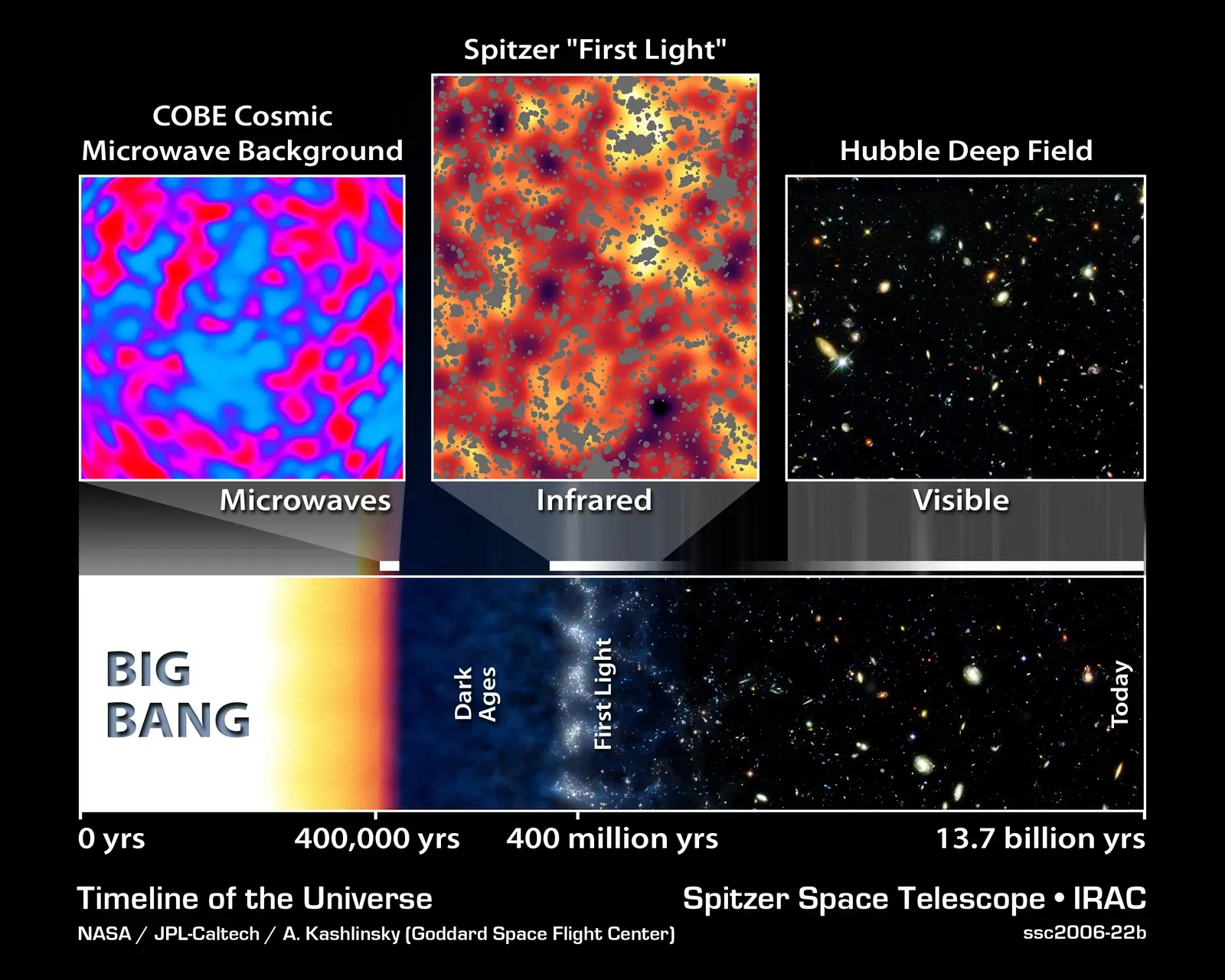
The web also encodes a kind of fossil record of how the universe transitioned from a nearly uniform hot plasma after the Big Bang to the richly structured cosmos we see today. Features like the sizes of voids, the shapes of superclusters, and the way gas flows along filaments preserve information about that long evolution. By reading this record, scientists reconstruct when different regions lit up with the first generations of stars and black holes, and how feedback from those objects heated and stirred the intergalactic medium. The cosmic web is not just a snapshot; it is the outcome of everything that has happened on all scales for more than thirteen billion years, compressed into one grand pattern.
Unanswered Questions Along the Cosmic Threads
Even as the cosmic web framework has solidified, some of its most intriguing details remain unsettled. One pressing challenge is to fully account for the universe’s ordinary matter, much of which appears to reside in faint, filamentary gas that is still difficult to observe directly. Pinning down exactly how this gas cycles in and out of galaxies – through inflows, outflows, and shocks – will sharpen our understanding of how stars and black holes regulate their surroundings. Another open question is how precisely galaxy properties correlate with their web environment beyond simple density: for example, whether the orientation of galaxy spins or the shapes of dark matter halos systematically track filament directions.
New instruments and surveys planned or underway are designed specifically with the web in mind, from next‑generation X‑ray missions to massive mapping projects that cover huge slices of the sky. These efforts aim to weave together better observations of gas, galaxies, and gravitational lensing into a more complete portrait. At the same time, theorists are exploring whether subtle deviations in web structure could betray physics beyond the standard picture, such as ultra‑light dark matter or new interactions. The cosmic web is no longer just a backdrop; it is the playing field where many of the most ambitious questions in cosmology will either stand or fall in the coming years.
How Curious Humans Can Explore a Universe of Connections
For most of us, the cosmic web exists far beyond the reach of any telescope we will ever personally touch, yet there are surprisingly direct ways to engage with it. Public data releases from major surveys let anyone with a laptop fly through three‑dimensional maps of galaxies, watching filaments and voids emerge as you rotate the view. Planetariums and science museums often build immersive shows based on real simulation data, turning the web into something you can almost feel wrapped around you in the dark. Even high‑quality documentaries and visualizations online, when chosen carefully, can replace vague mental images with a clear sense of how structured the universe really is.
If you want to go a step further, reading lay‑friendly books and articles on cosmology, joining local astronomy clubs, or attending public lectures can give the web a human context: the stories of the teams, instruments, and decades of work behind those beautiful maps. Supporting science education, libraries, and research institutions – through attention, advocacy, or donations if you are able – helps sustain the long projects that reveal patterns this large. And the next time you look up at the night sky, it is worth pausing to imagine not just scattered stars, but filaments of invisible matter connecting your gaze to galaxies you will never see. In a universe woven together at such vast scales, curiosity itself becomes a way of tugging gently on those distant threads.
Suhail Ahmed is a passionate digital professional and nature enthusiast with over 8 years of experience in content strategy, SEO, web development, and digital operations. Alongside his freelance journey, Suhail actively contributes to nature and wildlife platforms like Discover Wildlife, where he channels his curiosity for the planet into engaging, educational storytelling.
With a strong background in managing digital ecosystems — from ecommerce stores and WordPress websites to social media and automation — Suhail merges technical precision with creative insight. His content reflects a rare balance: SEO-friendly yet deeply human, data-informed yet emotionally resonant.
Driven by a love for discovery and storytelling, Suhail believes in using digital platforms to amplify causes that matter — especially those protecting Earth’s biodiversity and inspiring sustainable living. Whether he’s managing online projects or crafting wildlife content, his goal remains the same: to inform, inspire, and leave a positive digital footprint.