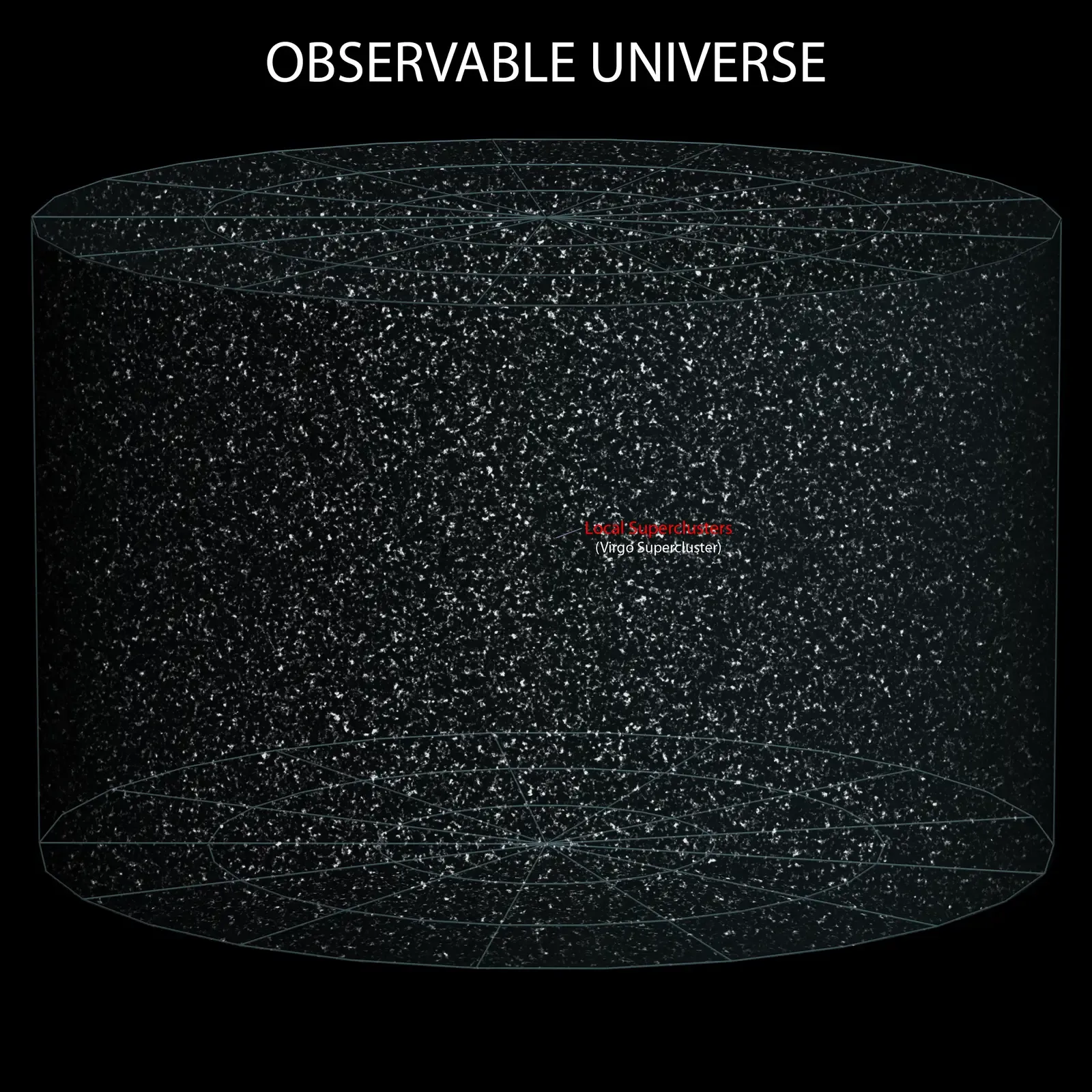
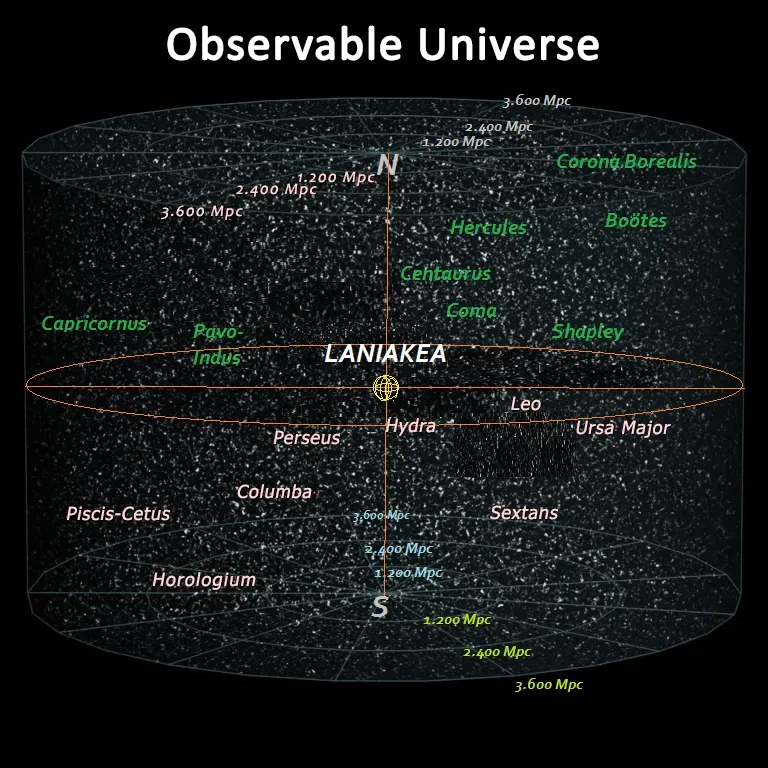
At first glance, the night sky looks like a random scatter of stars and galaxies, a kind of celestial static stretching in all directions. But over the past few decades, astronomers have uncovered a far stranger and more organized reality: on the largest scales, the universe resembles a vast three‑dimensional web. Thin filaments of galaxies span hundreds of millions of light‑years, converging in dense knots while leaving enormous dark voids in between. This shift from chaos to structure has transformed cosmology, forcing scientists to rethink how matter, gravity, and even dark energy sculpt the cosmos. The emerging picture is not just visually striking; it is also a powerful test of our deepest physical theories about how everything began and where it may be heading.
The Hidden Clues in a Seemingly Random Sky
For much of human history, the universe beyond our own galaxy was invisible, both literally and conceptually. Through early telescopes, even the few fuzzy patches we now know as galaxies looked like small, isolated smudges against a largely empty backdrop. It was tempting to imagine that, once you zoomed out far enough, matter would smear out evenly in all directions, like a thin fog. The idea of a cosmic web, with its sprawling filaments and yawning voids, would have sounded like speculative fiction rather than sober astrophysics.
The clues that this picture was wrong arrived quietly, embedded in the redshifts and positions of distant galaxies. As surveys charted more and more of the sky, patterns began to appear: chains and walls of galaxies linking into one another, surrounding surprisingly empty regions. What initially looked like noise resolved into structure, much like constellations emerging from a sea of stars when you finally learn to see the shapes. This realization turned galaxy catalogs into treasure maps, hinting that something deep in the early universe had laid down a hidden scaffolding we are only now learning to read.
From Pencil Maps to 3D Atlases of the Universe
The road to mapping the cosmic web began modestly, with astronomers literally drawing pencil lines on sheets of paper to mark galaxy positions. In the late twentieth century, early redshift surveys traced thin, wedge‑shaped slices of the universe, revealing surprising features like the so‑called Great Wall, a gigantic aggregation of galaxies spanning hundreds of millions of light‑years. These structures hinted that galaxies were not sprinkled randomly, but arranged along vast, interconnected ridges. Still, the view was fragmented, like trying to understand a city from a couple of narrow aerial photographs.
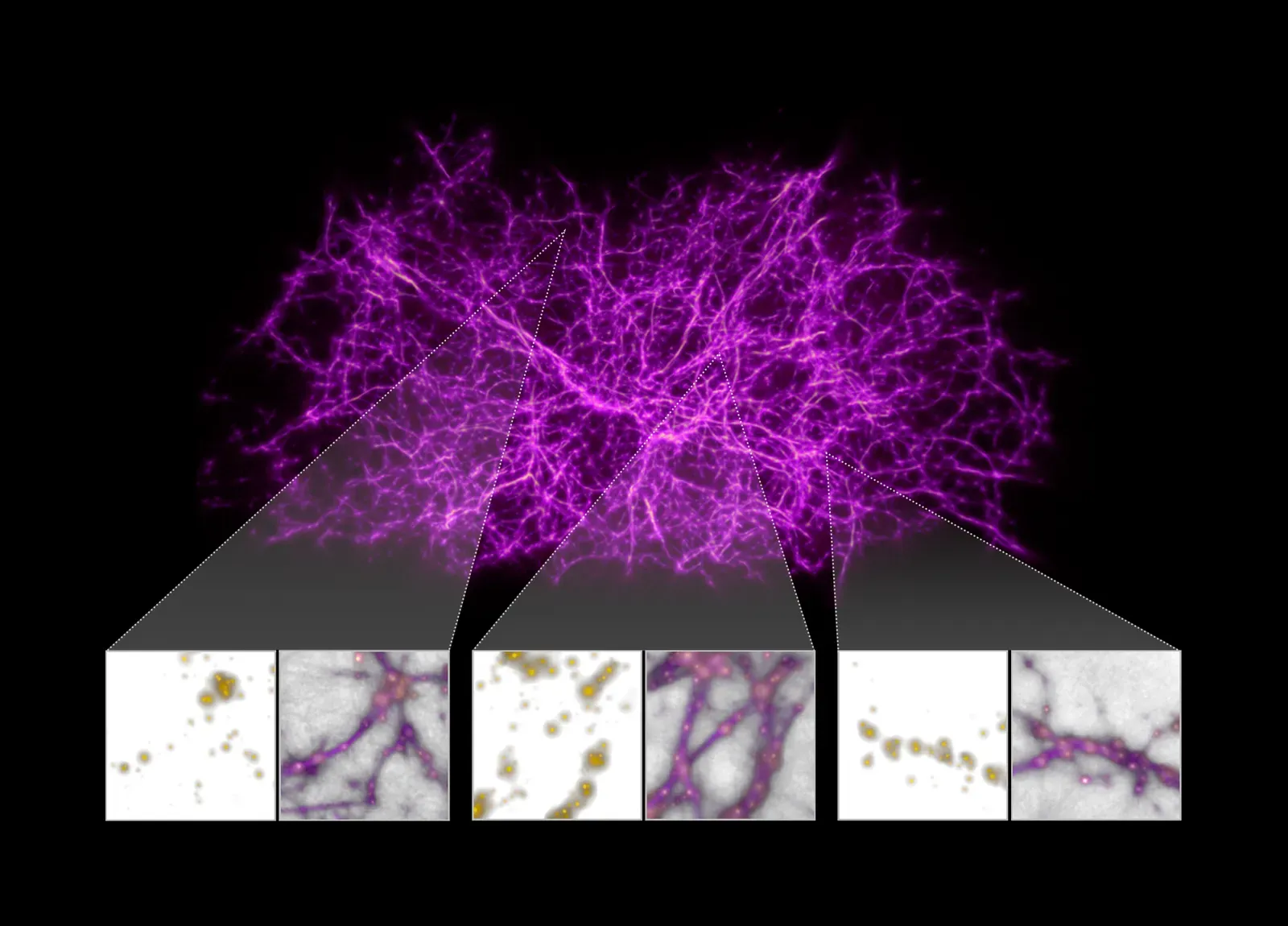
The revolution came with massive projects such as the Sloan Digital Sky Survey and, more recently, surveys using instruments like the Dark Energy Spectroscopic Instrument. These did not just collect pretty pictures; they measured distances to millions of galaxies and quasars, building up a three‑dimensional atlas of the cosmos. On a computer screen, the data resemble a ghostly foam: bright nodes where clusters reside, filaments stretching between them, and enormous voids that could swallow thousands of Milky Ways. What once required hand‑drawn maps is now a high‑precision, data‑driven reconstruction of the universe’s large‑scale architecture.
The Physics Behind the Cosmic Web
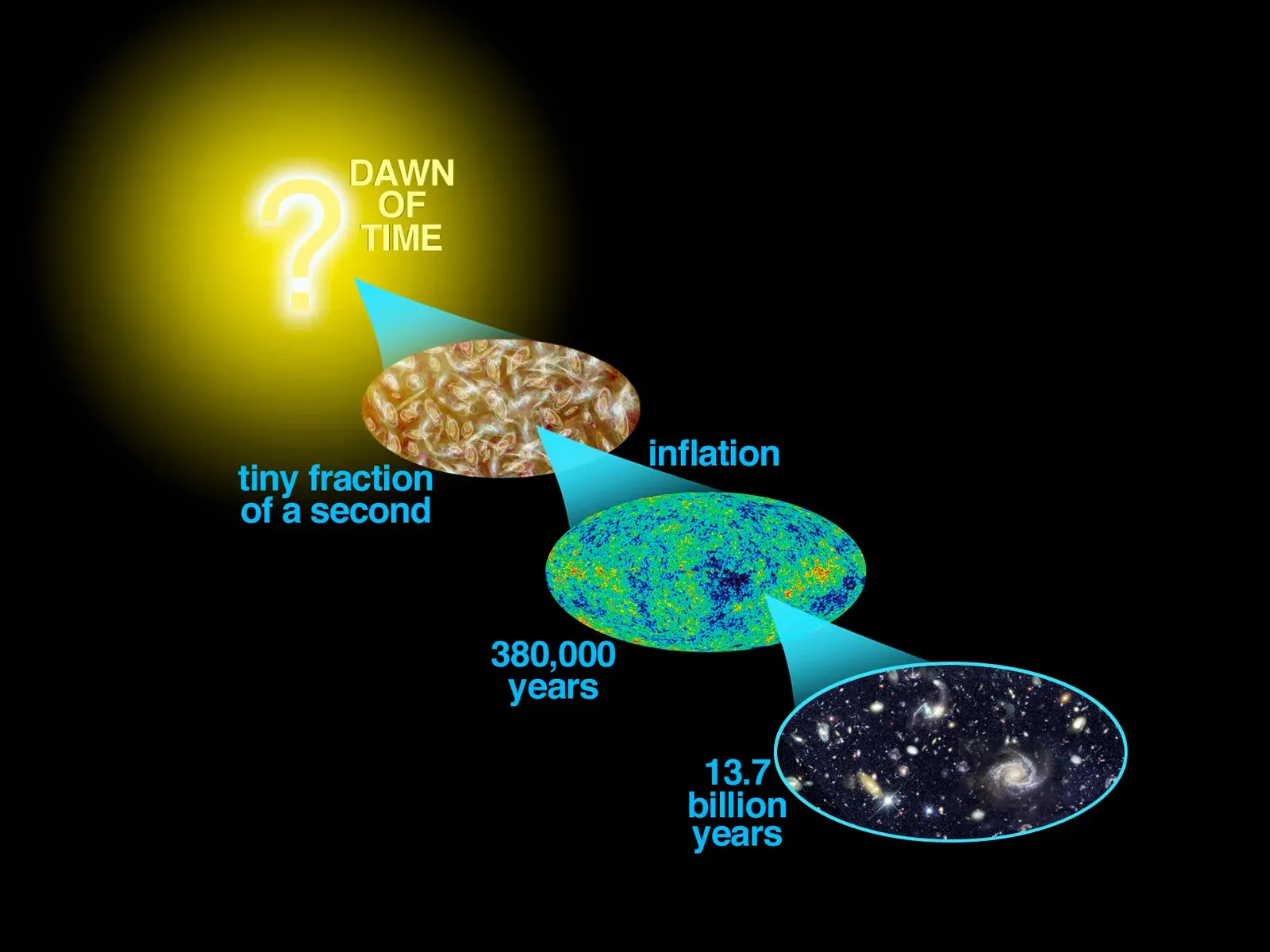
The cosmic web might look like an intricate design, but it arises from a surprisingly simple starting point: tiny fluctuations in the density of matter in the early universe. Just after the Big Bang, space was filled with nearly uniform hot plasma, with small regions ever so slightly denser than others. Gravity, patient and relentless, amplified those minuscule differences over billions of years. Denser regions pulled in more matter, becoming the nodes and filaments we see today, while underdense regions expanded into the enormous voids in between.
Crucially, this story is not just about the matter we can see. Invisible dark matter, which outweighs normal matter by roughly a factor of five, plays the starring role as the underlying skeleton of the cosmic web. Computer simulations that include dark matter and the known laws of physics naturally produce web‑like patterns, with gas and stars later forming inside those gravitational wells. Baryonic matter – the protons, neutrons, and electrons that make up stars, planets, and people – essentially traces a pre‑existing dark matter framework. The match between simulations and real surveys has become one of the strongest arguments that our current cosmological model, while incomplete, is capturing something profoundly right about how structure forms.
What Lives in the Filaments, Nodes, and Voids?
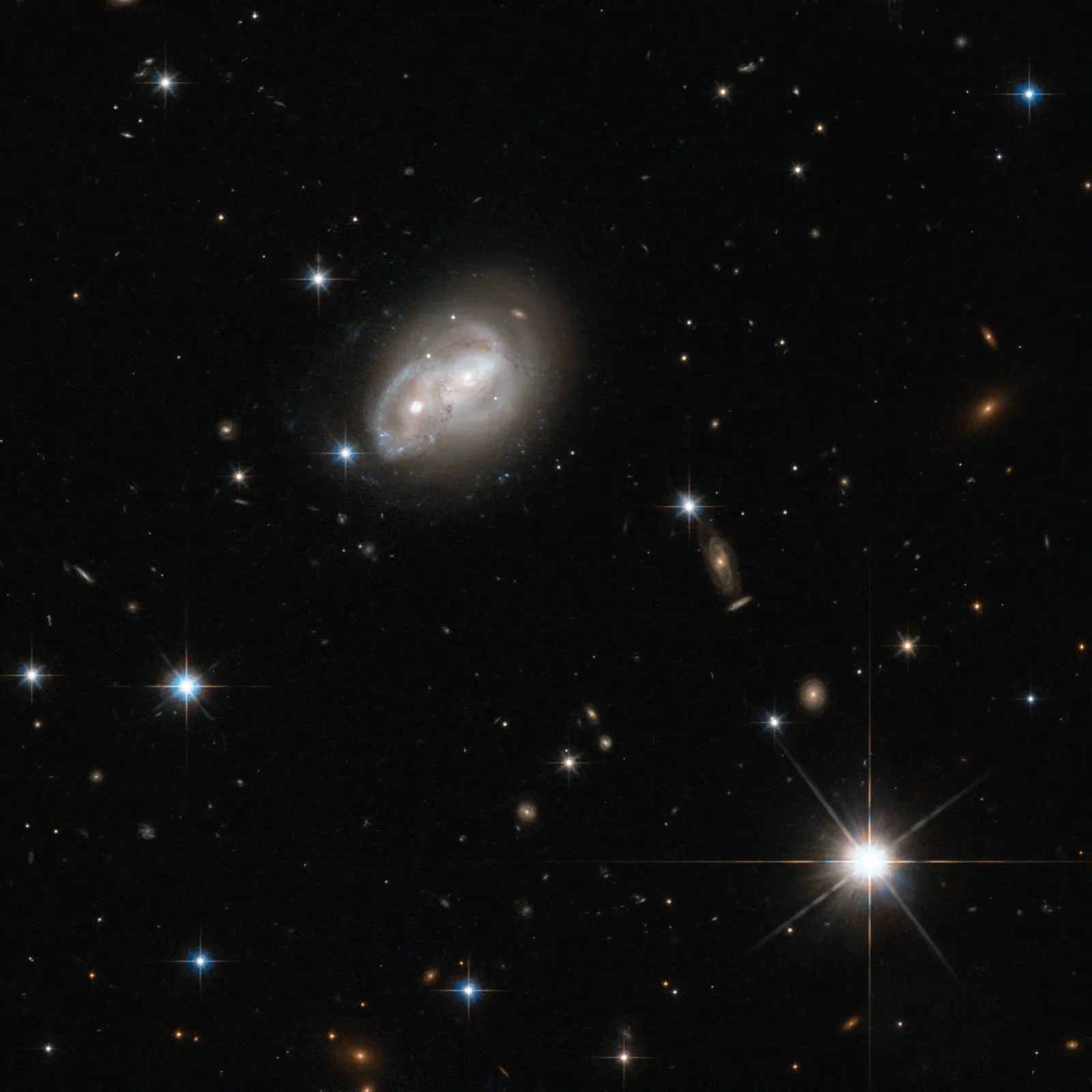
Looking at the cosmic web is a bit like studying the ecosystem of a planet, but on incomprehensible scales. The dense nodes where filaments intersect are home to massive galaxy clusters, crowded environments where galaxies interact, merge, and sometimes tear gas from one another. Along the filaments, galaxies stream toward these clusters, feeding them with a kind of cosmic traffic flow. In these environments, gravity and hot gas shape how galaxies grow, how quickly they form stars, and how their central black holes behave. The web is not just geometry; it directly influences galactic evolution.
The voids, by contrast, are among the loneliest places in the universe. These underdense regions contain very few large galaxies, and their gentle gravitational fields offer a relatively quiet laboratory for testing cosmological theories. Intriguingly, some of the smallest and faintest galaxies appear to inhabit the outskirts of voids, raising questions about how such fragile systems formed in such sparse environments. Researchers now examine where galaxies sit within the web – node, filament, wall, or void – to understand why some galaxies are blue and star‑forming, while others have gone red and quiescent. The cosmic web acts as both stage and script for the drama of galaxy life cycles.
Why This Cosmic Architecture Matters
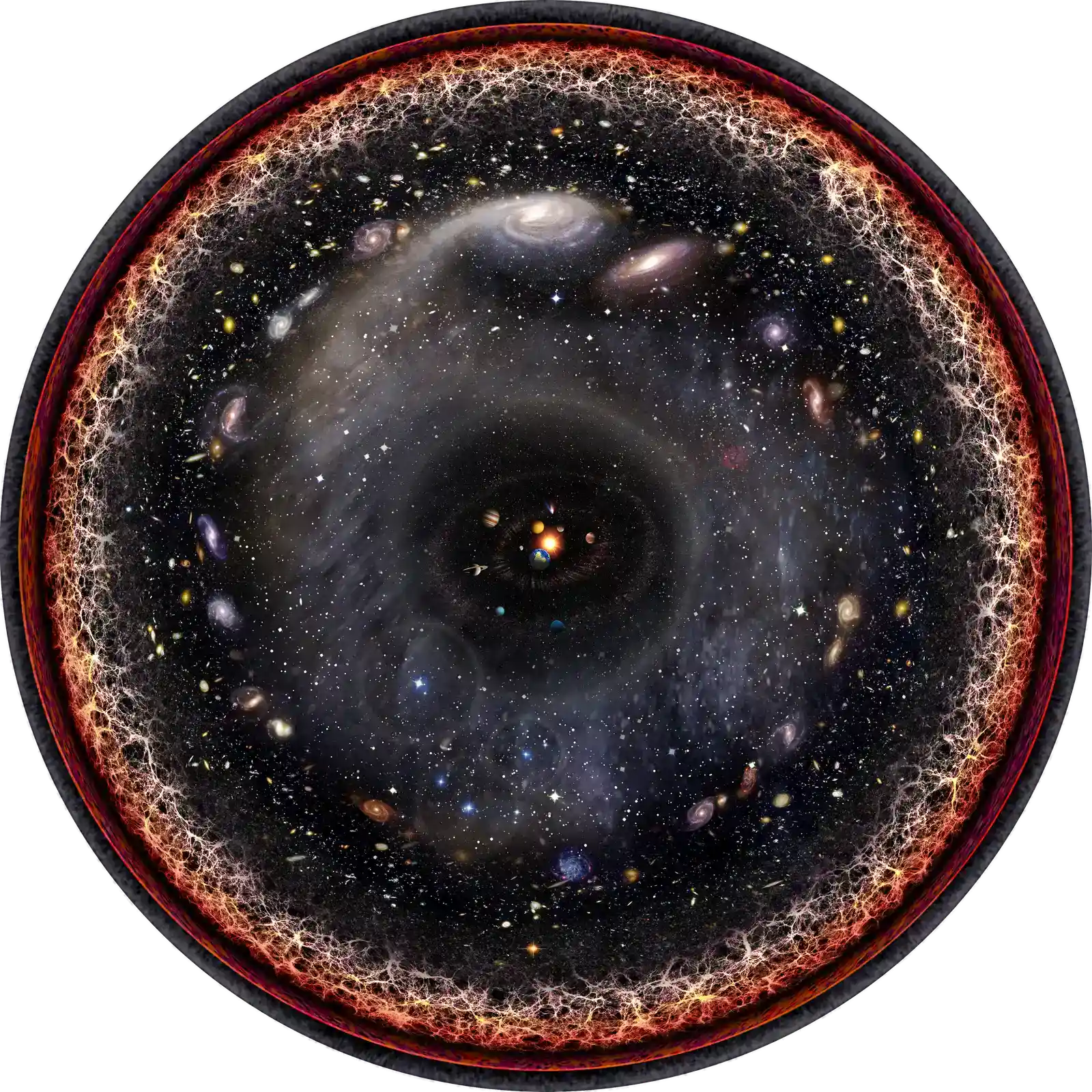
It might sound abstract to talk about filaments and voids spanning hundreds of millions of light‑years, but this architecture is a decisive test of our most fundamental physical theories. When cosmologists propose a model for the universe – how much dark matter it contains, how fast it is expanding, how dark energy behaves – those parameters predict a particular pattern of large‑scale structure. By comparing observations of the cosmic web to the patterns predicted by different models, scientists can rule out entire families of ideas. The web is, in effect, a massive, three‑dimensional experiment running over billions of years.
This perspective also reframes our sense of cosmic address. The Milky Way is not drifting alone in empty space; it is embedded in a filament within a larger structure known as the Laniakea Supercluster, sharing flows of matter and motion with thousands of neighboring galaxies. That context shapes everything from our galaxy’s future trajectory to its past interactions. On a practical level, the web also encodes information about the early universe, including traces of primordial sound waves in the hot plasma, known as baryon acoustic oscillations, that now appear as a preferred separation scale between galaxies. Measuring those subtle patterns lets us probe physics at times and energies we could never reproduce on Earth.
How Scientists Map the Invisible Threads
The challenge of studying the cosmic web is that much of it does not shine. Dark matter does not emit light, and even the normal gas in filaments can be too diffuse and faint to detect directly. Astronomers therefore use a range of clever techniques to infer the web’s structure, turning galaxies and photons into indirect tracers. One approach is to use galaxy positions and redshifts as markers, reconstructing the unseen filaments that must link them gravitationally. Another is to use gravitational lensing – the way mass bends background light – to map the total matter distribution, including the invisible components.
More recently, instruments that can detect extremely faint ultraviolet and X‑ray signals have started to reveal hot, tenuous gas in the filaments themselves, partly solving a long‑standing puzzle about where much of the universe’s ordinary matter was hiding. Radio telescopes, too, are beginning to trace hydrogen gas stretched along filamentary structures. In practice, researchers often combine data from multiple wavelengths and techniques, overlaying them like translucent layers on a digital globe of the universe. The picture that emerges is still incomplete, but each new survey sharpens the contrast, turning what was once a speculative sketch into a detailed cartography of the cosmic web.
The Future Landscape: Next‑Generation Maps of the Cosmos
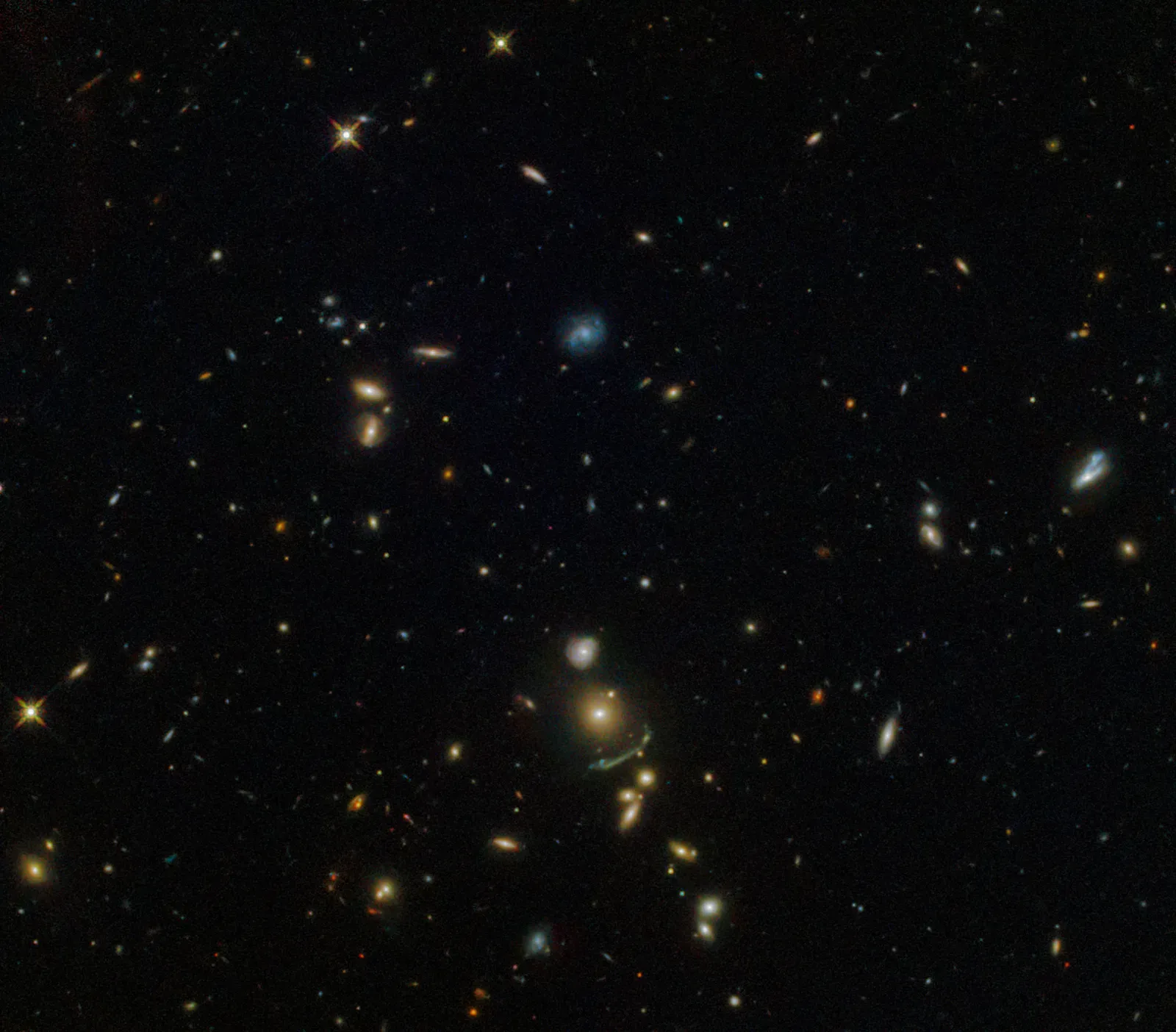
The coming decade promises to transform our view of the cosmic web yet again, thanks to a wave of ambitious telescopes and surveys. Space missions like the European Space Agency’s Euclid and NASA’s Roman Space Telescope are designed to map the large‑scale distribution of galaxies and dark matter with extraordinary precision. On the ground, powerful facilities such as the Vera C. Rubin Observatory will repeatedly scan wide swaths of the sky, capturing transient events and building up deep, time‑lapse maps of structure growth. Together, these projects will not just show the web more clearly; they will track how it has evolved over cosmic history.
At the same time, advances in computing are allowing cosmologists to run ever more detailed simulations that push closer to the complexity of the real universe. By comparing these virtual webs to observations, scientists can search for subtle discrepancies that might hint at new physics, such as exotic dark matter properties or deviations from Einstein’s theory of gravity. There are open questions about how small‑scale processes like star formation and black hole feedback ripple upward to affect large‑scale structure. The global implications are significant: by tightening constraints on dark energy and the expansion history of the universe, these studies will refine our understanding of the universe’s fate and test whether our current cosmological model is indeed complete.
Connecting the Cosmic Web to Our Daily Lives
It is easy to assume that something as immense as the cosmic web has nothing to do with ordinary human concerns, but that separation is more psychological than real. The same physics that sculpts the web – gravity, quantum fluctuations, the behavior of matter under extreme conditions – also underpins technologies we rely on, from medical imaging to GPS satellites. The tools developed to map large‑scale structure, such as data‑analysis algorithms and image‑processing techniques, spill over into fields as diverse as climate science, finance, and public health. In that sense, every new way we learn to read the universe’s structure sharpens our ability to interpret complex patterns closer to home.
On a more personal level, the cosmic web offers a humbling but oddly comforting story about connection. Our galaxy, our Sun, and our planet exist not in isolation but as part of a continuous chain of structures stretching back to the earliest moments after the Big Bang. When we look up at the night sky, we are glimpsing just the brightest beads on threads of matter that extend far beyond what the eye can see. Understanding that hidden architecture does not make daily frustrations vanish, but it can reframe them, placing our lives within a much larger narrative woven across space and time.
How You Can Stay Connected to a Connected Universe
Engaging with the science of the cosmic web does not require a telescope or a physics degree; it starts with curiosity and a willingness to look up. Many major surveys release their data and visualizations to the public, allowing anyone with an internet connection to explore interactive maps of the universe. You can support observatories and science institutions – whether through memberships, donations, or simply by visiting and sharing their work – that make these discoveries possible. Public outreach programs, planetariums, and online lectures often feature the latest results, turning dense research papers into stories you can follow and discuss.
On a broader level, staying informed about space science helps build a culture that values long‑term thinking and fundamental research, even when the payoff is not immediately practical. You might choose to advocate for science funding, encourage young people in your life to explore astronomy, or participate in citizen‑science projects that help classify galaxies and map cosmic structures. Each of these actions is a small thread in a much larger tapestry of human inquiry. The universe’s web connects galaxies; our collective curiosity connects us, across generations, in the ongoing effort to understand where we come from and what kind of cosmos we inhabit.
Suhail Ahmed is a passionate digital professional and nature enthusiast with over 8 years of experience in content strategy, SEO, web development, and digital operations. Alongside his freelance journey, Suhail actively contributes to nature and wildlife platforms like Discover Wildlife, where he channels his curiosity for the planet into engaging, educational storytelling.
With a strong background in managing digital ecosystems — from ecommerce stores and WordPress websites to social media and automation — Suhail merges technical precision with creative insight. His content reflects a rare balance: SEO-friendly yet deeply human, data-informed yet emotionally resonant.
Driven by a love for discovery and storytelling, Suhail believes in using digital platforms to amplify causes that matter — especially those protecting Earth’s biodiversity and inspiring sustainable living. Whether he’s managing online projects or crafting wildlife content, his goal remains the same: to inform, inspire, and leave a positive digital footprint.