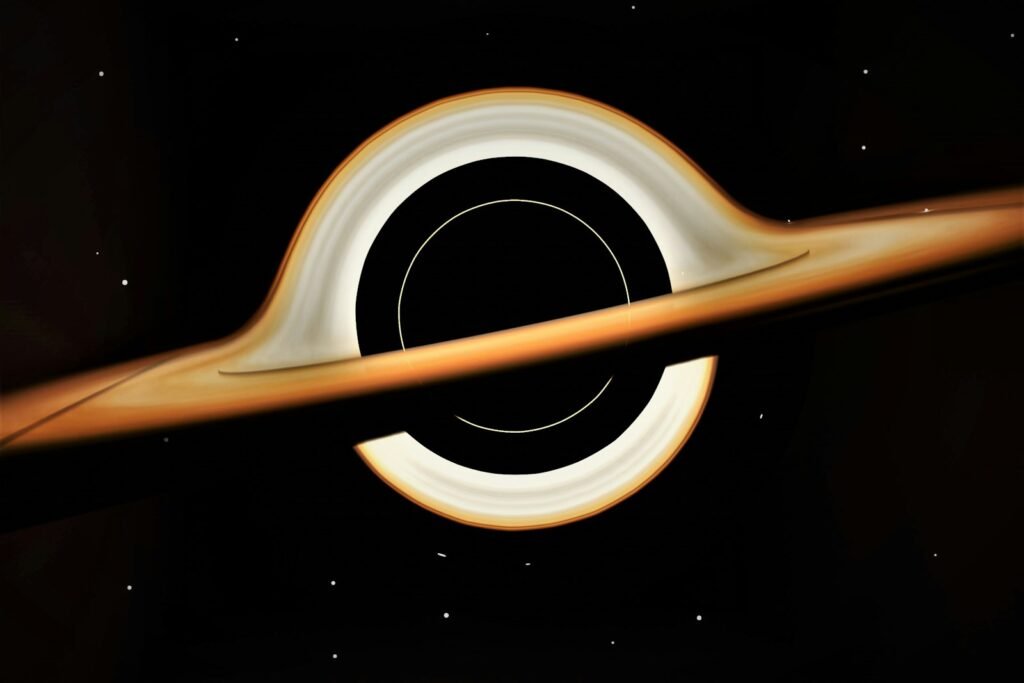

Imagine looking up at the night sky and realizing that everything you see – every galaxy, every star, even your own sense of self – might be the three‑dimensional “shadow” of information written on a distant cosmic surface. That is the unsettling, exhilarating idea behind the holographic universe hypothesis, a theory that started at the edges of black holes and has crept into serious discussions about the entire cosmos. It sounds like science fiction, yet it emerges from attempts to fix some of the deepest contradictions in modern physics. Instead of saying the universe is an illusion, scientists are asking whether space, time, and matter are emergent, like a high‑resolution image built from tiny, invisible pixels of information. And as strange as it sounds, this possibility is forcing researchers to rethink what it means to say something is “real” at all.
The Hidden Clues in the Cosmic Background
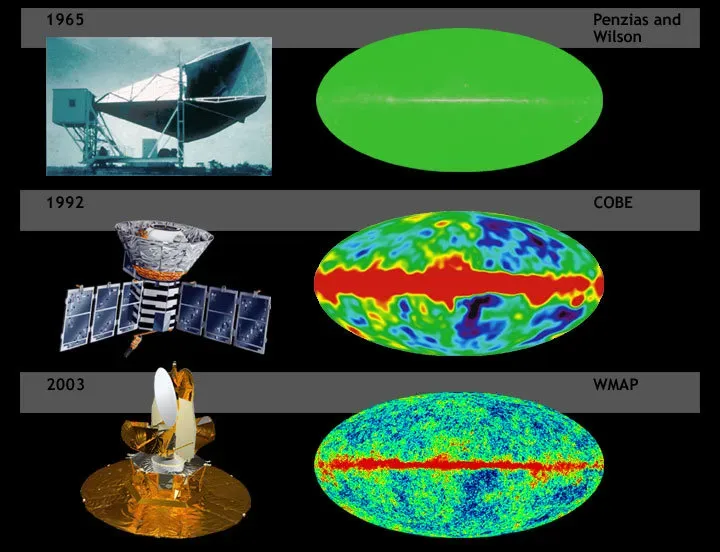
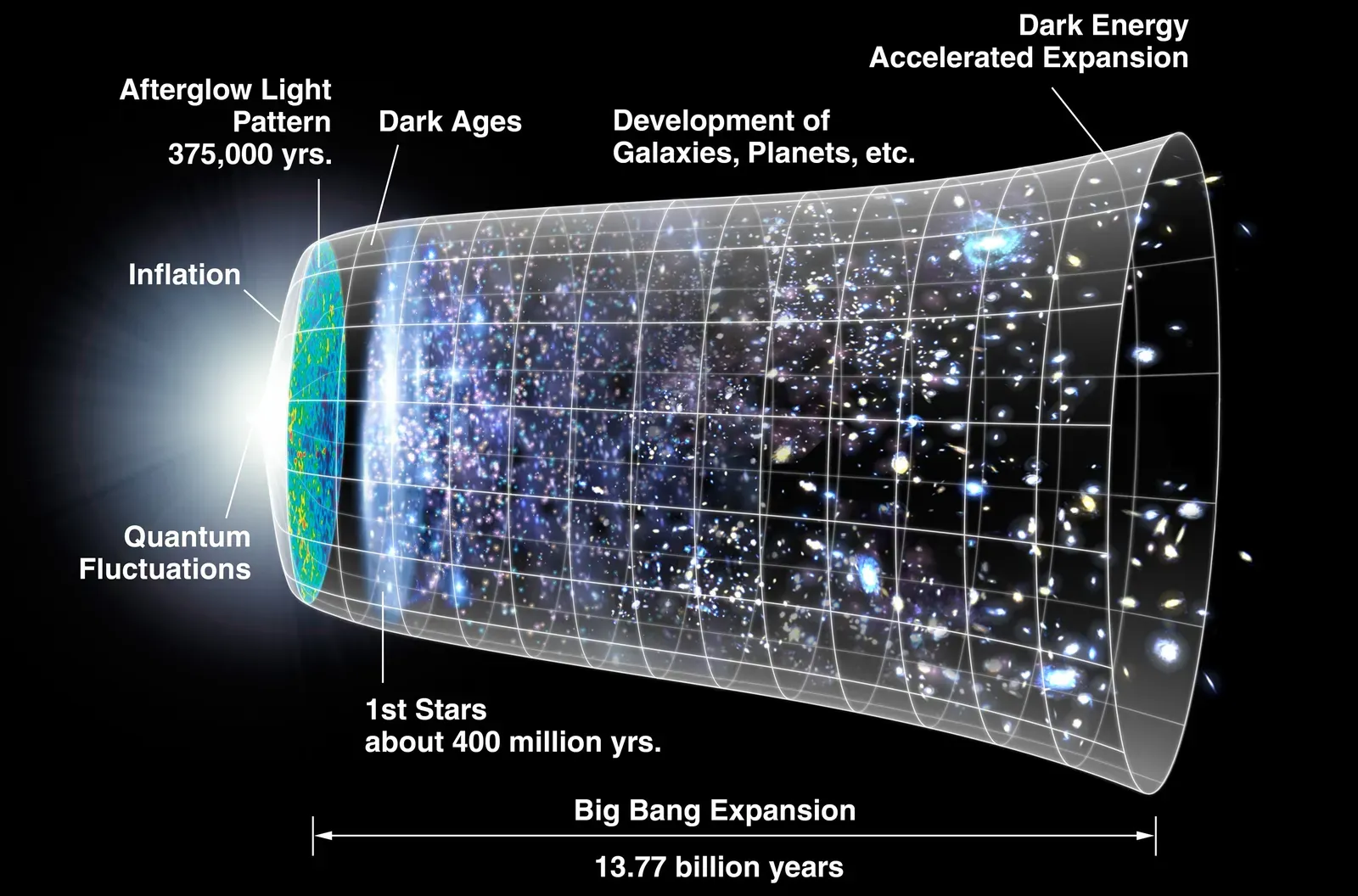
One of the most surprising hints that our universe might be holographic comes from the oldest light we can see: the cosmic microwave background, a faint glow left over from just after the Big Bang. This radiation is like a baby picture of the universe, and it carries subtle patterns – tiny temperature variations – that tell a story about the early cosmos. A little under a decade ago, physicists began exploring whether those patterns could also be explained by a universe that behaves holographically, where the physics in three dimensions mirrors a description on a distant two‑dimensional boundary. Some early models showed that a holographic description could reproduce features of this ancient light as well as conventional cosmology does. That does not prove the hologram idea is correct, but it makes it much harder to dismiss as pure philosophical speculation.
What fascinates many researchers is that these clues are not buried in exotic experiments, but in sky maps already made by satellites like Planck. Instead of adding new layers of complexity, holographic models sometimes simplify how quantum mechanics and gravity can coexist without ripping the equations apart. You can think of it like discovering that a messy-looking pattern in the wallpaper is actually created by a simple repeating tile hidden underneath. If the same trick works for the universe, then some of the “mess” we see might just be the projection of a much leaner description on a boundary we can never reach. That sense of an invisible organizing layer sitting beyond our view is what keeps scientists digging.
From Black Holes to a Holographic Universe
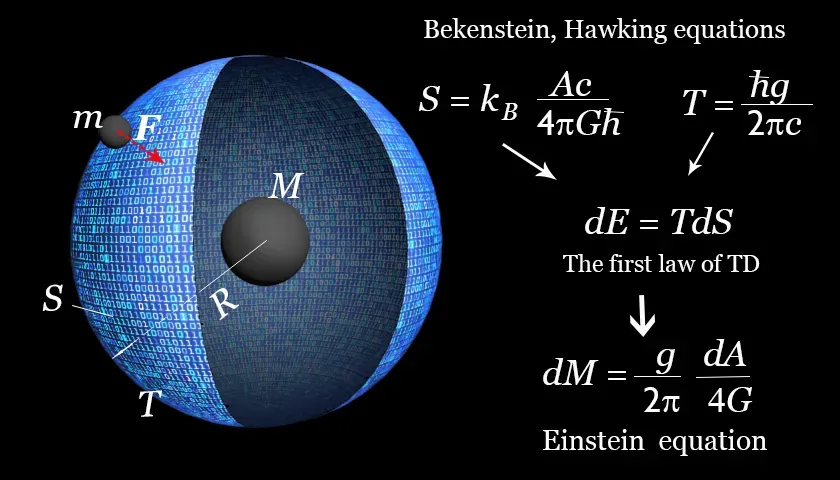
The hologram idea did not start as a wild claim about reality; it grew quietly out of black hole physics. In the 1970s and 1980s, researchers realized that the information content of a black hole – how much detail it can store – does not scale with its volume, but with the area of its event horizon. Roughly speaking, if you double the radius of a black hole, you quadruple the area but increase the volume by much more, yet the information seems to track the area, not the volume. That was such a bizarre result that it inspired the so‑called holographic principle: perhaps, in some deep sense, the true information describing a region of space lives on its boundary. A holographic sticker on a credit card packs a three‑dimensional image into a two‑dimensional surface; maybe the universe does something similar, just on a cosmic scale.
In the late 1990s, this principle gained mathematical teeth through a powerful idea known as gauge–gravity duality, often illustrated by a relationship called AdS/CFT correspondence. In that framework, a universe with gravity in a higher‑dimensional space can be exactly equivalent to a universe without gravity on a lower‑dimensional boundary. It is as if two very different movies share the same script, just filmed from different angles. Although our universe is not shaped like the specific space used in those original calculations, the success of that duality encouraged theorists to take the holographic principle seriously as more than a metaphor. Since then, versions of this idea have been tested across particle physics, condensed matter, and cosmology, each time strengthening the sense that holography may be a fundamental feature of the way nature organizes information.
What “Hologram” Really Means (And What It Doesn’t)
When people hear that the universe might be a hologram, it is tempting to imagine that reality is fake, like a cosmic cinema screen playing tricks on us. That is not what most physicists are arguing. In a holographic picture, your body, the Earth, and distant galaxies are still absolutely real in the sense that you can measure them, interact with them, and build technologies from their behavior. What changes is the underlying bookkeeping: instead of thinking of space as filled with independent little chunks everywhere, the most fundamental description may live on a kind of distant boundary, with the world we inhabit emerging from that information. It is less like saying we live in a video game and more like saying nature uses clever data compression under the hood.
This distinction matters, because it separates serious science from casual pop‑culture claims that “nothing exists.” The holographic principle is a proposal about how quantum information and gravity fit together, not a declaration that your experiences are meaningless. If anything, it makes reality more interesting by suggesting there are multiple, exactly equivalent ways to describe the same physical situation. A glass of water can be described in terms of swirling molecules or as a smooth fluid; both are valid, just useful at different scales. Likewise, the three‑dimensional world we move through could be one of several interchangeable narratives written from the same deeper information. That subtle twist is what keeps philosophers of science, not just physicists, awake at night.
The Quantum Puzzle at the Heart of Reality
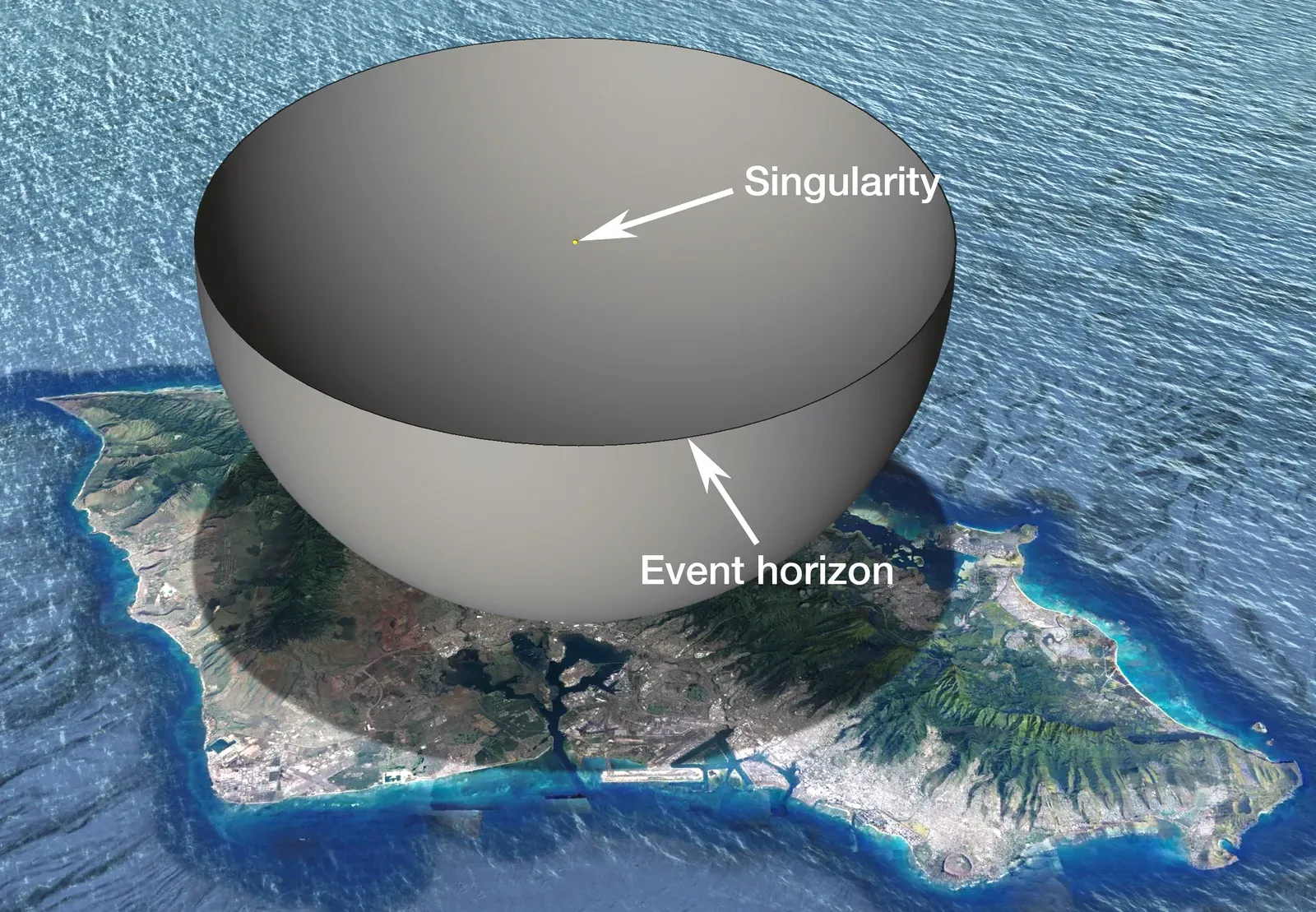
At the core of the holographic idea lies a stubborn conflict between quantum mechanics and general relativity, our two towering theories of the twentieth century. Quantum physics insists that information is never truly destroyed, while relativity predicts that anything falling into a black hole vanishes behind an event horizon forever. That tension led to the infamous black hole information paradox and has haunted theoretical physics for decades. The holographic principle offers a potential truce: what falls into a black hole might be encoded on its surface, preserving information in a scrambled but not lost form. The mathematics of holography shows how this surface description can later be read out, at least in principle, through the radiation the black hole emits.
Extending that logic to the universe as a whole, some researchers suspect that space itself might be woven from patterns of quantum entanglement, like a giant tapestry whose threads are correlations rather than bits of matter. In that view, geometry and even time could be emergent properties of how information is linked, similar to how temperature emerges from the frantic motion of countless molecules. This kind of thinking has led to striking connections between the equations used to calculate entanglement entropy and the shapes of spacetime in holographic models. For non‑physicists, it can feel like a magic trick: rearrange the math of quantum information, and suddenly a gravitational universe pops out. For the scientists working on it, it is less magic and more a hint that the true building blocks of reality might be information itself.
Why It Matters: Shifting Our Place in the Cosmos
It is reasonable to ask why any of this should matter to someone who is more worried about rent, climate change, or their next work deadline. The answer is that ideas like the holographic universe quietly reshape how we think about everything from free will to the nature of consciousness. If the universe at its core is an information‑processing system, that nudges us to see ourselves not as passive specks in an uncaring void, but as active patterns woven into the same informational fabric. The line between “observer” and “observed” starts to blur in a way that echoes the strange feedback loops of quantum experiments, where simply measuring a system can change its state. In my own case, reading about holography years ago flipped a mental switch; suddenly, questions that once felt purely philosophical started to look like testable physics.
There is also a more practical, historical reason to care: every major shift in our cosmic story has eventually reshaped human society. Realizing that Earth orbits the Sun upended old power structures and religious certainties. Discovering that the galaxy is one among many changed how we think about uniqueness and scale. If we now learn that space and time themselves are emergent from deeper informational laws, it will almost certainly fuel new technologies, new ethical debates, and new cultural narratives. We may find ourselves reinterpreting data, privacy, and even identity through a lens in which information is the most basic currency of reality. In that sense, the holographic universe is not an abstract curiosity; it is a slow‑burn revolution in how we understand what it means to exist.
Clues, Not Proof: Where the Evidence Stands
Despite the bold headlines, scientists are not claiming to have definitive proof that we live in a hologram. What they do have are converging strands of evidence that holographic descriptions work remarkably well in areas where our traditional tools struggle. For instance, certain properties of high‑energy particle collisions and strongly interacting materials can be described more simply using holographic dualities than with standard calculations. Cosmologists have built models in which a holographic boundary encodes the early universe, and those models reproduce key observed features of the cosmic microwave background. None of this is a smoking gun, but it is enough to show that the idea earns its keep.
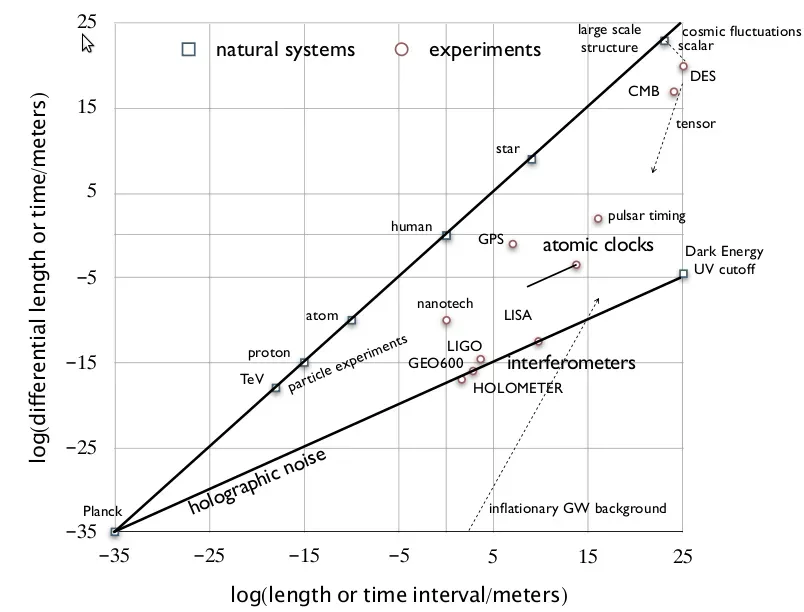
There have even been proposals to look for tiny “pixelation” effects in spacetime itself, using exquisitely sensitive interferometers to detect holographic noise, though results so far have not delivered a clear signal. More broadly, the fact that black hole thermodynamics, quantum information theory, and gravitational geometry keep telling the same holographic story is itself a kind of circumstantial case. It is as if separate witnesses in an investigation, who never met each other, are describing the same suspect. The scientific community remains appropriately cautious, because nature has a way of humbling overconfident theorists. Still, the growing web of connections makes it hard to believe that holography is just a clever mathematical game with no reflection in the real universe.
The Future Landscape: Experiments, Simulations, and New Technologies
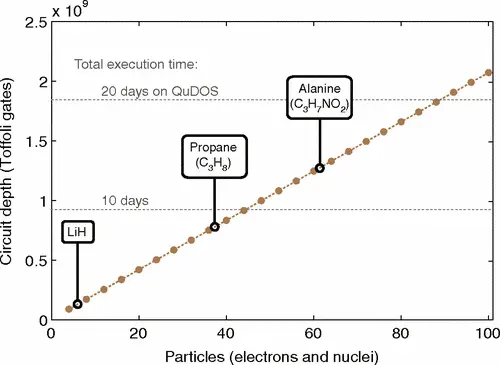
Looking ahead, the most exciting developments may come from the unlikely marriage of high‑energy physics and quantum technology. As quantum computers grow more powerful, researchers are already using them to simulate tiny toy universes that obey holographic rules, effectively building miniature laboratories for quantum gravity. These simulations could reveal how space and time emerge from entanglement, or how information scrambles and unscrambles in systems that mimic black holes. At the same time, astrophysical observations – from gravitational‑wave detectors to next‑generation cosmic microwave background missions – will keep stress‑testing our models of the early universe. If holographic cosmologies survive those tests, their credibility will only grow.
There is also the prospect of practical spin‑offs, even if they are decades away. Thinking of reality in information‑theoretic terms has already influenced how we design error‑correcting codes, cryptographic systems, and quantum networks. In a world where data is becoming as valuable as oil once was, a universe built from information is more than a poetic image; it might inspire entirely new ways of storing, processing, and protecting that data. Of course, there are serious challenges too: unifying these daring theories with messy real‑world measurements, avoiding over‑interpretation of elegant mathematics, and keeping hype in check. Yet that tension between visionary ideas and hard‑nosed testing is exactly where science tends to make its biggest leaps.
How You Can Engage With a Holographic Universe
You do not need a PhD in physics to take part in this unfolding story about the nature of reality. One simple step is to cultivate informed curiosity: seek out well‑researched books, lectures, and public talks on quantum gravity, cosmology, and the holographic principle, rather than relying on sensational social media posts. Many universities and research institutes release accessible explainers and recorded seminars that peel back the math without dumbing down the ideas. You can think of it as learning a new language for talking about the universe, one in which information, not just matter, plays the starring role. The more people share that language, the richer our collective conversation about reality becomes.
If you feel inspired to go further, you can support organizations and projects that push the frontiers of fundamental physics, whether through donations, advocacy, or simply amplifying their work. Citizen‑science platforms occasionally offer ways to help classify astronomical data or explore simulations, giving you a small but genuine role in the process. Even choices closer to home – valuing science education, defending evidence‑based policy, encouraging kids who ask uncomfortable questions about how the world works – feed into the same long arc of discovery. In the end, whether or not the universe turns out to be a hologram, our willingness to question, to learn, and to imagine new possibilities is the most powerful projection we create. Engaging with that process is one of the most human things you can do.
Suhail Ahmed is a passionate digital professional and nature enthusiast with over 8 years of experience in content strategy, SEO, web development, and digital operations. Alongside his freelance journey, Suhail actively contributes to nature and wildlife platforms like Discover Wildlife, where he channels his curiosity for the planet into engaging, educational storytelling.
With a strong background in managing digital ecosystems — from ecommerce stores and WordPress websites to social media and automation — Suhail merges technical precision with creative insight. His content reflects a rare balance: SEO-friendly yet deeply human, data-informed yet emotionally resonant.
Driven by a love for discovery and storytelling, Suhail believes in using digital platforms to amplify causes that matter — especially those protecting Earth’s biodiversity and inspiring sustainable living. Whether he’s managing online projects or crafting wildlife content, his goal remains the same: to inform, inspire, and leave a positive digital footprint.