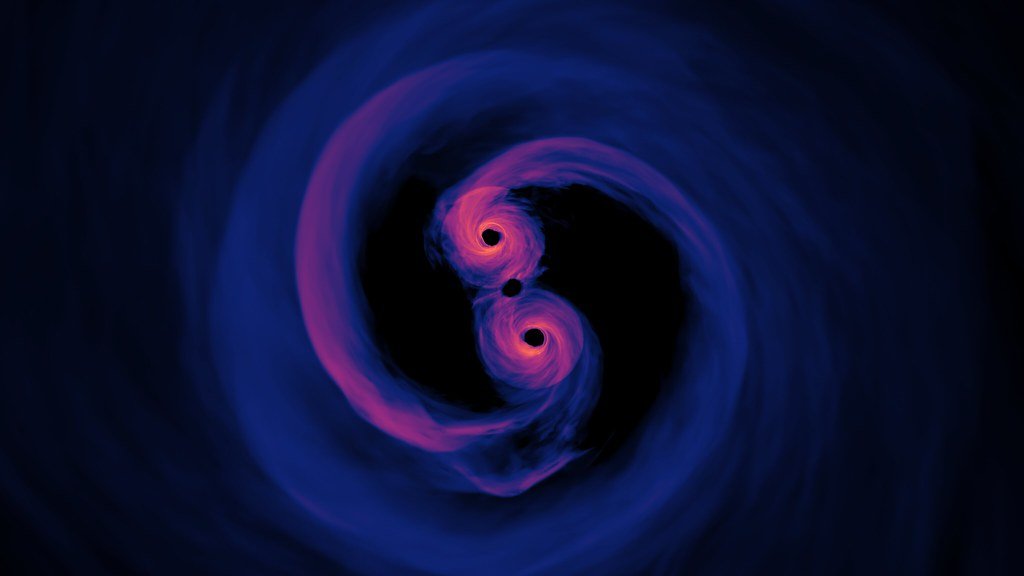

Most of us grow up thinking gravity is simple: what goes up must come down, end of story. But the deeper scientists look, the stranger gravity becomes, and the less “settled” it actually feels. In 2026, gravity sits at the heart of some of the biggest unsolved mysteries in physics, from the birth of the universe to the hidden nature of dark matter and dark energy.
I still remember reading about gravity in school as if it were a done deal: first Newton, then Einstein, and that was that. Now, the more I follow modern physics, the clearer it is that we’re still in the middle of the story, not at the end. New observations from telescopes, gravitational-wave detectors, and particle physics experiments keep poking holes in our comfortable picture, forcing scientists to stretch, patch, or even rewrite the rules of how gravity works.
From Falling Apples to Curved Spacetime
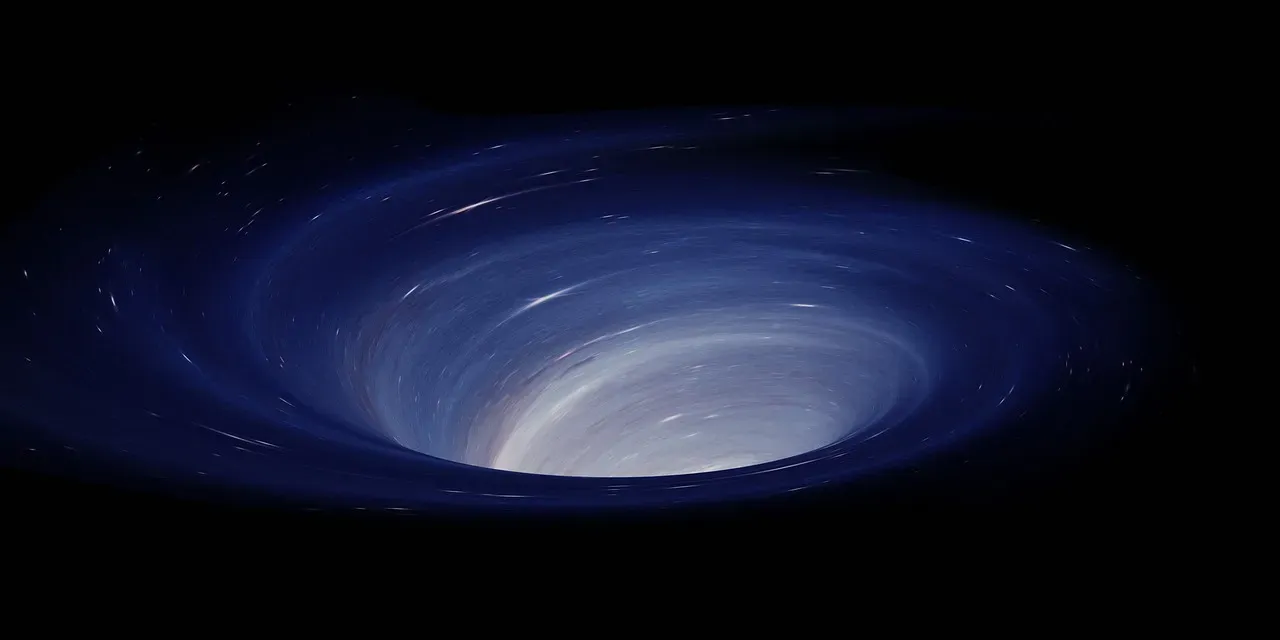
It’s easy to forget how radical the journey from Newton to Einstein really was. Newton’s idea, that gravity is a force pulling objects together, works beautifully for everyday life: planets orbit the Sun, apples fall, rockets launch and return. For centuries, this simple framework explained nearly everything people could measure in the sky and on Earth.
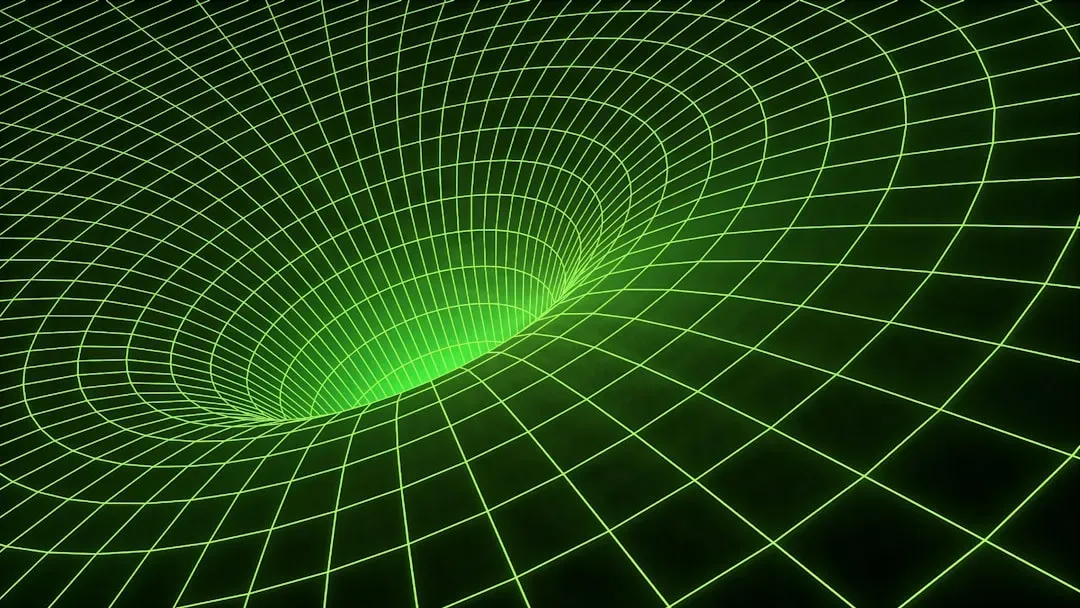
Then Einstein came along and replaced the notion of a pulling force with curved spacetime itself. In his view, matter and energy bend the fabric of space and time, and objects simply follow the straightest possible paths within this warped geometry. That’s why light curves around the Sun, and why time slows down near massive objects. Today, GPS satellites literally rely on Einstein’s corrections to work properly, which is a wild thought when you’re just trying to find a coffee shop.
Why Einstein’s Gravity Can’t Explain Everything
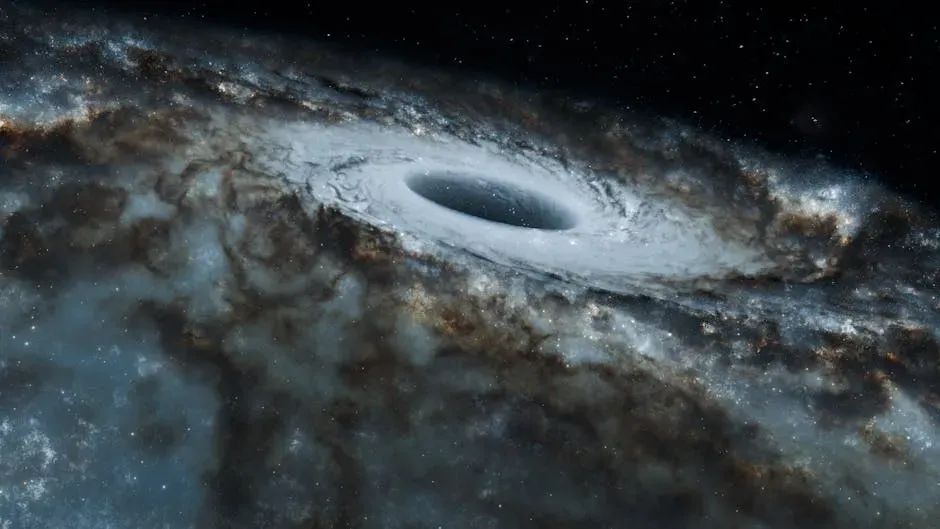
For all its success, general relativity has a huge blind spot: it doesn’t play nicely with quantum mechanics. Quantum theory rules the tiny world of particles and fields, where uncertainty and probability dominate. General relativity rules the massive and the cosmic. Put them together at extremes – like inside black holes or at the very first instant of the Big Bang – and the math breaks down.
Physicists see this clash as a blinking red warning light that our current understanding of gravity is incomplete. In regions where gravity is unimaginably strong and quantum effects are unavoidable, our two best theories contradict each other. It’s like having two perfectly accurate maps that completely disagree once you zoom in far enough; you can’t just ignore that forever and pretend everything’s fine.
Dark Matter: Gravity Pointing at Something We Can’t See
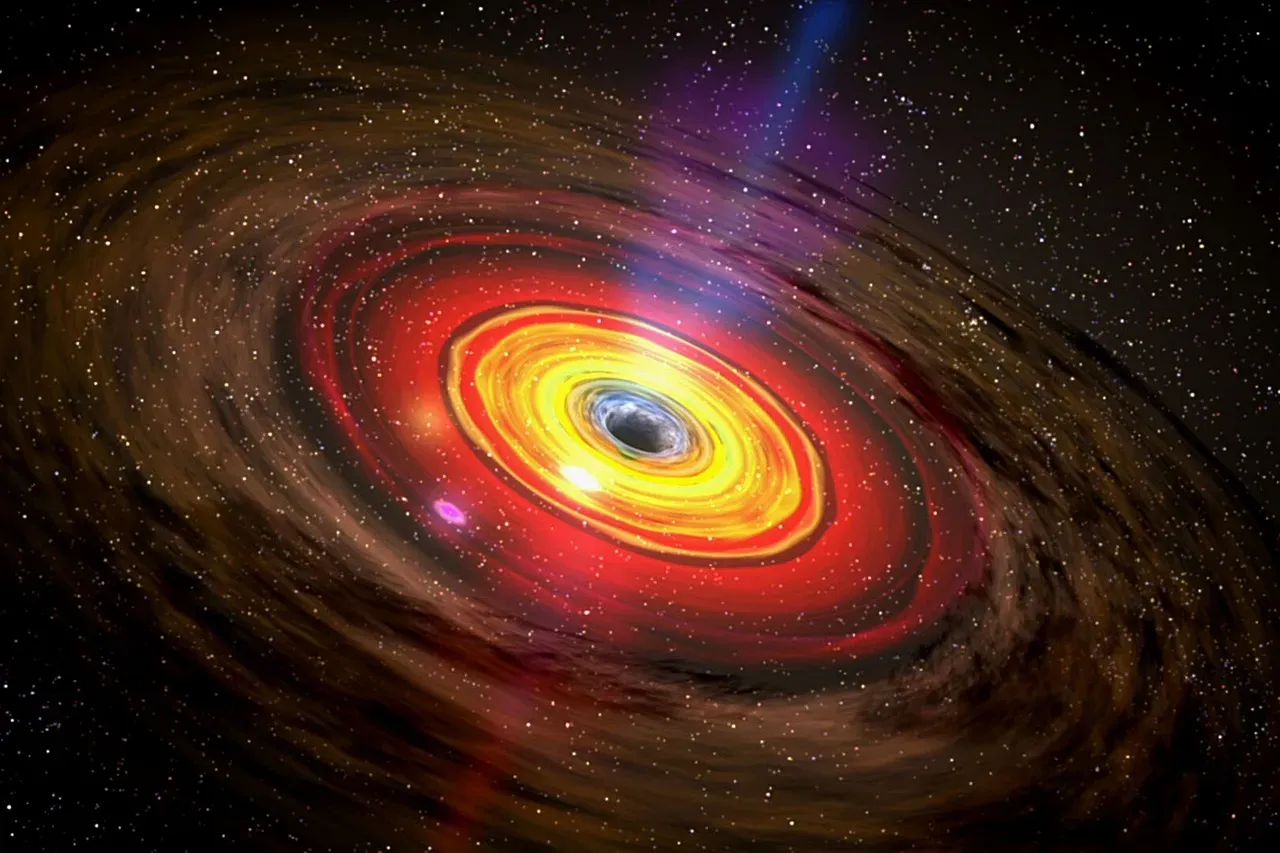
When astronomers look at galaxies, they see stars moving so fast that, by normal gravity rules, many of them should be flung into space. Yet the galaxies hold together, as if an invisible mass is providing extra gravitational glue. Similar hints show up in how light bends around galaxy clusters and how large-scale structures in the universe are arranged.
This missing mass is what scientists call dark matter, a form of matter that doesn’t give off light but seems to reveal itself through gravity. The majority of mass in the universe appears to be this unseen stuff, not the ordinary atoms we’re made of. For decades, researchers have been building detectors deep underground and smashing particles together at high energies, hoping to catch dark matter in the act. So far, the silence has been unsettling, and it raises a sharp question: is there hidden matter out there, or is our understanding of gravity itself incomplete?
Dark Energy and the Mystery of Cosmic Acceleration
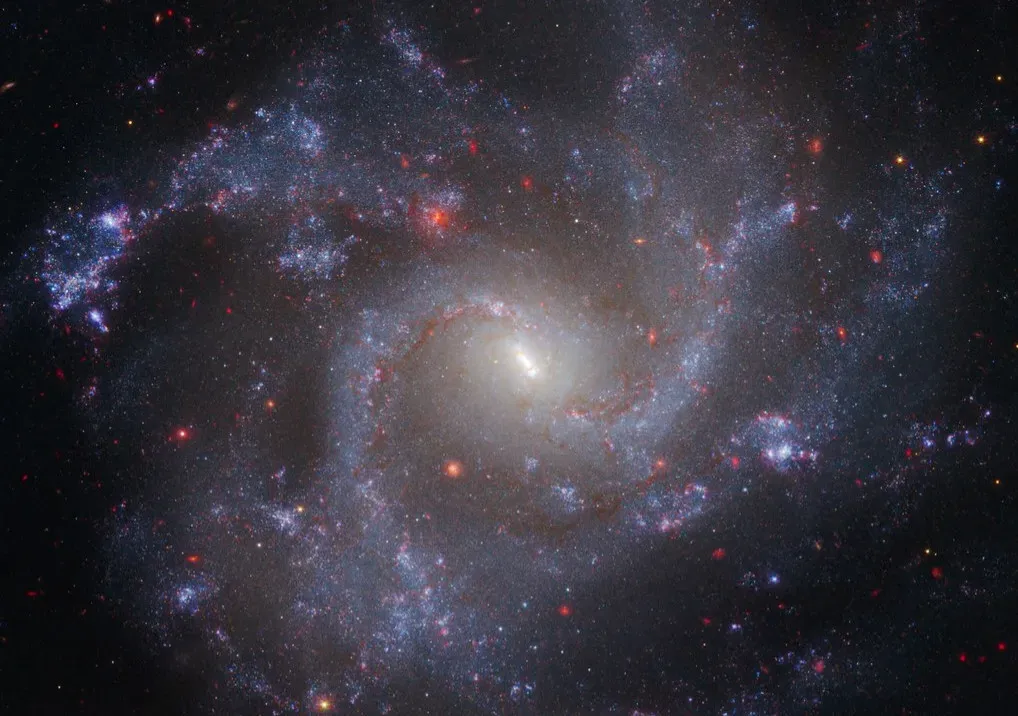
As if dark matter weren’t puzzling enough, there’s another twist: the expansion of the universe isn’t just continuing, it’s speeding up. Observations of distant supernovae in the late 1990s showed that galaxies are flying apart faster and faster, as if some kind of cosmic anti-gravity is at work. This is now attributed to dark energy, a mysterious component that appears to fill all of space.
Dark energy makes up the bulk of the universe’s energy content, yet we don’t know what it actually is. In Einstein’s equations, you can add a term called the cosmological constant, representing an energy contained in empty space, and it fits the data rather well. But when physicists try to calculate this from quantum theory, they get a value wildly off from what’s observed. It’s like predicting the weight of a feather and getting the mass of a mountain instead.
Modified Gravity: What If the Law Itself Changes?
Some scientists have taken a bold route: maybe gravity itself changes its behavior on very large scales, and we don’t actually need dark matter or dark energy to explain what we see. One of the best-known attempts is Modified Newtonian Dynamics, or MOND, which tweaks how gravity works at extremely low accelerations like those at the edges of galaxies. In many cases, MOND can predict galaxy rotation curves surprisingly well without invoking unseen matter.
More sophisticated versions, often called modified gravity theories, adjust Einstein’s equations instead of just Newton’s. They try to reproduce all the confirmed predictions of general relativity while also accounting for galactic and cosmic phenomena. The challenge is that these theories must fit a huge range of observational tests, from gravitational lensing to the cosmic microwave background, and many proposed models run into contradictions. Still, the fact that alternatives to dark matter and dark energy remain on the table shows how unsettled the situation really is.
String Theory and the Hunt for Quantum Gravity
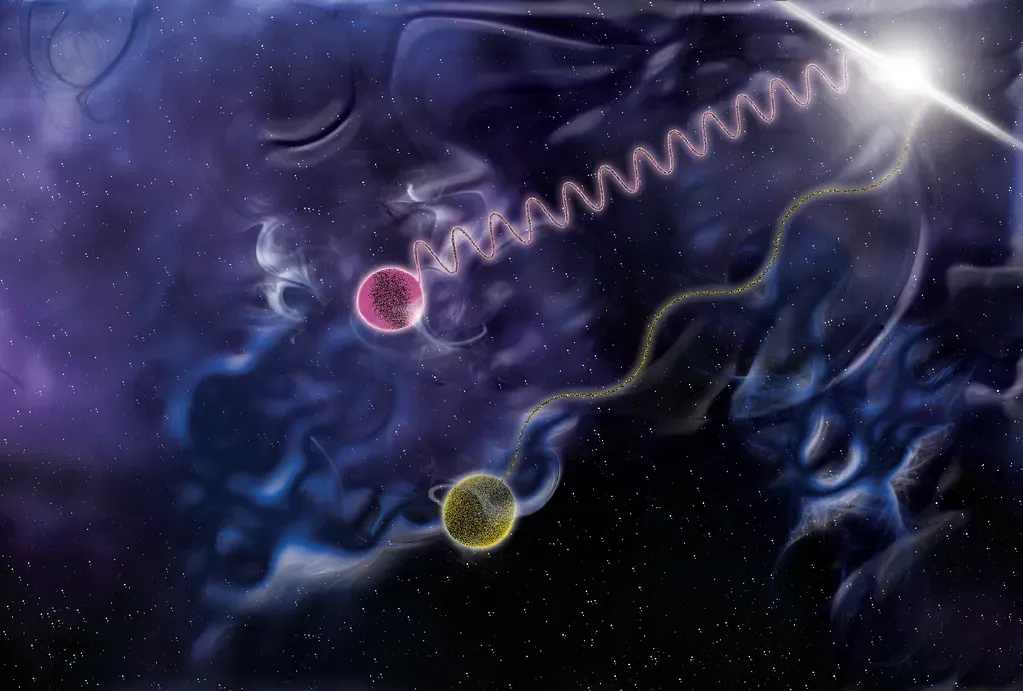
On the theoretical side, one of the most ambitious attempts to unify gravity with quantum mechanics is string theory. In this picture, the basic building blocks of the universe aren’t point-like particles, but tiny vibrating strings. Different vibration patterns produce different particles, and gravity emerges naturally from one of these vibration modes. To make the math work, string theory typically requires extra dimensions beyond the familiar three of space and one of time.
This sounds like science fiction, but the framework is mathematically rich and has led to deep insights about black holes and quantum fields. The frustrating part is that direct experimental evidence for string theory is still missing, partly because many of its effects may only show up at energies far beyond current technology. Some physicists remain passionate believers, while others are skeptical and argue that a theory without testable predictions is more philosophy than physics.
Loop Quantum Gravity and the Granular Fabric of Space
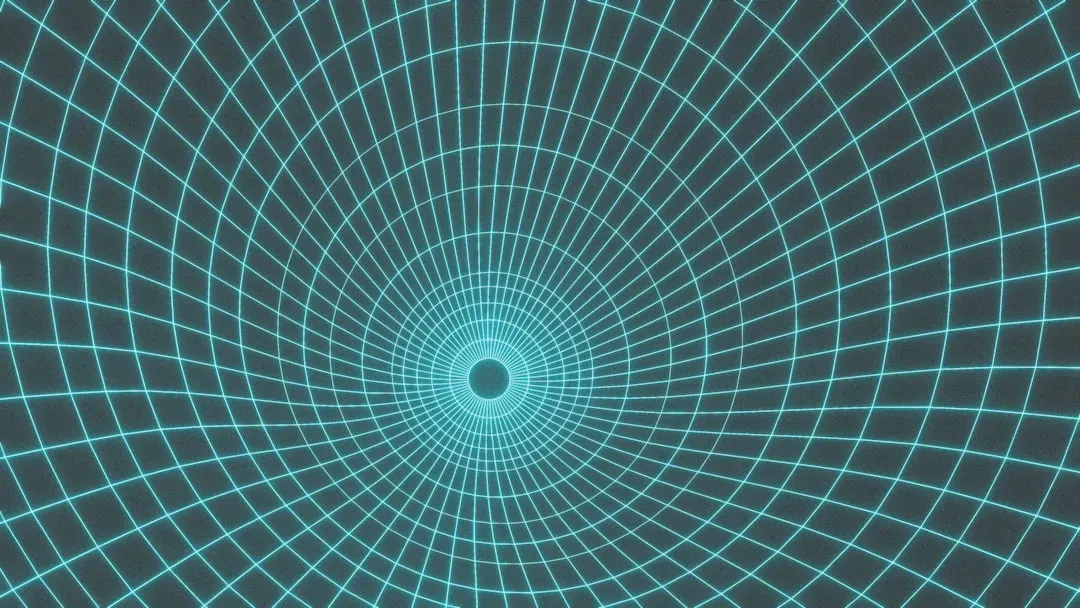
Another major approach to quantum gravity is loop quantum gravity, which takes a different route from string theory. Instead of adding extra dimensions or new types of objects, it starts with the geometry of spacetime itself and tries to quantize it directly. In this picture, space is not smooth and continuous, but made of tiny discrete loops or chunks, a bit like a woven fabric when you magnify it enough.
Some versions of loop quantum gravity suggest that the Big Bang might not have been a true beginning, but a “bounce” from a prior contracting universe. It also offers potential explanations for what happens inside black holes, where classical general relativity predicts singularities with infinite density. While still a work in progress, loop quantum gravity reflects a deep intuition many physicists share: maybe the smooth spacetime of Einstein is only an approximation, like a calm ocean hiding a choppy, grainy structure underneath.
Gravitational Waves: Listening to Space Itself
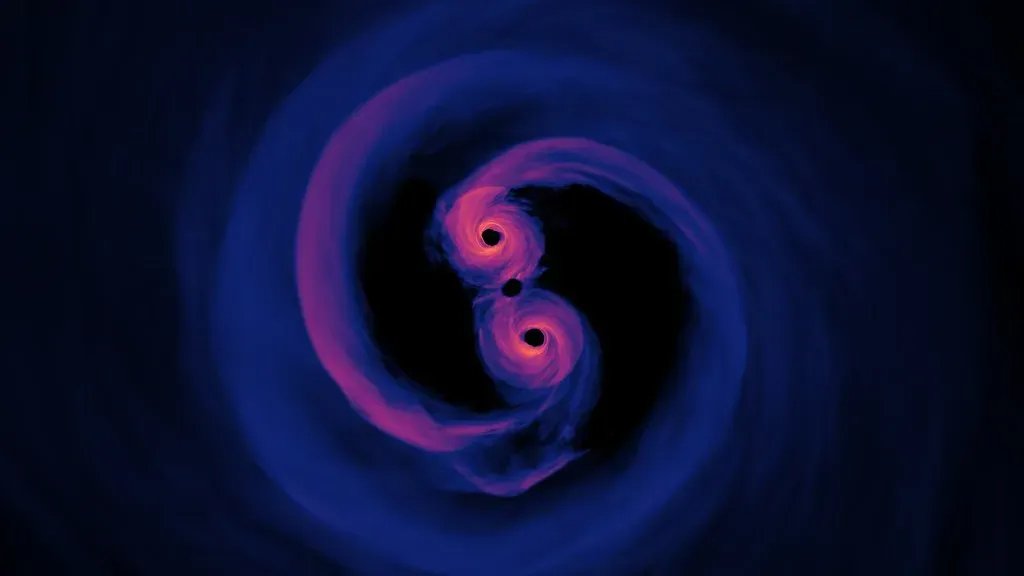
In 2015, the first direct detection of gravitational waves changed the game. These ripples in spacetime, created by violent events like colliding black holes, had been predicted by Einstein but never observed directly until advanced detectors finally became sensitive enough. Now, gravitational-wave astronomy is an active field, providing an entirely new way of “seeing” the universe that doesn’t rely on light at all.
Every new detection is a stress test for our theories of gravity. So far, general relativity has held up impressively well, even in extreme conditions. But researchers are carefully checking for tiny deviations in the wave signals that could hint at new physics or modified gravity. It’s a bit like listening to an orchestra and trying to detect a single off-key instrument; subtle, but potentially transformative if something doesn’t quite match the expected tune.
Black Holes, Event Horizons, and the Information Puzzle
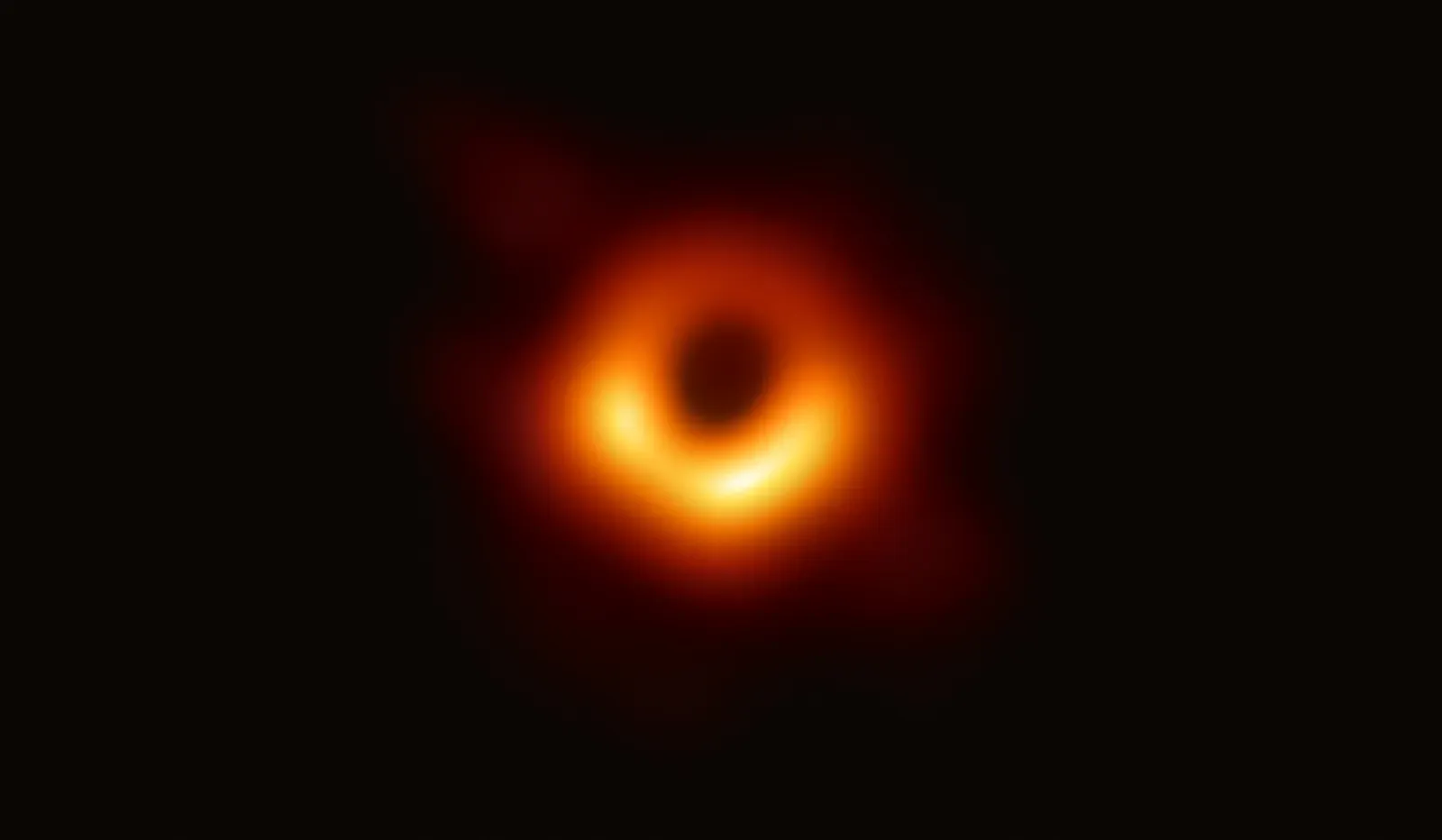
Black holes are where gravity goes to its most extreme, and they’ve become the stage for some of the deepest puzzles in modern physics. According to general relativity, a sufficiently massive collapsed object creates a region from which nothing, not even light, can escape. Yet quantum theory insists that information can’t simply vanish from the universe. This clash leads to the black hole information paradox, a problem that has pushed theorists to rethink what spacetime and gravity really are.
Recent simulations, theoretical work, and observations from projects like the Event Horizon Telescope have sharpened these questions. Some proposals suggest that spacetime near the horizon is far more complex than classical theory suggests, involving intricate quantum entanglement patterns. Others explore whether what we call a black hole might be an approximation of something slightly different and more subtle. Either way, black holes have gone from being exotic curiosities to central testing grounds for new ideas about gravity.
Emergent Gravity: What If Gravity Isn’t Fundamental?
One of the most provocative ideas is that gravity might not be a fundamental force at all, but something that emerges from deeper microscopic physics, a bit like temperature emerging from the motion of particles. In this view, spacetime and gravity could be large-scale, collective phenomena arising from some underlying quantum information structure. Several researchers have explored analogies between gravity and thermodynamics, suggesting that the equations of general relativity might resemble equations of state rather than basic laws.
This emergent perspective could help explain why gravity is so weak compared to other forces and why it resists being quantized in the usual way. It also connects to ideas about holography, where the physics in a volume of space might be fully encoded on a lower-dimensional boundary. These concepts are still highly theoretical, but they hint at a future where our current picture of gravity is reinterpreted as a kind of large-scale illusion built from deeper, more fundamental ingredients.
Where Gravity Research Might Be Heading Next
In the coming years, new telescopes, more sensitive gravitational-wave detectors, and improved experiments on Earth are all set to push our understanding of gravity further. Surveys mapping the large-scale structure of the universe will sharpen measurements of dark energy, while galaxy observations and laboratory searches continue to probe the nature of dark matter. At the same time, theorists are refining quantum gravity models, hunting for signatures that might show up in cosmic data or high-energy collisions.
It’s entirely possible that our current picture of gravity will look outdated to people reading about it a few decades from now, the way pre-Einstein physics looks to us today. For now, we live in a strangely exciting in-between era, where the everyday experience of gravity feels ordinary, but the science behind it is anything but settled. Who would’ve guessed that the force that simply pulls us to the ground is also the one dragging us to the edge of what we know?