
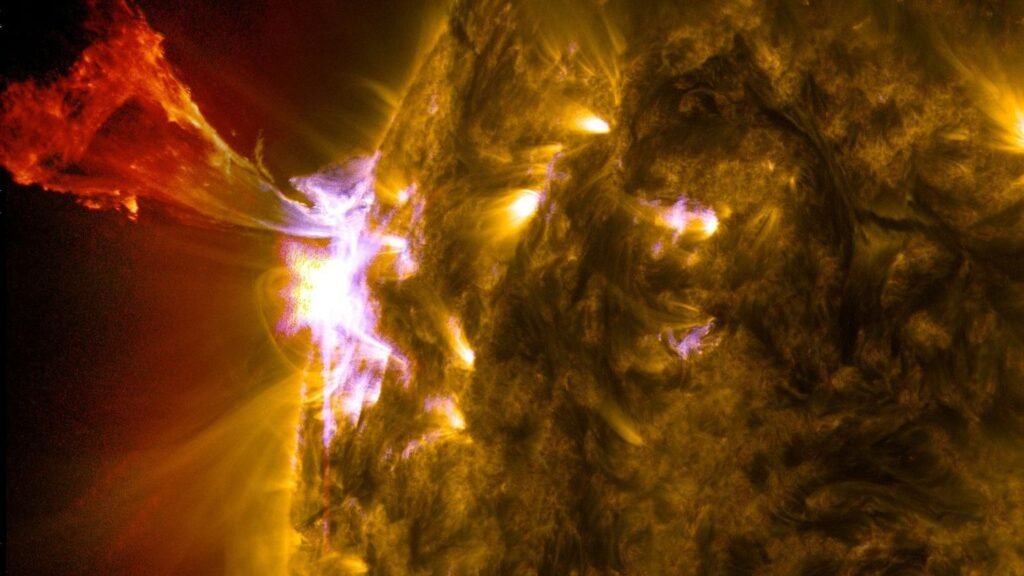

We grow up drawing it as a yellow circle with lines: the friendly ball of fire in the sky that rises, sets, and pretty much minds its own business. But the more scientists stare at the Sun with modern telescopes and spacecraft, the stranger and more unpredictable it starts to look. The star we depend on for every breath, every meal, and every moment of warmth is turning out to be far less simple than the classroom posters made it seem.
Over the last two decades, and especially with missions launched in the late 2010s and early 2020s, researchers have uncovered behaviors in the Sun that don’t fit neatly into old theories. There are regions that behave like cosmic pressure cookers, magnetic fields twisting like tangled headphones, and mysterious bursts of energy that seem to appear out of nowhere. The Sun, it turns out, is not just a gentle lamp in the sky; it’s a constantly shifting, barely contained storm – and we’re only just beginning to understand it.
The Sun’s Surface Is Not Really a “Surface” at All
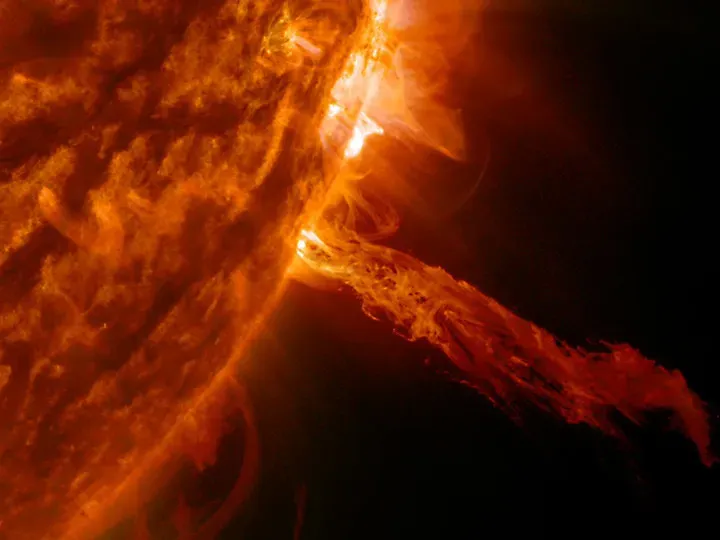
The first surprising thing is that the Sun doesn’t actually have a solid surface, even though we talk about its “surface temperature” and show images that look like a fiery crust. What we see as the solar surface, called the photosphere, is really a thin, glowing layer of gas where light escapes into space. It’s more like the top layer of a boiling pot than a hard boundary, constantly churning, bubbling, and reshaping itself on timescales of minutes and hours.
Solar observatories like NASA’s Solar Dynamics Observatory and the Daniel K. Inouye Solar Telescope have revealed this “surface” in staggering detail, showing granules the size of continents and dark sunspots larger than Earth. These patterns are driven by hot plasma rising and cooler plasma sinking, creating convection cells like the rolling water in a pot just before it boils over. It’s chaotic, violent, and utterly different from the calm yellow disk our eyes perceive from the ground. Once you see those high-resolution images, it’s hard to ever look at the Sun the same way again.
The Corona’s Bizarre Heat Problem
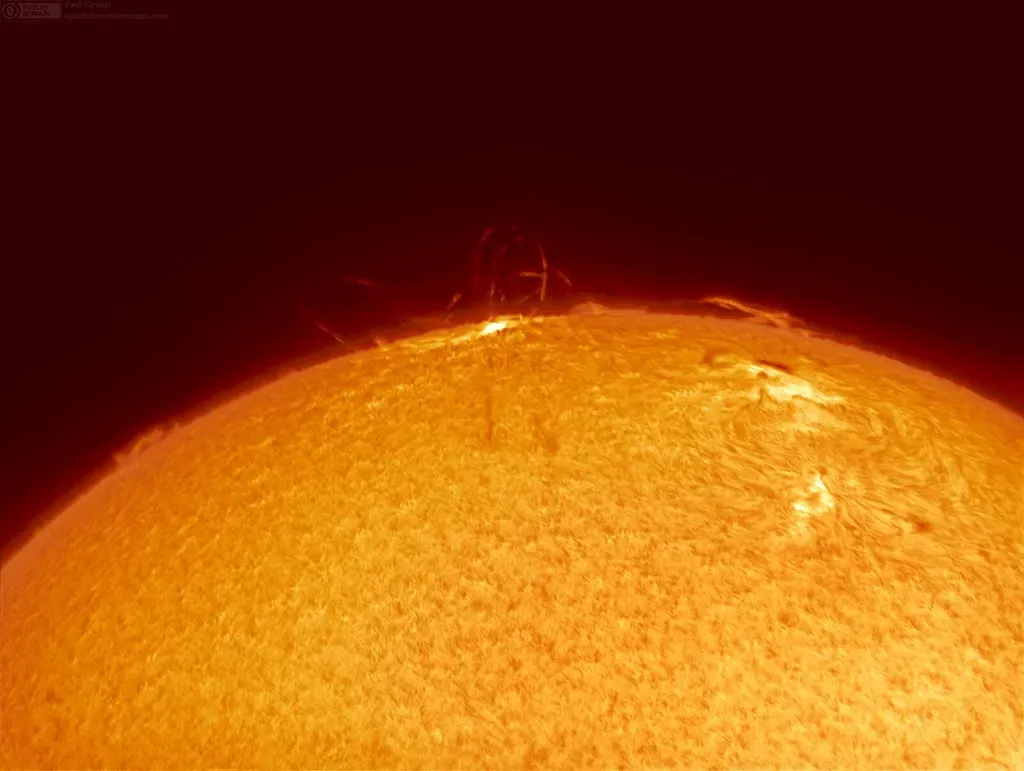
One of the most stubborn solar mysteries sounds almost like a bad joke: the outer atmosphere of the Sun, called the corona, is vastly hotter than the visible “surface” below it. The photosphere is roughly a few thousand degrees Celsius, but the corona can soar to millions of degrees. That’s like standing next to a campfire and somehow being colder than the smoke rising above it, which completely breaks our normal intuition about how heat works.
For decades, scientists had theories but not enough direct data to settle the question of what’s really heating the corona so dramatically. Recent observations from missions such as Solar Orbiter and the Parker Solar Probe, which has flown closer to the Sun than any spacecraft before, have strengthened the idea that tiny magnetic explosions and waves in the magnetic field pump energy into the corona. Imagine millions of microscopic space “earthquakes” rippling through the magnetic field, constantly dumping energy into the upper atmosphere. It’s not a complete answer yet, but we’re much closer to understanding that bizarre temperature jump than we were even ten years ago.
Solar Wind: A Constant Storm Blowing Through the Solar System
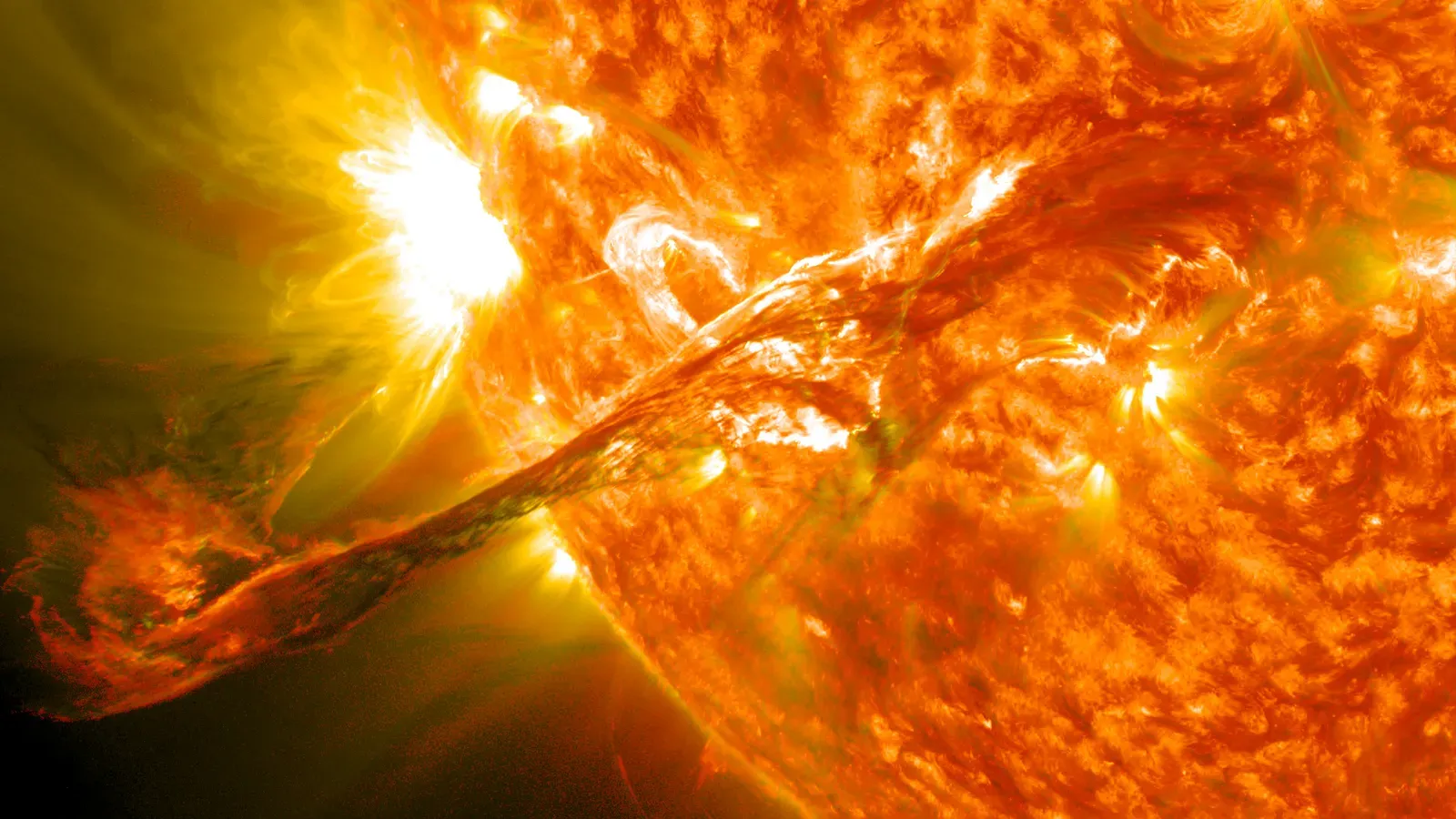
Also available on NASA’s Image and Video Library as GSFC_20171208_Archive_e001662, CC BY 2.0)
We tend to think of space as empty, but the Sun is constantly filling it with a thin but relentless stream of charged particles known as the solar wind. This wind races outward at hundreds of kilometers per second, carrying the Sun’s magnetic field along with it and shaping a gigantic bubble in space called the heliosphere. Everything in our solar system – Earth, Mars, the outer planets, even distant comets – lives inside this invisible, solar-made bubble.
Until recently, scientists struggled to pinpoint exactly where and how the solar wind forms, and why some of it is slow while some blasts out at high speed. New close-up measurements from Parker Solar Probe have shown that the wind isn’t a simple, smooth flow; it’s full of sudden flips in direction called switchbacks, as if the magnetic field lines have been kinked and snapped like a whip. These discoveries suggest that small-scale magnetic processes in the Sun’s atmosphere play a much bigger role in launching the solar wind than scientists realized, turning what seemed like a gentle breeze into a more complicated and turbulent gale.
Magnetic Fields: The Sun’s Invisible Puppet Strings
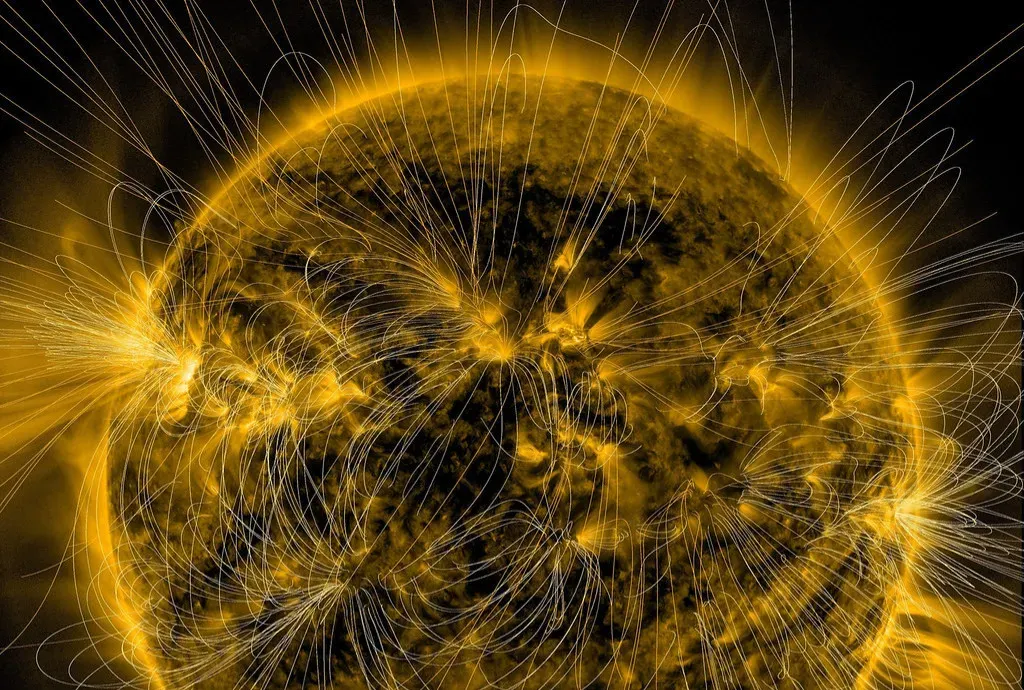
Almost everything strange the Sun does, it does because of magnetism. The dark sunspots, the explosive flares, the giant loops of glowing plasma that arc out into space – all of these are driven by complex, tangled magnetic fields generated deep inside the Sun. You can think of the Sun’s interior as a gigantic, churning electrical dynamo, where moving plasma creates magnetic fields that rise, twist, and eventually burst through the surface.
New instruments that map these magnetic fields in three dimensions have revealed that they’re far more twisted and dynamic than older models assumed. Instead of smooth, simple loops, researchers see knotted ropes of magnetism that can store enormous amounts of energy. When those knots suddenly rearrange, they can release that stored energy in powerful eruptions. In a way, the Sun is like a giant ball of elastic bands constantly being stretched and snapped; the visible light is only half the story, and the invisible magnetism is quietly pulling the strings behind the scenes.
Solar Flares and “Space Weather” That Can Hit Earth
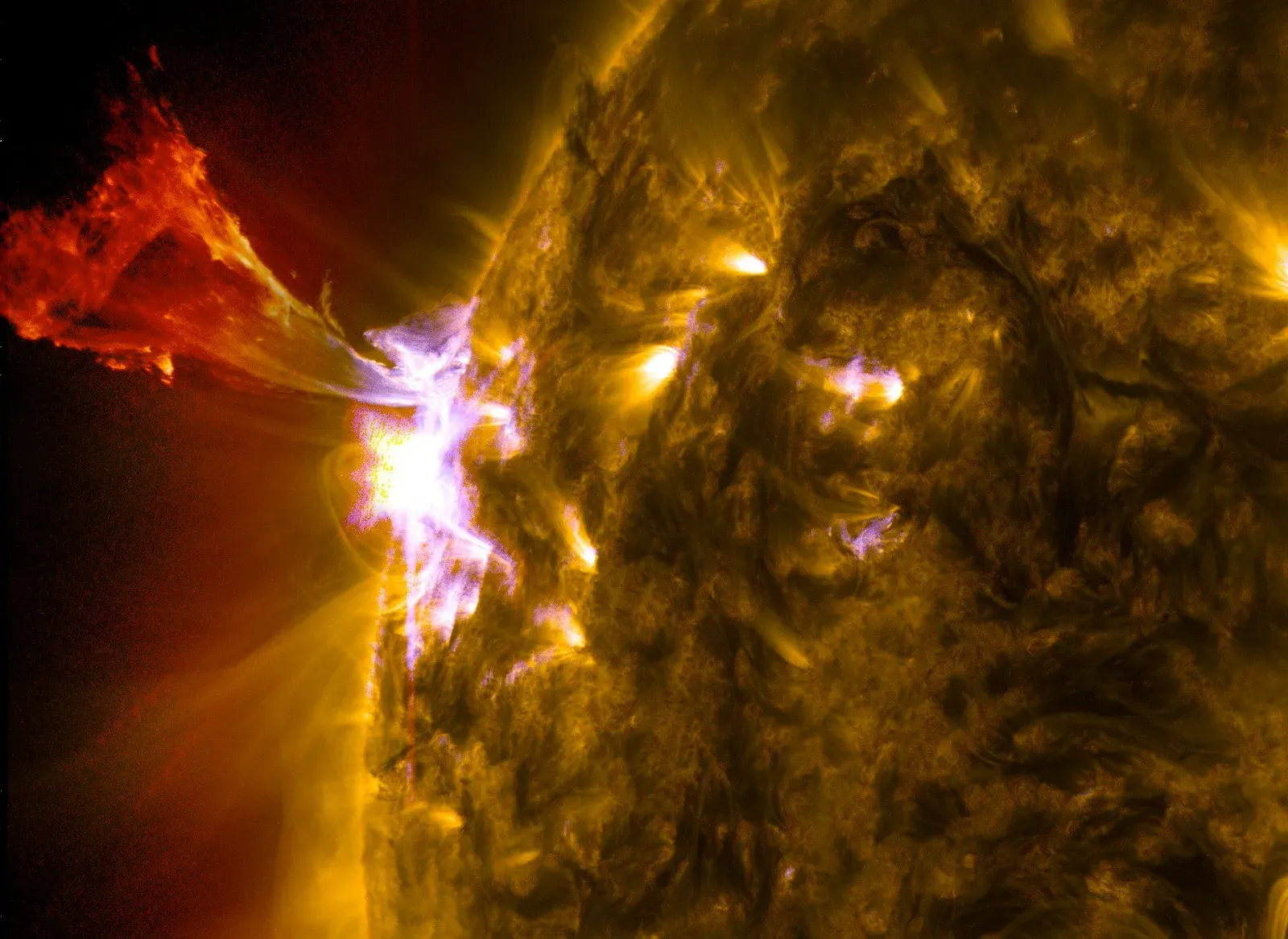
Solar flares and coronal mass ejections are among the most dramatic events the Sun can unleash, sometimes hurling billions of tons of plasma into space. When these eruptions are aimed toward Earth, they can trigger what we now call space weather: disturbances in our planet’s magnetic field and upper atmosphere. These storms can generate stunning auroras, but they can also disrupt satellites, affect GPS signals, and in extreme cases, damage power grids on the ground.
Recent years have seen big improvements in predicting these events, but it’s still far from perfect. New data from spacecraft placed at strategic points between the Sun and Earth have helped researchers build better models of how flares and ejections evolve as they travel through space. Yet the exact trigger that decides whether a tangled magnetic region will quietly rearrange itself or explode in a massive eruption remains a major unsolved puzzle. It’s a bit like trying to predict which snowpack will cause an avalanche; we understand the conditions, but not the final tipping point.
The Solar Cycle: A 11-Year Mood Swing with Surprises
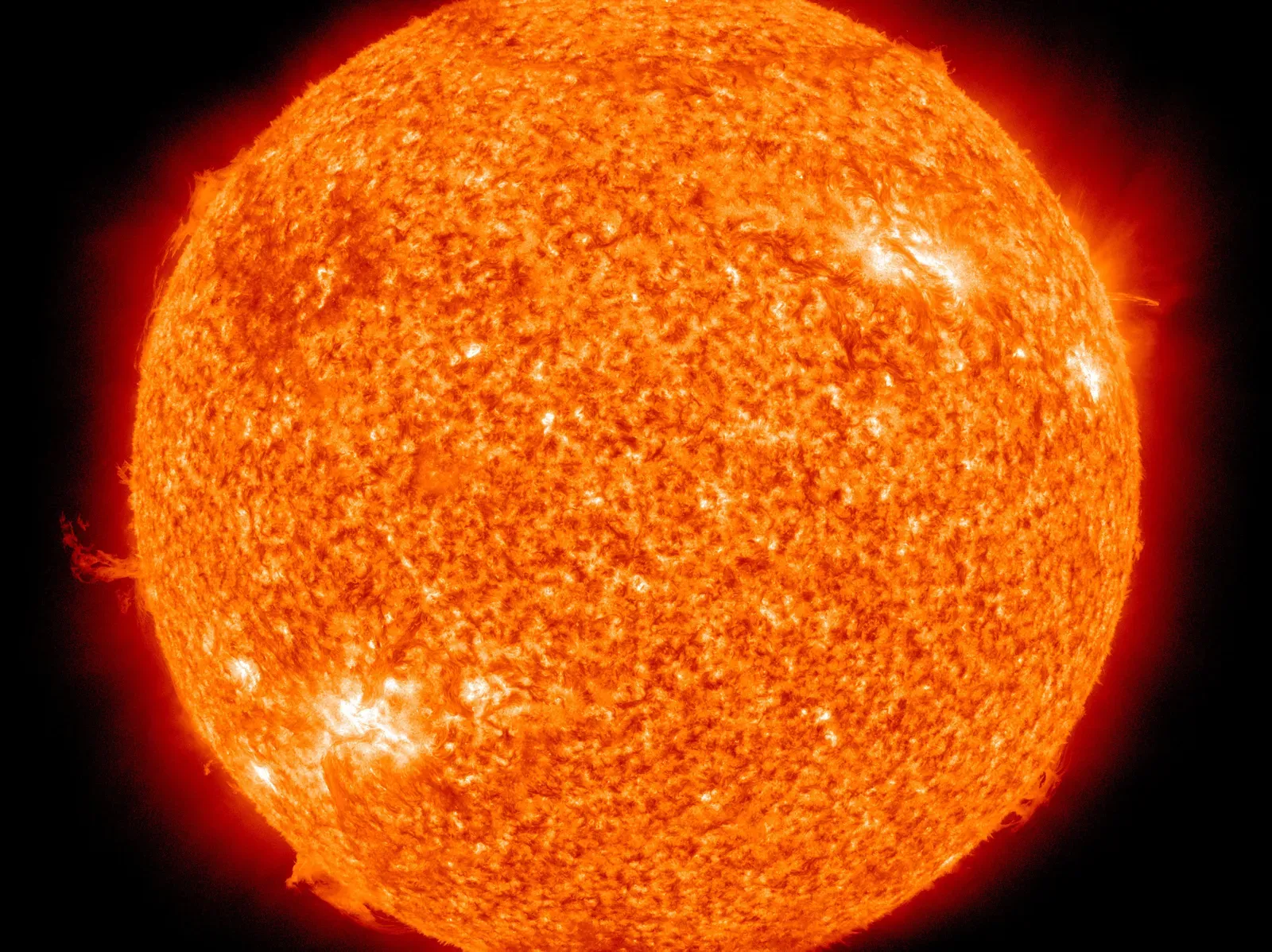
The Sun goes through a repeating cycle of activity that lasts about eleven years, swinging from quiet phases with few sunspots to busy maxima full of magnetic chaos. For a long time, this cycle seemed regular enough that scientists and even radio operators could roughly plan around it. But the last few cycles have been full of surprises, with unusually weak peaks and strange timing that shook confidence in some older predictive techniques. Nature, it turns out, didn’t sign any agreement to keep things neat for our convenience.
Modern models now treat the solar cycle not as a simple rhythm but as the product of a complex internal dynamo, where flows of plasma near the surface and deep inside the Sun interact in changing ways. Observatories that peer beneath the visible layer using a sort of “solar ultrasound” have helped track these flows more precisely. Still, even with better data and stronger computers, predicting the exact strength of each upcoming cycle remains tricky. For Earth, this matters more than it sounds, because the level of solar activity can affect satellite drag, radio communications, and even the radiation environment astronauts experience in space.
Why the Sun’s Mysteries Matter for Our Future
It’s easy to think of solar science as something abstract, the hobby of astronomers who happen to like bright things. But as our world becomes more dependent on satellites, high-frequency communications, and space-based infrastructure, the moods of the Sun start to feel uncomfortably close to home. A single extreme solar storm in the wrong direction could cause temporary blackouts, satellite failures, or major disruptions in navigation systems we now take for granted. Understanding the Sun is slowly shifting from a purely scientific curiosity to a practical necessity.
At the same time, there’s something deeply human about trying to decode the star that shaped every myth, calendar, and harvest across civilizations. New solar missions launching this decade will fly closer, see sharper, and measure more precisely than anything before, peeling back layers of mystery that have lingered for generations. I still remember seeing my first real-time solar flare animation and feeling a bizarre mixture of awe and anxiety – like watching the heartbeat of something you depend on but don’t fully control. As we learn more, the Sun feels less like a static background and more like a living system we’re finally beginning to meet on its own terms.
For all the progress we’ve made, today’s cutting-edge explanations may look quaint a few decades from now, just as older textbook diagrams now feel incomplete. The Sun is not just a distant light; it’s an active, evolving star whose behavior shapes the space around us and the technology we rely on every day. If a familiar object like our own star can still surprise us this much, what else in the universe might be hiding in plain sight?


