
Have you ever stopped to wonder what really holds your world together? The floor beneath your feet, the phone in your hand, even the light streaming through your window operates according to rules so bizarre that even the scientists who discovered them struggled to believe what they were seeing. We’re talking about quantum mechanics, a branch of physics that describes reality at its tiniest scales. It’s hard to say for sure, but the truth is we’re swimming in a sea of quantum weirdness every single second of every day, mostly without realizing it.
Here’s the thing. You don’t need a particle accelerator or a physics degree to encounter quantum effects. They’re embedded in the fabric of existence itself, determining how atoms bond, why the sun shines, and how your eyes process the colors around you. Yet despite a century of research and countless technological breakthroughs, the deepest questions about what quantum mechanics actually means remain hauntingly unanswered. Let’s dive in.
The Measurement Problem That Still Haunts Physicists
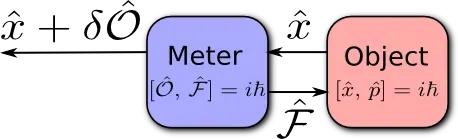
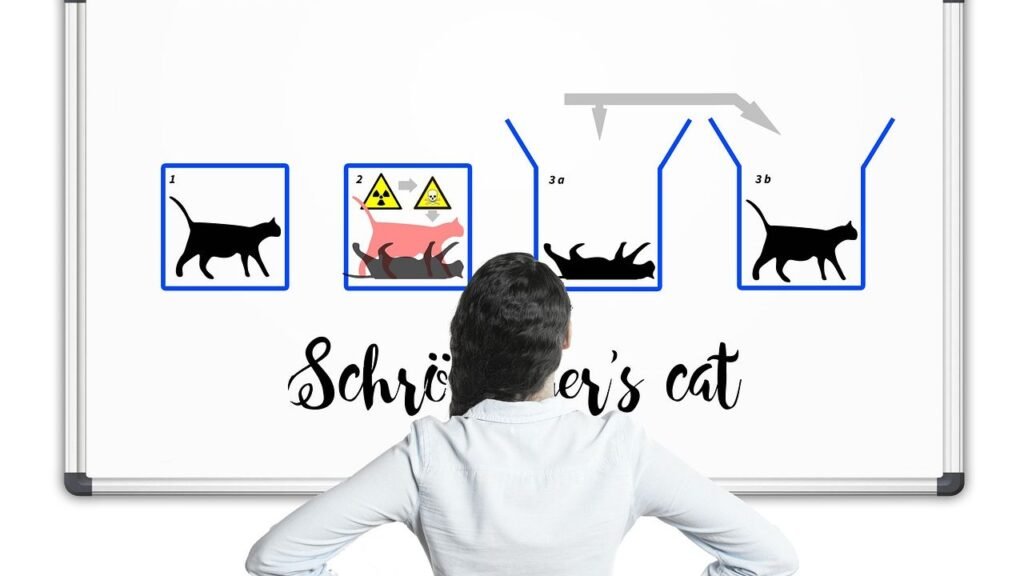
Scientists struggle to interpret what quantum theory implies about nature, particularly how the act of measurement pins down the indeterminate behavior of atoms. Picture this: an electron doesn’t have a definite location until you look at it. Sounds crazy, right? The standard framing has an unsettling anthropocentric flavor, suggesting humans play some special role in shaping the universe, yet theorists are now emphasizing how observers do indeed create the world they inhabit.
Physicist Anton Zeilinger outlined his view that quantum states exist only in his head and describe information rather than reality, while Heisenberg and Bohr argued that an unobserved particle’s properties really were fundamentally unfixed until measurement. This isn’t just philosophical hand-wraving. It strikes at the heart of what we mean by “real” in the first place. What’s at stake is nothing less than reality itself.
Superposition Makes Your Computer Work

Let’s be real, superposition sounds like science fiction. Superposition describes the condition in which a quantum system can exist in multiple states simultaneously, and because a qubit is a quantum mechanical system, it can exist in both the zero state and the one state, or any linear combination of the two. Think of it like a coin spinning in the air, being both heads and tails at the same time until it lands.
Semiconductors accommodate a wide range of currents and voltages, making them useful in everyday electronics such as computers, LED lights, TVs, cell phones, and smart devices. Your smartphone, your laptop, every digital device around you relies on transistors that exploit quantum tunneling. The device you’re likely holding right now relies on quantum mechanics, with transistors operating based on quantum physics principles, including quantum tunneling that allows electrons to tunnel through barriers. Without quantum weirdness, we’d still be in the Stone Age technologically speaking.
Entanglement Defies Common Sense and Distance
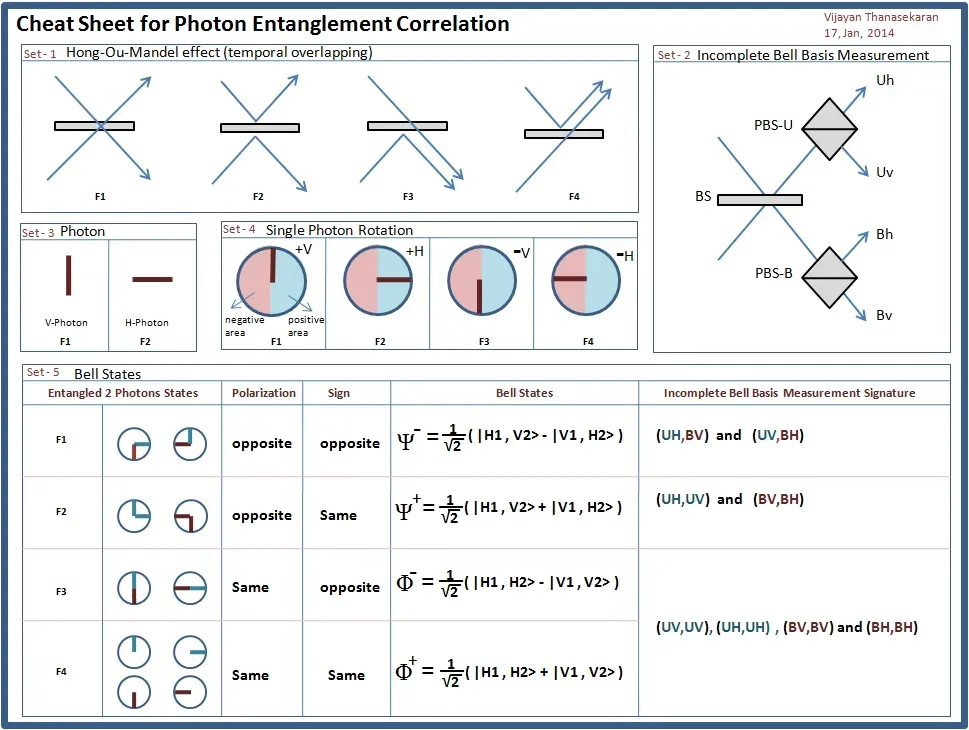
Here’s where things get truly bizarre. Quantum entanglement describes a connection between quantum objects that remains intact even across vast distances, where entangled particles’ states are linked in such a way that the state of one instantly determines the state of the other, no matter how far apart they are. Einstein famously hated this idea, calling it spooky action at a distance.
The outcome of measurement on one qubit will always be correlated to the measurement on the other qubit, even if the particles are separated from each other by a large distance. Picture two coins flipped simultaneously on opposite sides of the galaxy. When one lands on heads, the other instantly becomes tails. No signal passes between them. No speed limit is violated. A common misunderstanding is that entanglement could be used to instantaneously send information from one point to another. It can’t be used for communication, which somehow makes it even more mysterious.
Quantum Computing Promises Revolutionary Change
Traditional computers process information one bit at a time, chugging through calculations sequentially. Because classical bits can be in only one of two possible states, classical computers can perform only one computation at a time, whereas because a qubit can be in a superposition of zero and one, quantum computers can perform multiple computations in parallel by processing all possible states at once.
The combination of superposition and entanglement enables quantum computers to perform numerous calculations in parallel, dramatically increasing computing power and making them potentially capable of solving problems that are far too complex for classical computers. Honestly, the potential is staggering. We’re talking about drug discovery, climate modeling, financial optimization, and cryptography applications that would take conventional supercomputers millions of years to solve. Princeton engineers built a superconducting qubit that lasts three times longer than today’s best versions, with the new qubit lasting over one millisecond, three times longer than the best ever reported and nearly fifteen times longer than the industry standard.
Your GPS Relies on Quantum Clocks

Every time you use navigation on your phone, you’re depending on quantum mechanics working flawlessly. Atomic clocks are calibrated against the microwave frequency required to move an electron in an atom from a lower quantum energy state to a higher one, and using this technology, time can be measured within a margin of error of only one second in up to one hundred million years.
Atomic clocks are integral to global positioning systems, including those found in mobile phones, and are also used to send signals to spacecraft to determine their position. The precision required for GPS to work demands quantum-level accuracy. Without it, your navigation app would be off by miles instead of meters. The precision of quantum mechanics ensures that GPS systems can accurately determine locations. It’s one of those things we take completely for granted until you realize the quantum gymnastics happening behind the scenes.
The Sun Shines Because of Quantum Tunneling

Here’s something most people don’t know. The sun’s energy comes from nuclear fusion, hydrogen atoms combining to form helium, a process only possible because of quantum tunneling, which allows particles to pass through energy barriers that would be impossible in classical physics, and without quantum tunneling, the sun couldn’t produce the energy that sustains life on Earth.
Classically speaking, the temperatures and pressures inside the sun shouldn’t be enough for fusion to occur. The nuclei should repel each other too strongly. Yet quantum mechanics says particles can sometimes appear on the other side of barriers they shouldn’t be able to cross. It’s like walking through a wall, except at the atomic level it actually happens. Every photon of sunlight that warms your skin exists because quantum rules allow the impossible.
Photosynthesis May Use Quantum Tricks

Plants are better quantum engineers than we are. Photosynthesis is a highly optimized process from which valuable lessons can be learned about operating principles in nature, with its primary steps involving energy transport operating near theoretical quantum limits in efficiency, and recent research was motivated by the hypothesis that nature used quantum coherences to direct energy transfer.
The conversion process of photosynthesis happens at close to one hundred percent efficiency, and a viable description to account for the near-perfect conversion rate has eluded scientists for a long time, though recently solutions based on quantum mechanics have demonstrated how plants can achieve photosynthesis with high conversion efficiency. There’s still scientific debate about exactly which quantum effects matter most, but the efficiency is undeniable. Recent research indicates that chlorophyll within plants appears to exploit the feature of quantum superposition to achieve greater efficiency in transporting energy. Nature figured out quantum optimization billions of years before we did.
Medical Imaging Sees Inside You Through Quantum Spin

MRI machines are quantum devices hiding in plain sight. The positively charged proton of a hydrogen atom has a quantum spin associated with it, and when a strong external magnetic field is applied, the axes of atomic magnetic fields align, then specially tuned radio frequency pulses temporarily knock some of the hydrogen atoms out of alignment.
The field of medicine is touched by the quantum world, as magnetic resonance imaging relies on the principles of quantum mechanics to create detailed images of the human body’s internal structures. Doctors can see tumors, torn ligaments, and brain activity without ever cutting you open, all because we’ve learned to manipulate the quantum properties of hydrogen atoms in your body. MRI machines use the principles of quantum physics to look inside the human body without surgery, working by detecting the magnetic fields of atoms in our body. That’s genuinely remarkable when you think about it.
Lasers Are Pure Quantum Light
Lasers can emit concentrated beams of light because the light waves are all going in the same direction and are coherent with identical frequencies and waveforms, with the generation of laser light relying on stimulated emission, in which a photon stimulates an already excited atomic electron to drop to a lower quantum energy state and release two identical photons. This cascade effect creates the intense, focused beams we use for everything from surgery to barcode scanners.
Lasers, which are used in everything from scanning barcodes at the supermarket to removing tattoos, operate on the principles of quantum mechanics. The grocery store checkout, your Blu-ray player, fiber-optic internet, laser eye surgery, all depend on our ability to coax atoms into releasing photons in lockstep. Quantum mechanics is the backbone of technologies that shape our lives, from lasers and microchips to quantum computers and secure communications. It’s quantum choreography on a massive scale.
Where We Go From Here
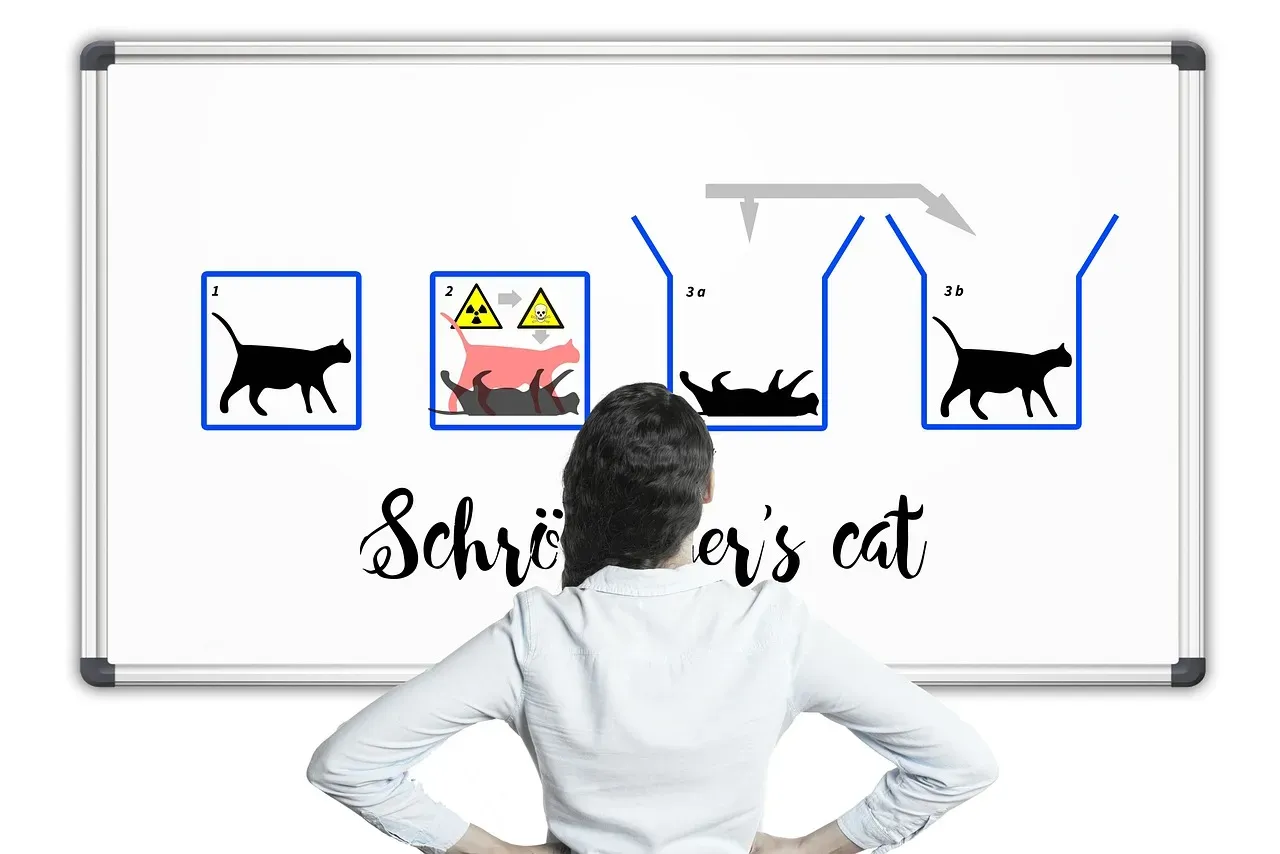
Hundreds of physicists convened to commemorate the birth of quantum mechanics, which has earned its keep by predicting experimental outcomes with immaculate precision and enabling technologies such as lasers, transistors, and atomic clocks, yet even today, scientists struggle to interpret what the theory implies about nature. We’ve built an entire technological civilization on quantum foundations we don’t fully understand.
Quantum mechanics is one of the most successful theories in science and makes much of modern life possible, with technologies ranging from computer chips to medical-imaging machines relying on equations that describe the behavior of objects at the microscopic scale. The practical applications work brilliantly. The philosophical implications remain deeply troubling. We don’t need to fix quantum mechanics to make it compatible with what we observe; we need to recognize that there are alternative ways of looking at the world.
So here we are in 2026, surrounded by quantum technology, still arguing about what it all means. Our reality is shaped by rules that defy intuition, rules that allow particles to be in two places at once, to communicate instantaneously across cosmic distances, to tunnel through impossible barriers. We’ve harnessed these phenomena to create miracles of engineering, yet the deepest mystery remains. What does quantum mechanics tell us about the nature of reality itself? Did you expect that the world beneath appearances would be this strange?