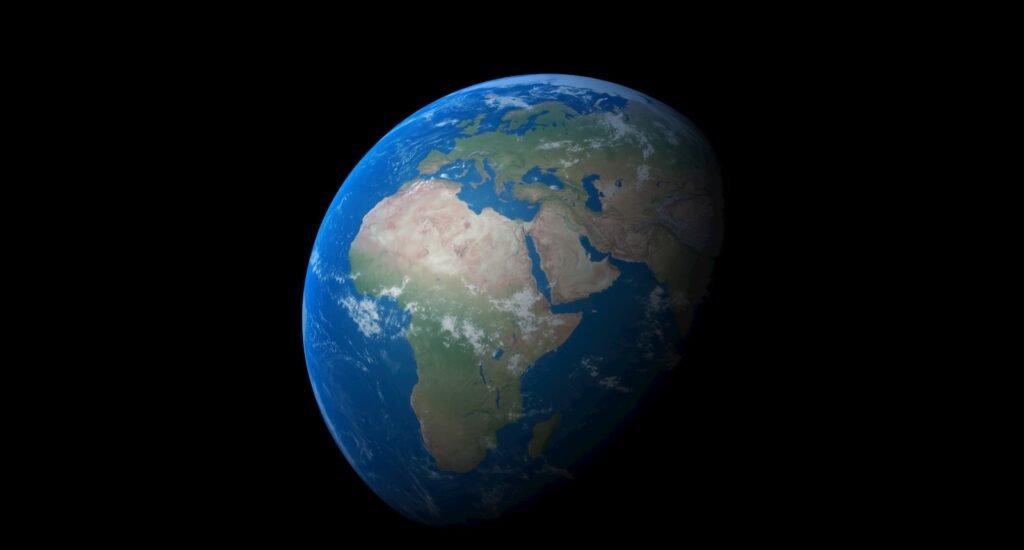

Stand on any quiet stretch of ground and it feels still, almost timeless, but the soil under your feet is the wreckage of worlds that came before you. Our planet has frozen solid, boiled with lava, nearly choked on its own gases, and been hit hard enough from space to reset the biological clock. Each of those upheavals did more than scar the landscape; they rewrote the rules for what life could be, including us. This article follows a handful of those turning points, from invisible microbes re‑engineering the atmosphere to continents ripping apart and slamming back together. Seen together, they tell a story that is less about slow, gentle change and more about a restless planet constantly forcing life to adapt or disappear.
When Microbes Poisoned the Sky and Gave Us Breath
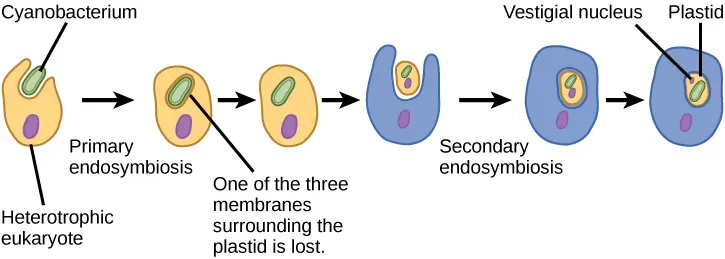
Imagine a world where oxygen is a deadly waste product and the air would suffocate you in a heartbeat – that was Earth more than two billion years ago. The planet’s oceans were ruled by microbes that thrived without oxygen, feeding on dissolved iron and volcanic gases. Then a new group of bacteria evolved the trick of photosynthesis, using sunlight to split water and releasing oxygen they did not need. At first, that oxygen reacted with iron in the oceans, forming vast rust-colored deposits that today we mine as iron ore.
Only after those chemical sinks filled up did oxygen begin to leak into the atmosphere, turning a trace contaminant into a planetary force. For most existing microbes, this was catastrophic; oxygen damaged their cells, and many lineages vanished or retreated into oxygen-free niches. But for others, the new gas became an opportunity, powering more efficient ways to extract energy from food. That slow, invisible revolution – driven by organisms smaller than dust – ultimately made complex, energy-hungry life like animals, forests, and human brains even possible.
Snowball Earth: When the World Almost Froze Solid
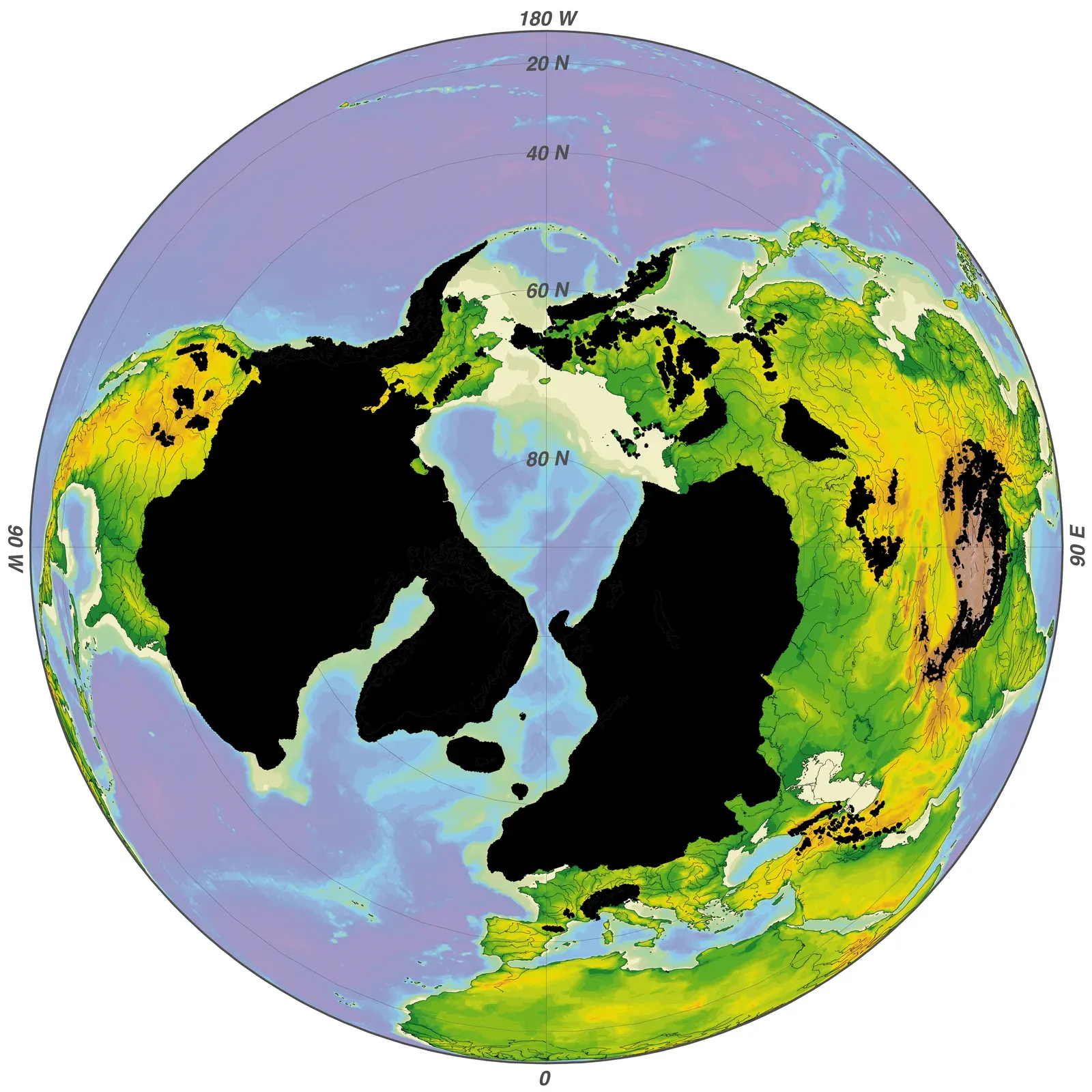
Hundreds of millions of years after oxygen first rose, Earth appears to have swung to the opposite extreme of habitability. Geological evidence from places like Namibia, Canada, and China suggests that glaciers once reached nearly to the equator, covering much of the planet in ice. Tropical seas may have been roofed over by thick ice sheets, with only thin films of liquid water circulating below. It is one of the starkest images in Earth science: a blue world turned white, sunlight bouncing away, temperatures sinking further.
Yet life did not blink out during these “Snowball Earth” episodes; it hunkered down and, in some ways, sharpened its toolbox. Volcanic eruptions kept pumping carbon dioxide into the air, while weathering slowed on the frozen continents, allowing greenhouse gases to build up. Eventually, the planet tipped back, the ice retreated, and wild swings in climate followed. Right after one of these frozen episodes, fossils show a burst of larger, more complex organisms. It is hard not to see a pattern: extreme stress crushing ecosystems, then rewarding whatever evolution managed to keep alive with an open world to colonize.
Continents on the Move and the Birth of Diverse Habitats
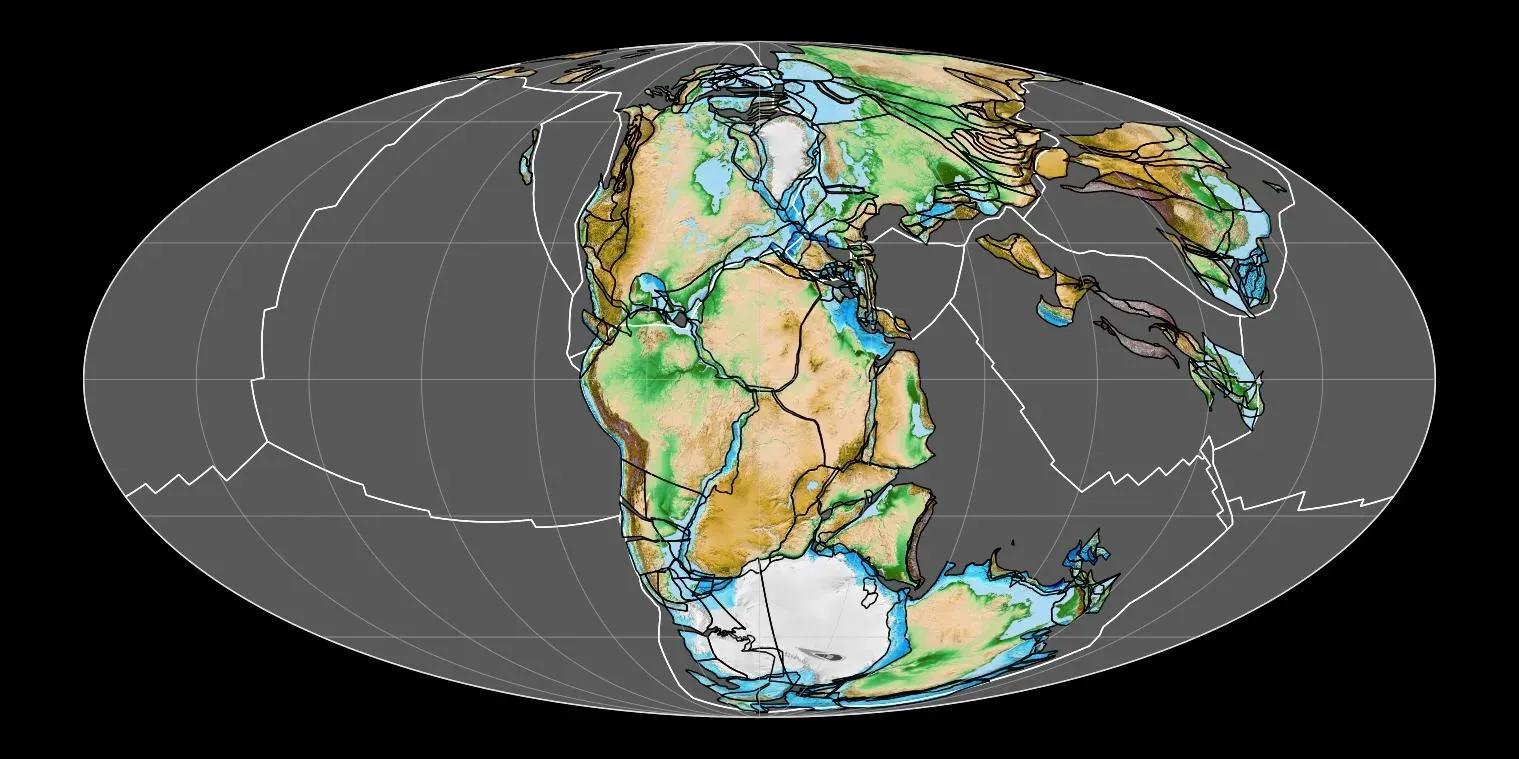
From a human viewpoint, continents look nailed in place, but on geological timescales they drift like slow rafts on a convecting mantle. Wartime sonar in the twentieth century first revealed the mid-ocean ridges that hinted at seafloor spreading, confirming that entire landmasses have collided, broken apart, and reassembled many times. Those collisions raise mountain chains, open and close seaways, and reroute ocean currents. Each change shuffles climate patterns, turning wet regions dry and transforming coastlines into inland deserts or lush deltas into drowned plains.
For life, continental drift has acted like an enormous experiment in isolation and reconnection. When a supercontinent such as Pangaea forms, species can spread widely but often face more uniform climates and fewer barriers. When that supercontinent later splits, populations are stranded on drifting fragments, evolving into distinct lineages as conditions diverge. Some of the planet’s most iconic ecosystems – from the unique marsupials of Australia to the strange plants of South Africa’s Cape – owe their existence to this slow ballet of rock beneath the oceans, long before humans ever mapped a coastline.
Shallow Seas and the Cambrian Explosion of Body Plans
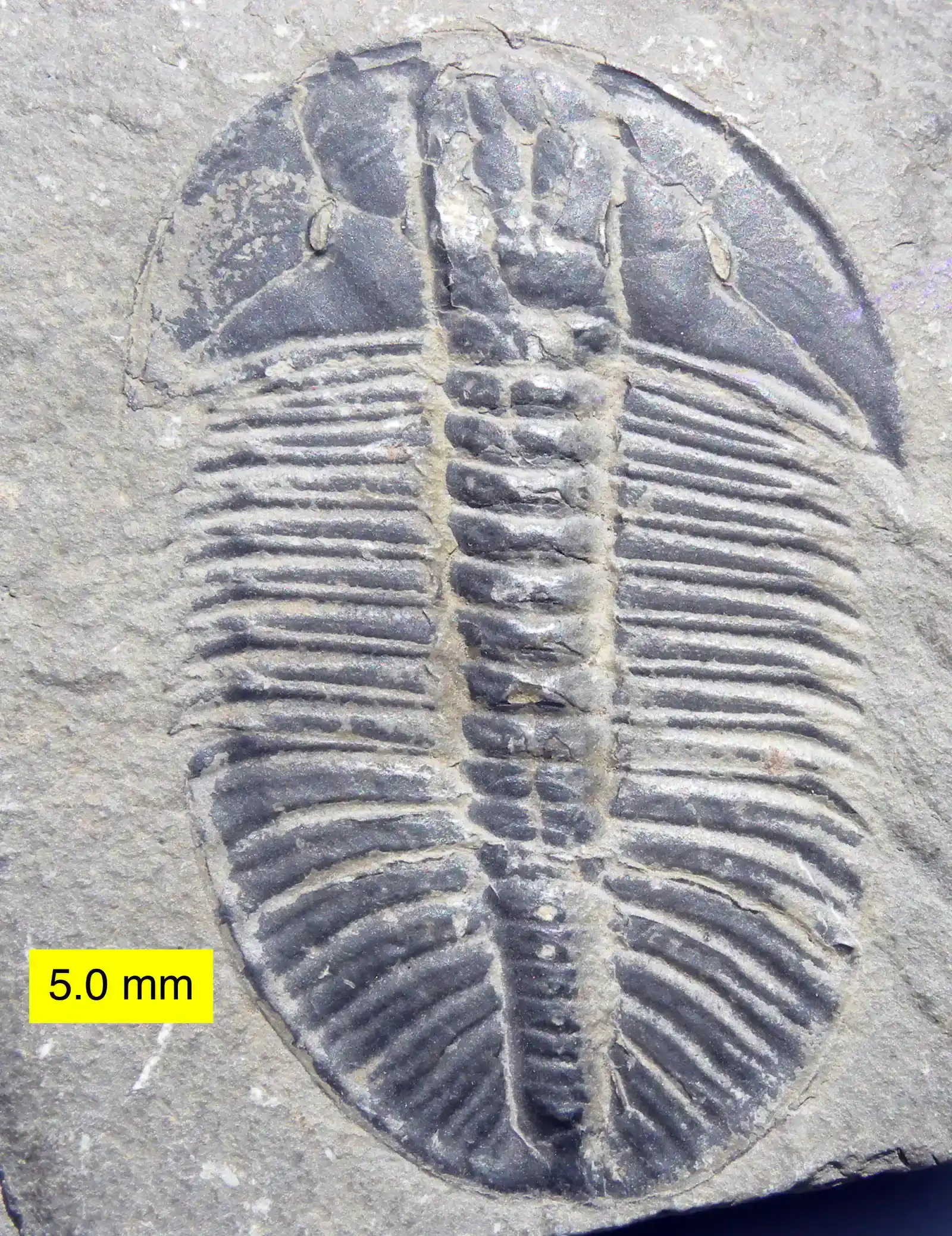
Roughly more than half a billion years ago, something extraordinary happened in Earth’s shallow seas: a riot of new body plans appeared in a geologically short span of time. Sediments from places like the Burgess Shale in Canada and Chengjiang in China preserve creatures with spines, eyes, legs, armor, and feeding appendages that look both alien and oddly familiar. Before this event, most life had been soft-bodied and relatively simple; afterward, ecosystems were full of predators, burrowers, swimmers, and filter-feeders competing and interacting in complex ways. The term “Cambrian explosion” captures how abruptly these forms show up in the fossil record, even if the evolutionary groundwork took longer.
Several factors likely converged to make this burst of innovation possible: higher oxygen levels, changing seawater chemistry, and expanding continental shelves that created wide, sunlit habitats. Once animals could build hard skeletons and move more efficiently, an evolutionary arms race took off, with prey evolving defenses and predators responding in kind. Many of those early experiments left no descendants, but some gave rise to the major animal groups that dominate today, including the ancestors of arthropods and vertebrates. Every fish, bird, and mammal you know is, in a deep sense, a footnote to that ancient surge of creativity along the seafloor.
Mass Extinctions: Five Shocks That Rewrote the Cast of Life
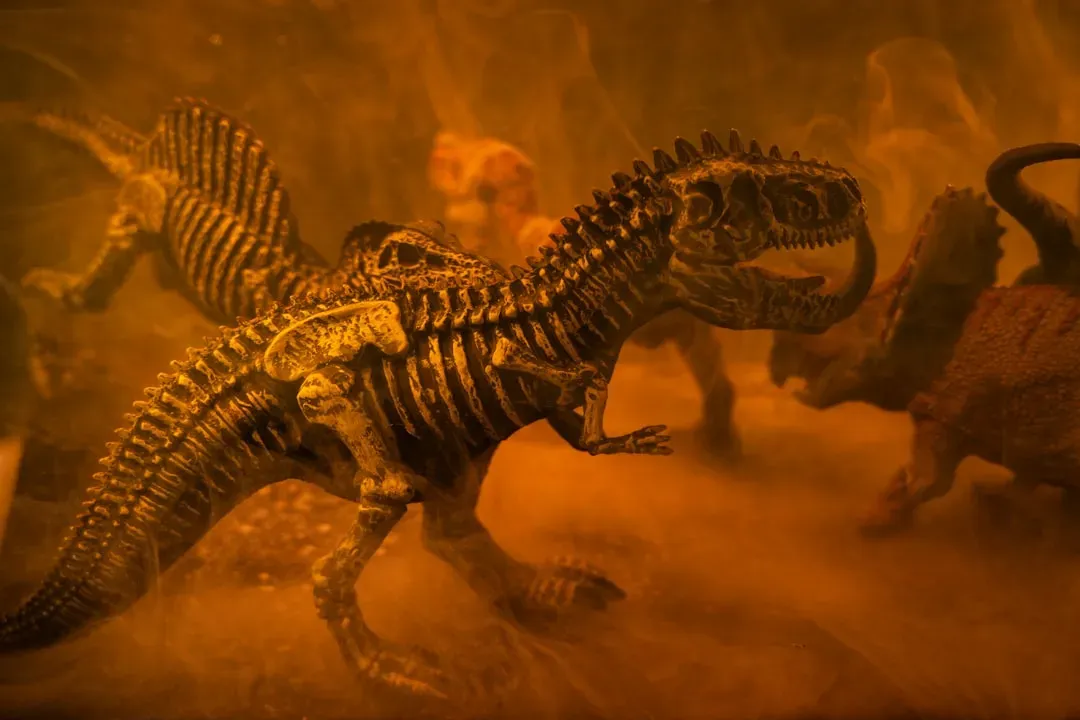
Earth’s history is not a gentle curve of increasing diversity; it is a jagged line interrupted by collapses where much of life abruptly disappears. Paleontologists recognize at least five great mass extinctions in the last half billion years, when a large slice of species vanished in what amounts to an geological instant. The end-Permian event, sometimes called the Great Dying, saw most marine species and many land-dwellers wiped out, likely driven by massive volcanic eruptions in what is now Siberia. These eruptions spewed greenhouse gases, acidified oceans, and may have stripped oxygen from the seas, leaving behind hostile, stagnant waters.
Each mass extinction did more than clear the stage; it changed the kind of stories evolution could tell afterward. Groups that had been minor players suddenly found empty niches to fill, while formerly dominant organisms were gone for good. After the end-Permian disaster, for example, early relatives of dinosaurs and mammals eventually rose in ecosystems that would have been unrecognizable a few million years earlier. From a distance, the pattern feels uncomfortably familiar: rapid environmental change, stressed ecosystems, and cascading losses. The difference now is that our species is one of the driving forces, not just a future fossil recording the damage.
The Day the Sky Fell: Asteroids, Dinosaurs, and Mammal Opportunity
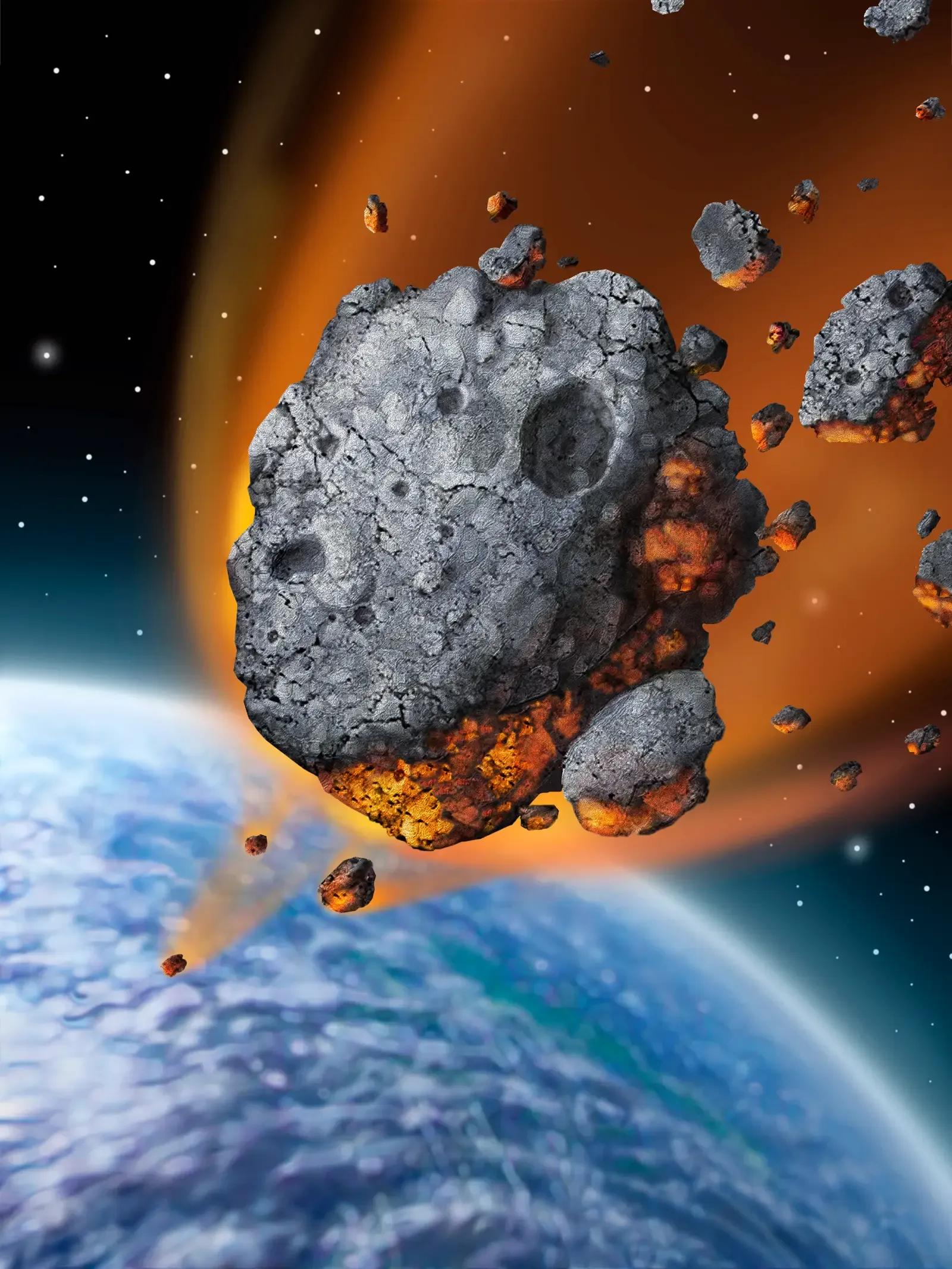
Sixty-six million years ago, a space rock several miles across slammed into what is now Mexico’s Yucatán Peninsula, releasing more energy than the world’s nuclear weapons combined. The impact excavated a vast crater, hurled molten rock and dust around the globe, and probably ignited widespread wildfires. In the weeks and months that followed, sunlight dimmed under a veil of airborne debris, photosynthesis faltered, and food chains buckled from the bottom up. Large animals on land and in the oceans, including all non-avian dinosaurs, fared especially badly in this collapse.
Yet this disaster created room for something new. Small, adaptable mammals that had lived in the dinosaurs’ shadow suddenly faced a world with open habitats and fewer giant competitors. Over tens of millions of years, those survivors diversified into bats, whales, primates, and eventually the lineage that produced humans. It is a deeply humbling twist: without a random celestial collision, there might be no people puzzling over dinosaur bones or debating asteroid defense strategies. The same blow that ended one reign on Earth accidentally paved the way for another.
Analysing the Pattern: A Restless Planet and the Rules of Resilience
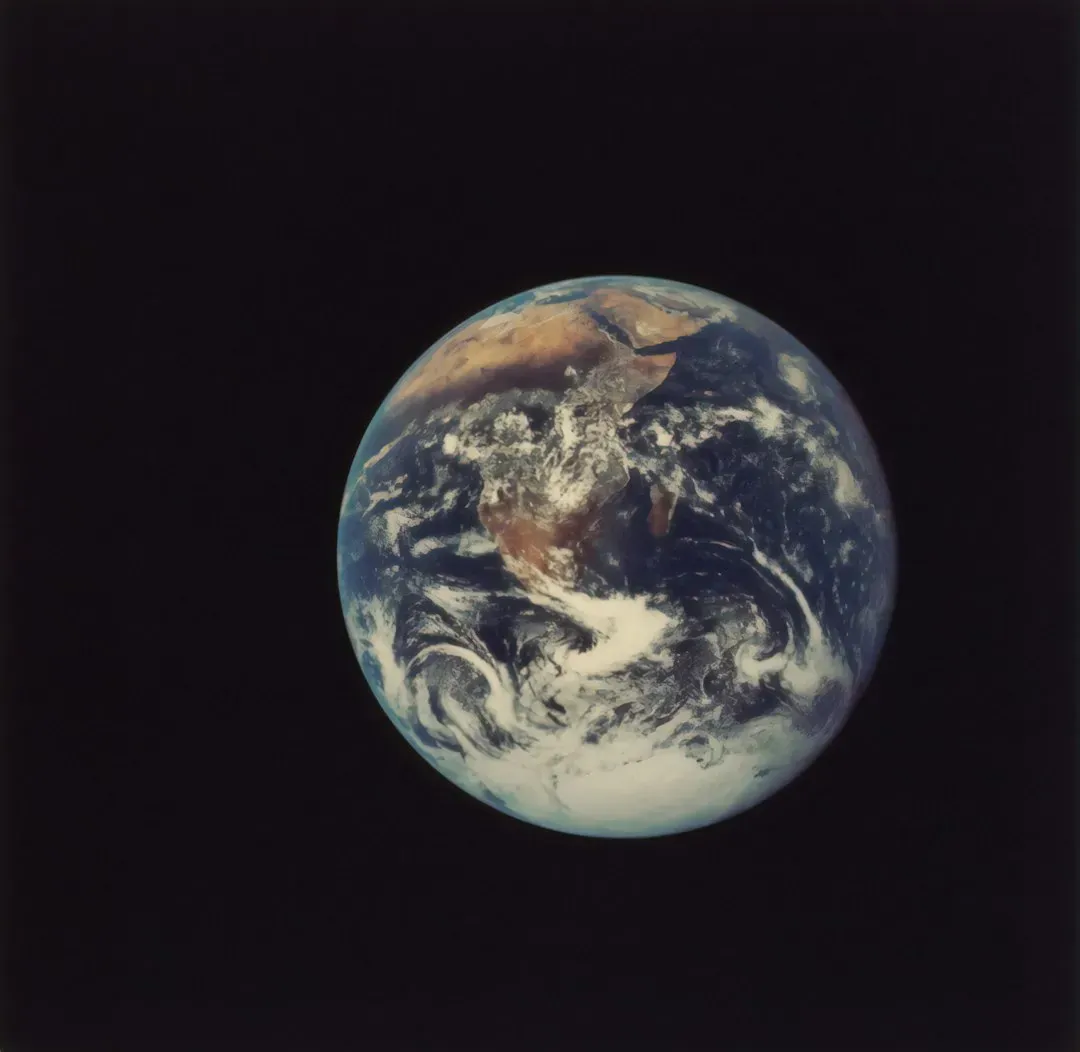
When you line up these events – the oxygenation of the atmosphere, global glaciations, continental collisions, evolutionary bursts, and mass extinctions – a clear theme emerges: Earth itself is not a stable backdrop but an active participant in life’s story. Early geologists once pictured a mostly steady planet with occasional floods or regional upheavals, while biologists imagined evolution as a gradual, even process. Modern evidence has overturned that comforting picture, revealing instead a world punctuated by short, sharp shocks that ripple through every ecosystem. The old debate between slow change and catastrophe has softened into a synthesis, where long trends and sudden crises work together to shape the tree of life.
These insights have practical weight, not just philosophical charm. They tell us that biodiversity is both remarkably robust over enormous spans of time and terrifyingly vulnerable to rapid disruption. They show that small, often invisible organisms – like early oxygen-producing microbes – can transform the entire planet without any intent or awareness. And they underline that our own industrial reshaping of the atmosphere and climate is not happening in a vacuum; it is joining a long tradition of planetary upheavals, but with one crucial difference: this time, the trigger can read its own warning signs and choose how to respond.
Unfinished Business: Open Questions Beneath Our Feet
For all the dramatic headlines we can write about Snowball Earth or dinosaur-killing asteroids, scientists are still arguing over key details in almost every chapter. How completely did ice cover the oceans during the coldest episodes, and how did photosynthetic life hold on in such grim conditions. Exactly how many different triggers combined to produce the worst mass extinctions, and in what order did they cascade through ocean chemistry and climate. Even the timing and tempo of the Cambrian explosion continue to be refined as new fossil sites and dating techniques push the boundaries of what we can see.
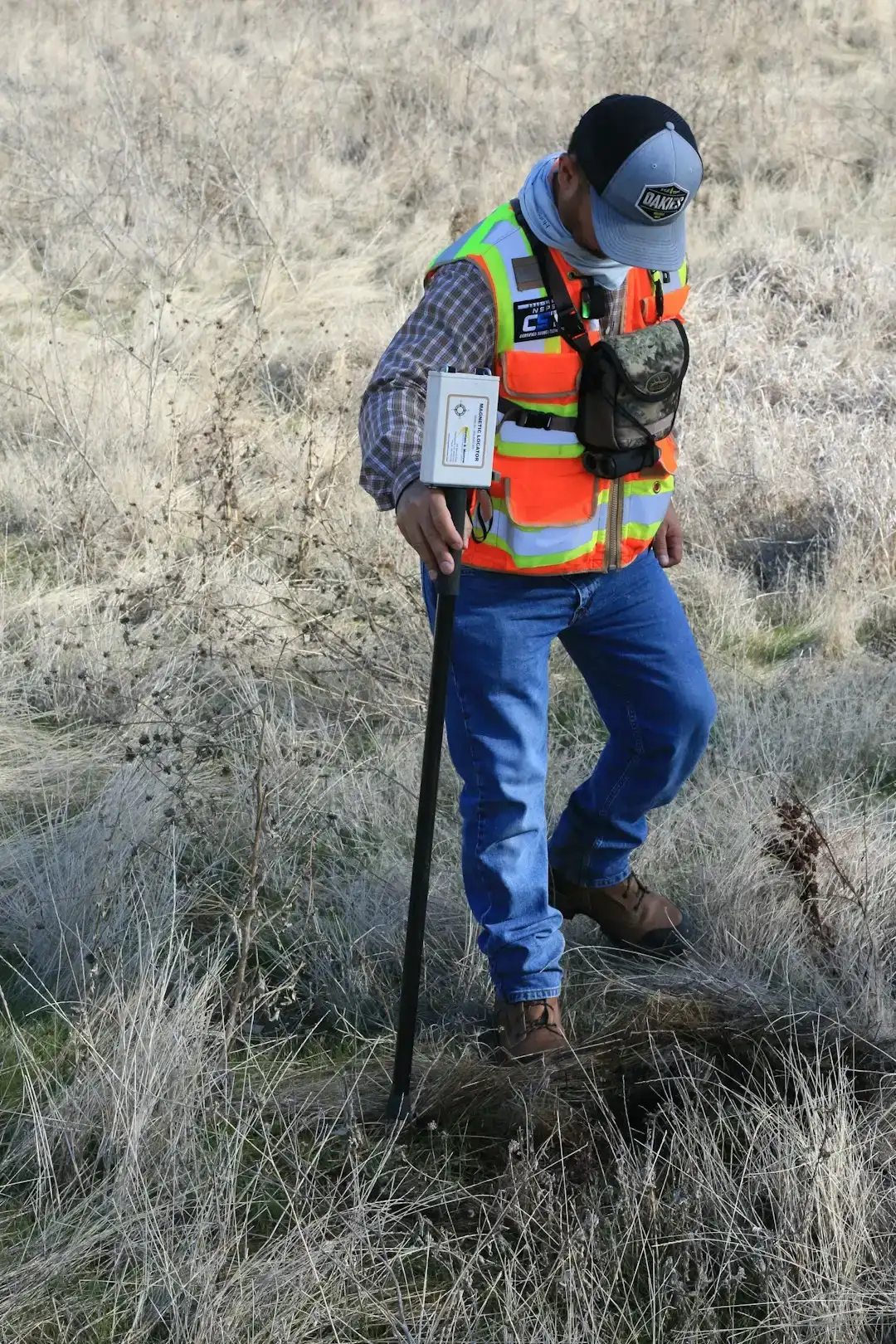
Some of these puzzles are being attacked with tools that would have sounded like science fiction a generation ago: scanning fossils in three dimensions, using isotope geochemistry to reconstruct ancient temperatures, and running global climate models on supercomputers to simulate long-vanished continents. Others depend on the unglamorous work of hiking into remote outcrops, hammering at rocks, and squinting at thin sections under a microscope. Piece by piece, these efforts fill in an imperfect but steadily improving portrait of a planet that changes in fits and starts. The open questions are not a sign of weakness in the science; they are the oxygen that keeps curiosity burning.
Why Our Deep Past Demands Our Attention Now
It is tempting to treat these ancient dramas as safely distant, like old myths that can entertain us without touching our lives, but that distance is an illusion. The carbon we burn today comes from forests and plankton that once thrived in ancient climates, and the seas rising around modern cities respond to physics that also governed long-vanished shorelines. When we pump greenhouse gases into the air, strip ecosystems, and acidify oceans, we are nudging some of the same levers that once tipped Earth into mass extinctions and wrenching transitions. The rock record is blunt about what can happen when those levers move too fast.
At the same time, Earth’s history also carries a quieter message of stubborn survival. Life has endured snowballs, firestorms, poison atmospheres, and shattering impacts by diversifying, shrinking, shifting, and trying again. That does not guarantee a soft landing for our own species, but it does suggest that our choices will decide whether we navigate the coming changes as one more resilient branch or as another dead end. Learning this history is not just an intellectual hobby; it is a way of calibrating our sense of risk and responsibility on a planet that has already reset the rules many times before.
How You Can Step Into Deep Time
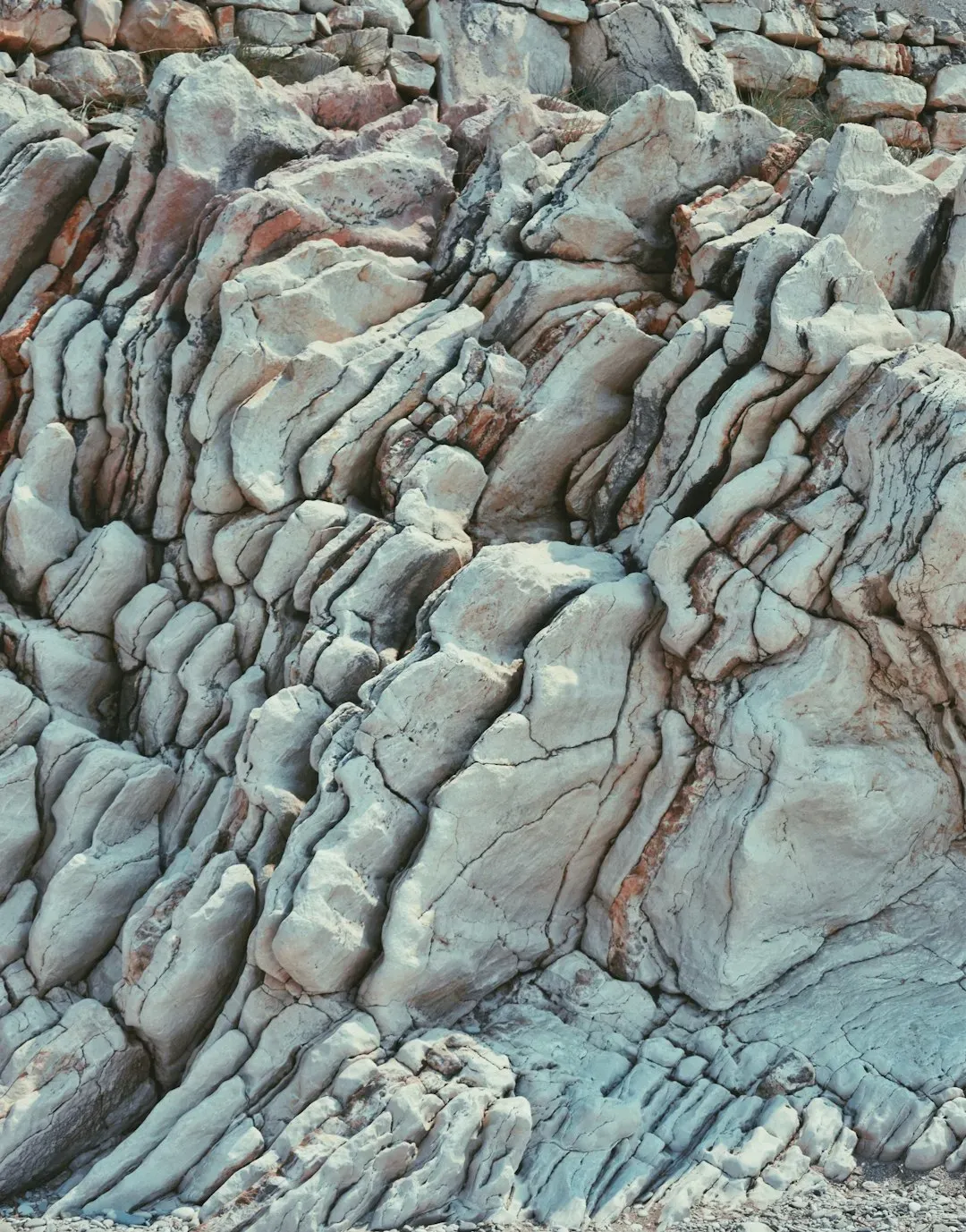
You do not need a geology degree to feel the weight of these events; you just need to know where to look and how to ask questions. A cliff of layered rock along a highway cutting, a ripple pattern frozen in sandstone at a local park, or a fossil trilobite in a small-town museum are all doorways into worlds destroyed and rebuilt. Many national parks and regional reserves in the United States and beyond offer ranger talks, field guides, and interpretive trails that connect specific outcrops to global events like ancient seas or past climate shifts. Even city science museums often hold meteorites you can touch, literally pieces of the cosmic roulette that altered life’s course.
On a quieter level, you can follow ongoing research through public lectures, open-access articles, or university outreach programs, paying attention to how new findings reshape old stories. Supporting conservation efforts helps protect not only living ecosystems but also the rock records that preserve their ancestors. And the next time you feel detached from the nonhuman world, it might be worth remembering that your bones, your breath, and your thoughts are all late chapters in a saga written by ice, fire, stone, and microbes. What other hidden turning points might still be buried under our feet, waiting for someone curious enough to notice?
Suhail Ahmed is a passionate digital professional and nature enthusiast with over 8 years of experience in content strategy, SEO, web development, and digital operations. Alongside his freelance journey, Suhail actively contributes to nature and wildlife platforms like Discover Wildlife, where he channels his curiosity for the planet into engaging, educational storytelling.
With a strong background in managing digital ecosystems — from ecommerce stores and WordPress websites to social media and automation — Suhail merges technical precision with creative insight. His content reflects a rare balance: SEO-friendly yet deeply human, data-informed yet emotionally resonant.
Driven by a love for discovery and storytelling, Suhail believes in using digital platforms to amplify causes that matter — especially those protecting Earth’s biodiversity and inspiring sustainable living. Whether he’s managing online projects or crafting wildlife content, his goal remains the same: to inform, inspire, and leave a positive digital footprint.