
Most of us walk through life without ever pausing to think about what’s happening thousands of miles beneath our feet. You step out of bed, make coffee, and go about your day – totally unaware that deep inside this planet, something extraordinary and almost unimaginable is stirring. Something that hasn’t just been sitting there quietly. It’s moving, shifting, and revealing secrets that scientists are only now beginning to decode.
The center of our Earth has long been treated as a kind of geological black box. We know it’s there, we know it’s hot, and we’ve assumed it’s mostly stable. Honestly, that assumption is turning out to be very, very wrong. Prepare to see the ground beneath you in a completely different light. Let’s dive in.
A Solid Ball That Isn’t Quite Solid Anymore
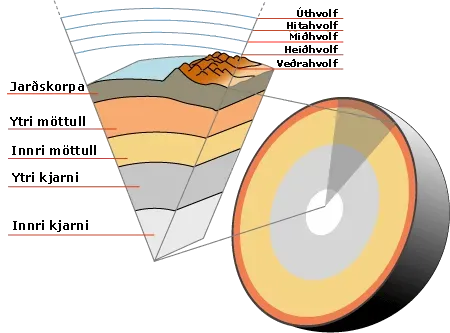
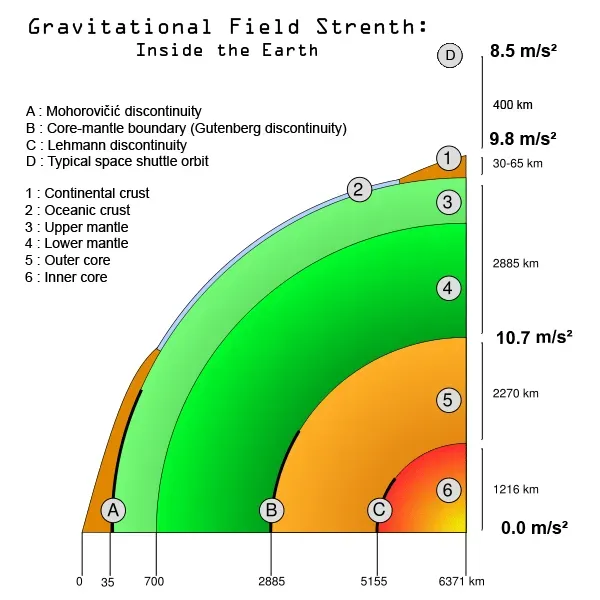
Here’s the thing – for decades, textbooks told you that Earth’s inner core is a dense, solid sphere of iron and nickel sitting at the planet’s center. That picture was neat, tidy, and apparently incomplete. Located 3,000 miles below Earth’s surface, the inner core is anchored by gravity within the molten liquid outer core, and until recently, it was widely thought of as a solid sphere. That thinking has now been turned on its head.
Even though the inner core is solid, it behaves like a softened metal, slowing seismic shear waves and displaying physical properties more similar to butter than to steel – a paradox that raises a fundamental question about how the planet’s solid center can appear firm yet strangely pliable. Think about that for a second. You have what should be the hardest, most compressed object on the planet acting almost like a slow-moving putty. That changes everything about how scientists think of Earth’s deepest layer.
The Shocking Discovery of a Superionic State
In December 2025, researchers dropped what can only be described as a geological bombshell. New research revealed that Earth’s solid inner core is actually in a superionic state, where carbon atoms flow freely through a solid iron lattice. Let that sink in. Atoms flowing freely – inside what we’ve always called a solid. It’s almost science fiction, except it’s not.
The research team reports that Earth’s inner core is not behaving like a conventional solid. Instead, it exists in a superionic state in which light elements move through a stable iron framework as if they were liquid – a finding that reshapes our entire picture of the planet’s deepest layer. Using a dynamic shock compression platform, the researchers propelled iron-carbon samples to 7 kilometers per second, achieving pressures of up to 140 gigapascals and temperatures near 2,600 kelvin, closely reproducing the environment found in the inner core. The experiments were extraordinary, and the results were even more so.
The Inner Core Is Actually Changing Its Shape
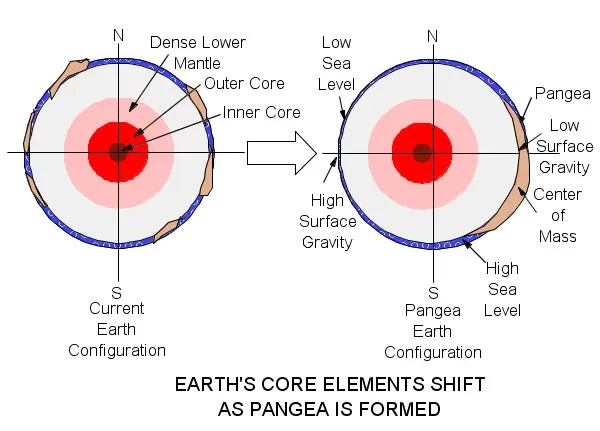
You probably assume that something buried 3,000 miles underground, under unimaginable pressure, stays the same shape. It doesn’t. Researchers have found the first evidence of changes taking place over the past 20 years in the shape of the inner core, with signs of the core’s deformation appearing in waves from earthquakes strong enough to reach Earth’s center.
The study utilized seismic waveform data, including 121 repeating earthquakes from 42 locations near Antarctica’s South Sandwich Islands that occurred between 1991 and 2024, to give a glimpse of what takes place in the inner core. The physical activity is best explained as temporal changes in the shape of the inner core, with the new study indicating that the near surface of the inner core may undergo viscous deformation, changing its shape and shifting at the inner core’s shallow boundary. Picture a slowly wobbling, subtly morphing sphere at the heart of this planet. That’s what you’re standing on top of right now.
The Core Has Reversed Its Spin – And It’s Affecting Your Day
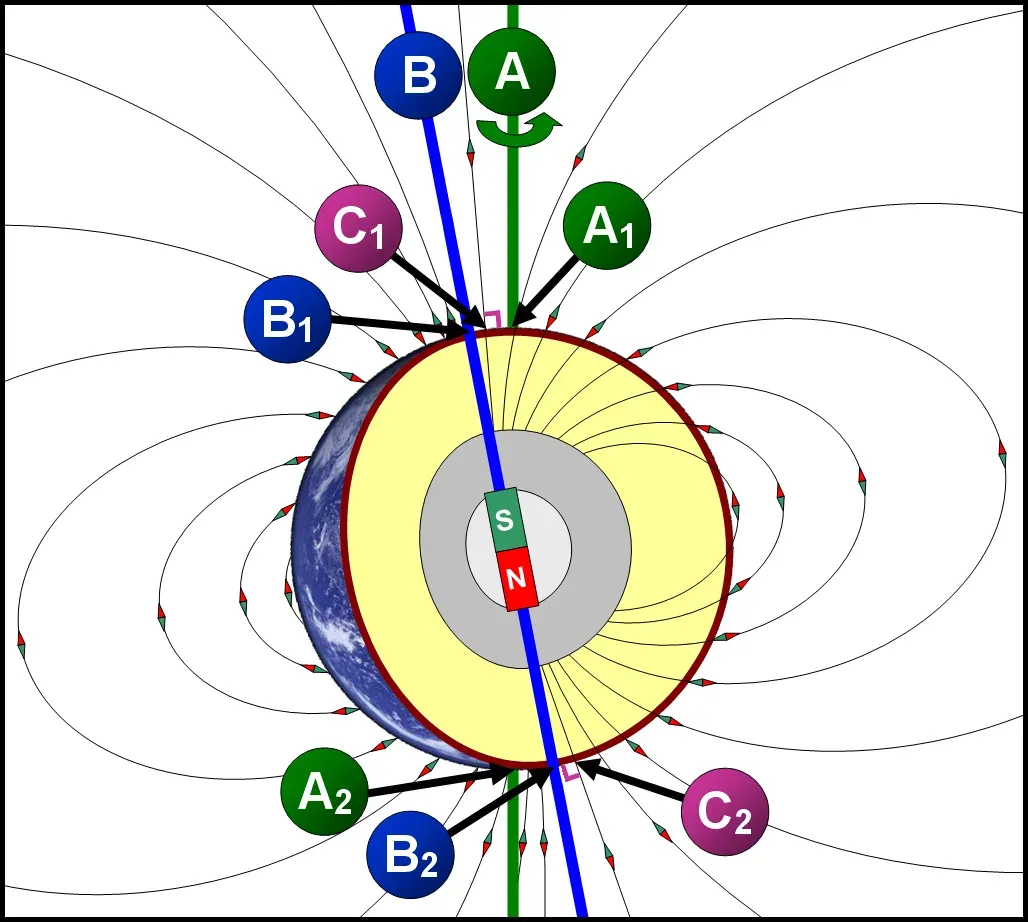
I know it sounds crazy, but the solid core spinning inside Earth doesn’t simply rotate in lock-step with the planet above it. It has its own motion. According to a recent study published in Nature Geoscience, Earth’s inner core has not only slowed down, it now appears to be rotating in reverse compared to the planet’s surface. This is a confirmed, peer-reviewed reversal happening in real time.
Earth’s magnetic field yanks at this solid ball of hot metal, making it spin, while the gravity and flow of the fluid outer core and mantle drag at the core – and over many decades, the push and pull of these forces cause variations in the core’s rotational speed. Some scientists speculate that fluctuations in the inner core’s movement could alter the length of a day by milliseconds – and while imperceptible to humans, these tiny shifts can accumulate over long periods, potentially influencing Earth’s climate and rotational stability. Milliseconds might sound trivial, but over geological time, those milliseconds add up in surprising ways.
Carbon: The Hidden Architect of Earth’s Solid Core
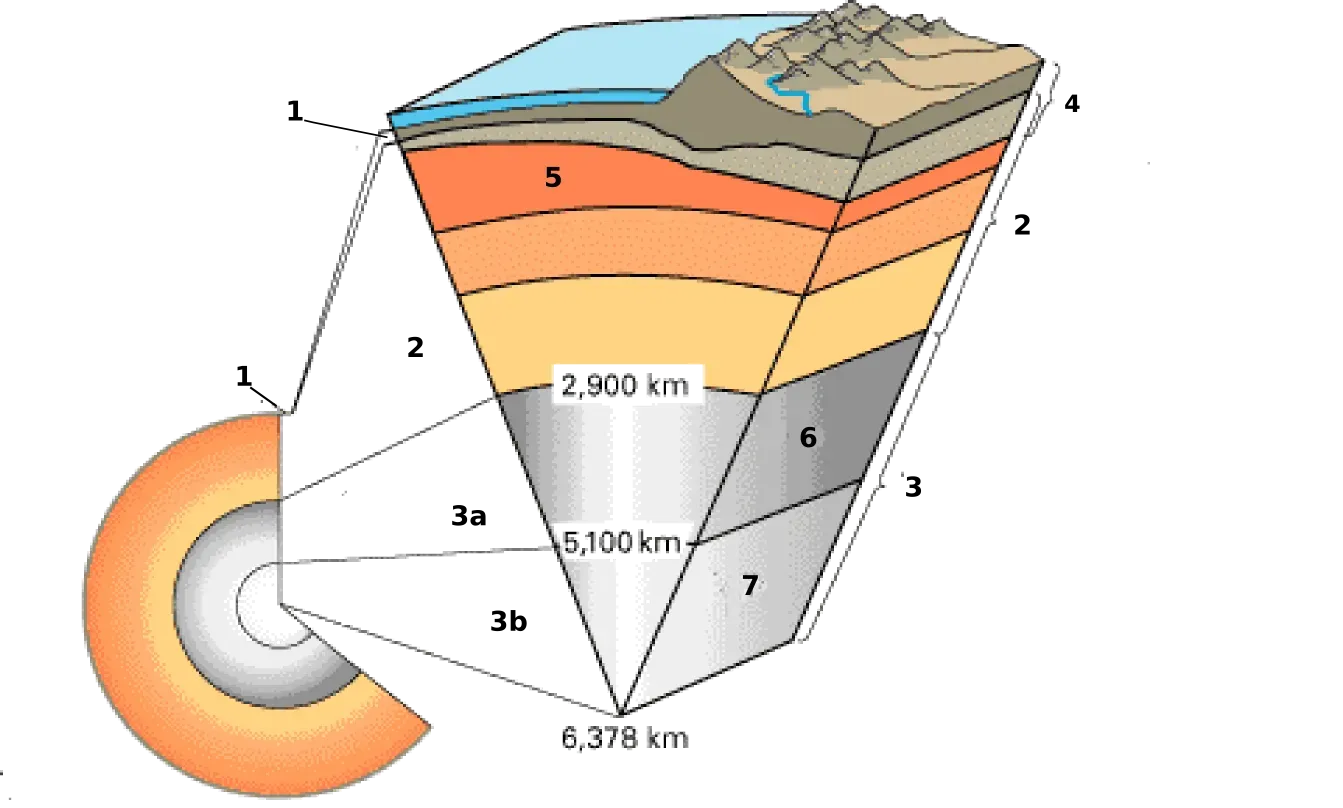
You might think of carbon as the element of life – the backbone of every organism on Earth. What you probably didn’t know is that carbon may also be the reason this planet has a solid core at all. Researchers have long struggled to explain how Earth’s solid inner core formed, cooled, and crystallized without undergoing extreme supercooling, but a recent study published in Nature Communications reveals that carbon may play a far more significant role than previously believed.
The international team, led by scientists from the University of Oxford, University of Leeds, and University College London, used atomic-scale simulations to show that carbon accelerates the nucleation process necessary for the core to freeze, providing fresh insights into one of Earth’s most enduring geological mysteries. Without this element, Earth might have failed to develop a solid inner core, potentially compromising the generation of the planet’s magnetic field, which shields us from harmful solar radiation – meaning carbon’s presence has broader implications for Earth’s habitability over geological timescales. In other words, carbon didn’t just build life on the surface. It may have quietly made life possible from the very bottom of the planet up.
Oceans of Water Hidden in the Earth’s Core

Here’s a fact that will genuinely stop you in your tracks. The oceans you see on maps – those vast blue expanses covering most of Earth’s surface – may actually be a minor fraction of the water this planet holds. Research indicates that the Earth’s core may contain the largest reservoir of hydrogen on the planet, surpassing the combined volumes of the oceans, mantle and atmosphere.
Researchers discovered that hydrogen does not exist in the core as a standalone element. Instead, it forms nanostructures with silicon and oxygen that are incorporated within molten iron, and exists not as a gas or as a water molecule but as an iron hydride directly within the molten metal. If this hydrogen were to combine with oxygen to form water, it would correspond to approximately 9 to 50 times the volume of water found in all of today’s oceans. The water you drink, the oceans you sail, the rain that falls on your face – they might all be just the visible tip of a colossal, hidden reservoir locked in Earth’s metallic heart.
Giant Hidden Structures Are Shaping Earth’s Magnetic Field
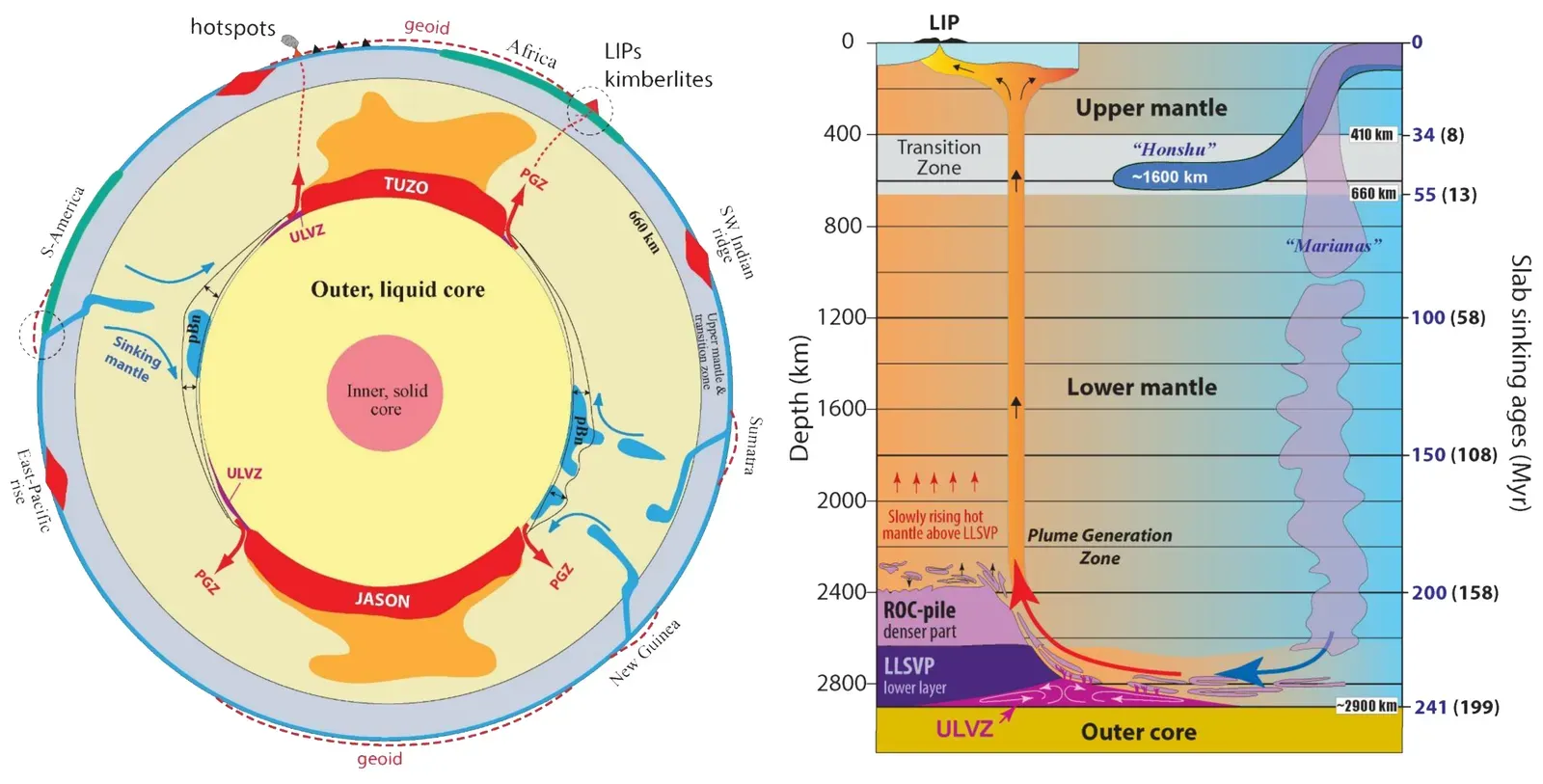
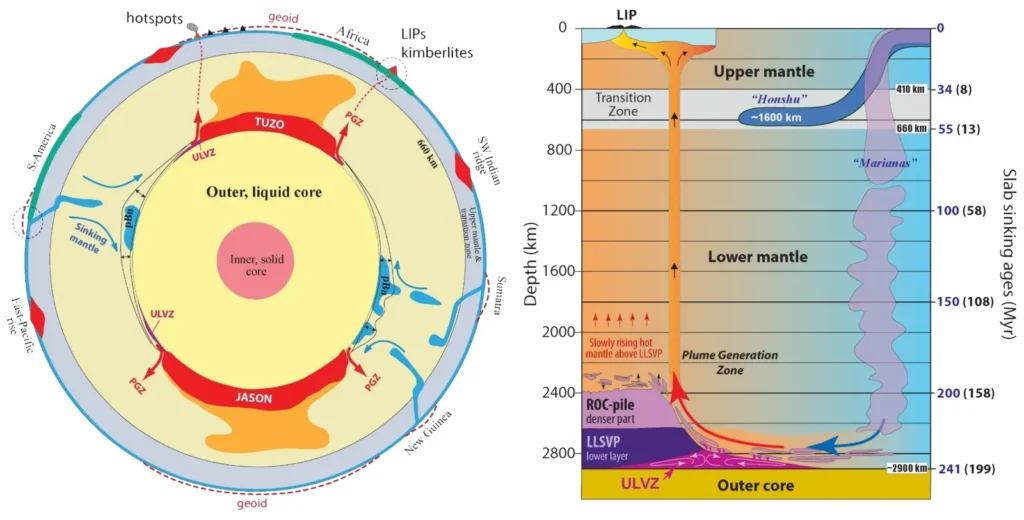
Imagine two mountains larger than anything visible on Earth’s surface, buried so deep that they sit roughly five times farther from you than the International Space Station does in orbit. Earth has two particularly large sub-surface mountains, one hidden under Africa and another nestled deep below the Pacific, both about 2,000 kilometers beneath the surface – and the mountain under the Pacific is colossal, spanning about 3,000 kilometers, almost as wide as the Moon.
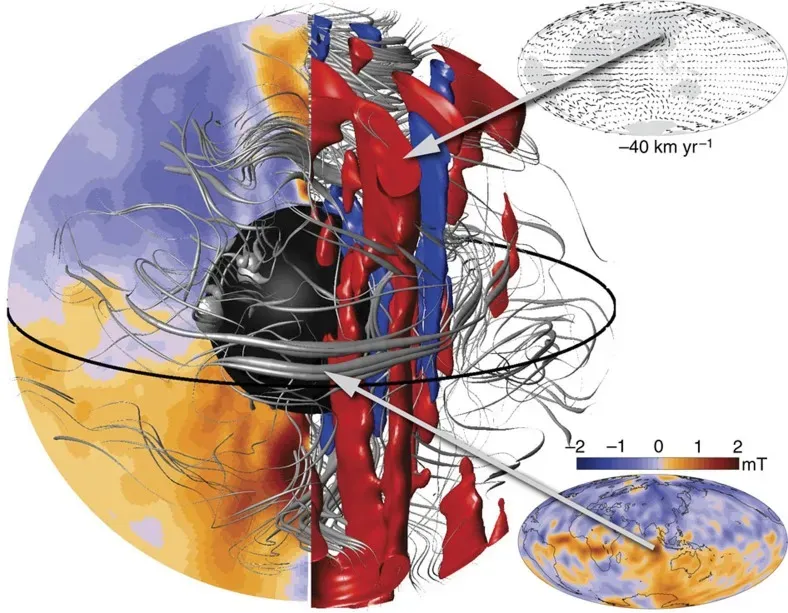
A research team led by the University of Liverpool found magnetic evidence that two massive, intensely hot rock formations at the base of Earth’s mantle influence the liquid outer core beneath them – sitting about 2,900 kilometers below Africa and the Pacific Ocean – and have played a role in shaping Earth’s magnetic field for millions of years. The hydrogen stored deep underground could influence processes such as the magnetic field, mantle dynamics, and the global water cycle. These are not passive, inert structures. They are active participants in the systems that keep your compass pointing north and your atmosphere intact.
Conclusion: The Ground Beneath You Is Alive
What all of these discoveries collectively reveal is both humbling and awe-inspiring. The planet you live on is not just a lump of rock spinning through space. It is an active, dynamic, layered system that is constantly changing at its very core – sometimes in ways that take decades for science to detect and even longer to understand.
While the idea of a spinning, reversing core may sound like science fiction, it plays a real role in the systems that make Earth habitable, with the movement of molten metal around the inner core generating the planet’s magnetic field, which protects us from solar radiation and helps guide everything from animal migrations to satellites. The inner core’s behavior, the hidden oceans of hydrogen, the superionic state of its matter, the giant buried mountains shaping our magnetic field – none of this was on the scientific radar just a few years ago.
It’s hard to say for sure what the next wave of discoveries will bring, but one thing seems certain: the deeper scientists look, the more alive this planet turns out to be. The real story of Earth isn’t written on its surface. It’s written miles beneath your feet, in a language made of seismic waves, iron lattices, and elements we are only now beginning to understand.
What would you have guessed was happening at the center of our planet? Tell us in the comments – we’d love to know.