
Deep beneath our feet, far below the deepest mines and the ocean’s blackest trenches, lies a realm we will almost certainly never see – and yet it shapes every second of our lives. Earth’s core drives the magnetic field that shields us from harmful space radiation, stirs the mantle that feeds volcanoes, and may even influence how our climate evolves over millions of years. But for all that power, the core is still one of the great scientific blind spots of our age. In recent years, new evidence has suggested that the inner core may be changing, slowing, or even “wobbling” in ways that challenge long‑held assumptions. Between what we think we know and what remains stubbornly hidden, the story of Earth’s core is less a solved puzzle and more an unfolding thriller.
The Hidden Clues Deep Below Our Feet
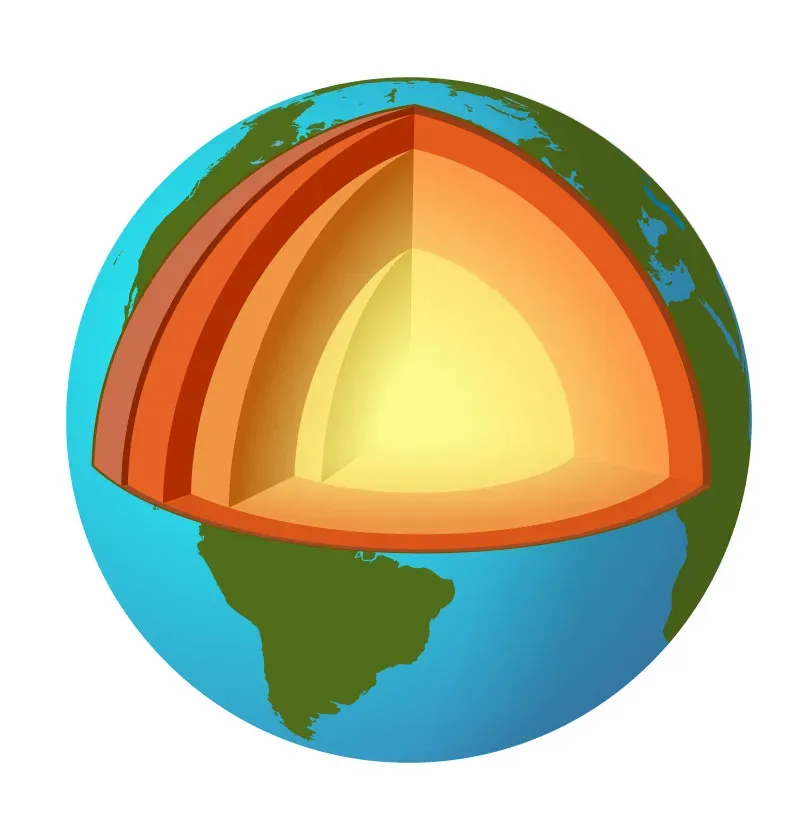
We cannot drill to the core, and we never will with any technology remotely on the horizon, so scientists have to rely on indirect clues, like detectives working a cold case. The most important of those clues comes from seismic waves generated by earthquakes, which travel through the planet and bend, slow, or speed up depending on what they pass through. By timing how those waves arrive at seismometers around the globe, researchers build rough “X‑ray” images of Earth’s interior, including the liquid outer core and solid inner core. Over the last few decades, those seismic records have hinted at strange behavior: the inner core does not seem to be perfectly uniform, and waves move faster along some directions than others.
More recently, teams comparing earthquake data from the 1960s to the present have spotted subtle timing shifts that suggest the inner core might be rotating slightly differently from the mantle and crust above it. Some analyses argue it once spun a bit faster, then slowed down, and may now even be drifting in the opposite direction relative to the surface. These changes are incredibly small – fractions of a degree over many years – but they point to a churning, dynamic heart rather than a static metal ball. Each new dataset sharpens the image a little, but also raises fresh questions about how the core formed and how it is evolving right now beneath us.
From Ancient Tools to Modern Core Science
Our fascination with what lies beneath goes back much further than seismic labs and supercomputers. Early cultures imagined underworlds, fiery pits, and cosmic serpents coiled beneath the crust, using myth to fill in where observation could not reach. The first real scientific leap came with the study of Earth’s gravity and magnetism, when nineteenth‑century physicists realized that the planet must be far denser inside than at the surface. That implied a world rich in heavy metals below, even if the exact structure was still a mystery.
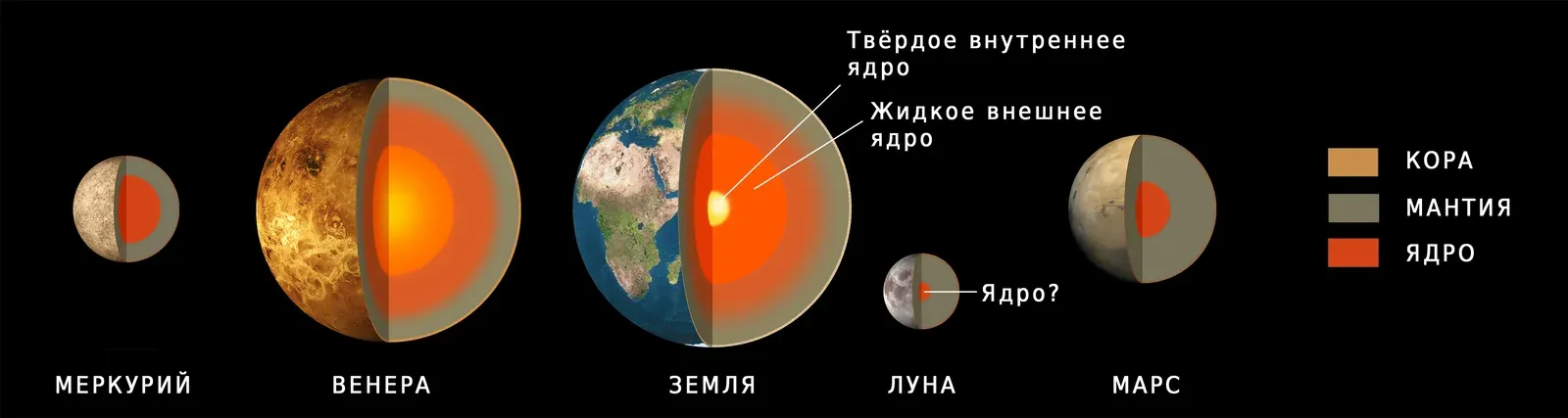
The modern picture took shape in the early twentieth century, when seismologists noticed that certain earthquake waves simply did not travel through all parts of the globe. Their absence revealed that a liquid outer core was blocking one class of waves, while others were refracting at boundaries deep underground. Later, in the 1930s, more refined analysis suggested a solid inner core nested inside that liquid metal ocean. In the last few decades, powerful computers and networks of digital seismometers have allowed scientists to track even tiny tremors, turning Earth’s quakes into a global, continuous probe of the deep interior. We have moved from rough outlines to intricate, if still incomplete, portraits of the core’s layered structure.
What We Think the Core Actually Is
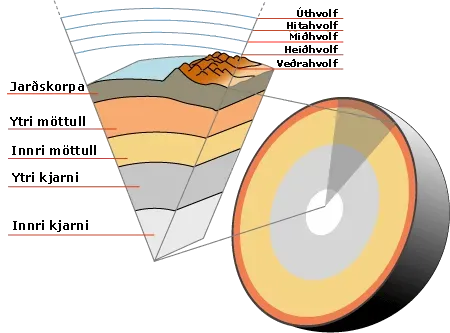
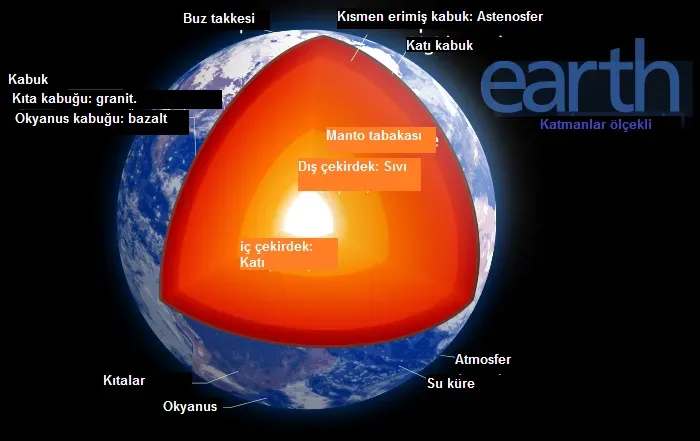
The leading model today envisions Earth’s core as a dense, mostly metallic sphere, dominated by iron and nickel with a mix of lighter elements such as silicon, sulfur, oxygen, and possibly hydrogen. The outer core is molten, swirling like an enormous metallic ocean thousands of kilometers deep, while the inner core is solid due to the intense pressure squeezing atoms into rigid patterns despite the extreme heat. Temperatures near the center may rival or exceed those on the surface of the Sun, yet the pressure is so crushing that iron cannot melt there. This bizarre combination of searing heat and crushing pressure creates a planet within a planet, with its own rules of behavior.
That picture, however, is still full of caveats and open questions. Some studies suggest the inner core itself may have sub‑layers – a softer outer shell and a more rigid inner “inner core” with crystals aligned in different directions. Others point to unexpected softness in certain regions, as if parts of the inner core are not as solid or uniform as once thought. High‑pressure experiments in diamond‑anvil cells and giant computer simulations try to recreate these conditions, but none perfectly match the subtle signals recorded by seismometers. For now, what we think the core actually is feels less like a finished diagram and more like a draft under constant revision.
The Shocking Role of the Core in Our Everyday Lives
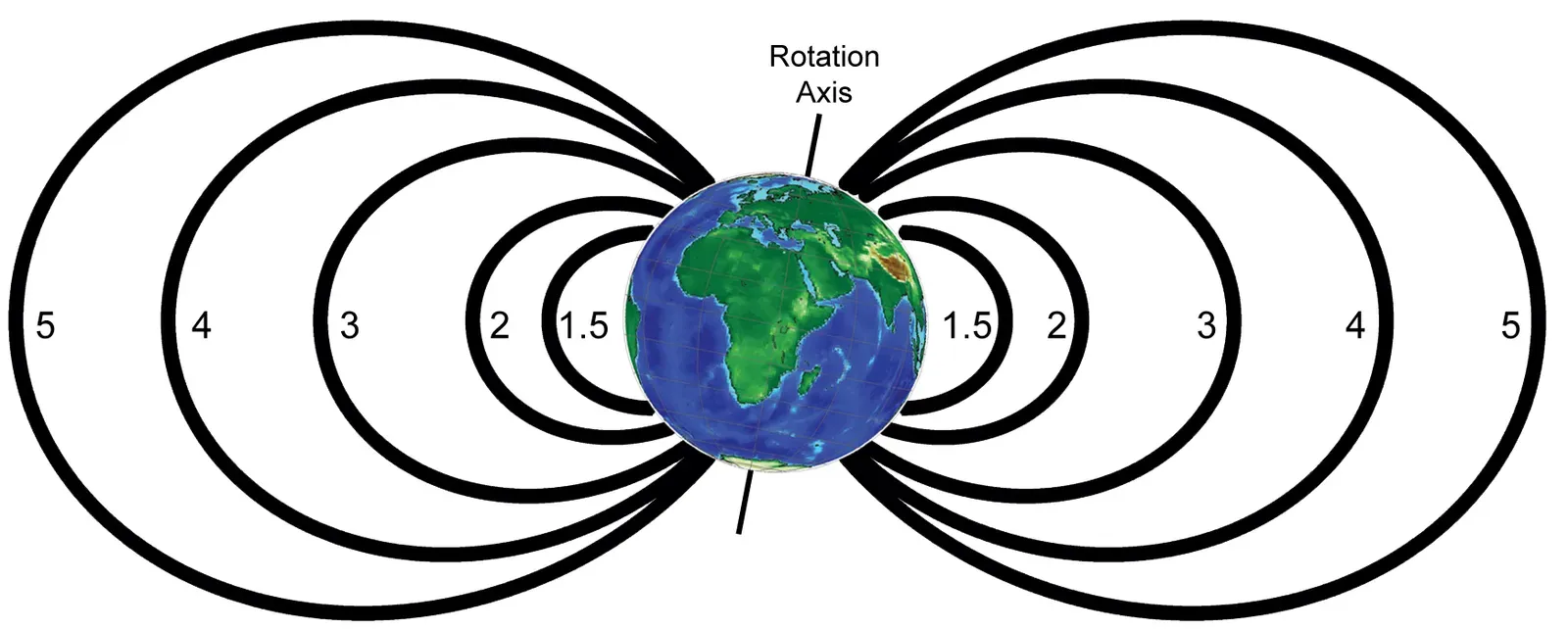
It is easy to think of the core as something exotic and distant, but its influence reaches into your daily life every time you unlock your phone or board a flight. The motion of molten metal in the outer core generates Earth’s magnetic field, which deflects much of the charged particle wind streaming from the Sun. Without that invisible shield, satellites would fail more often, power grids would be more vulnerable, and the upper atmosphere might slowly erode, making our planet a far harsher place to live. The gentle sway of a compass needle is, in a very real sense, a direct signal from the core.
Evidence from rocks and ocean sediments suggests that this magnetic field has flipped many times in the distant past, with north and south trading places. Those reversals are likely connected to changes in core flow patterns, though the details are still argued over. During such flips, the field may weaken for thousands of years, potentially exposing modern technologies to stronger space weather. Even subtle shifts in field strength can influence how cosmic rays reach Earth, which in turn affects things like radiation levels on high‑altitude flights. When you consider that nearly everyone depends on GPS, global communications, and power networks, the behavior of Earth’s core stops feeling abstract and becomes very personal very quickly.
The Puzzles That Keep Geophysicists Up at Night
Despite steady progress, some of the biggest questions about the core remain stubbornly unanswered, and that uncertainty makes the story more thrilling, not less. One major puzzle is exactly how and when the solid inner core first formed; estimates range over hundreds of millions of years, and the timing has huge implications for how long Earth’s magnetic shield can last. Another headache involves strange asymmetries: seismic waves sometimes move differently through the eastern and western halves of the inner core, hinting that one side might be growing faster or melting differently than the other. That kind of lopsided growth is hard to reconcile with simple models of cooling and solidification.
Then there is the question of whether the inner core’s rotation relative to the mantle is truly changing, and if so, what is driving that shift. Some researchers interpret the data as a slow oscillation, a sort of pendulum swing over decades, while others see only noise and measurement limits. On top of that, physicists still debate the exact recipe of elements mixed into the core, since different blends can produce similar seismic signatures. These uncertainties are not a sign of failure but of a field pressing up against the limits of what is currently measurable. They are the scientific equivalent of dark, unexplored corridors at the end of a well‑lit hallway, begging to be entered.
Why It Matters: More Than Just a Geologic Curiosity

At first glance, the question of what lies at Earth’s center might seem like pure curiosity, a trivia challenge for geology fans. In reality, the core sits at the crossroads of several issues that affect the long‑term survival of our technological civilization. When scientists model climate over tens or hundreds of millions of years, they have to factor in how heat escapes from the core and mantle, because that outflow drives plate tectonics, mountain building, and volcanic cycles that recycle carbon between the deep Earth and the atmosphere. A planet without an active core and tectonics can become geologically dead, like Mars, with consequences for habitability.
Understanding the core also sharpens our search for life beyond Earth. Astronomers now routinely discover rocky exoplanets, but to judge whether those worlds could host oceans and atmospheres over billions of years, they need to know whether such planets can maintain magnetic fields. By studying our own core in detail, we get a better sense of what makes a planet magnetic, stable, and protective versus what leaves it exposed to stellar radiation. Even in the shorter term, better models of the core and magnetic field help us plan for powerful solar storms that can disrupt navigation systems and power infrastructure. The mystery below our feet is, in a real sense, tied to the reliability of everything from internet connections to interplanetary exploration.
The Future Landscape: New Tools for Seeing the Unseen
Probing the core in the coming decades will require creativity as much as raw computing power. Scientists are already deploying denser networks of seismometers on land and at the bottom of the ocean, turning the whole planet into a listening device that can tease out fainter and more complex wave patterns. At the same time, lab experiments using diamond‑anvil cells and powerful lasers are pushing iron and alloy samples to pressures and temperatures closer to those at the core. These experiments, combined with more sophisticated quantum‑level simulations, should narrow down which mixtures of elements match Earth’s observed behavior best.
Researchers are also turning to unexpected data sources. Tiny quakes generated by ocean waves slamming into coastlines, or by human activity like mining and fracking, provide a constant background hum of seismic noise that can be mined for clues. Space missions monitoring changes in Earth’s magnetic field from orbit, along with ground observatories, are building time‑lapse maps of how the field shifts year by year. Together, these efforts may reveal whether the inner core’s rotation is truly oscillating and how quickly energy is leaking out of the deep interior. The challenges are enormous – there are no direct samples to hold, no cameras to send – but each new technique is like drilling a narrow, invisible borehole made of data rather than steel.
How You Fit Into the Story of Earth’s Core
It might feel like the core belongs purely to labs and observatories, but there are simple ways to stay connected to this hidden part of our planet. One step is just paying attention: following news from geological surveys, space agencies, and seismology networks can turn big quakes or solar storms into teachable moments rather than distant headlines. Museums and science centers often host exhibits or talks on Earth’s interior, and supporting those institutions helps keep research and education flowing. Even casual actions, like sharing a well‑made explainer about Earth’s magnetic field instead of a sensationalized rumor, can shift public understanding in the right direction.
If you want to go a bit further, you can support organizations that fund basic Earth science research, advocate for strong science education in schools, or participate in citizen‑science projects that use smartphones and home devices to monitor tiny tremors. Teachers and parents can lean into kids’ natural fascination with volcanoes and earthquakes to introduce the deeper story of the planet’s interior. The more people appreciate how closely our technology and safety are tied to processes unfolding thousands of kilometers down, the easier it is to argue for long‑term monitoring and research. After all, we are all riding on the same metal heart, glowing in the dark beneath our feet – doesn’t it seem worth getting to know it a little better?
Suhail Ahmed is a passionate digital professional and nature enthusiast with over 8 years of experience in content strategy, SEO, web development, and digital operations. Alongside his freelance journey, Suhail actively contributes to nature and wildlife platforms like Discover Wildlife, where he channels his curiosity for the planet into engaging, educational storytelling.
With a strong background in managing digital ecosystems — from ecommerce stores and WordPress websites to social media and automation — Suhail merges technical precision with creative insight. His content reflects a rare balance: SEO-friendly yet deeply human, data-informed yet emotionally resonant.
Driven by a love for discovery and storytelling, Suhail believes in using digital platforms to amplify causes that matter — especially those protecting Earth’s biodiversity and inspiring sustainable living. Whether he’s managing online projects or crafting wildlife content, his goal remains the same: to inform, inspire, and leave a positive digital footprint.