
Imagine standing in a garden and looking at a bright red rose. To you, it’s a vivid, unmistakable crimson. Now imagine that the bee hovering right beside you sees an entirely different set of colors on that exact same flower – colors that don’t even have names in any human language. That’s not science fiction. That’s just Tuesday morning in the animal kingdom.
The way different species experience color is one of the most mind-bending corners of modern biology. The ability to “see color” is not a universal constant but a diverse range of sensory capabilities across the animal kingdom, and color perception is fundamentally about detecting specific wavelengths of light through mechanisms that vary dramatically from species to species. So if you’ve ever wondered whether your dog enjoys the same visual world you do – spoiler alert, they absolutely don’t. Let’s dive in.
The Building Blocks: How Eyes Translate Light Into Color
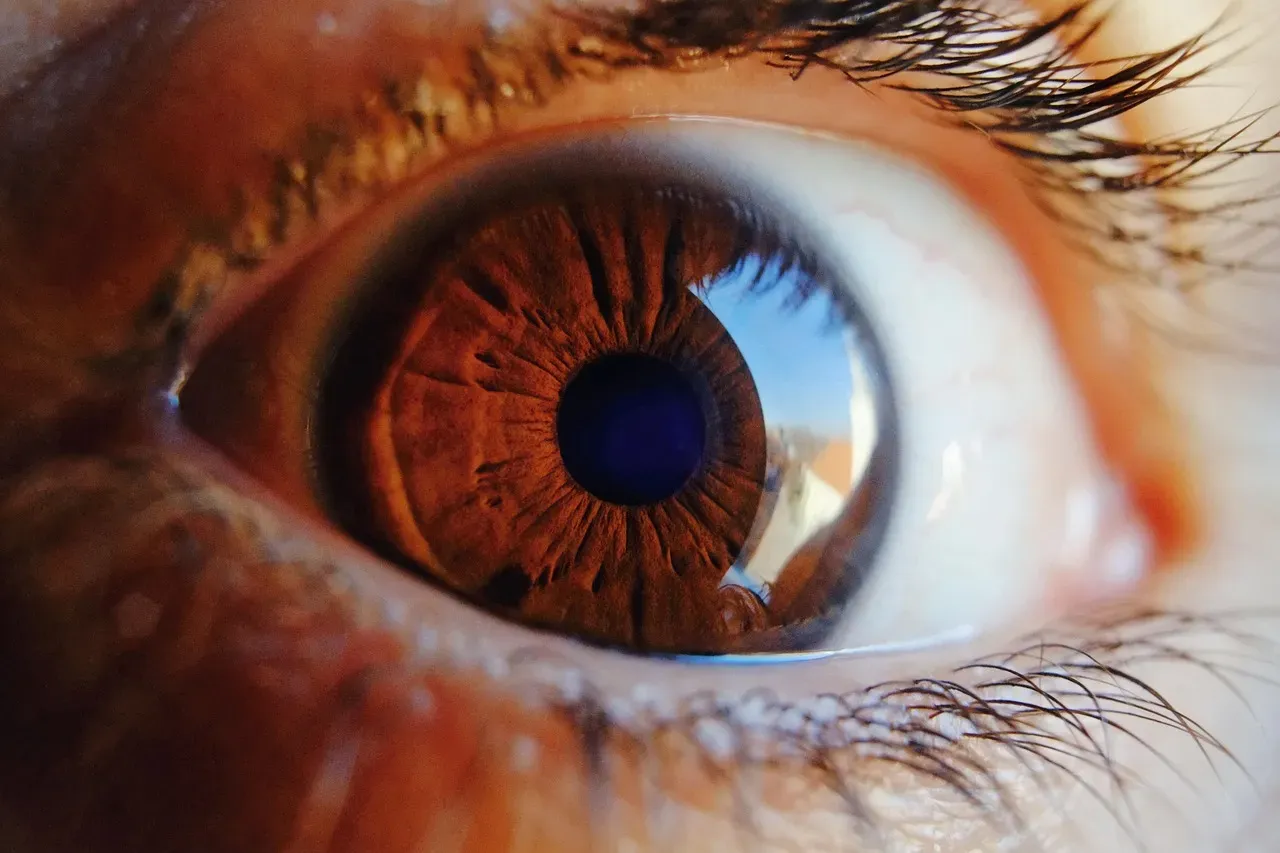
The foundation of color perception lies within the retina, where specialized photoreceptors convert light into electrical signals for the brain. These cells are divided into two main types: rods and cones. Rods are highly sensitive, function in low-light conditions, and provide vision in shades of gray without color distinction, while cones are active in brighter light and are responsible for color vision. Think of rods and cones like the hardware in a camera – and every species has a different camera model installed.
The number of functional cone types dictates the complexity of a species’ color vision. Animals with only one type of cone, or none, are called monochromats and perceive the world in varying levels of brightness. Dichromats possess two types of cones, enabling them to distinguish a limited range of colors, typically along a blue-yellow axis. Humans are trichromats, relying on three distinct cone types to perceive millions of color combinations. Some species, known as tetrachromats, have four types of cones, allowing them to detect colors beyond the range visible to humans.
The Human Standard: Trichromatic Vision and Its Surprising Limits
Here’s the thing most people don’t realize – humans are not at the top of the color vision food chain. We tend to assume our version of color is the gold standard, and honestly, that assumption has even held back scientific progress. In the past, the colors that humans could see clouded scientists’ study of animals’ color perception, and leaving that bias behind has led to new insights about how and why the color vision of animals evolved.
A century after Erwin Schrödinger sketched out a bold vision for how we perceive color, scientists have finally filled in the missing pieces. A Los Alamos team used advanced geometry to show that hue, saturation, and lightness aren’t shaped by culture or experience – they’re built directly into the mathematical structure of how we see color. That’s a remarkable piece of news from early 2026 that reshapes how we understand even our own visual experience. Knowing the limits of human vision is the first step toward appreciating just how differently other species experience their world.
Dogs and Cats: Not Colorblind, Just Color-Different

You’ve probably heard that dogs are colorblind. It’s one of those factoids that travels fast, but it’s not quite right. The majority of mammals, including dogs and cats, are dichromats, a visual system that differs from human trichromacy. These animals possess cones sensitive to blue-violet and yellow-green wavelengths, and this limited color range is optimized for other survival factors, such as superior night vision and greater sensitivity to motion.
When a dog looks at a red toy on green grass, the object lacks the vivid contrast a human would perceive, appearing as a less distinct shade of yellow or gray. So your dog isn’t admiring the scarlet red of their favorite ball. They’re essentially seeing a world washed in shades of blue and yellow, like a perpetual sunrise. Dogs and cats have more rods than humans, meaning that they are better able to see at night – a worthy trade-off, honestly.
Birds and Their Fourth Dimension of Color
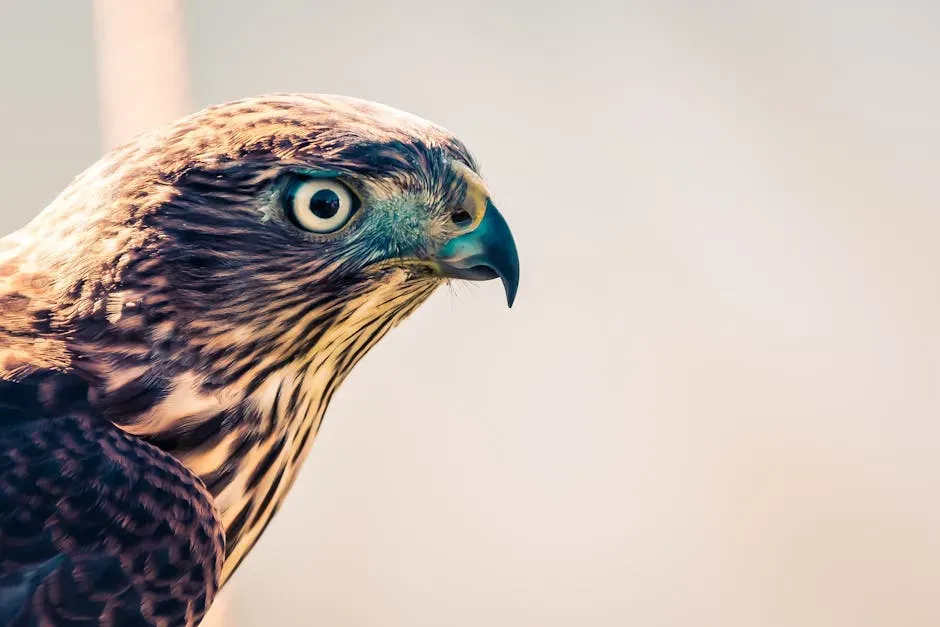
If you think human vision is impressive, birds will absolutely humble you. The avian world is populated by tetrachromats, with most birds possessing a fourth cone type that extends their vision into the ultraviolet light range. This UV sensitivity reveals patterns and colors in feathers, skin, and fruit that are invisible to the human eye, and the ability to see UV light means that many bird species that appear identical to humans are visually distinct to their own kind.
For a bird, vision is quite different. A cloudless day doesn’t seem so blue to birds – birds would see the sky bathed in ultraviolet light, which appears to humans as pink through the new specialized camera systems used to study animal vision. Think about that for a moment. The sky you know as a relaxing shade of blue might look like a vivid, glowing pink canvas to the pigeon sitting on your windowsill. This ability allows birds to see a broader spectrum of colors, including UV markings on flowers and other birds’ feathers that are often invisible to the human eye, and this enhanced color perception plays a crucial role in behaviors such as mate selection, foraging, and navigation.
Bees and Butterflies: Pollinator Vision That Rewires the Flower World
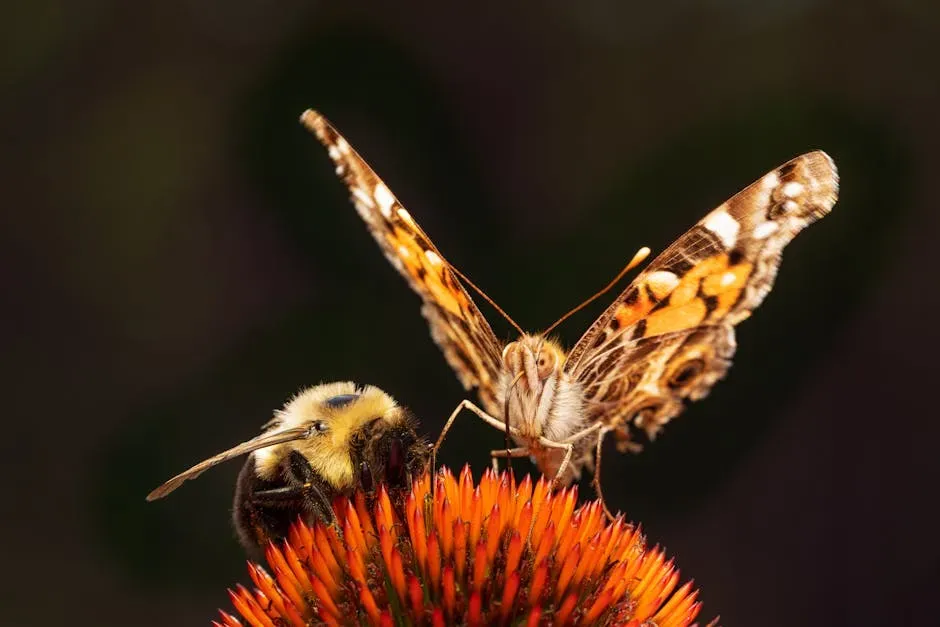
Let’s be real – flowers are not just pretty for human eyes. They’re billboards, and they’ve been designed by evolution for an audience that doesn’t see what you see. Insects, particularly bees and butterflies, also perceive color differently. Bees are trichromatic like humans, but their vision is shifted towards shorter wavelengths. They can see blue, green, and UV light but are less sensitive to red light, and this adaptation helps them detect nectar guides on flowers that are invisible to humans.
Butterflies, on the other hand, are said to possess up to five types of photoreceptors, allowing them to perceive an exceptionally broad range of colors, including UV light, and this complex vision aids in their navigation, foraging, and finding mates. So while you see a cheerful yellow sunflower, a bee is reading an intricate roadmap of UV patterns pointing directly toward the nectar. It’s like the flower is shouting directions in a language you simply can’t hear.
The Mantis Shrimp: Twelve Channels and Still Full of Surprises
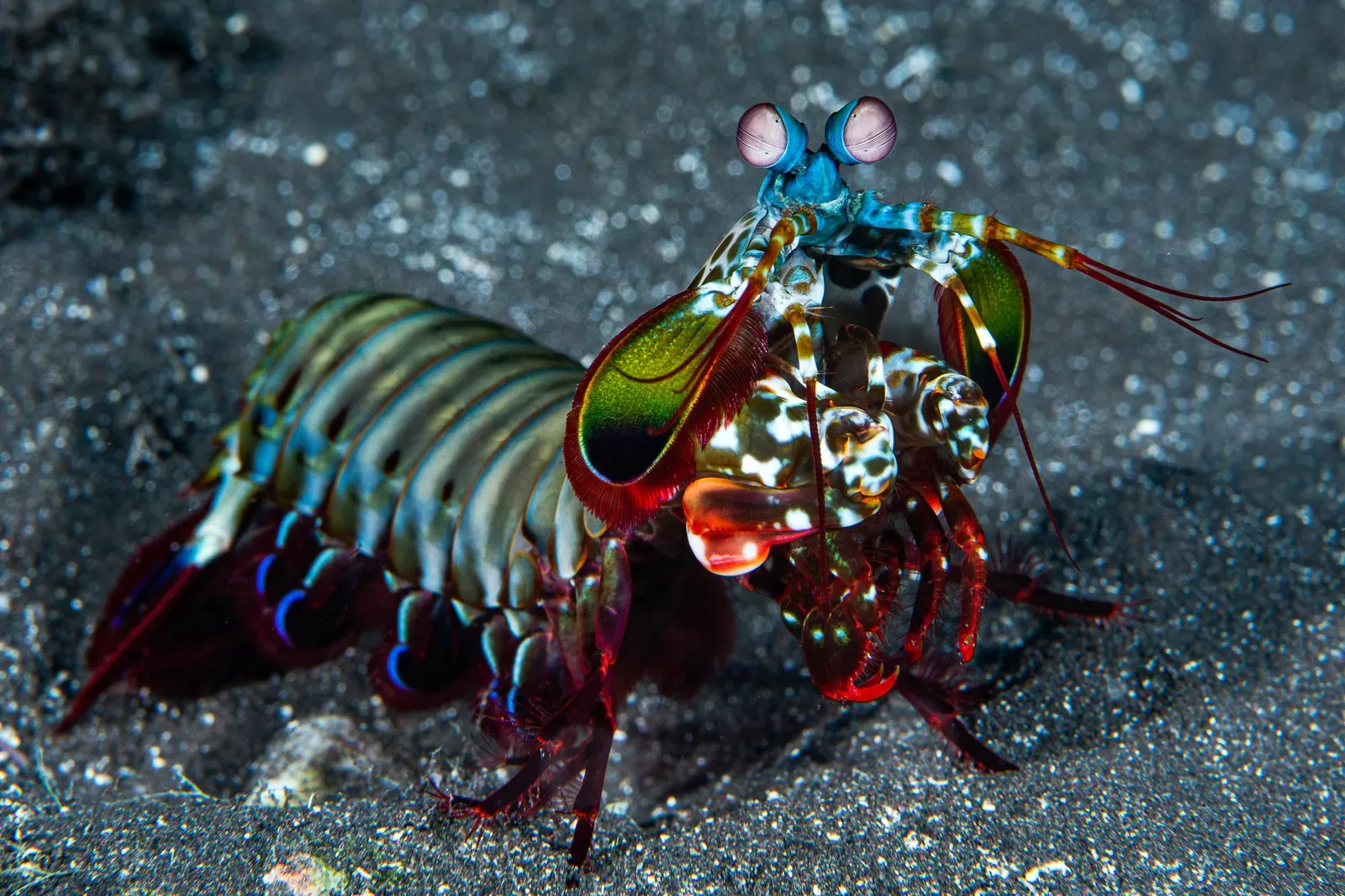
No conversation about animal color vision is complete without the legendary mantis shrimp. It’s the creature that broke the internet among science enthusiasts, and for good reason. Humans can process three channels of color, while mantis shrimps perceive the world through 12 channels of color and can detect UV and polarized light – aspects of light humans can’t access with the naked eye.
Here’s where it gets genuinely fascinating, though. You’d expect 12 color channels to produce the most detailed color vision imaginable. Surprisingly, that’s not how it works. Remarkably, despite having about four times as many photoreceptors as humans, mantis shrimp are actually rather poor at discriminating between colors, possibly because the cones in human eyes have intricate mechanisms which allow them to work together, while cones in mantis shrimp eyes work independently of each other, without complicated neural computations. Using a scanning technique coupled with the 12 photoreceptor modalities, mantis shrimp vision allows for rapid color recognition without the need to discriminate between wavelengths within a spectrum, giving them an evolutionary advantage as a predator to quickly attack prey. It’s speed over subtlety – a completely different philosophy of vision.
Primates vs. Humans: Even Our Closest Relatives See Differently
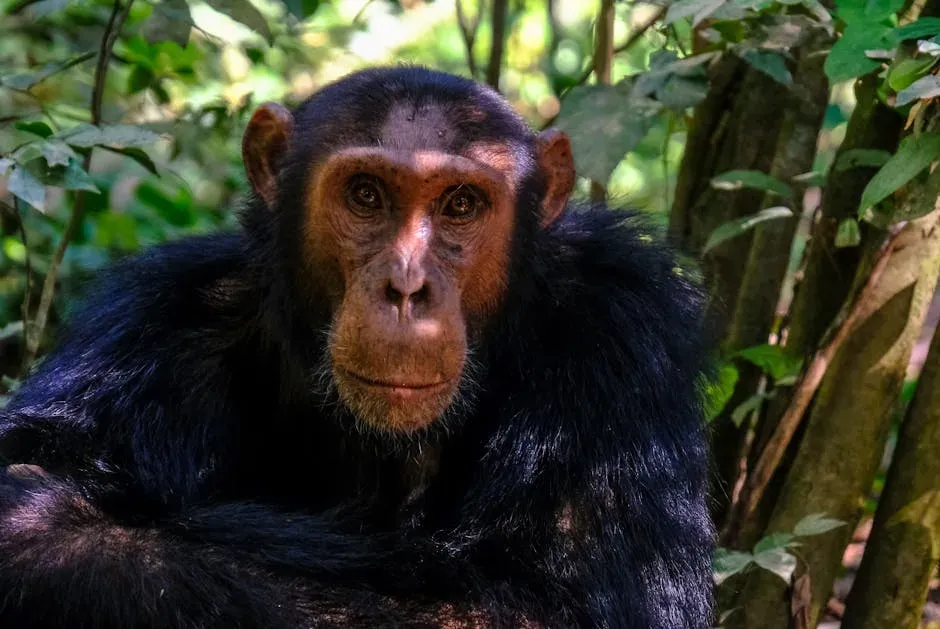
You might assume that our nearest relatives in the animal tree share our exact visual experience. It turns out they don’t, and the differences are more surprising than expected. New findings in color vision research imply that humans can perceive a greater range of blue tones than monkeys do, and distinct connections found in the human retina may indicate recent evolutionary adaptations for sending enhanced color vision signals from the eye to the brain.
Researchers discovered that a certain short-wave or blue-sensitive cone circuit found in humans is absent in marmosets and is also different from the circuit seen in the macaque monkey, with other features found in human color vision not expected based on earlier nonhuman primate models. Researchers also mentioned that differences among mammals in their visual circuitry could have been at least partially shaped by their behavioral adaptation to ecological niches, noting that marmosets live in trees whereas humans prefer to dwell on land, and the ability to spot ripe fruit among the shifting light of a forest may have offered a selective advantage for particular color visual circuitry. Evolution, in other words, custom-tailored each species’ visual system to suit their specific lifestyle.
Deep-Sea Fish: Vision in a World Without Sunlight
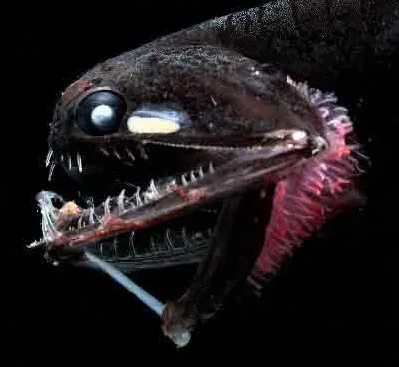
Photostomias.jpg: Edith Widder/HBOI, Public domain)
Now, consider creatures that live where light barely exists at all. Deep-sea fish have arguably the most extreme visual adaptations on the planet – and the environment they live in is what drives those changes. In clear ocean waters, red is absorbed in the upper ten meters, orange by about forty meters, and yellow disappears before a hundred meters, while shorter wavelengths penetrate further, with blue and green light reaching the deepest depths.
Certain deep-sea fish have expanded their repertoire of rhodopsin genes, and each of those gene copies has adapted to detect a certain wavelength of light. Those genes cover exactly the wavelength range of light produced by the bioluminescent organisms that share their habitat. Red light does not reach ocean depths, so deep-sea animals that are red actually appear black and are thus less visible to predators and prey. It’s a visual world built entirely around bioluminescent glows – think of it as navigating life with only a neon sign as your only light source, and evolving eyes specifically tuned to read it.
How Habitat Shapes the Colors You Can See
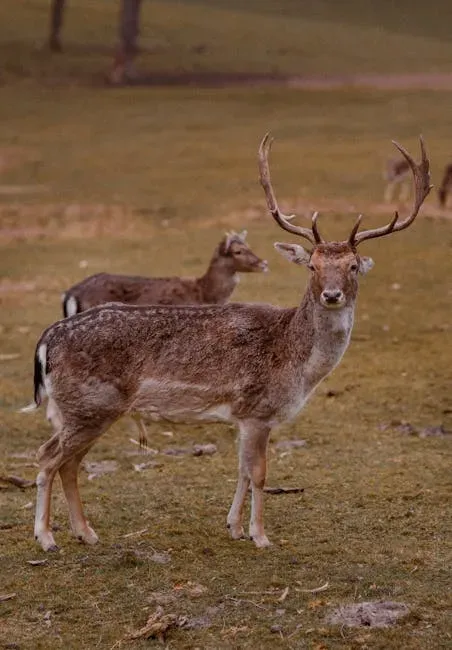
It’s hard to say for sure exactly which came first – the habitat or the visual system – but science increasingly shows they are deeply intertwined. Researchers determined that animals adapted to land are able to see more colors than animals adapted to water, and animals adapted to open terrestrial habitats see a wider range of colors than animals adapted to forests.
Evolutionary history – primarily the difference between vertebrates and invertebrates – significantly influences which colors a species sees, with invertebrates seeing more short wavelengths of light compared to vertebrates. The diversity in color perception across species is a direct result of evolutionary pressures and ecological needs, and species develop color vision systems that best suit their environmental interactions and survival strategies. Predatory animals may evolve vision that highlights the contrast between prey and the background, while pollinators and seed dispersers develop color vision that helps them locate food sources. Vision, it turns out, isn’t just a sense – it’s a survival tool shaped over millions of years of evolution.
Conclusion: You’ve Never Seen the World – Only Your Version of It
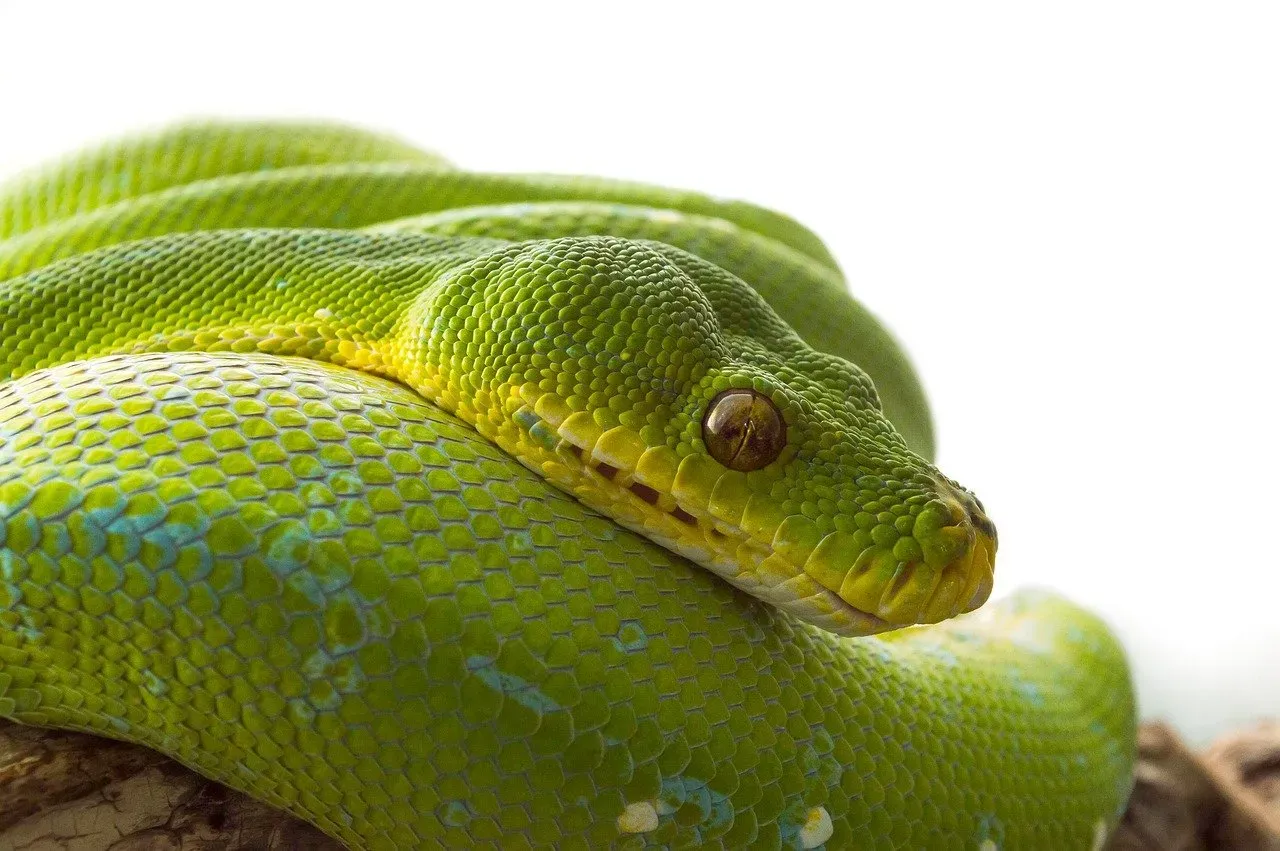
After all of this, one thought is impossible to shake: the world we experience through our eyes is not the world. It’s just one version of the world, filtered through three humble cone types and a brain that has learned to make something beautiful out of them. Other creatures live in versions of reality that are richer, stranger, or more specialized in ways we can barely begin to imagine.
Reconstructing the colors that animals actually see can help scientists better understand how they communicate and navigate the world around them. With new camera technologies and advances in neuroscience, we are finally beginning to glimpse those alien visual worlds. What we know about color perception in the animal kingdom pales in comparison to that which is yet to be discovered. The next time you glance at a flower, a clear sky, or a red toy rolling through green grass, consider this: somewhere in the animal kingdom, there’s a creature for whom that same scene looks breathtakingly, incomprehensibly different. What would you give to see through those eyes, even for just a moment?