You know that feeling when you peer into something so vast, so extreme, that your mind struggles to comprehend it? That’s exactly what lies at the heart of your own galaxy. Not some distant enigma in a faraway corner of the universe, but right here in our cosmic backyard sits one of the most powerful and mysterious objects known to science.
Sagittarius A*, abbreviated as Sgr A*, is the supermassive black hole at the Galactic Center of the Milky Way. Sagittarius A* is more than 25,000 light years from Earth – your nearest supermassive black hole. Think about that for a second. You’re living in a galaxy that essentially orbits around a region where gravity has become so intense that even light, traveling at roughly 186,000 miles per second, cannot escape. Honestly, it’s hard to wrap your head around the sheer scale of what this means for our understanding of the cosmos.
The Monster’s True Identity
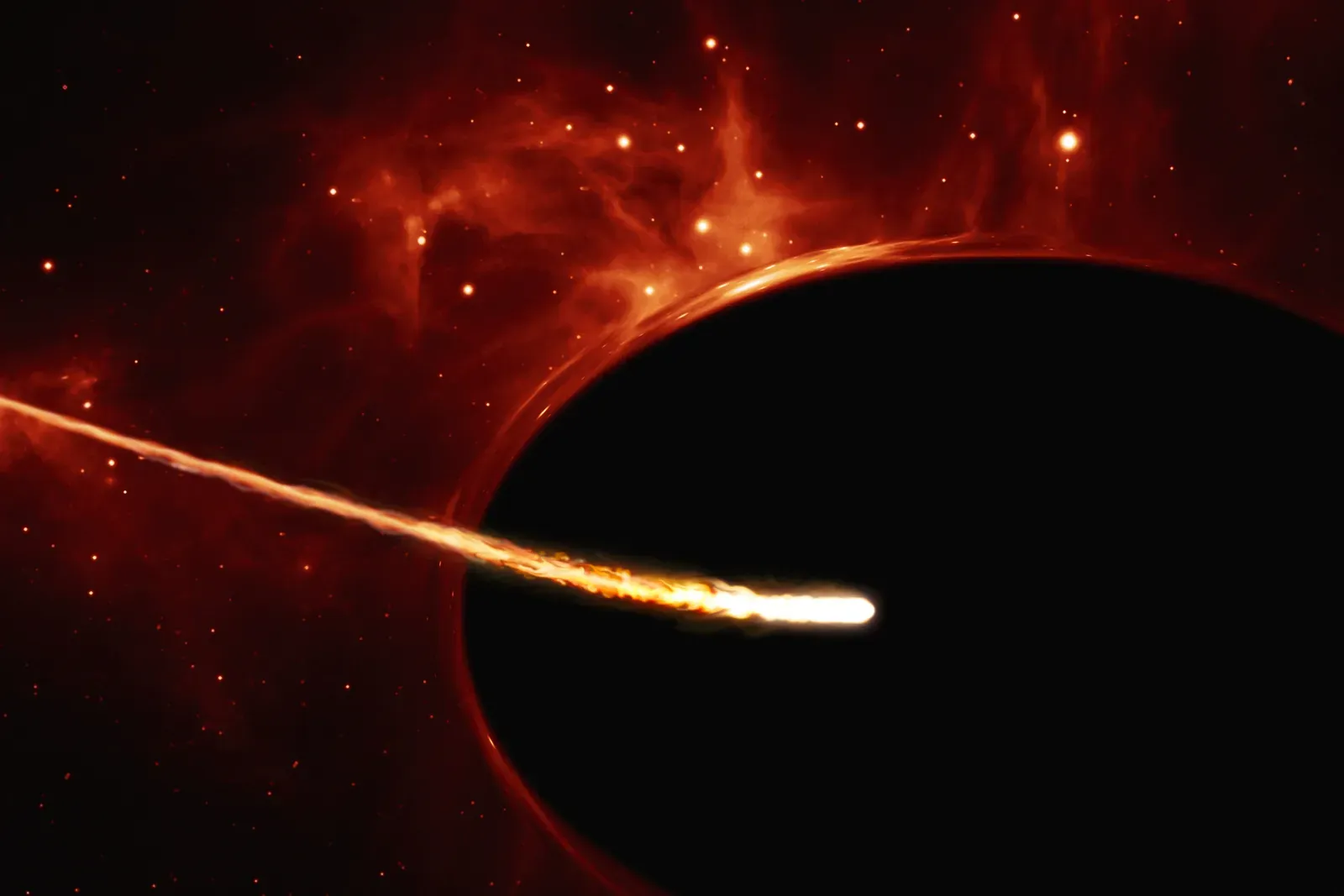
The current best estimate of its mass is 4.297±0.012 million solar masses. Let that sink in. Sagittarius A* weighs roughly four million times more than our Sun. Yet here’s where things get truly mind-bending. The black hole in the center of the Milky Way has a mass 4 million times that of the Sun’s. Yet it is incredibly compact and would fit between the orbit of Mercury and the Sun.
Imagine cramming four million suns into a space smaller than Mercury’s orbit around our star. It’s this insane density that gives black holes their terrifying gravitational grip. The object isn’t particularly large by cosmic standards, but its compactness creates a gravitational well so deep that nothing crossing a certain threshold can ever climb back out.
Reinhard Genzel and Andrea Ghez were awarded a half share in the 2020 Nobel Prize in Physics for their discovery that Sagittarius A* is a supermassive compact object, for which a black hole was the only explanation. Scientists watched stars whip around this invisible monster for years, their movements betraying the presence of something utterly massive yet completely hidden from view.
The First Portrait of Darkness
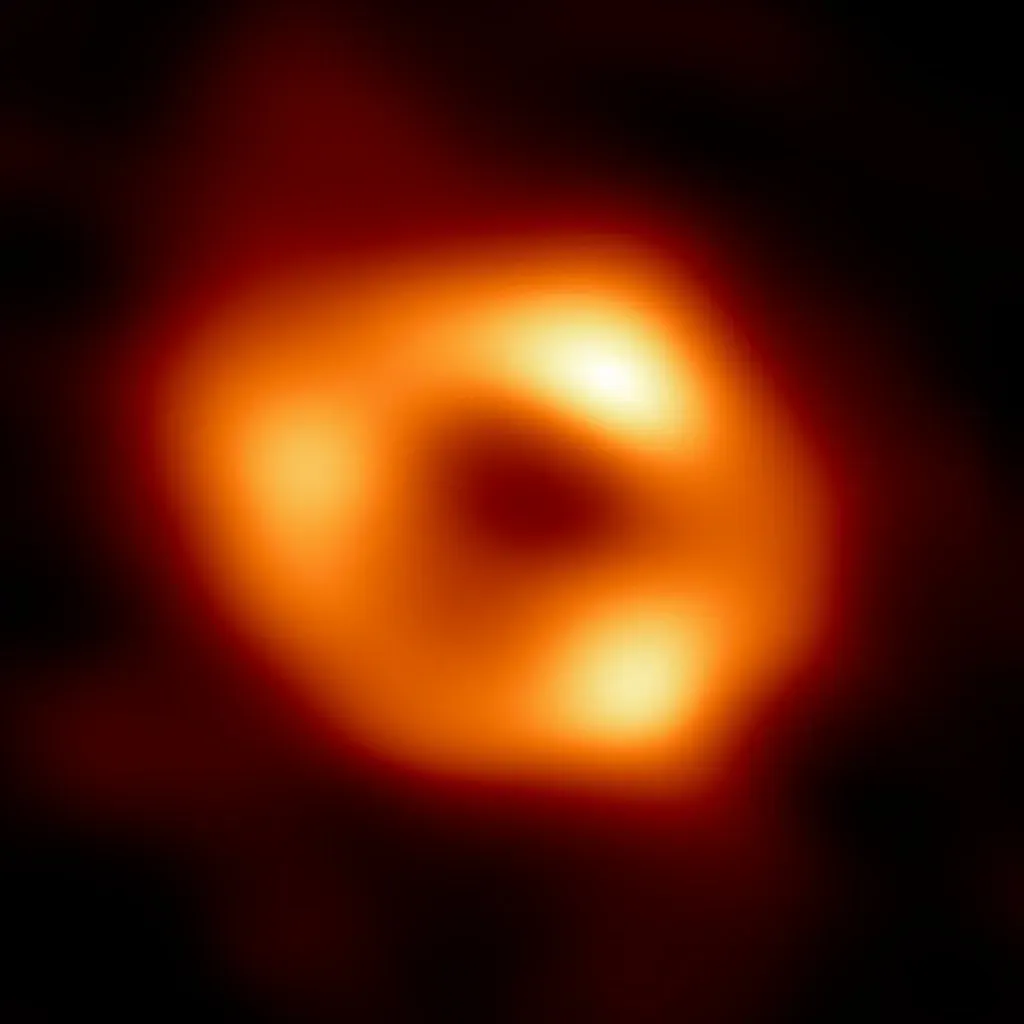
For decades, Sagittarius A* remained invisible. Black holes don’t emit light, making them notoriously difficult to observe directly. That changed dramatically in May 2022. Astronomers released the first image of the accretion disk around the event horizon of Sagittarius A*, using the Event Horizon Telescope, a world-wide network of radio observatories.
The image shows something remarkable. Although we cannot see the black hole itself, because it is completely dark, glowing gas around it reveals a telltale signature: a dark central region (called a “shadow”) surrounded by a bright ring-like structure. You’re looking at light bent by gravity so powerful it warps the very fabric of spacetime. The new view captures light bent by the powerful gravity of the black hole, which is four million times more massive than our Sun.
Creating this image was no simple feat. The researchers focused the EHT array on the center of our galaxy, 27,000 light years from Earth, cutting through our planet’s atmosphere and the turbulent plasma beyond our solar system. The team essentially created a virtual telescope the size of Earth itself.
The Glowing Ring of Doom
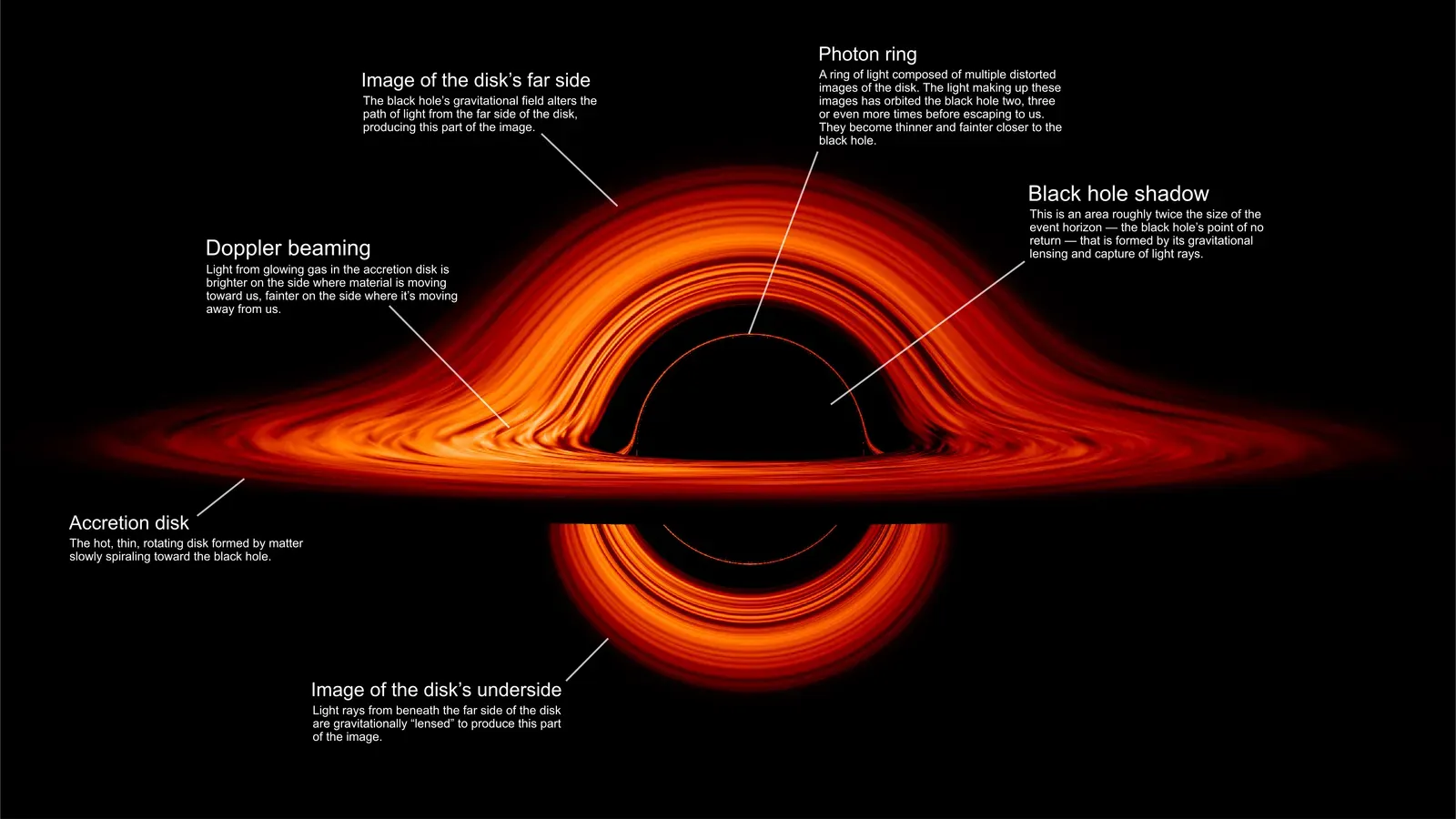
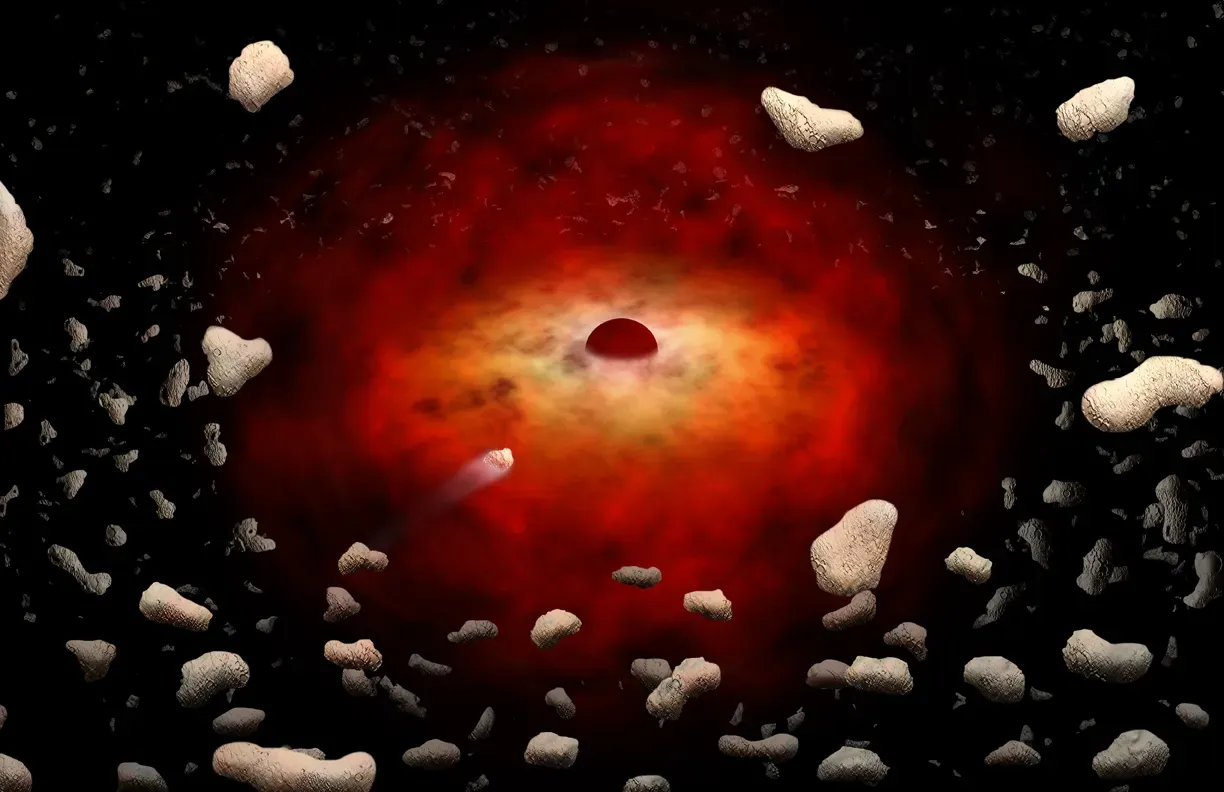
That bright orange ring you see in the famous image? That’s superheated matter spiraling toward oblivion. The observed radio and infrared energy emanates from gas and dust heated to millions of degrees while falling into the black hole.
The temperature of an accretion disk around a black hole is high enough for the disk matter to emit large amounts of highly-energetic X-rays. The maximum temperature in an accretion disk around a supermassive black hole a hundred times the mass of our sun will be around one million Kelvin – and temperatures can soar even higher. To put that in perspective, the core of our Sun reaches about fifteen million Kelvin, but that heat is spread throughout a massive volume. The accretion disk concentrates this thermal fury in a razor-thin plane.
Matter falling towards a central object, forming an accretion disk, represents an eminently efficient way to produce radiation from other forms of energy (in this case gravitational energy). It is roughly 30 times more efficient than nuclear fusion – the energy mechanism that powers stars like our Sun.
The Sleeping Giant’s Recent Awakening
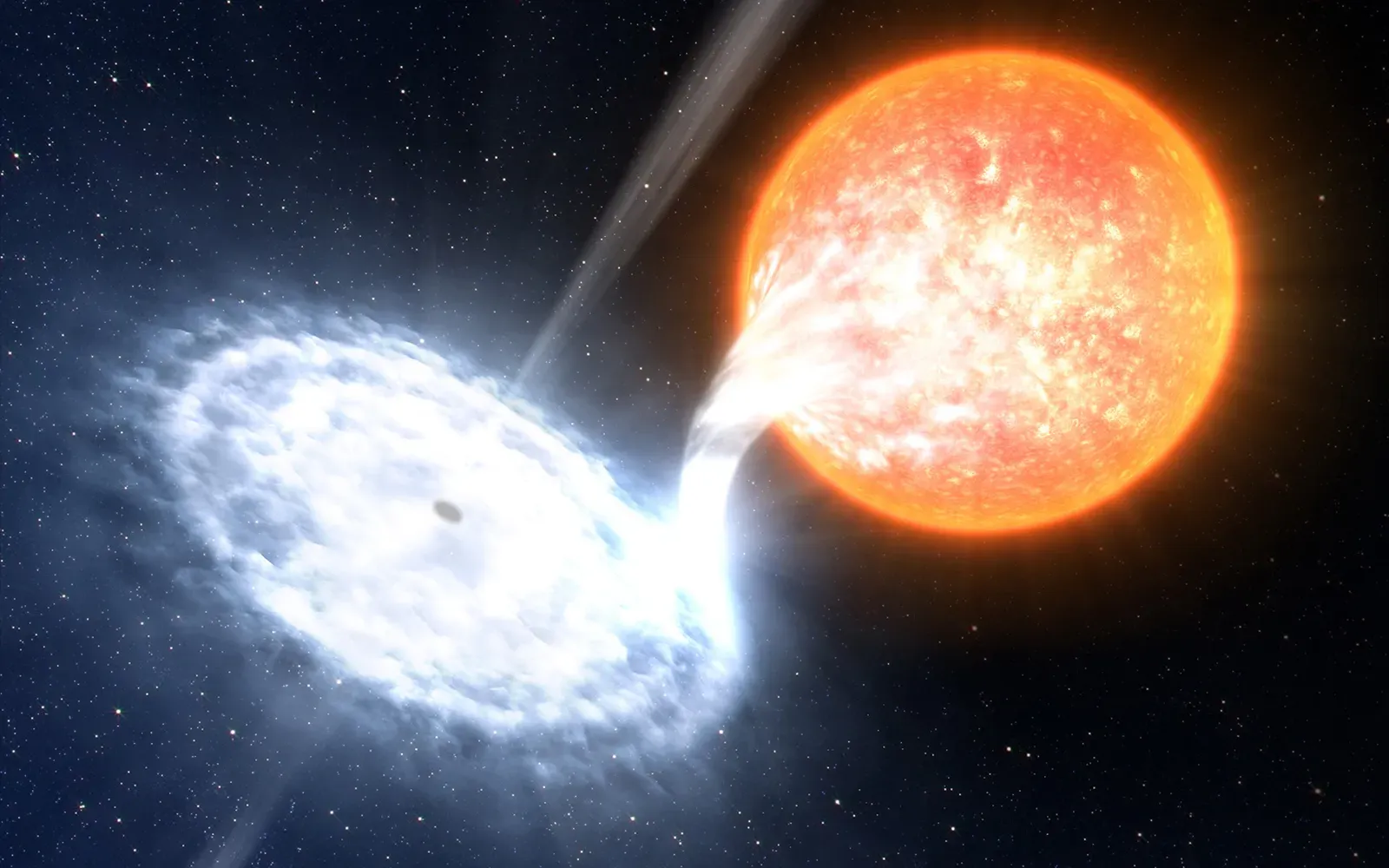
Here’s something that might surprise you. Sagittarius A*, the supermassive black hole at the center of the Milky Way galaxy, woke some 200 years ago to devour cosmic debris, according to new findings from NASA’s Imaging X-ray Polarimetry Explorer. Around two centuries ago, by our reckoning, the monster stirred from its slumber.
Sagittarius A* is far less luminous than other black holes at the centers of galaxies we can observe, which means our galaxy’s central black hole has not been actively gobbling up material around it. Compared to the ravenous black holes powering quasars and active galactic nuclei in other galaxies, Sagittarius A* is relatively quiet. It’s a sleeping dragon, not the fire-breathing type actively consuming everything in sight.
That doesn’t mean it’s harmless. On January 5, 2015, NASA reported observing an X-ray flare 400 times brighter than usual, a record-breaker, from Sgr A*. When it does feed, the results can be spectacular.
Magnetic Mysteries at the Edge of Forever
Scientists recently uncovered another layer to this cosmic enigma. A new image from the Event Horizon Telescope collaboration has uncovered strong and organized magnetic fields spiraling from the edge of the supermassive black hole Sagittarius A*.
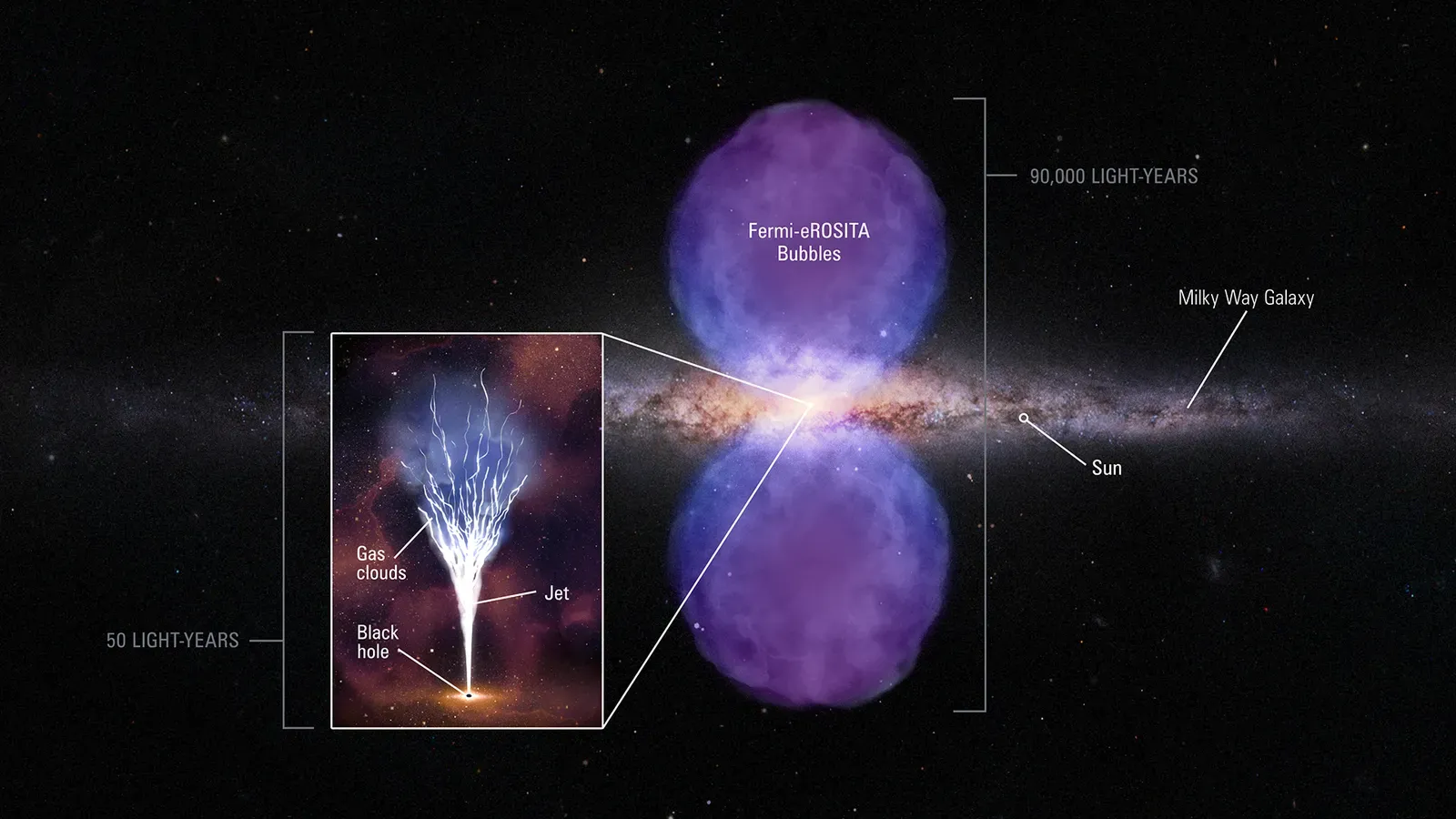
These magnetic fields aren’t just cosmic decoration. “What we’re seeing now is that there are strong, twisted, and organized magnetic fields near the black hole at the center of the Milky Way galaxy,” explained researcher Sara Issaoun. Using the polarised part of the radio light, the researchers discovered strong magnetic fields that spiral out from the edge of the supermassive black hole Sagittarius A*. The results indicate that a jet could be dormant in the centre of our galaxy – a jet that, if active, would blast material outward at near light-speed.
Large X-ray bright bubbles above and below the plane of the Milky Way indicate that a jet was active in the core of our galaxy a few million years ago. These enormous structures, visible in X-ray observations, suggest our galactic center wasn’t always so tranquil.
The Dance of Doomed Stars
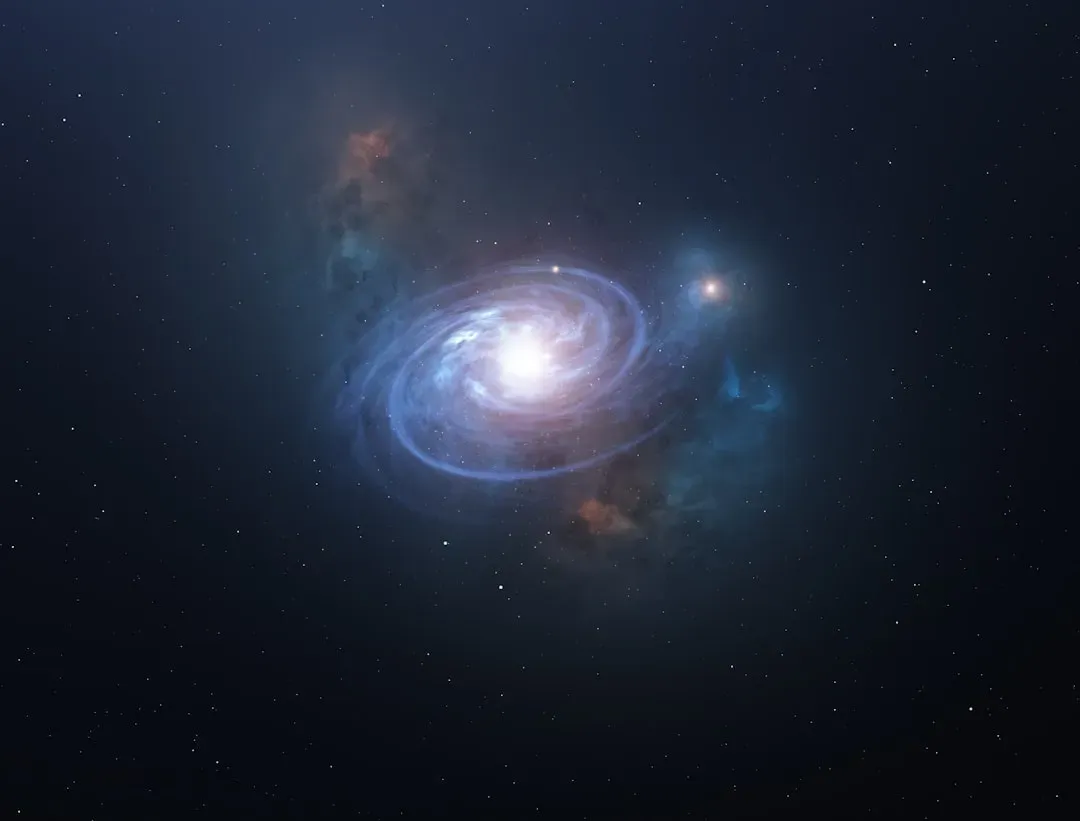
One of the most dramatic ways scientists study Sagittarius A* is by watching stars dance around it. The observation of several stars orbiting Sagittarius A*, particularly star S2, have been used to determine the mass and upper limits on the radius of the object. From examining the Keplerian orbit of S2, they determined the mass of Sagittarius A* to be 4.1±0.6 million solar masses, confined in a volume with a radius no more than 17 light-hours.
These stars move at blistering speeds. They’re locked in gravitational embraces with an invisible partner, their elliptical orbits revealing the monster’s presence through pure gravitational influence. It’s like watching dancers perform around an invisible choreographer – except this choreographer weighs millions of suns.
A supermassive black hole’s intense gravity can cause stars to orbit around it in a particular way. Astronomers tracked the orbits of several stars near the center of the Milky Way to prove it houses a supermassive black hole, a discovery that won the 2020 Nobel Prize. For years, scientists meticulously tracked these stellar paths, building an ironclad case that only a black hole could explain what they were seeing.
A Cosmic Merger’s Legacy
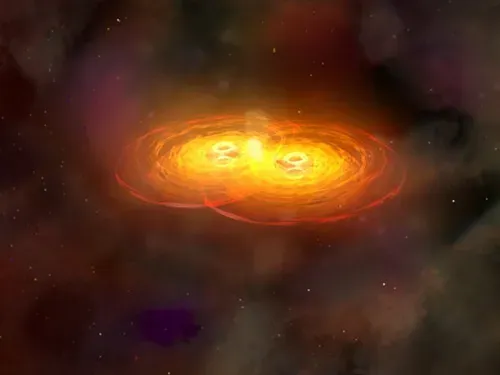
Where did this monster come from? Recent research offers a tantalizing answer. Researchers from the Nevada Center for Astrophysics at UNLV discovered compelling evidence suggesting that the supermassive black hole at the center of our Milky Way galaxy, known as Sagittarius A*, is likely the result of a past cosmic merger.
“This merger likely occurred around 9 billion years ago, following the Milky Way’s merger with the Gaia-Enceladus galaxy,” explained distinguished professor Zhang. Think about that timeline. Nine billion years ago, two galaxies collided, and their central black holes likely spiraled together in a cataclysmic dance that ultimately created the object we observe today.
This helps solve one of astronomy’s greatest puzzles: how supermassive black holes grow so large. Scientists know supermassive black holes can grow by feeding on smaller objects, like their stellar-mass relatives and neutron stars. They can also merge with other supermassive black holes when galaxies collide.
The Point of No Return
Let’s talk about what makes black holes truly terrifying: the event horizon. A black hole is a location in space with a gravitational pull so strong that nothing, not even light, can escape it. A black hole’s outer edge, called its event horizon, defines the spherical boundary where the velocity needed to escape exceeds the speed of light.
Cross that threshold, and you’re never coming back. Not because something actively pulls you in faster than light, but because spacetime itself becomes so warped that all paths lead inward. The black hole itself is thought to emit only Hawking radiation at a negligible temperature, on the order of 10−14 kelvin. That’s basically absolute zero – colder than anything naturally occurring in the universe.
Due to a black hole’s extreme density, objects in its vicinity will experience extreme gravity and hence extreme tidal forces that can even pull the object apart. Scientists call this “spaghettification,” and yes, it’s exactly as pleasant as it sounds. Your head would be pulled with vastly more force than your feet, stretching you like cosmic taffy.
What It Means for Our Galactic Home
Should you be worried? Honestly, no. Sagittarius A* is more than 25,000 light years from Earth, which is extraordinarily far by any reasonable measure. You’re far more likely to worry about climate change, asteroid impacts, or running out of coffee than anything related to our galactic black hole.
The central cubic parsec around Sagittarius A* contains around 10 million stars. Although most of them are old red giant stars, the Galactic Center is also rich in massive stars. The region around Sagittarius A* is a bustling stellar metropolis, surprisingly populated despite the gravitational menace at its core. The existence of these relatively young stars was a surprise to experts, who expected the tidal forces from the central black hole to prevent their formation.
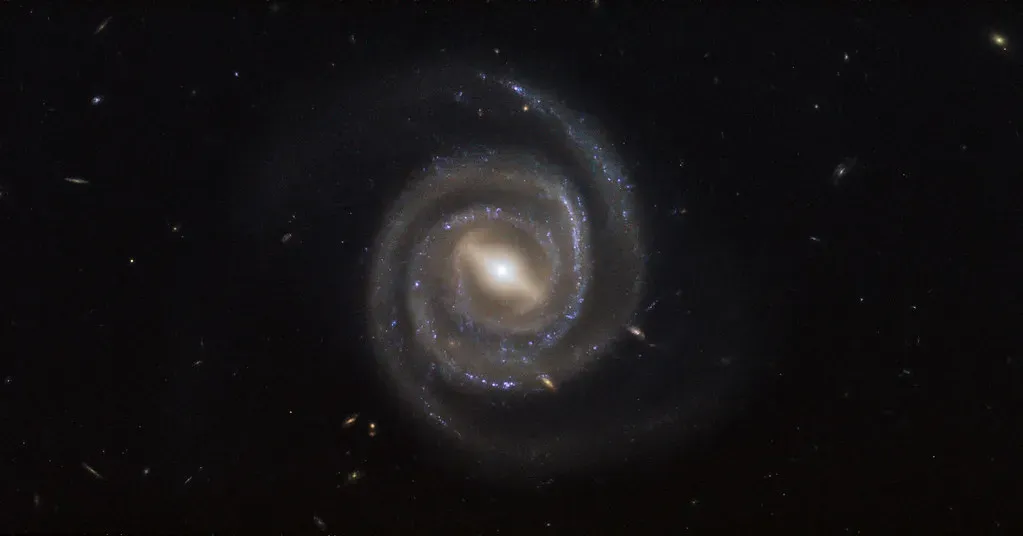
Our Sun orbits the galactic center at a sedate pace, completing one orbit roughly every 225 million years. We’re far enough away that Sagittarius A*’s influence on our daily lives is essentially nil. Yet its gravity shapes our entire galaxy, keeping hundreds of billions of stars in their grand cosmic dance.
Conclusion: The Cosmic Lighthouse in the Dark
Sagittarius A* represents one of humanity’s greatest scientific achievements – not just in discovering it, but in actually imaging it. The image provides the first direct visual evidence of what scientists had long theorized but never directly seen. We’ve gone from abstract mathematical predictions to actual photographs of one of nature’s most extreme phenomena.
The black hole at our galaxy’s heart is both our cosmic anchor and a reminder of how much we still don’t understand. It shapes our galaxy, influences the orbits of billions of stars, and occasionally erupts with spectacular flares that echo across space. It’s a monster, yes, but also a fundamental architect of the cosmic structure we call home.
What do you think about living in a galaxy with such an extreme object at its center? Does it change how you see our place in the cosmos? The universe has a way of making us feel simultaneously insignificant and privileged – insignificant in scale, yet privileged to witness and comprehend such wonders.
Hi, I’m Andrew, and I come from India. Experienced content specialist with a passion for writing. My forte includes health and wellness, Travel, Animals, and Nature. A nature nomad, I am obsessed with mountains and love high-altitude trekking. I have been on several Himalayan treks in India including the Everest Base Camp in Nepal, a profound experience.