

What if everything you see, hear, and feel is not quite what you think it is? You might walk into a room and believe you are receiving an objective snapshot of the world around you. In truth, your brain is doing something far more extraordinary, and honestly, far more unsettling. It is constructing a version of reality from the inside out, using predictions, memories, and educated guesses to build the world you experience.
This is not philosophy. It is neuroscience. The idea that your brain fabricates your reality, stitch by stitch, moment by moment, is one of the most profound shifts in how scientists now understand human consciousness. The deeper you look, the stranger it gets. Let’s dive in.
Your Brain Lives in Darkness and Makes Its Best Guess
Here is something that should genuinely stop you in your tracks. For your whole life, your brain is trapped inside a dark, silent box called your skull, constantly receiving data from your eyes, ears, nose, and other sense organs. It never directly sees the world. Not once. Think of it like a detective locked in a room with only secondhand clues, forced to reconstruct a crime scene it will never visit.
Your brain also receives a continuous stream of sense data from inside your body as your lungs expand, your heart beats, and your temperature changes. All this data presents a mystery, representing the end result of some set of causes that are unknown. Your brain’s job, every single second, is to make the most plausible story out of all those clues. Remarkably, it almost always succeeds without you noticing a thing.
Perception Is an Active Construction, Not a Passive Recording
The central idea here is that perception is a process of active interpretation geared toward adaptive interaction with the world via the body, rather than a re-creation of the world within the mind. This is a huge distinction. You are not a camera. You are a meaning-making machine, constantly interpreting, filling in gaps, and prioritizing information that helps you survive.
Perception is the brain’s search for the best interpretation of the stimuli presented to you. What you believe you see and hear from the world is essentially modeled by the brain. Scientists describe this as involving two streams: bottom-up processing, where raw sensory input flows in, and top-down processing, where your existing knowledge and expectations reshape what you actually experience. Both are happening simultaneously, all the time.
The Brain’s Prediction Engine: Why Your Past Runs Your Present
For decades, research has shown that your perception of the world is influenced by your expectations. These expectations, also called “prior beliefs,” help you make sense of what you are perceiving in the present, based on similar past experiences. Imagine a seasoned doctor spotting a shadow on an X-ray that an intern would completely miss. The doctor’s brain has been trained by years of experience to see what the untrained eye cannot.
Research supports the theory that what you recognize is influenced more by past experiences than by newly arriving sensory input from your eyes. Even more striking, a rope coiled on a dusty trail may trigger a frightened jump from a hiker who recently stepped on a snake. A new study explains how a one-time visual experience can shape perceptions afterward, showing that humans recognize what they are looking at by combining current sensory stimuli with comparisons to images stored in memory. Your history literally edits what you see.
When the Brain Gets It Wrong: Optical Illusions and Perceptual Errors

The stories your brain tells you about reality are extremely compelling, even when they are wrong. Optical illusions are not just party tricks. They are windows into the underlying mechanisms your brain uses every day. When you see movement that is not there, or colors that shift depending on context, you are catching your perception system in the act of constructing rather than simply receiving.
Bistable illusions have taught us that humans tend to think their perception is so reliable that they consider it shared with others, while this is not always the case. When your brain filters, processes, and interprets stimuli from the world, it continuously and unconsciously makes assumptions about what the world is or how it functions. Honestly, that is a little terrifying. Your brain’s quiet confidence in its own story can lead you astray without you ever suspecting a thing.
How Your Emotions Secretly Rewrite What You Perceive

Emotional responses modulate and guide cognition to enable adaptive responses to the environment. Emotion determines how you perceive your world, organise your memory, and make important decisions. This is not a metaphor. Emotions physically alter which sensory signals your brain amplifies and which ones it suppresses. When you are anxious, the world genuinely looks more threatening because your brain is primed to find threats.
Due to their ability to capture attention, emotional stimuli tend to benefit from enhanced perceptual processing, which can be helpful when such stimuli are task-relevant but hindering when they are task-irrelevant. Altered emotion-attention interactions have been associated with symptoms of affective disturbances. Think of it this way: fear is like turning up the volume on certain channels while muting others entirely. You end up hearing a completely different broadcast than someone sitting right beside you.
No Two Realities Are the Same: Why Your Brain’s World Differs From Everyone Else’s

Reality is constructed by the brain, and no two brains are exactly alike. This goes far deeper than simply having different opinions or preferences. Your brain’s unique history, culture, emotional patterns, and accumulated experiences create a perception of reality that is genuinely yours alone. Two people at the same dinner table, watching the same sunset, are having measurably different experiences.
Intrinsic and extrinsic factors play a direct role in shaping your perception of the world. As a result, not all individuals perceive things in the same way, and even the same individual may not consistently perceive things in the same manner. Add to this the fascinating field of cultural neuroscience, which shows that culture, as an amalgam of values, meanings, conventions, and artifacts that constitute daily social realities, might interact with the mind and its underlying brain pathways of each individual member of that culture. Your culture is literally inside your head.
Social Reality: The Collective Hallucination We All Agree On
Let’s be real about something wild. Money has no actual value. Borders do not physically exist. Laws are ideas. Yet these things shape entire lives and civilizations. Your perception of reality is not an exact representation of the objective truth but rather a combination of sensory inputs and the brain’s interpretation of these signals. This interpretation is influenced by past experiences and is often predictive. The brain’s categorization process extends beyond physical characteristics to include abstract, functional features, allowing humans to create “social reality,” where we collectively assign functions or meanings to objects or concepts that don’t inherently possess them, such as the value of money or the concept of borders and citizenship.
An ensemble of human brains together creates social reality, a superpower that can turn fish into puppies, boulders into currency, stereotypes into brain wiring, and a person into a president. Any group of people can make up abstract concepts, share them, and weave them into reality. Consequently, you have more control over reality than you might think, and more responsibility for it than you might realise or want. That last part is the part most people never sit with long enough.
Mindfulness and Perception: Training Your Brain to See More Clearly

While your brain creates models of the physical world, it also makes models of your emotional, cultural, and social worlds. These models are also created through shortcuts and best guesses, but the resulting illusions, or biases, can be much harder to spot. The good news is that this does not have to be the end of the story. Research strongly suggests that you can actively reshape the way your brain processes reality.
Studies clearly indicate that the practice of mindfulness changes brain function in areas including the medial cortex, default mode network, insula, and amygdala. Mindfulness has been described as dispassionate, non-evaluative, and continuous moment-by-moment awareness of sensations, perceptions, emotions, and thoughts. In a very literal, measurable, neurological sense, emotional reactivity can bias perception, leading to exaggerated appraisals of threat. In contrast, mindfulness may enable you to cognitively appraise your present circumstances with less emotional bias, and to more accurately assess your ability to cope with present challenges. Seeing clearly is a skill. And like any skill, it can be practiced.
Conclusion: The Most Important Thing You Will Ever Question
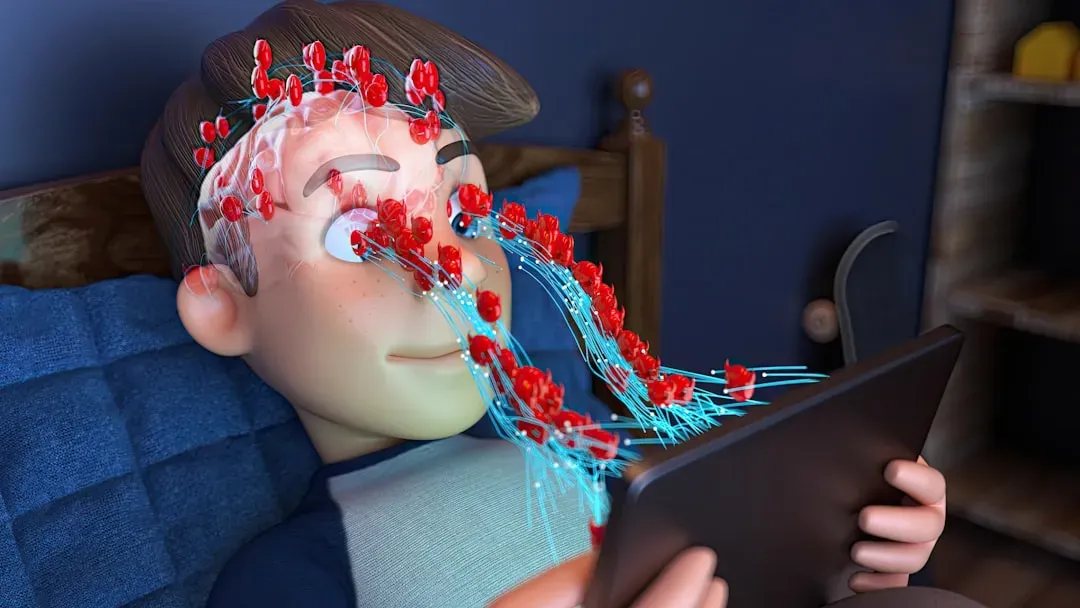
What you call “reality” is, in the most rigorous scientific sense, a deeply personal construction built by a brain that never has direct access to the world outside your skull. Your expectations, emotions, memories, and culture all shape the signal before it ever reaches your conscious awareness. That is not a flaw. It is, in fact, an extraordinary evolutionary achievement that keeps you alive and functional.
The real invitation here is not to distrust everything you perceive, but to hold your version of reality a little more lightly. It is not about doubting everything that comes through your senses. It is about looking for your blind spots, with the goal of becoming a better thinker. It can also help with empathy. When other people misperceive reality, you may not agree with their interpretation, but you can understand where it comes from.
I think the single most powerful thing you can take from all of this is simple: the world you experience is partly a world you create. And that means, at least in some ways, you have more power over it than you ever imagined. When was the last time you genuinely questioned whether your version of events was the only version there was?