
You carry the most sophisticated computing device ever known right inside your skull, and you probably haven’t given it nearly enough credit today. It weighs roughly the same as a small bag of sugar, fits comfortably in the palm of your hand, and hums along quietly on about as much electricity as a dim nightlight. Yet, everything you think, feel, remember, and create flows from it in real time, without a single reboot required.
What makes this even more mind-bending is that despite the billions of dollars poured into building supercomputers that fill entire warehouses, science still has not managed to fully replicate what your brain does before you’ve even had your morning coffee. There’s a fascinating, and honestly somewhat humbling, story here. Let’s dive in.
The Raw Numbers Are Genuinely Staggering
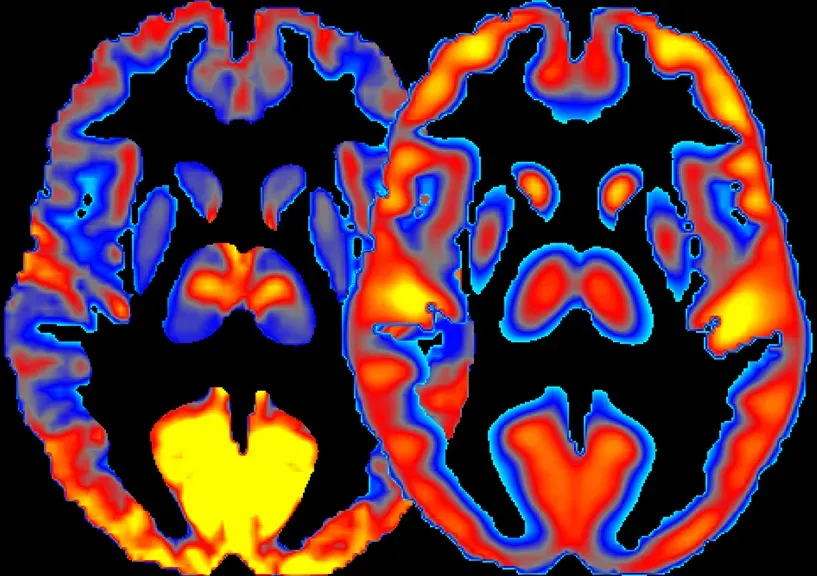
Let’s be real, the brain’s architecture is something that defies ordinary intuition. Your brain contains roughly 86 billion neurons and around 100 trillion connections between them. Think of it like this: if every connection in your brain were a single grain of sand, you’d have enough sand to fill a beach the size of a small country.
A rough estimate based on the number of digital electrical pulses that the approximately 100 billion neurons in a human brain send to one another per second via approximately 100 trillion synapses suggests that your brain carries out about one thousand trillion logical operations per second, which is known as a petaflop of computational ability. That is not a number you casually beat with a box of circuits.
Some order-of-magnitude estimates suggest that human brains carry out the equivalent of 100 to 1,000 petaflops of information processing. To put that in perspective, only a handful of machines on Earth even approach that range, and they cost hundreds of millions of dollars to build and operate.
Your Brain Runs on the Power of a Dim Light Bulb
Here’s the thing that should stop you in your tracks. By distributing its computing power to billions of small units that interact through trillions of connections, your brain can rival the most powerful supercomputers in the world, while requiring only the same power used by a fridge lamp bulb. Supercomputers, meanwhile, generally take up lots of space and need large amounts of electrical power to run.
A 100 petaflop supercomputer requires about 15 million watts, enough power to support a city of about 10,000 homes, occupies an area of about an American football field of interconnected cabinets, and requires a sophisticated and expensive cooling system. In contrast, your brain, even when solving a difficult physics problem, consumes about 15 watts. That gap in energy efficiency is almost embarrassingly large.
Energy-wise, the human brain consumes 20 watt-hours to produce an exaflop, while the Frontier supercomputer needs 20 million watt-hours. I honestly think that statistic alone deserves a moment of silence. The engineering world has been chasing that kind of efficiency for decades, and your brain already mastered it through billions of years of evolution.
The Brain Merges Memory and Processing in One Seamless System
Traditional computers have always had a fundamental design weakness, and it’s one your brain simply doesn’t share. Your smartphone, a laptop, and even the most powerful supercomputer in the world all share the same fundamental structure: they have distinct processing and memory units, where data and instructions are stored in the memory and computed by a processor. Your brain throws that whole rigid framework out the window.
In your brain, unlike in a computer, memory and computation are governed by the same neurons and synapses. It’s a bit like having your office desk, filing cabinet, and thinking space all fused into one seamlessly operating unit. No shuffling data between locations, no bottlenecks, no lag caused by the back-and-forth transfer of information.
Computers have some parts for processing and others for memory; the brain does not do this separation, which makes them enormously efficient. The same calculations and processes that a computer might take a few million steps to complete can be accomplished through a few hundred neuron transmissions, which require much less energy. That’s not just efficient, that’s a completely different philosophy of computing.
Neuroplasticity: Your Brain Updates Its Own Hardware
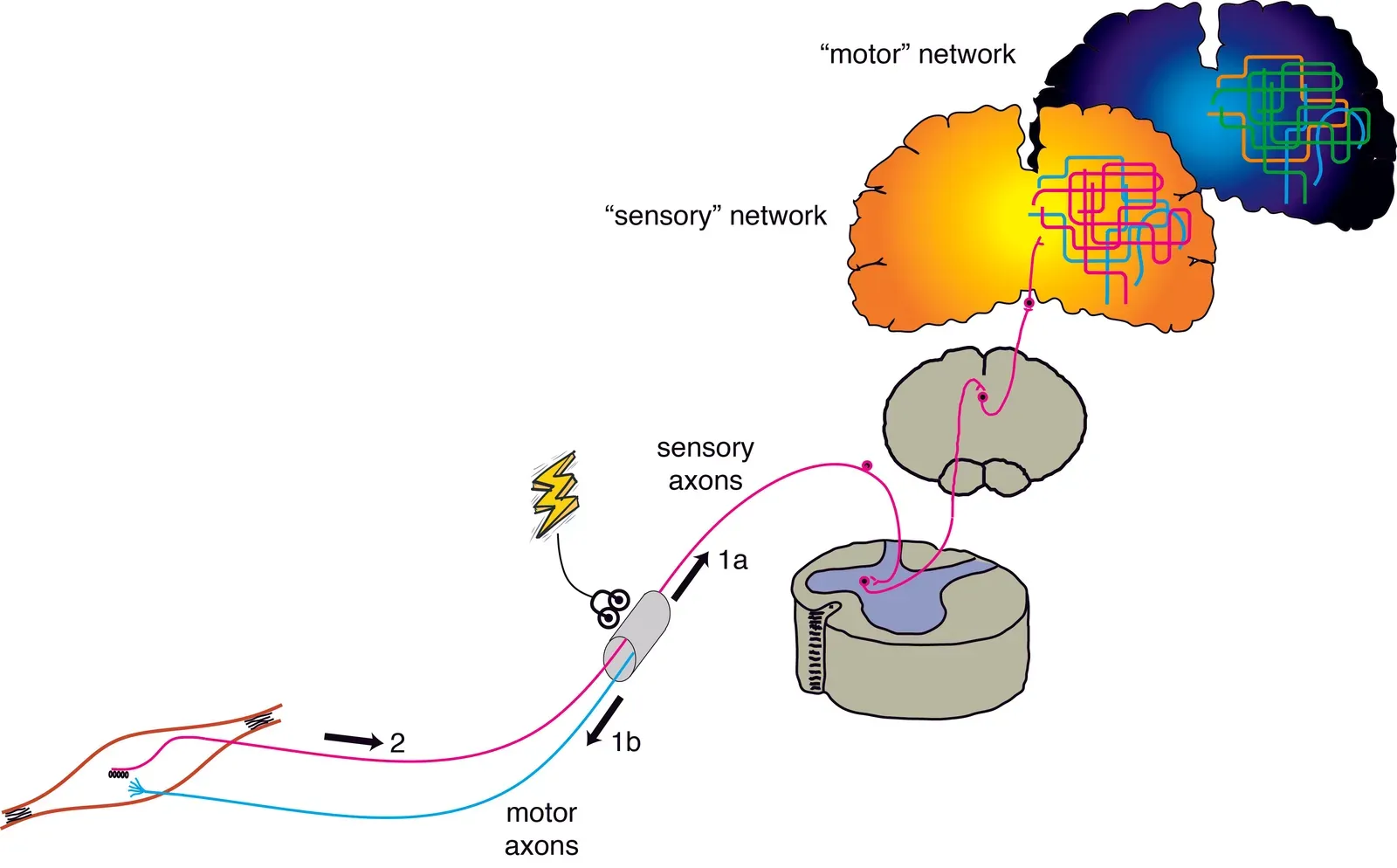
If you’ve ever marveled at how a computer can’t fix itself when it crashes, welcome to one of the most jaw-dropping differences between silicon and biology. Unlike computers, which are built to certain specifications and receive software updates periodically, your brain can actually receive hardware updates in addition to software updates. No engineer required. No factory reset needed.
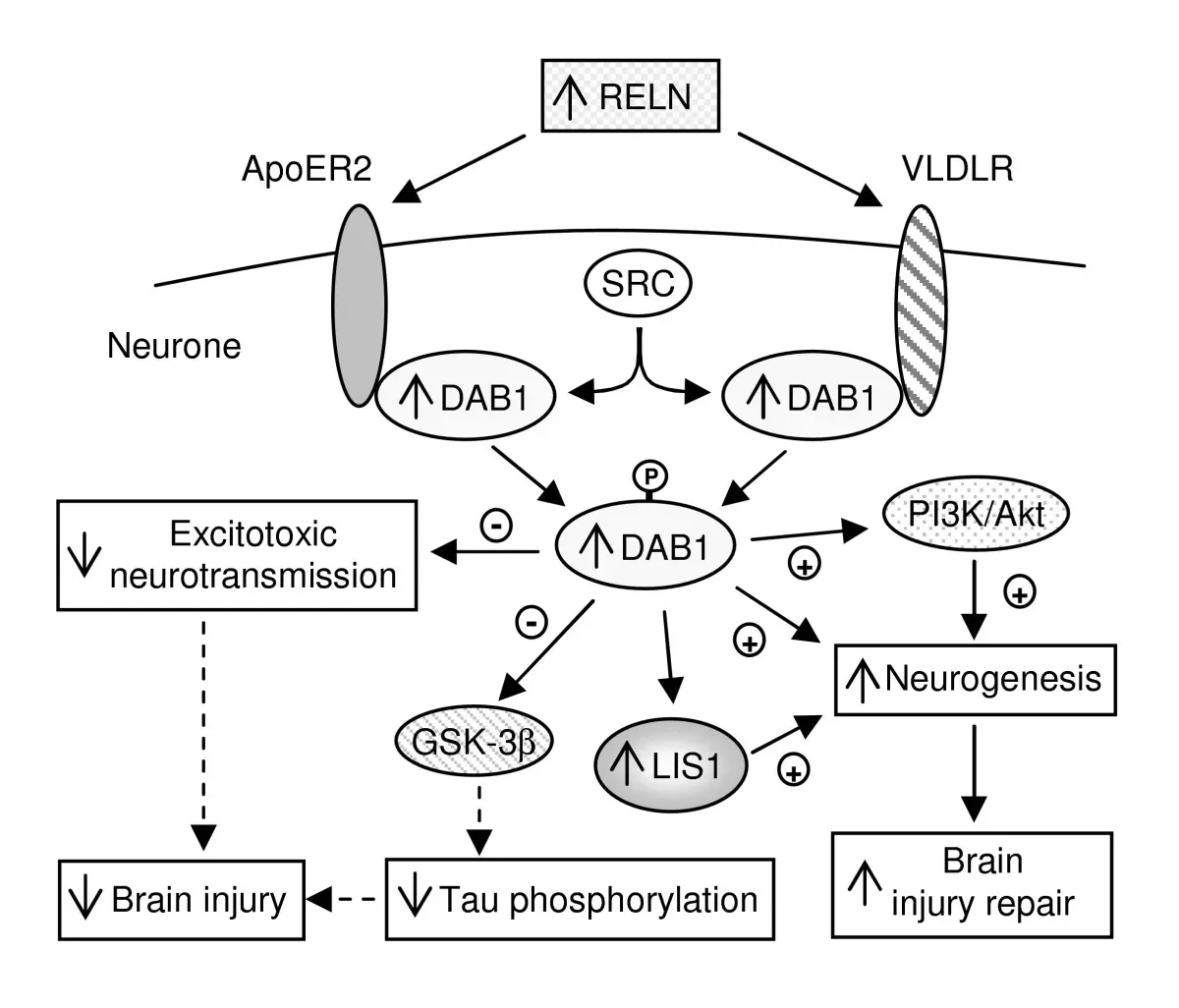
Neuroplasticity is your brain’s capacity to reorganize itself by forming new neural connections, and it is central to modern neuroscience. Once believed to occur only during early development, research now shows that plasticity continues throughout your lifespan, supporting learning, memory, and recovery from injury or disease. This means the brain you wake up with tomorrow is literally a slightly different version of the one you used today.
Your brain can essentially rewire itself, a feat more formally known as neuroplasticity. Neurons are able to disconnect and reconnect with others and even change in their basic features, something that a carefully constructed computer simply cannot do. That adaptability is not just impressive, it is the reason stroke survivors can relearn to speak, and why humans can master entirely new skills well into old age.
The Brain Processes Information in Massive Parallel Streams
Imagine trying to cook a five-course dinner using a kitchen that can only work on one dish at a time. That is essentially what traditional computers do. Your brain, on the other hand, is running every burner simultaneously. Unlike the sequential processing of traditional computers, your brain handles distributed, simultaneous computations across billions of neurons.
While computer architectures like SIMD or MIMD can excel at specific tasks such as image processing or matrix operations, they still lack the versatility and energy efficiency of the brain’s parallel computation across a wide variety of tasks, from sensory processing to abstract reasoning. Your brain handles all of those things at once, without breaking a sweat or overheating.
For example, a professional tennis player can follow the trajectory of a tennis ball served at a speed as high as 160 miles per hour, move to the optimal spot on the court, position the arm, and swing the racket to return the ball, all within a few hundred milliseconds. Moreover, the brain accomplishes all these tasks with power consumption about tenfold less than a personal computer. Try coding that into any machine today. It’s hard to say for sure that we ever fully will.
Memory Storage That Puts Digital Archives to Shame
You might think your smartphone with its large storage sounds impressive. Wait until you hear what your brain is quietly holding onto. According to a 2010 article in Scientific American, the memory capacity of the human brain was reported to have the equivalent of 2.5 petabytes of memory capacity. A “petabyte” means 1,024 terabytes or a million gigabytes, so the average adult human brain has the ability to store the equivalent of 2.5 million gigabytes of digital memory.
By comparison, the IRS’s own massive data warehouse, which keeps track of over 300 million Americans and many more millions of businesses, has the capacity of 150 terabytes of memory. Yet Yahoo’s 2.0 petabyte computational center, which can process 24 billion events a day, is a full 20 percent smaller than the capacity of a single human brain. A single human brain. Not a network of brains. Just yours.
In one study, it was reported that a single synapse can store 4.7 bits of information. Neurons are the cells which process and transmit messages within the brain, and synapses are the bridges between neurons which carry those transmitted messages. When you multiply that across hundreds of trillions of connections, the total storage capacity becomes almost impossible to fully comprehend.
Science Is Now Building Computers That Copy the Brain
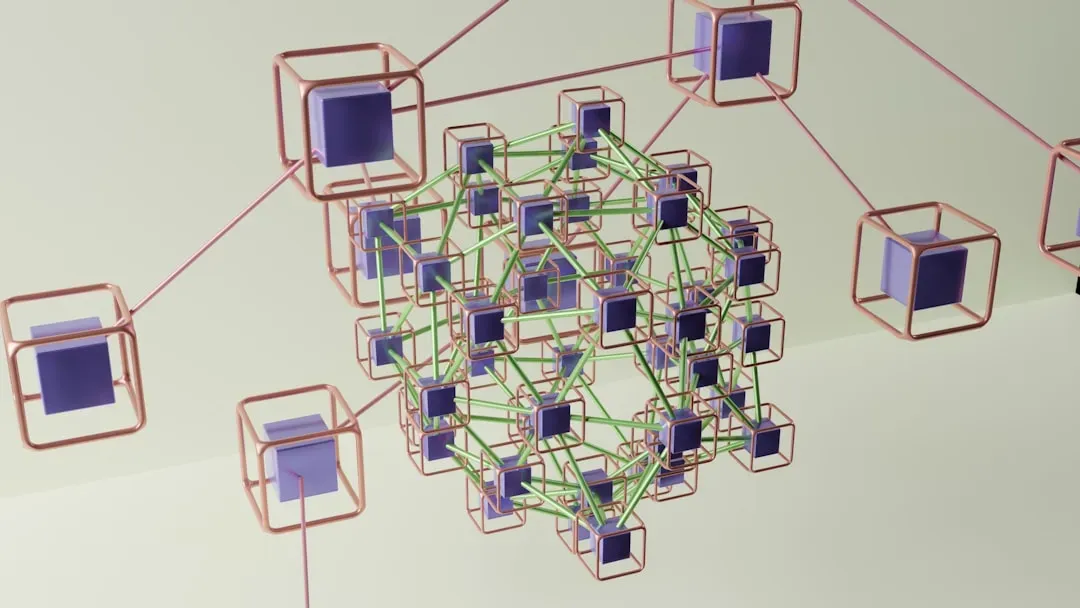
Perhaps the greatest compliment humanity has ever paid to the brain is this: after decades of trying to surpass it, the world’s top engineers and scientists have decided to simply try copying it instead. DeepSouth belongs to an approach known as neuromorphic computing, which aims to mimic the biological processes of the human brain. It is the sincerest form of flattery in computer science.
When fully operational, the DeepSouth supercomputer will be capable of performing 228 trillion synaptic operations per second. This is comparable to the level of activity across all the many interconnected neurons within the brain, and it’s all thanks to its innovative neuromorphic design. That’s remarkable, and yet even that machine is essentially trying to catch up to what you are already doing right now, for free, inside your head.
As you learn, synapses in your brain enhance communication between neurons. At Stanford, researchers are currently creating artificial synapses to replicate the brain’s efficiency and learning capacity in computing systems. The fact that the smartest institutions on the planet are essentially reverse-engineering your brain should tell you everything about just how extraordinary it truly is.
Conclusion: The Most Powerful Computer Is Already With You
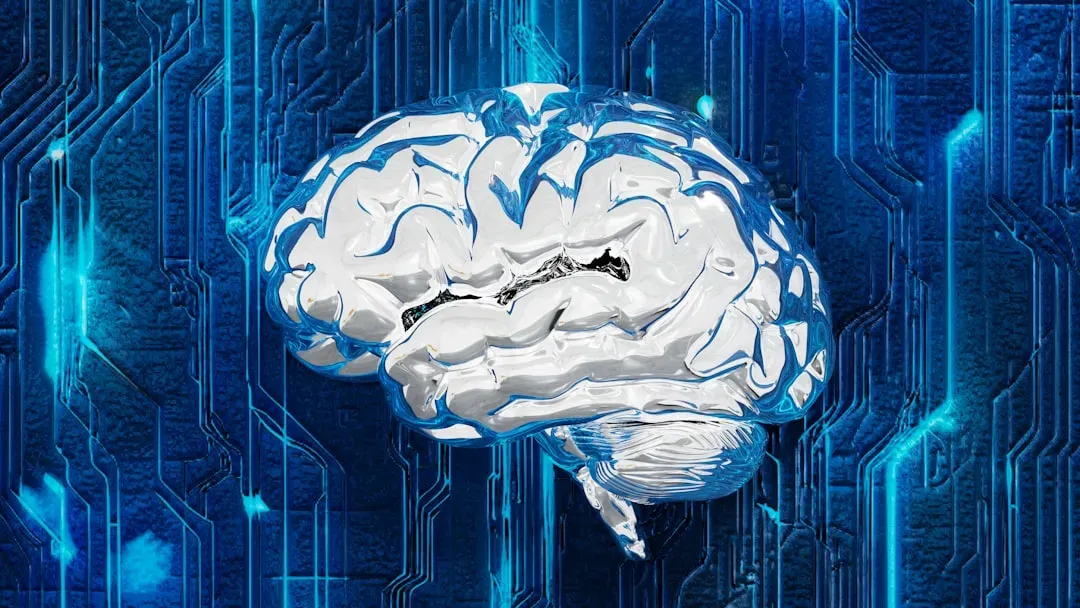
After everything we’ve explored here, one thing becomes genuinely clear. The brain is not just competing with modern supercomputers, it is operating on an entirely different level of elegance, efficiency, and adaptability. It rewires itself, stores virtually limitless information, processes countless streams of data simultaneously, and does it all on roughly the same energy it takes to power a bedside lamp.
Supercomputers are extraordinary human achievements. Nobody is taking that away. Yet the very fact that the world’s leading engineers are studying your brain in order to build better machines speaks volumes. The most powerful, most efficient, most adaptable computer ever known is not sitting in a climate-controlled server room in a national laboratory. It is sitting right between your ears.
So the next time someone tells you technology has surpassed human intelligence, you might want to raise an eyebrow. We are still very much the benchmark. What part of your brain’s capabilities surprised you the most? Share your thoughts in the comments.