Picture this: you’re watching a documentary about ocean life, and suddenly an octopus appears on screen. It changes color instantly, squeezes through impossibly small spaces, and displays problem-solving skills that would make some humans jealous. Then it hits you – this creature seems almost too alien to be from our planet. What if that nagging feeling isn’t just your imagination? What if octopuses really are visitors from another world?
The Alien-Like Intelligence That Baffles Scientists

When marine biologists first began studying octopuses seriously, they couldn’t believe what they were seeing. These creatures were opening jars from the inside, navigating complex mazes, and even using tools – behaviors that seemed impossibly advanced for invertebrates. The most shocking discovery came when researchers realized that octopuses could recognize individual humans and respond differently to each person.
Dr. Jennifer Mather’s groundbreaking research at the University of Lethbridge revealed that octopuses demonstrate what can only be described as personality traits. Some are bold and curious, while others are shy and cautious. This level of individual variation in behavior patterns is typically associated with much more complex vertebrate brains.
A Genetic Code Unlike Anything on Earth

The octopus genome reads like science fiction. With over 33,000 protein-coding genes, these creatures have more genetic material than humans, who possess only about 20,000 such genes. But it’s not just the quantity that’s remarkable – it’s the quality and organization that leaves geneticists scratching their heads.
What makes this even more intriguing is that octopuses engage in massive RNA editing, essentially rewriting their genetic instructions on the fly. This process, called recoding, happens to an extent seen nowhere else in the animal kingdom. While humans recode less than 1% of their neural transcripts, octopuses recode tens of thousands.
Eyes That See Beyond Earth’s Design

The octopus eye is so perfectly designed that it seems to mock the concept of gradual evolution. Unlike vertebrate eyes, which have a “blind spot” due to poorly arranged blood vessels and nerves, octopus eyes are flawlessly constructed. Their photoreceptors face forward, creating no blind spots whatsoever.
This superior design has led some researchers to question whether such perfection could arise through random evolutionary processes on Earth. The octopus eye appears to be engineered by an intelligence that understood optics better than natural selection typically allows.
The Mysterious Arrival in Earth’s Timeline

Octopuses appeared in Earth’s fossil record around 296 million years ago, but their modern cognitive abilities seem to have emerged much more recently. This sudden evolutionary leap puzzles paleontologists because there’s little evidence of gradual development toward their current sophisticated state.
The timeline becomes even more suspicious when you consider that the Cambrian explosion – when complex life forms suddenly appeared – coincides with several mass extinction events. Some theorists suggest these weren’t just random catastrophes, but potential delivery windows for extraterrestrial genetic material.
Panspermia: Seeds of Life From Space

The panspermia theory proposes that life on Earth originated from microorganisms or chemical precursors present in outer space. This isn’t just wild speculation – it’s a legitimate scientific hypothesis supported by researchers like Nobel laureate Francis Crick and astronomer Fred Hoyle.
According to this theory, comets, asteroids, and other celestial bodies could have carried organic compounds or even primitive life forms to Earth. The octopus, with its radically different biology, might represent one of these cosmic immigrants that successfully adapted to our planet’s conditions.
The Cephalopod Brain: A Distributed Network

Perhaps the most alien aspect of octopus biology is their distributed nervous system. Unlike humans, who centralize intelligence in their brains, octopuses have two-thirds of their neurons in their arms. Each arm can taste, touch, and even react to stimuli independently of the central brain.
This decentralized intelligence model is so foreign to terrestrial life that it resembles theoretical designs for advanced artificial intelligence networks. It’s as if octopuses arrived on Earth with a blueprint for consciousness that our planet had never seen before.
Camouflage Technology Beyond Nature

The octopus’s ability to change color and texture instantly involves millions of specialized cells called chromatophores, iridophores, and leucophores. This biological technology is so advanced that military researchers study it to develop adaptive camouflage systems for soldiers and vehicles.
What makes this ability even more remarkable is that octopuses are colorblind, yet they can perfectly match colors they cannot see. This suggests they possess sensory abilities or processing methods that we don’t fully understand – possibly evolved under conditions very different from those on Earth.
The Jetpropulsion System

Long before humans invented jet engines, octopuses were using water propulsion to navigate the oceans. Their siphon system allows them to shoot water with incredible precision and force, enabling rapid escape from predators or swift attacks on prey.
This propulsion method is remarkably similar to spacecraft thrusters, leading some to wonder if octopuses inherited this technology from ancestors who once traveled through space. The efficiency and sophistication of their biological jet system rivals modern engineering achievements.
Tool Use That Defies Evolutionary Logic

Octopuses have been observed using coconut shells as portable shelters, wielding rocks as hammers, and employing sticks as probes. This tool use is particularly puzzling because octopuses are solitary creatures who don’t pass knowledge to their offspring through teaching.
The fact that they independently develop tool-using behaviors suggests an innate intelligence that doesn’t rely on cultural transmission. This kind of inherent technological aptitude is exactly what you might expect from creatures whose ancestors evolved in a more challenging environment than Earth’s oceans.
The Quantum Biology Connection

Recent research suggests that octopuses might utilize quantum mechanical processes in their neural computation. Their brains appear to operate with quantum efficiency that allows for incredibly rapid information processing and decision-making.
This quantum biology connection is significant because it represents a level of biological sophistication that seems almost too advanced for Earth’s evolutionary timeline. It’s the kind of adaptation you might expect from organisms that evolved under the extreme conditions of space.
Convergent Evolution or Cosmic Heritage?

Scientists often explain octopus intelligence as convergent evolution – the independent development of similar traits in unrelated species. However, the degree of convergence between octopus and vertebrate intelligence is unprecedented in the natural world.
The probability of such extensive convergent evolution occurring by chance is astronomically low. This statistical impossibility leads some researchers to consider whether octopuses and vertebrates might share a common cosmic origin rather than having evolved independently on Earth.
The Cosmic Radiation Resistance
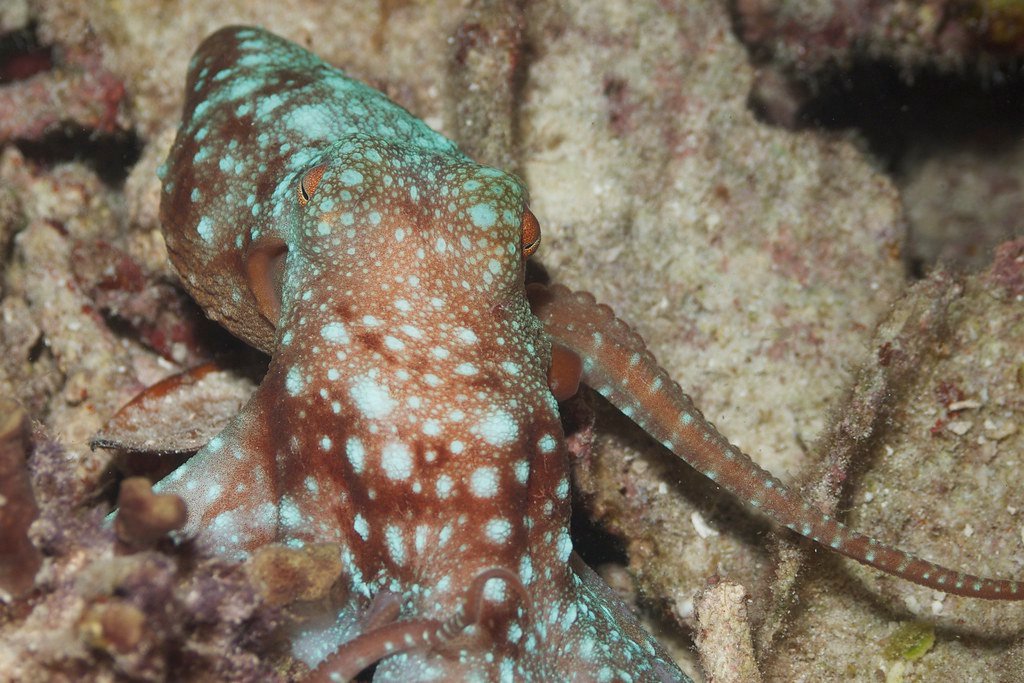
Octopuses demonstrate remarkable resistance to radiation and can survive in conditions that would be lethal to most Earth life. Their cellular repair mechanisms are so efficient that they can recover from DNA damage that would kill other organisms.
This radiation resistance is particularly intriguing because it’s exactly the kind of adaptation you’d expect from organisms whose ancestors survived interstellar travel. The vacuum of space is filled with deadly radiation that would require exactly these kinds of biological defenses.
The Missing Link Problem

Despite extensive fossil records for many marine species, the evolutionary path to modern octopus intelligence remains largely mysterious. There’s a conspicuous absence of intermediate forms showing the gradual development of their sophisticated cognitive abilities.
This missing link problem is unusual in evolutionary biology, where transitional forms typically provide clear evidence of gradual change. The octopus appears to have leaped directly from primitive mollusk to genius-level intelligence without leaving the expected fossil trail.
Laboratory Evidence of Alien-Like Behavior
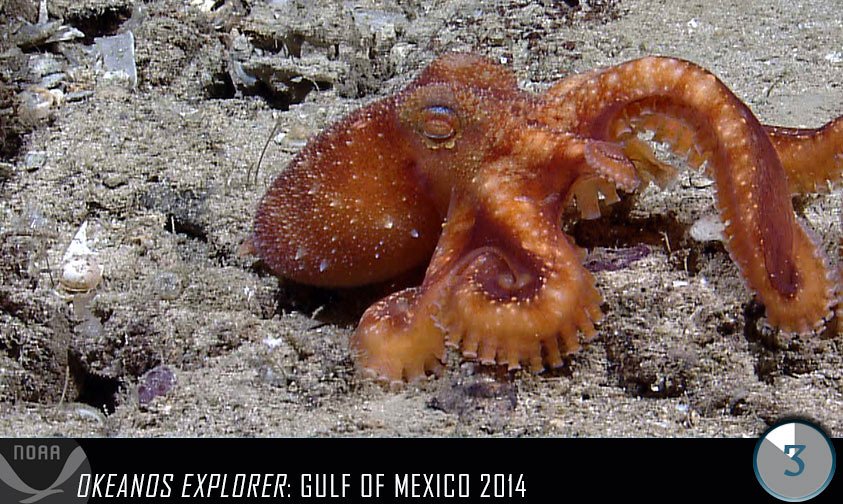
Controlled laboratory studies have revealed octopus behaviors that seem almost supernatural. They can predict human actions, solve puzzles they’ve never encountered, and even demonstrate what appears to be a sense of humor by playing pranks on researchers.
One famous case involved an octopus named Otto who repeatedly broke the lights in his aquarium by shooting water at them. When researchers tried to stop him, he would wait until they left, then resume his electrical sabotage. This level of strategic thinking and mischievous behavior is unprecedented in invertebrates.
The Biochemical Anomalies

Octopus blood contains copper-based hemocyanin instead of the iron-based hemoglobin found in most Earth life. This blue blood is more efficient at carrying oxygen in cold, low-oxygen environments – exactly the conditions you’d find in deep space or on distant planets.
Their three hearts and complex circulatory system also represent radical departures from typical Earth biology. These adaptations seem designed for extreme environments rather than the relatively stable conditions of Earth’s oceans.
The Telepathic Communication Mystery

Recent studies suggest that octopuses might possess forms of communication that transcend conventional understanding. Their color-changing abilities appear to convey complex information instantaneously, almost like a biological form of telepathy.
This rapid, non-verbal communication system is so sophisticated that researchers struggle to decode its full meaning. It’s reminiscent of the kind of advanced communication methods that science fiction attributes to alien civilizations.
Modern Research and Growing Support

A growing number of mainstream scientists are taking the octopus-alien hypothesis seriously. The 2018 paper by 33 researchers, led by molecular biologist Edward Steele, suggested that octopuses might indeed represent an extraterrestrial influence on Earth’s biosphere.
While the paper sparked controversy, it also opened legitimate scientific discourse about the possibility of panspermia and the octopus’s role in it. The research community is increasingly willing to consider explanations that once seemed too far-fetched for serious consideration.
The Implications for Life in the Universe
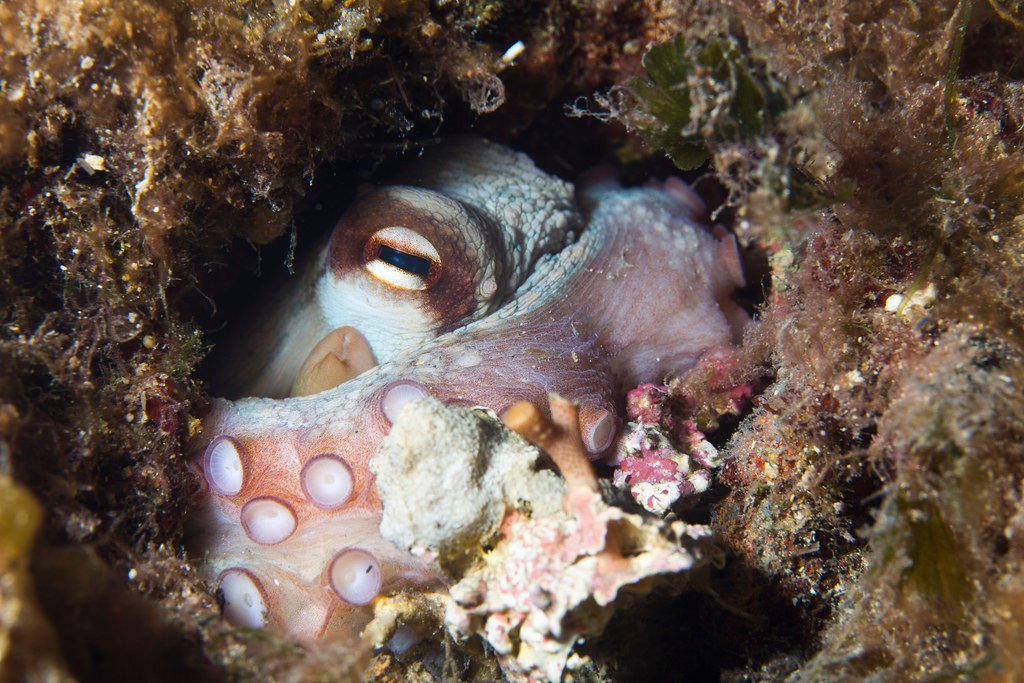
If octopuses are indeed cosmic visitors, it would revolutionize our understanding of life in the universe. It would suggest that intelligence can take forms radically different from human cognition and that life is far more creative and resilient than we previously imagined.
This possibility also raises profound questions about our place in the cosmos. Are we alone in our intelligence on Earth, or do we share our planet with visitors from distant worlds? The octopus might be our first contact with alien intelligence, hiding in plain sight in our oceans.
The Future of Octopus Research
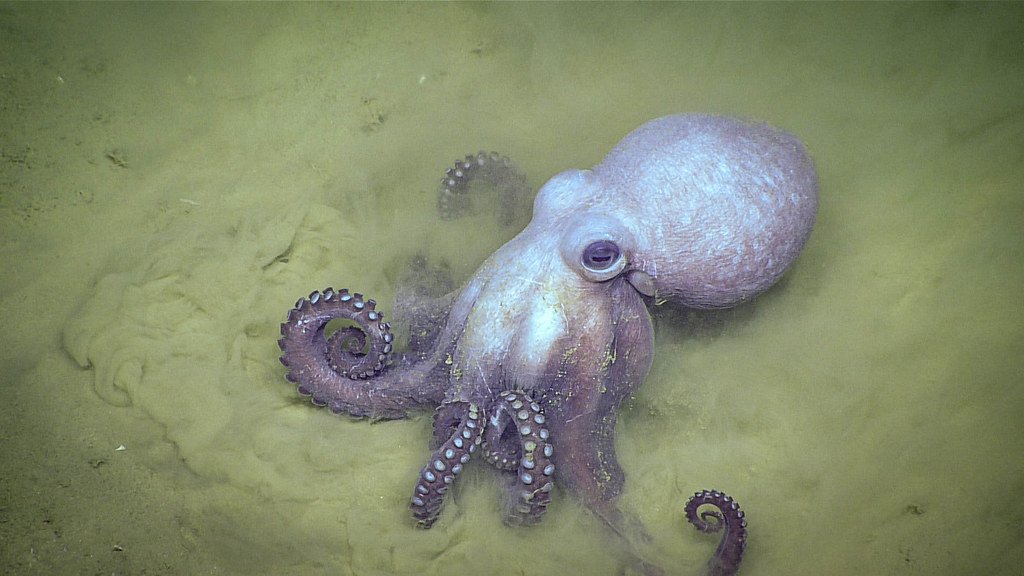
As technology advances, researchers are developing new methods to study octopus biology and behavior. Advanced genetic sequencing, quantum biology research, and deep-sea exploration technologies are providing unprecedented insights into these mysterious creatures.
Future research might finally solve the octopus puzzle, determining whether they’re Earth’s most successful aliens or simply evolution’s most impressive achievement. Either way, they continue to challenge our understanding of intelligence, consciousness, and life itself.
The octopus remains one of nature’s greatest mysteries, a living puzzle that defies easy explanation. Whether they’re alien visitors or Earth’s most remarkable evolutionary success story, one thing is certain: they’ve earned their place among the most fascinating creatures in the known universe. Every new discovery about octopus intelligence and biology only deepens the mystery, leaving us to wonder what other secrets these eight-armed enigmas might be hiding in the depths of our oceans.