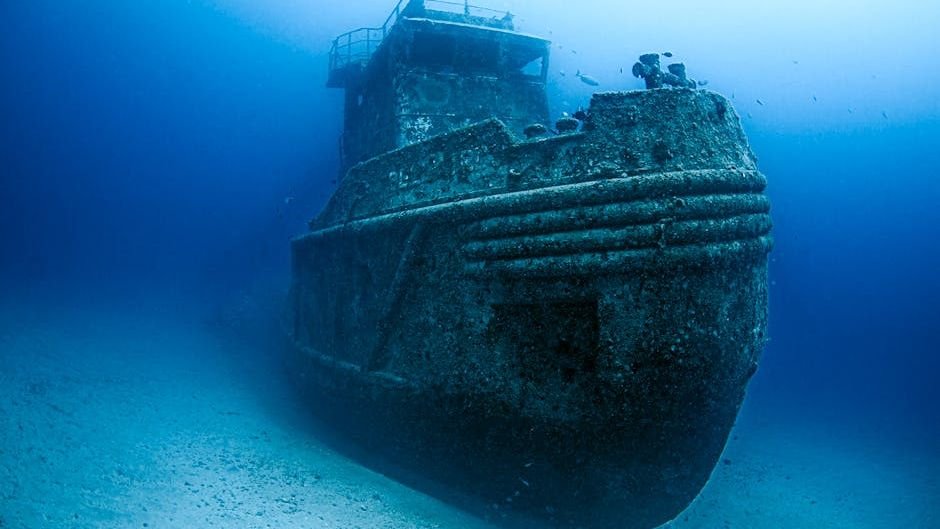

There’s something deeply haunting about the idea of massive warships sitting silently on the ocean floor, frozen in time, slowly being reclaimed by coral and sea life. These are not just historical artifacts. They are graves, monuments, and mysteries all wrapped into one.
Decades after the guns went quiet, World War II shipwrecks continue to surface in the news, in research expeditions, and in the imaginations of historians and divers worldwide. Some of these vessels hold untold stories, toxic secrets, and even geopolitical significance that stretches all the way into 2026. Curious yet? Let’s dive in.
Ghost Ships of the Deep: What Lies Beneath
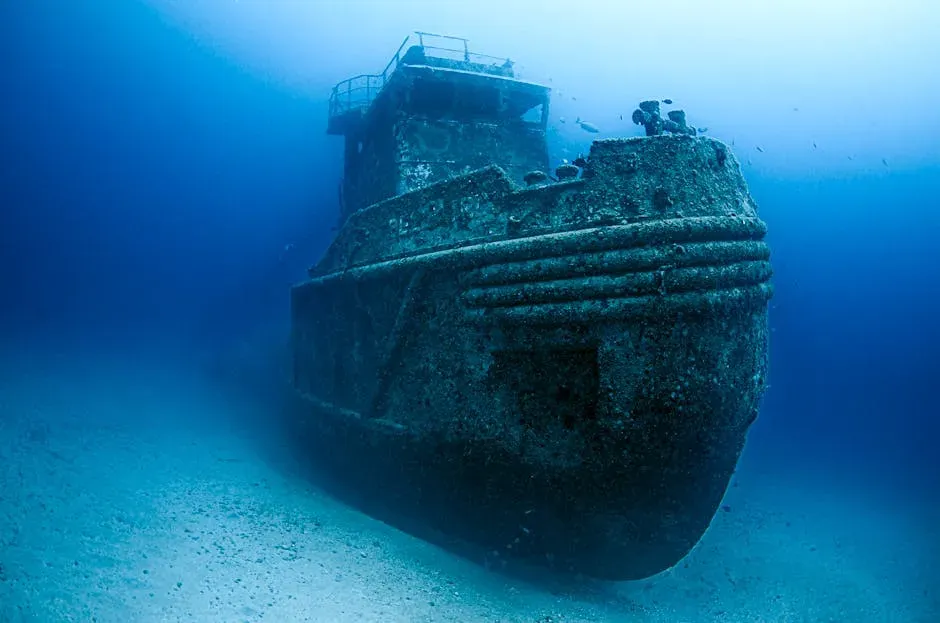
Here’s the thing about WWII shipwrecks – there are far more of them than most people realize. Estimates suggest that thousands of vessels from the Second World War remain on the ocean floor across the globe, from the Pacific to the Atlantic to the waters of Southeast Asia. Some were warships. Some were supply vessels. Others were submarines that simply vanished without a trace.
Many of these wrecks were never formally documented or even located until recent decades, when advances in sonar technology and deep-sea exploration made it possible to find them. What researchers are discovering is that these ships are not static relics. They are ecosystems unto themselves, teeming with marine life that has colonized the rusting hulls over generations.
Honestly, it’s both beautiful and sobering. A battleship that once carried hundreds of men now serves as a home for fish, coral, and sea turtles. Nature has a way of doing that, turning human tragedy into something strangely alive.
The Environmental Ticking Time Bomb Hidden in the Wrecks
This is the part that doesn’t get nearly enough attention. Many of these sunken warships are still carrying their original fuel loads, and that fuel has been slowly degrading inside corroding tanks for over eighty years. Scientists have warned for years that these wrecks represent a major environmental threat, capable of releasing enormous oil slicks if the aging hulls finally give way.
The RMS Olympus, the USS Mississippi, and dozens of others still hold significant quantities of heavy bunker oil. In tropical waters where corrosion accelerates, the window for preventing a catastrophic spill may be narrowing faster than governments are willing to admit. Roughly about one third of the most at-risk wrecks are located in waters near fragile reef ecosystems, which makes the potential fallout even worse.
It’s hard to say for sure exactly when or where a rupture might occur, but marine researchers are increasingly vocal that this is not a matter of if, it is a matter of when. The comparison that comes to mind is a rusting pipe buried under your house – you know it’s failing, but you can’t see it until water is already seeping through the floor.
Newly Discovered Wrecks That Rewrote Naval History
Some of the most exciting developments in WWII maritime research come from ships that were considered lost forever. In recent years, exploration teams have used advanced underwater drones and multibeam sonar to locate vessels that had gone unaccounted for since the 1940s. Each discovery carries with it a potential rewrite of what we thought we knew about specific battles or naval engagements.
The discovery of USS Johnston in 2021 at a depth of over six kilometers made headlines worldwide as one of the deepest known wreck discoveries at that time. Johnston went down during the Battle off Samar in 1944, a engagement now widely regarded as one of the most heroic last stands in U.S. naval history. Finding her at that depth confirmed details about how the ship sank that had previously only been speculation.
Discoveries like this matter enormously, not just for history buffs but for the families of the men who went down with these ships. There’s a deeply personal dimension to every wreck that gets located.
The Pacific Theater’s Underwater Graveyard
The Pacific Ocean holds more WWII wreckage than perhaps any other body of water on earth. Locations like Truk Lagoon in Micronesia have become almost mythic in the diving world, with dozens of Japanese warships and supply vessels resting in relatively shallow, clear water. Truk, now known as Chuuk Lagoon, was the site of Operation Hailstone in 1944, a devastating American air assault that sent an entire Japanese naval base to the bottom in just two days.
Divers from around the world travel to Chuuk specifically to explore these wrecks, which still contain cargo holds full of aircraft, tanks, ammunition, and even human remains. It is simultaneously one of the world’s greatest dive destinations and one of its most sacred war graves. That tension is real and worth sitting with for a moment.
Beyond Chuuk, the waters around Guadalcanal, the Philippines, and Papua New Guinea contain hundreds more vessels from both Allied and Japanese forces. The sheer scale of the naval warfare that took place across the Pacific during those years is almost impossible to comprehend from the surface.
Ownership, Legality, and the Fight Over Sunken Warships
Let’s be real about something that often gets overlooked in the romantic narrative of shipwreck exploration. These wrecks are not ownerless. Under international maritime law, warships are generally considered sovereign territory of the nation whose flag they flew, even centuries after sinking. That means the USS ships on the ocean floor are technically still U.S. government property. Japanese wrecks belong to Japan. British wrecks to the United Kingdom.
This creates genuine legal and diplomatic friction when it comes to salvage, exploration, and even photography. There have been documented cases of illegal salvage operations stripping metals from WWII wrecks in Southeast Asian waters, an activity that is not only legally questionable but morally reprehensible when you consider that many of these ships are war graves. The theft of metal from these sites essentially disturbs the resting places of thousands of servicemen.
Some nations have passed protective legislation, but enforcement in international or foreign waters remains inconsistent and frustratingly difficult. It is an ongoing problem that deserves far more attention from the international community than it currently receives.
Technology Transforming How We Explore These Wrecks
The tools available to marine archaeologists in 2026 are almost unrecognizable compared to what explorers had even twenty years ago. Autonomous underwater vehicles, or AUVs, can now descend to depths previously unreachable by human divers and produce photogrammetric 3D models of entire shipwrecks with stunning precision. This technology has essentially democratized deep-sea exploration for serious research institutions.
Companies like Vulcan Inc. and research institutions including the Woods Hole Oceanographic Institution have been at the forefront of using these technologies to document WWII wrecks before they deteriorate further or are damaged by illegal salvage. The ability to create a digital twin of a wreck means that even if the physical structure collapses, a permanent visual record survives for future generations.
What I find genuinely thrilling about this is that we are essentially in a golden age of underwater discovery. Ships that were considered permanently lost are being found and mapped with detail that would have seemed like science fiction to the men who sailed on them.
Why These Shipwrecks Still Matter in 2026
Eighty-plus years after the end of World War II, it might be tempting to think of these wrecks as purely historical curiosities. They are not. They carry ecological urgency, legal complexity, cultural significance, and a human weight that doesn’t diminish with time. Every corroding hull still contains the stories of the people who fought, and often died, on those ships.
The geopolitical dimension is also very much alive. Disputes over territorial waters in the South China Sea and the Pacific mean that WWII wreck locations sometimes intersect directly with modern political tensions. A ship sunk in waters now claimed by multiple nations can become an unexpected flashpoint in ways that have nothing to do with history and everything to do with present-day power struggles.
There is also something profoundly humbling about these wrecks for those willing to sit with it. We build massive machines of war, send them and the people aboard them into harm’s way, and then sometimes, we lose them entirely to the sea. The ocean keeps its secrets slowly but it does keep them.
A Final Reflection on What We Owe the Deep
WWII shipwrecks are more than sunken steel. They are chapters of human history that the ocean agreed to preserve on our behalf. Whether we treat them with the reverence they deserve is ultimately a test of our character as a civilization, not just as researchers or divers or historians.
The combination of environmental risk, legal complexity, and ongoing discovery means this is not a story that ended in 1945. It is still unfolding. New wrecks are being found. Old ones are slowly failing. The men who served on these ships may be gone, but the ships themselves are still speaking, if we choose to listen.
What would you do if you discovered a piece of history that the world had forgotten? Sometimes the most important question isn’t what lies at the bottom of the ocean. It’s whether we have the responsibility and the will to protect it. What do you think? Share your thoughts in the comments.