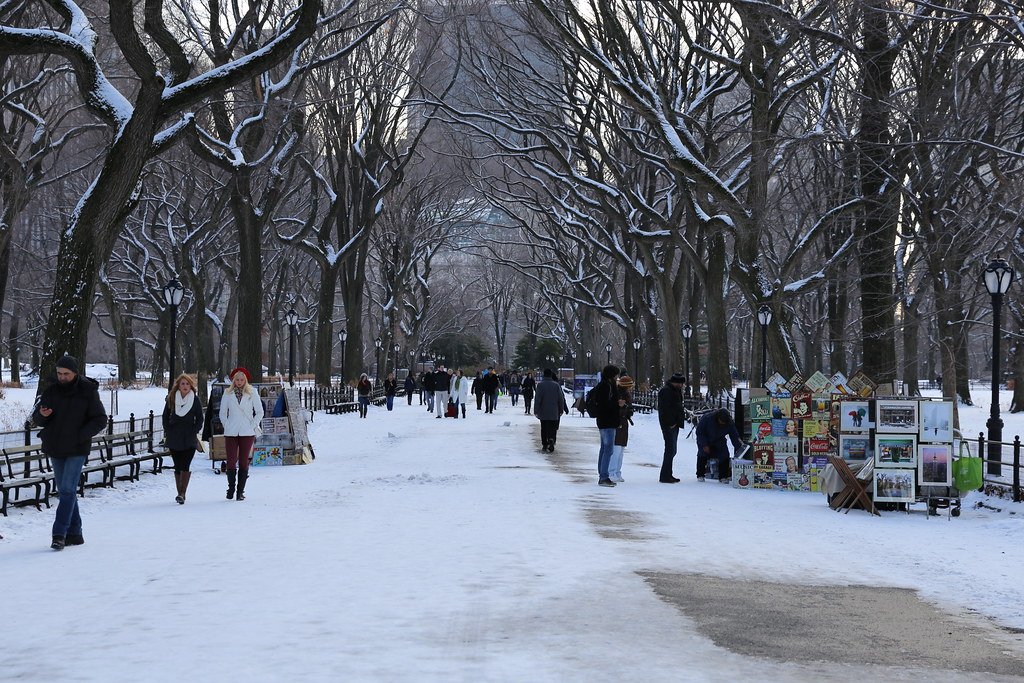


The Onset of a Long-Awaited Winter Blast (Image Credits: Flickr)
New York City – A powerful winter storm delivered the most substantial snowfall the region had seen in nearly four years, blanketing streets and runways while stranding thousands of travelers during the holiday season.
The Onset of a Long-Awaited Winter Blast
The storm arrived late Friday afternoon, catching the Northeast off guard with its intensity after a string of mild winters. Snowfall rates reached up to two inches per hour overnight, transforming familiar urban landscapes into a sea of white. Central Park recorded 4.3 inches by Saturday morning, marking the heaviest accumulation there since a major event in January 2022 that dropped over eight inches. Residents and officials alike noted the rarity of such a plowable snow event, the first in years to prompt widespread closures and precautions.
Authorities issued winter weather advisories across the Tri-State area, urging caution on icy roads and sidewalks. The precipitation mix shifted in some spots, blending snow with sleet and ice, which tempered totals in parts of New Jersey. Still, the storm’s reach extended from Philadelphia to Albany, affecting millions in its path. Cleanup efforts began as the flakes tapered off early Saturday, but the chill lingered, with temperatures dipping below freezing.
Air Travel Grounded by the Whiteout
Hundreds of flights faced cancellation or delay as the storm peaked, turning airports into hubs of frustration for holiday-bound passengers. Major carriers at JFK, LaGuardia, and Newark Liberty reported over 500 disruptions on Friday alone, with more following into the weekend. Ground crews worked tirelessly to clear runways, but visibility dropped sharply, forcing airlines to halt operations. Travelers shared stories of rerouted plans and overnight stays in terminals, highlighting the storm’s timing just after Christmas.
The National Weather Service had forecasted five to nine inches for the New York City area, with potential for up to 11 inches in elevated regions. This prediction held true in many spots, overwhelming de-icing teams and baggage handling. States of emergency declared in New York and New Jersey empowered local governments to mobilize resources quickly. By midday Saturday, some flights resumed, but full recovery stretched into Sunday amid ongoing advisories for black ice.
Snow Totals and Regional Variations
While New York City proper saw moderate accumulations, areas north and east bore the brunt of the storm’s fury. Higher elevations along the Hudson Valley and central Long Island reported totals exceeding eight inches, prompting school closures and road treatments. The weather service tracked the storm’s progression, noting how warmer air near the coast introduced sleet that reduced snow depths in southern zones.
To illustrate the disparity:
- Central Park: 4.3 inches
- Hudson Valley: 6-9 inches
- Central New York: Up to 11 inches
- Eastern Long Island: 7-10 inches
- New Jersey (coastal): 3-5 inches, mixed with ice
These figures represented a sharp contrast to recent winters, where the city barely topped a foot seasonally. Last year’s total hovered around 12 inches, a rebound from prior lean years but still unremarkable. The event underscored the region’s vulnerability to sudden shifts in winter patterns.
Navigating the Aftermath
As the storm subsided, focus turned to recovery, with plows clearing major arteries and salt trucks treating secondary roads. Pedestrians faced slick sidewalks, and motorists encountered hazardous patches where melting snow refroze overnight. The cold snap persisted through Sunday, maintaining the advisory for ice north and west of the city. Emergency services reported minor incidents, mostly fender-benders, but no widespread power outages marred the event.
Experts from the National Weather Service emphasized preparation for such systems, recommending reduced speeds and extra travel time. The storm’s end brought relief, yet it served as a reminder of winter’s unpredictability in a warming climate. Communities rallied with shoveling drives and neighborly aid, turning potential hardship into shared resilience.
Key Takeaways
- The storm marked New York City’s first major snowfall since 2022, with 4.3 inches in Central Park.
- Flight disruptions affected over 500 operations, stranding holiday travelers at key airports.
- Heavier accumulations hit northern and eastern areas, up to 11 inches, while ice limited totals elsewhere.
This snowfall not only refreshed the city’s winter weary but also tested its infrastructure, proving readiness amid the flakes. As the region shakes off the powder, it braces for what could be a more active season ahead – what are your experiences with this storm? Share in the comments below.
Hi, I’m Andrew, and I come from India. Experienced content specialist with a passion for writing. My forte includes health and wellness, Travel, Animals, and Nature. A nature nomad, I am obsessed with mountains and love high-altitude trekking. I have been on several Himalayan treks in India including the Everest Base Camp in Nepal, a profound experience.