Starless Planets Retain Moons Amid Chaos (Image Credits: Pexels)
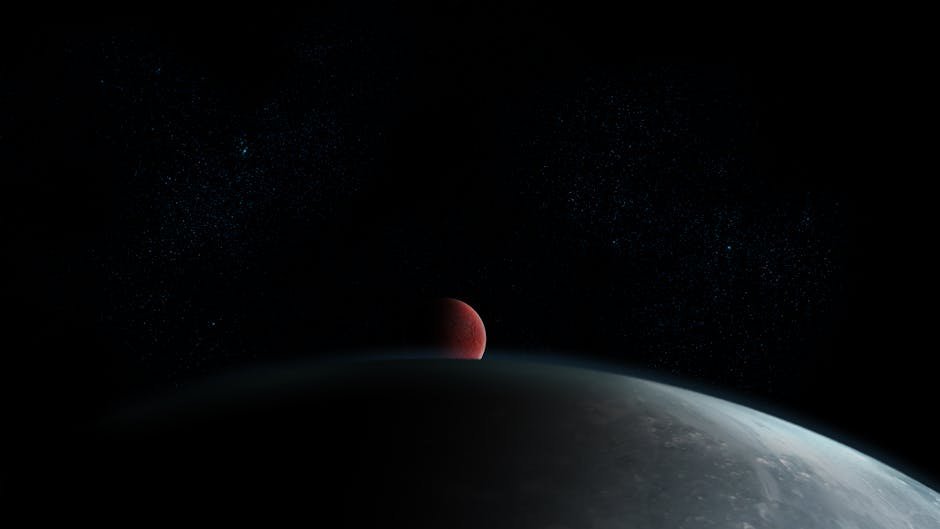
Drifting through the interstellar void, free-floating planets known as rogues wander far from any star’s warmth. Recent research suggests their moons could maintain habitable surface conditions for billions of years, powered by internal tidal forces and thick hydrogen envelopes. These starless realms challenge traditional views of where life might thrive.[1][2]
Starless Planets Retain Moons Amid Chaos
Planets ejected from their host systems by supernovae or dynamical instabilities often carry moons along for the ride. Simulations showed that these moons remain gravitationally bound despite the violent expulsion. Orbital eccentricities spike during ejection, reaching values around 0.33 for initially circular paths or up to 0.88 for pre-eccentric ones.[3]
This setup transforms isolation into an advantage. Without stellar radiation, moons avoid atmospheric stripping or extreme temperature swings. Instead, the heightened eccentricity fuels persistent energy input, setting the stage for enduring stability.
Tidal Forces Ignite Internal Heat
Eccentric orbits stretch and squeeze moons, generating tidal heating comparable to that on Enceladus and Europa. Between 12% and 15% of such rogue moons experience energy fluxes matching these ocean worlds, where subsurface liquids persist under ice.[3] Researchers defined effective heating for orbits beyond 0.01 AU with eccentricities over 0.1.
Damping timescales exceed the solar system’s age, ensuring billions of years of warmth. This internal engine sustains geological activity without external light, mimicking conditions on Saturn’s Enceladus but in perpetual darkness.
Hydrogen Atmospheres Trap Essential Heat
Thick, hydrogen-dominated envelopes act as insulators. Collision-induced absorption by H2 molecules efficiently traps infrared radiation, elevating surface temperatures above freezing.[2] Models incorporating radiative transfer and chemistry confirmed stability across carbon, oxygen, and nitrogen compositions.
Surface pressures dictate longevity, with habitability extending up to 4.3 billion years. Unlike carbon dioxide-heavy atmospheres prone to collapse, these H2 layers resist condensation, preserving liquid water oceans or pools on the surface.
Recipes for Life Beyond Sunlight
Strong tides induce wet-dry cycles, concentrating organics and fostering chemical complexity. Dissolved ammonia adds alkalinity, potentially enabling RNA polymerization essential for life’s origins.[2]
Key enablers include:
- Elevated orbital eccentricity from planetary ejections.
- Tidal heating rivaling known icy moons.
- Hydrogen-rich atmospheres preventing freeze-out.
- Cycles mimicking prebiotic Earth processes.
- Geological persistence over cosmic timescales.
These factors position rogue exomoons as “urable” – meeting minimal requirements for life’s emergence – for eons.[3]
Detecting Life in the Void
Rogue planets may outnumber stellar-bound ones two-to-one, implying trillions of moons galaxy-wide. Yet detection poses hurdles: no host starlight for transit methods, faint thermal emissions hard to spot.
Future telescopes like the Nancy Grace Roman Space Telescope could survey microlensing events for moon signatures. Ground-based observatories might catch atmospheric biosignatures in infrared.
Key Takeaways
These starless moons redefine habitability, proving life needs not sunlight but sustained energy and chemistry. As searches expand, rogue systems emerge as prime targets. What do you think about potential life in cosmic darkness? Tell us in the comments.