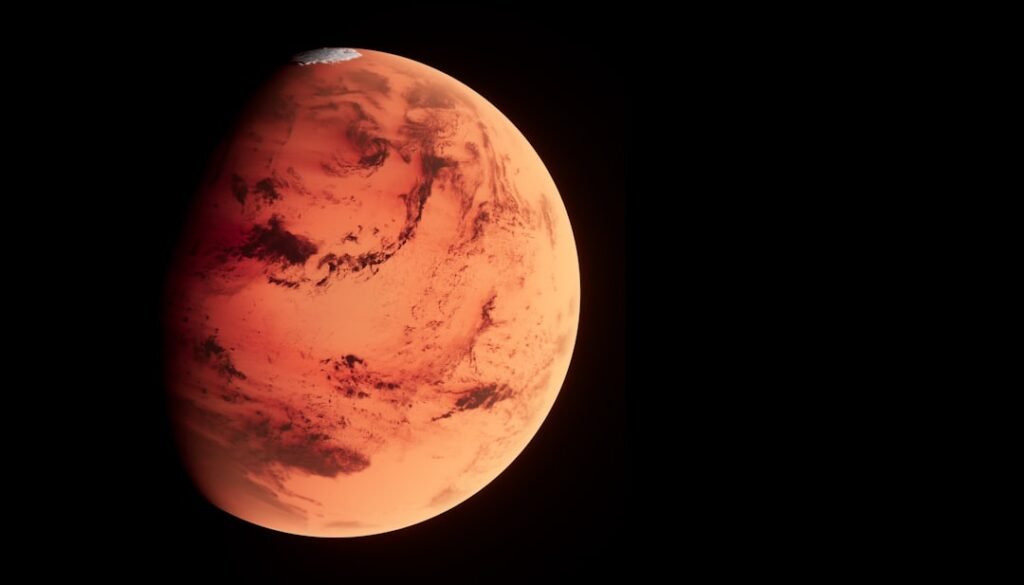

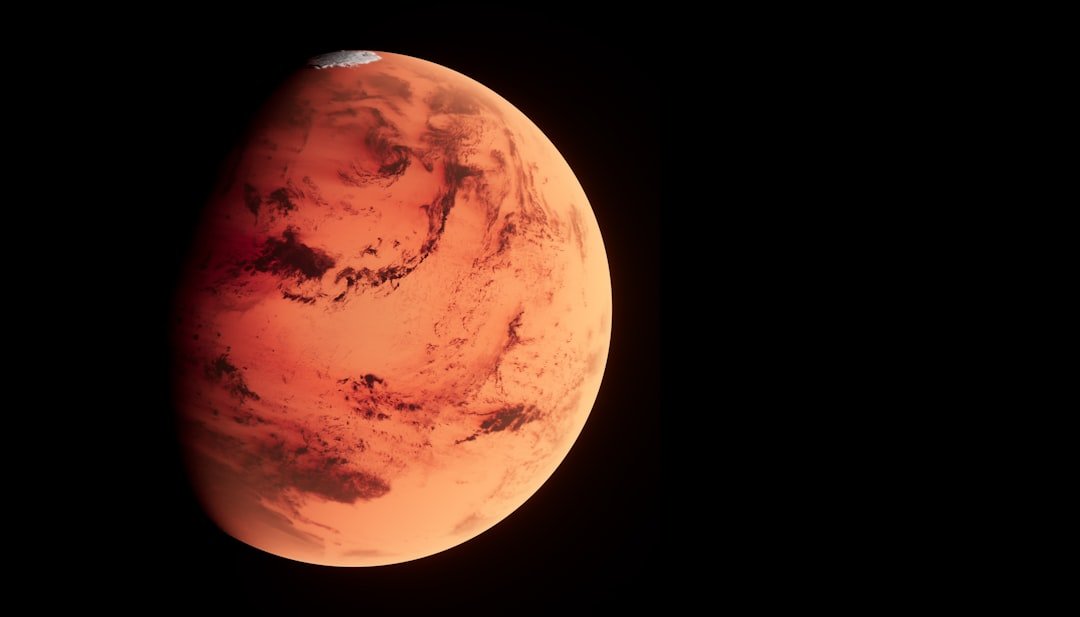
A Hidden Gem in Valles Marineris (Image Credits: Unsplash)
Mars – Researchers examining the planet’s sulfate deposits have proposed the existence of a novel iron sulfate mineral shaped by ancient water and later volcanic heat.
A Hidden Gem in Valles Marineris
Layered formations near the vast Valles Marineris canyon system hold traces of an unusual compound that defies known mineral catalogs. Scientists combined orbital observations with lab simulations to spotlight ferric hydroxysulfate, a ferric iron sulfate variant. This finding emerged from detailed spectral analysis of sulfate-rich layers, which appeared altered in ways not explained by existing minerals.
The deposits, remnants of Mars’ wetter past, showed chemical signatures matching the proposed mineral. Volcanic or geothermal processes likely drove the transformation after initial water evaporation left behind basic sulfates. Such activity heated the materials, prompting structural changes detectable from orbit.
Blending Data and Experiments
Orbital instruments captured the subtle hues and compositions of these layers, revealing iron-rich sulfates distinct from common types like jarosite. Laboratory teams replicated conditions by exposing sulfate samples to heat and humidity mimicking Martian environments. The experiments produced spectra aligning closely with remote observations.
This dual approach strengthened the case for ferric hydroxysulfate. Researchers noted the mineral’s stability under Mars-like acidity and temperature swings. Key steps included:
- Spectral mapping from orbiters to identify target sites.
- Synthesis of sulfate minerals in controlled chambers.
- Comparison of lab results against planetary data.
- Modeling of geological histories for context.
- Validation through multiple wavelength analyses.
Origins Tied to Mars’ Dynamic Past
Ancient lakes or floods deposited initial sulfate layers across the planet’s surface. Subsequent volcanic eruptions or subsurface heat sources altered these sediments. Ferric hydroxysulfate likely crystallized as iron oxidized within the warming matrix.
Evidence points to widespread occurrences beyond Valles Marineris, suggesting regional geothermal influence. The process mirrored Earth analogs but adapted to Mars’ thinner atmosphere and radiation exposure. This evolution highlighted the planet’s shift from habitable conditions to its current arid state.
What This Means for Martian Exploration
The potential mineral expands knowledge of Mars’ geochemical diversity. Future rovers could target these sites for direct sampling, confirming the compound’s presence. Such discoveries refine models of past habitability and resource potential.
Understanding sulfate transformations aids in interpreting water history. Iron sulfates often preserve biosignatures on Earth, raising intrigue for Mars. Missions like Perseverance continue to probe similar terrains.
- Ferric hydroxysulfate links ancient water deposits to volcanic alteration.
- Lab-orbital synergy provides strong evidence for the new mineral.
- Findings near Valles Marineris hint at broader Martian processes.
This breakthrough underscores Mars’ untapped geological secrets and invites deeper investigation. What implications do you see for future missions? Share your thoughts in the comments.