
Something quiet and invisible is happening beneath the ocean’s surface. No dramatic explosions, no visible destruction – just a slow, suffocating loss of oxygen that threatens to unravel marine life as we know it.
Most people think of climate change in terms of heat, storms, or melting ice. Fewer are talking about what’s happening deep underwater, where oxygen levels are quietly collapsing in ways that could permanently alter entire ecosystems. Scientists are genuinely alarmed, and honestly, you should be too. Let’s dive in.
A Crisis Hiding in Plain Sight
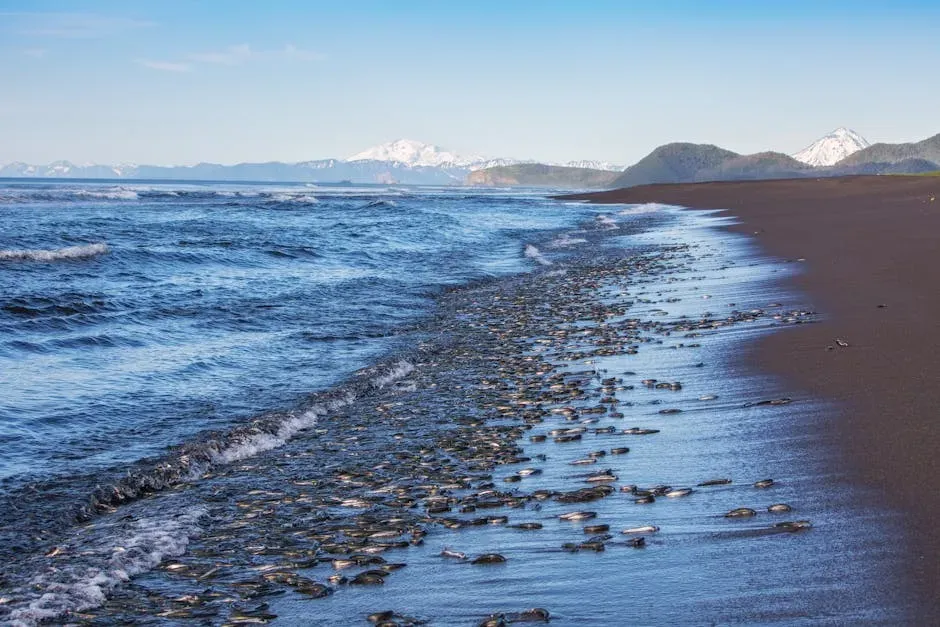
Here’s the thing – the ocean has always been dynamic, shifting, breathing in its own slow rhythm. But what researchers are now documenting goes far beyond natural fluctuation. Aquatic deoxygenation, the process by which bodies of water lose dissolved oxygen, is accelerating at a rate that is pushing our planet past critical safety thresholds.
Oxygen in water is not just a background detail. It is the lifeblood of fish, invertebrates, and entire food webs that billions of humans depend on for survival. When oxygen disappears from water, what’s left behind are so-called “dead zones” – regions where almost nothing can survive. There are now hundreds of these zones identified across the globe, and the number keeps climbing.
What Are Planetary Boundaries and Why Do They Matter
Scientists use the concept of “planetary boundaries” to describe the safe operating limits of Earth’s major systems. Think of it like a car’s dashboard. You can push the engine hard for a while, but once warning lights start flashing simultaneously, serious damage becomes inevitable.
Aquatic deoxygenation is now being recognized as one of these critical boundaries. Researchers argue that it deserves formal inclusion alongside better-known limits like carbon emissions, biodiversity loss, and freshwater use. The worry is that once these boundaries are crossed, some consequences may be irreversible, not in centuries, but potentially within our lifetimes.
Warm Water Holds Less Oxygen – It’s That Simple
The physics here is almost frustratingly straightforward. Warmer water simply cannot hold as much dissolved oxygen as cooler water. As global temperatures rise and ocean surfaces absorb more heat, the water’s capacity to retain oxygen shrinks. It’s not unlike leaving a cold soda out on a hot day – the fizz fades fast.
This warming-driven oxygen loss is being compounded by another problem: stratification. As surface waters warm, they become less likely to mix with cooler, oxygen-rich deeper layers. The result is a kind of suffocating isolation for marine life that depends on that mixing to survive. Certain deep-water species are being squeezed into smaller and smaller habitable zones.
Dead Zones Are Growing and Agriculture Is Partly to Blame
Climate change is not the only villain in this story. Nutrient pollution, particularly from agricultural runoff carrying fertilizers rich in nitrogen and phosphorus, is feeding massive blooms of algae in coastal waters. When those algae die and decompose, bacteria consume enormous amounts of oxygen in the process, creating hypoxic zones where oxygen levels crash.
The Gulf of Mexico hosts one of the most well-known dead zones in the world, fed largely by nutrient runoff from the Mississippi River basin. It swells seasonally, sometimes reaching the size of a small U.S. state. Globally, the pattern is repeating itself in the Baltic Sea, the Black Sea, Chesapeake Bay, and dozens of other coastal regions. The scale of this problem is, to put it plainly, staggering.
Marine Life Is Already Responding in Disturbing Ways
Fish and other marine creatures are not simply waiting around to be suffocated. They are moving. Species that once inhabited certain depth ranges or geographic zones are migrating toward cooler, more oxygenated waters, sometimes with dramatic ecological consequences. I think what’s most unsettling is that these shifts are happening faster than many scientists initially predicted.
Smaller fish means smaller catches. Disrupted migration patterns mean predator-prey relationships fall out of sync. Coral reefs, already battered by bleaching events tied to warming, are also under pressure from oxygen stress. The ocean’s communities are being reshuffled in ways that no ecosystem model fully prepared us for, and the downstream effects on fisheries and food security are very real.
The Case for Including Deoxygenation in Global Climate Policy
Right now, ocean deoxygenation occupies a frustrating political blind spot. Carbon dioxide gets the headlines. Methane gets some attention. Oxygen loss in water? It barely registers in most major climate agreements. That needs to change, and researchers are increasingly vocal about pushing deoxygenation into the formal framework of international environmental policy.
The argument is straightforward: you cannot effectively protect the ocean’s climate role without addressing its oxygen dynamics. The ocean absorbs a vast share of the world’s heat and carbon. A deoxygenated ocean is a less functional ocean, less able to perform those critical buffering roles. Treating oxygen loss as a secondary concern, rather than a core planetary boundary, may be one of the more consequential oversights of modern climate policy.
What Can Actually Be Done About It
Honestly, the solutions are not mysterious – what’s missing is political urgency. Reducing greenhouse gas emissions remains the single most important lever, since warming is the root driver of deoxygenation. Less warming means slower oxygen loss. That cause-and-effect chain is about as clear as climate science gets.
On the local level, cutting agricultural nutrient runoff through smarter farming practices, restored wetlands, and better wastewater management can meaningfully reduce dead zone formation in coastal areas. These are not futuristic technologies. They exist now. The challenge is applying them at the scale and speed the problem demands. Meanwhile, expanding ocean monitoring networks would at least give scientists the data they need to track change accurately and advocate more effectively for protective policy.
Conclusion: The Ocean Cannot Hold Its Breath Much Longer
We tend to think of the ocean as vast, resilient, and almost immune to permanent damage. That assumption is being dismantled, steadily, by the data. Aquatic deoxygenation is not a distant theoretical threat. It is measurable, accelerating, and already reshaping marine ecosystems in ways that will affect human lives in the decades ahead.
What makes this particularly difficult to communicate is the invisibility of it all. You cannot see oxygen disappearing from the deep sea. You cannot feel it the way you feel a heatwave. Yet the consequences are no less severe. If there is one thing the science of planetary boundaries teaches us, it is that nature does not negotiate. It simply responds. The question is whether we will respond first, and soon enough to matter. What do you think – should ocean oxygen loss be treated with the same urgency as carbon emissions? Share your thoughts in the comments.