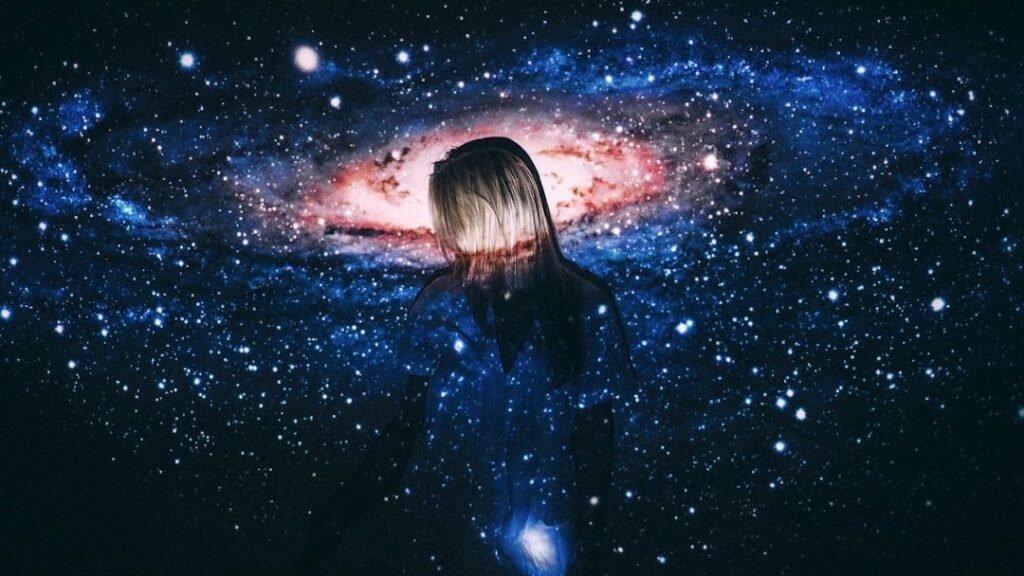

What if everything you think you know about your mind is only scratching the surface? What if your private inner world, those fleeting thoughts, emotions, and quiet moments of self-awareness, are not locked inside your skull at all, but are actually woven into the very fabric of the cosmos? It sounds like the kind of idea that belongs in a late-night philosophy debate. Honestly, it used to be dismissed that way.
But something has changed. Scientists, physicists, and neuroscientists are now producing peer-reviewed research suggesting that consciousness may be far more than just a product of neurons firing. Some are saying it could be the foundation from which reality itself is built. Be prepared to rethink everything you thought you knew about your own mind.
The Old View Is Crumbling: Consciousness Is Not Just Brain Activity
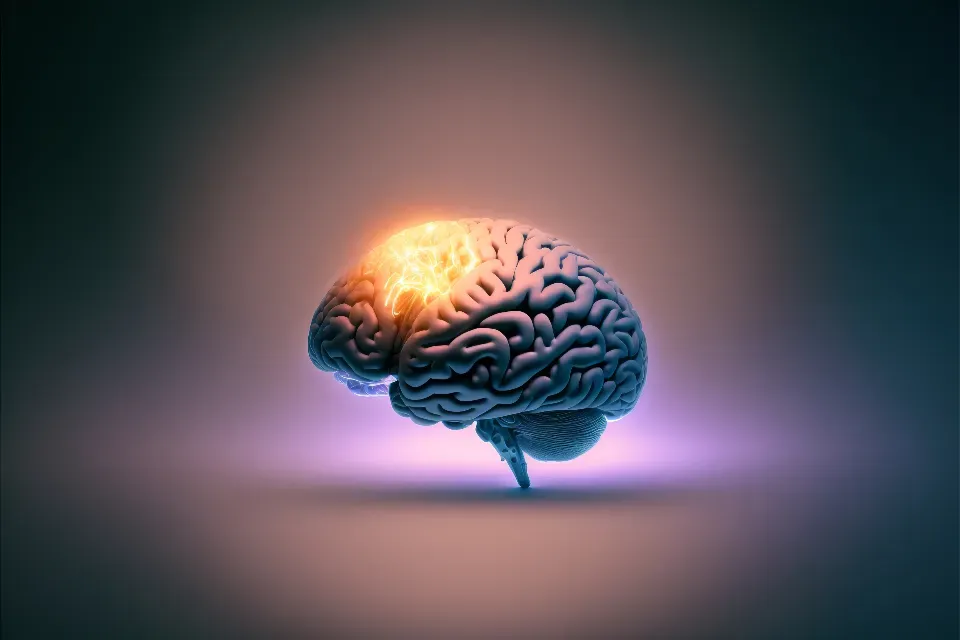
For most of modern science, the idea has been simple: your brain creates your consciousness. Neurons fire, chemicals flow, and somehow, magically, you become aware of the world around you. Tidy, logical, and increasingly looking like it might be wrong.
A striking new framework presents consciousness not as a byproduct of brain activity, but as a fundamental field underlying everything we experience, including matter, space, time, and life itself. Think of it less like a television producing a picture and more like the electricity that powers the entire grid. You are not the TV. You might be the current.
The nature of consciousness and its relationship to physical reality remain among the most profound scientific and philosophical challenges, and a bold new paper proposes that consciousness is not an emergent property of neural processes but a foundational aspect of reality. That is not a small shift. That is a complete inversion of how we have thought about minds for centuries.
Maria Strømme and the Theory That Shook Physics
A new theoretical model of the nature of reality was presented by Maria Strømme, Professor of Materials Science at Uppsala University, published in AIP Advances. What makes this particularly eyebrow-raising is that she is not a philosopher or a spiritual thinker. She is a nanotechnology researcher who decided to zoom all the way out.
Strømme took a major leap from the smallest scales to the very largest and proposed an entirely new theory of the origin of the universe. Her model builds on three core principles: universal mind, universal consciousness, and universal thought. These principles describe an underlying formless intelligence called mind, the capacity for awareness called consciousness, and the dynamic mechanism through which experience and differentiation arise, called thought.
Her theory also suggests that your individual consciousness does not cease at death, but returns to the universal field of consciousness from which it once emerged, and she has formulated this in quantum-mechanical terms. Whether you find that comforting or unsettling probably depends on the kind of day you are having.
The Zero-Point Field: Your Brain Might Be Tuned to the Universe
New evidence published in Frontiers in Human Neuroscience indicates that conscious states may arise from the brain’s capacity to resonate with the quantum vacuum, known as the zero-point field, which permeates all of space. Imagine the universe as a vast ocean of energy. Your brain, according to this model, is like a tuning fork vibrating in sync with it.
In quantum electrodynamics, the vacuum is not empty but filled with a fluctuating ocean of energy known as the electromagnetic zero-point field, and model calculations demonstrate that specific frequencies of this field can resonate with glutamate, the brain’s most abundant neurotransmitter. Let’s be real, that is extraordinary. Your most basic brain chemistry may be in constant conversation with an energy field that fills the entire universe.
If the model proves correct, consciousness arises not merely from electrochemical signaling but from a bottom-up orchestration involving the brain’s resonant coupling to the zero-point field, and in this view, awareness is tied to the selective excitation of zero-point field modes reflected in the brain’s critical dynamics. It is a profound and, honestly, slightly dizzying idea to sit with.
Quantum Entanglement and Your Neurons: Spooky Connections for Real
A controversial new framework says a quantum entanglement effect could happen inside microtubules, the tiny protein tubes that scaffold every neuron in your head, and neuroscientist Mike Wiest at Wellesley College thinks those tubes may carry quantum information that never stays put. Picture every thought you have as not just an electrical blip but a quantum event with potentially cosmic reach.
Quantum entanglement is a phenomenon where two or more particles become so deeply linked that the state of one instantaneously influences the other no matter how far apart they are, and when particles are entangled, measuring one particle’s state automatically determines the other’s. Now apply that to your brain. Because quantum entanglement links objects instantly regardless of distance, every collapse in your cortex might already be braided with particles beyond Earth, and equations even allow those linkages to stretch across the cosmos, hinting that subjective experience could share the same physical substrate as spacetime itself.
The Orch OR Theory: Penrose, Hameroff, and the Architecture of Awareness
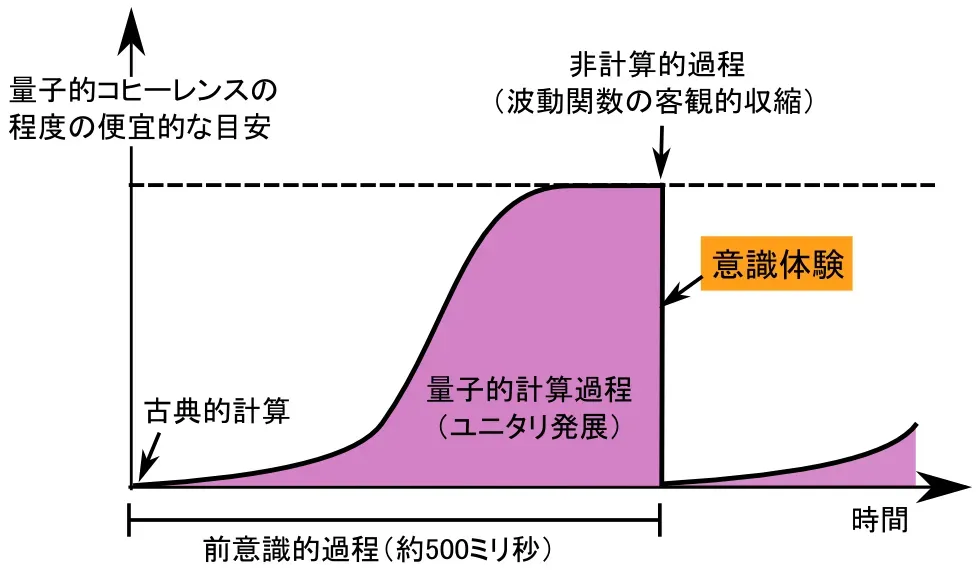
New work builds upon a theory Nobel Prize-winning physicist Roger Penrose and anaesthesiologist Stuart Hameroff first put forward in the 1990s, known as the Orchestrated Objective Reduction theory, or Orch OR. It has been controversial for decades, dismissed by many as too exotic. Yet it keeps finding new evidence on its side.
The theory broadly claims that consciousness is a quantum process facilitated by microtubules in the brain’s nerve cells, which could make sense since we increasingly believe that animals and birds tap into the weirdness of quantum mechanics to help them navigate. Migratory birds using quantum navigation is no longer science fiction. That it might apply to your inner life too is a genuinely exciting thought.
A Wellesley study published in the journal eNeuro demonstrated that anesthesia works by binding to microtubules inside neurons, providing important evidence for a quantum theory of consciousness while reviving a focus on microtubules in anesthesia research. The fact that unconsciousness itself may be quantum in nature gives you a clue about just how deep this rabbit hole goes.
Google, Quantum Computers, and the Boldest Experiment Yet
Hartmut Neven, a physicist and computational neuroscientist leading Google’s Quantum Artificial Intelligence Lab, believes quantum computing could help explore consciousness, and has outlined experiments and theories suggesting consciousness might emerge from quantum phenomena such as entanglement and superposition within the human brain. This is not a fringe thinker. This is someone leading one of the most powerful research teams on the planet.
To test his theories, Neven proposes experimental setups that combine human brains and quantum computers, with one experiment involving entangling a person’s brain with qubits in a quantum processor, and by inducing superpositions and collapses in the expanded system, researchers could determine whether participants report richer or altered conscious experiences. He calls it the “expansion protocol.” You have to admire the audacity of that.
Consciousness has long been considered one of the most enigmatic phenomena in science, described by philosopher David Chalmers as the “hard problem,” and the question of how subjective experiences arise from physical processes remains unresolved. Yet here we are, watching the world’s top research institutions line up to take a serious swing at it.
Near-Death Experiences, Telepathy, and What Science Is Now Willing to Say
Here is the thing that genuinely surprises people when they first encounter this research. Some of the phenomena long dismissed as pseudoscience are now being discussed in peer-reviewed journals with mathematical frameworks behind them. That deserves a moment.
In Strømme’s model, phenomena that are now perceived as mysterious, such as telepathy or near-death experiences, can be explained as natural consequences of a shared field of consciousness. She is not claiming these things are definitely real. She is saying that if the model holds, they become mathematically explainable rather than miraculous.
Researchers at the University of Virginia identified significant gaps in psychological and medical support for people who report near-death experiences, many of whom struggle to integrate these experiences into their lives, and regardless of cause, such experiences can be deeply transformative. Science is slowly, cautiously, but undeniably beginning to take these experiences seriously. That shift alone is remarkable.
A Paradigm Shift in the Making: What This Means for You
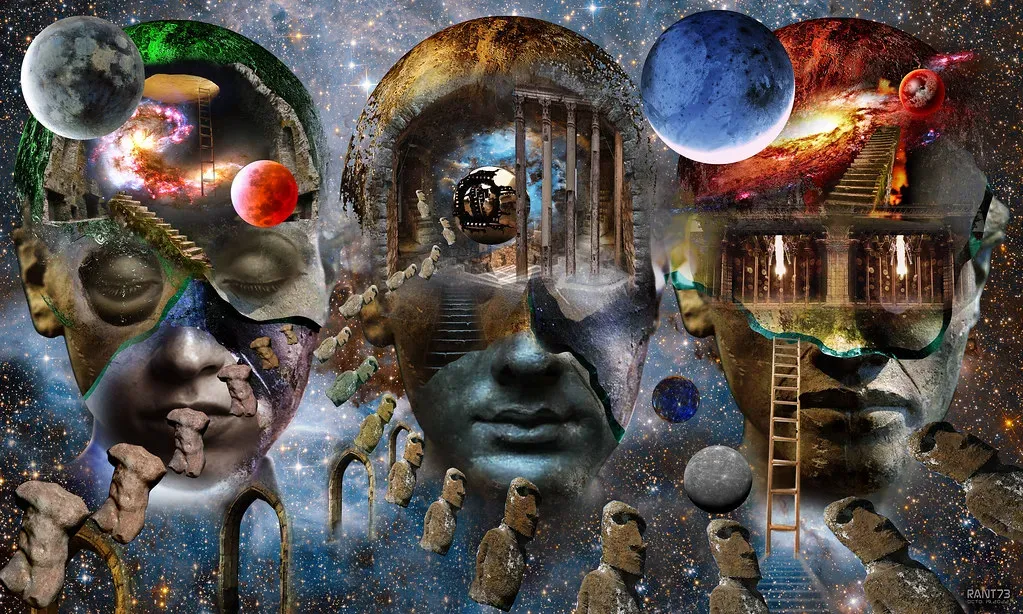
This quantum perspective could revolutionize our understanding of consciousness and its broader implications, potentially impacting the treatment of mental illnesses and our understanding of human connection to the universe. That last part is worth sitting with. Your connection to the universe. Not as a poetic metaphor. As a physical, testable, measurable reality.
Similar shifts in understanding have taken place before in history, such as when humanity realized that Earth is round and not flat, or when we understood it is not the sun that revolves around the Earth but vice versa, and researchers believe this may be the beginning of a new way of viewing the universe and the lives we perceive ourselves to be living. Every one of those old paradigm shifts seemed outrageous at the time too.
More broadly, a quantum understanding of consciousness gives us a world picture in which we can be connected to the universe in a more natural and holistic way. That is not a spiritual slogan. That is a physicist speaking about their own research findings. The boundary between mind and cosmos may be far thinner than any of us were taught to believe.
Conclusion: The Most Personal Discovery May Be the Most Universal
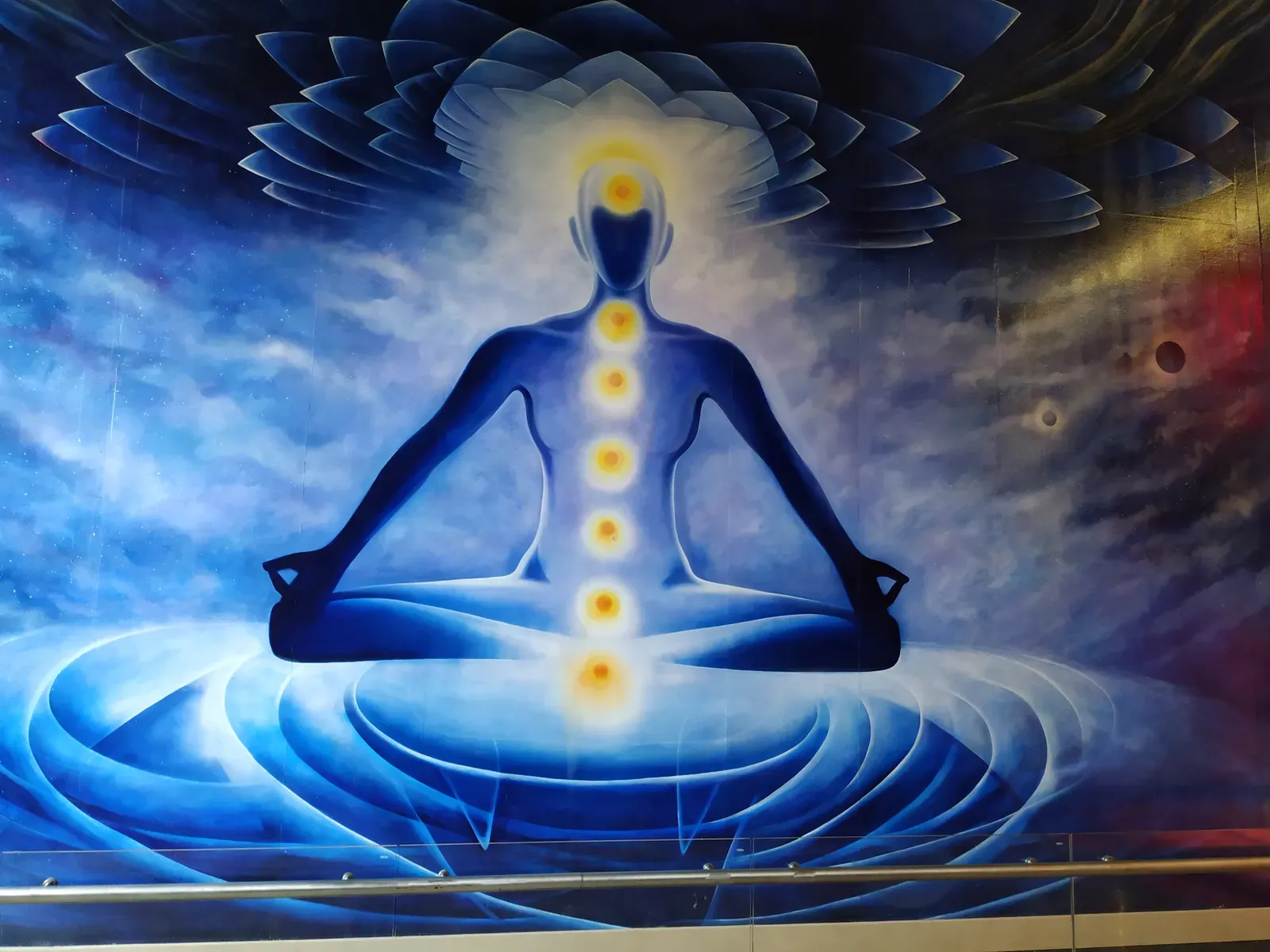
We are living in an extraordinary moment. The question of what consciousness is has been with humanity since the very first human looked up at the stars and wondered. But now, for the first time, we have the tools, the mathematics, and the willingness to answer it scientifically rather than just philosophically.
You are not just a bundle of neurons generating a temporary flicker of awareness. If even a fraction of this research holds up under scrutiny, you are something far more remarkable: a node in a cosmic network, a local expression of a universal field, a mind that does not end at your skin. The science is still young, the debates are fierce, and certainty remains elusive. But the direction of travel is clear.
The universe might not just be something you observe. It might be something your consciousness is already, quietly, fundamentally part of. What do you think? Does the idea that your mind connects to the cosmos feel like a scientific breakthrough, a spiritual truth you already sensed, or something in between? Share your thoughts in the comments below.