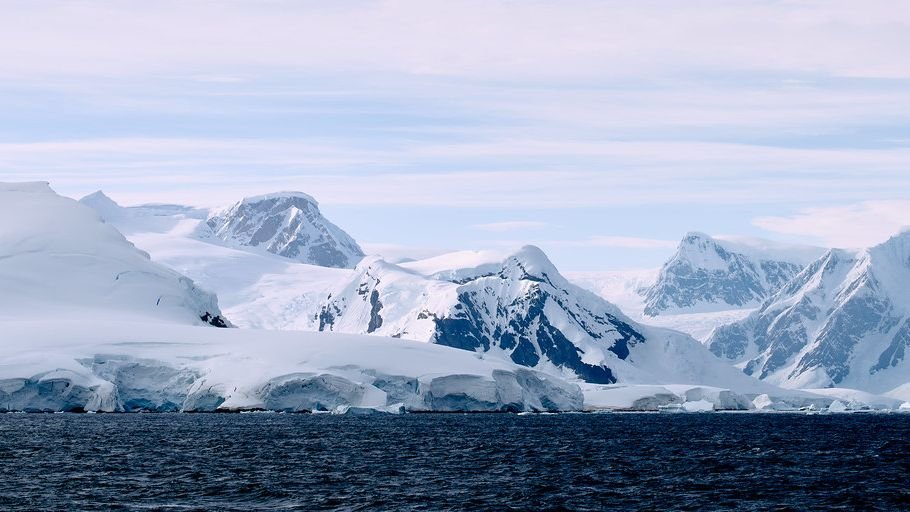

Imagine standing on a frozen continent that stretches across the bottom of the world, buried under ice sheets nearly three kilometers thick in places. It’s hard to believe that the land beneath all that white was once warm, green, and teeming with life. Yet the science is clear – Antarctica has not always been the frozen wasteland we picture today.
The story of how this continent transformed from a thriving landscape into Earth’s coldest, driest, and windiest place is genuinely one of the most dramatic geological stories ever told. It involves shifting continents, collapsing ocean currents, ancient forests, and timescales so vast they make human history feel like a blink. So let’s dive in.
Antarctica Was Not Always A Frozen Continent
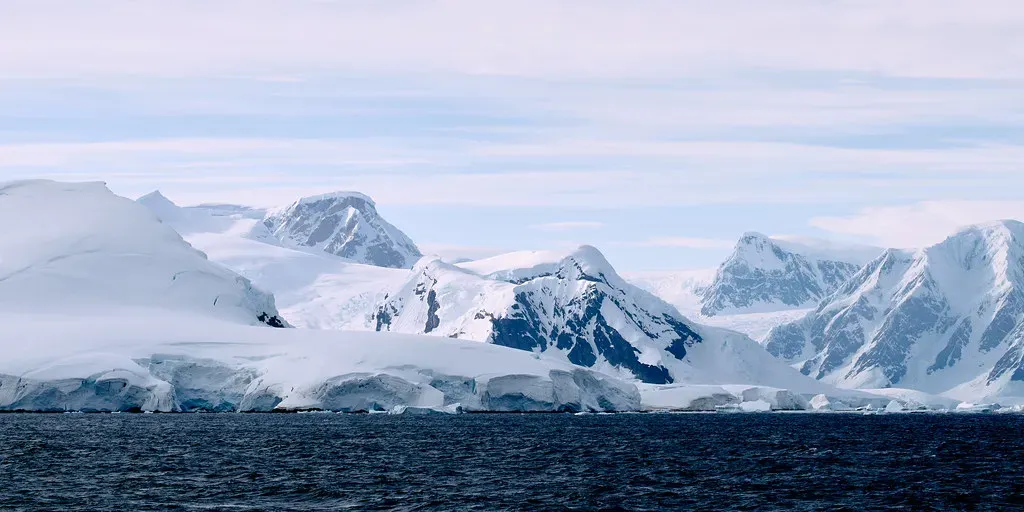
Here’s the thing most people don’t realize – Antarctica has been ice-free for the vast majority of its existence. For hundreds of millions of years, the continent sat in different positions on the globe, connected to other landmasses and bathed in a very different climate. It was not always sitting at the bottom of the world in total isolation.
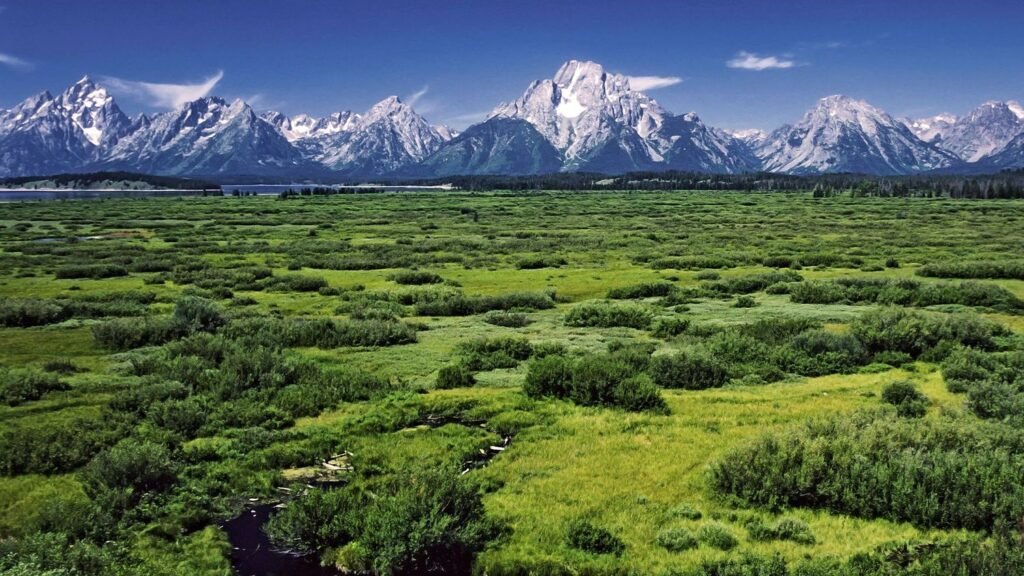
During periods like the Cretaceous, roughly 90 million years ago, Antarctica was warm enough to support forests, rivers, and a genuinely surprising diversity of life. Temperatures were far higher globally, and the poles were nothing like they are today. Scientists have found fossilized tree roots, ancient pollen, and even evidence of rainforest-style vegetation buried beneath the ice – which, honestly, still blows my mind every time I think about it.
The Last Time Antarctica Was Truly Ice-Free
This is the question that really pulls people in, and the answer is both fascinating and humbling. The last time Antarctica was completely free of ice was roughly 34 million years ago, at a geological boundary known as the Eocene-Oligocene transition. Before that point, the continent had ice in some places but was not fully glaciated the way it is now.
The shift was not gradual in the way you might imagine. It appears to have happened relatively quickly in geological terms, likely within a few hundred thousand years. That might sound like a long time, but on the scale of Earth’s history, it’s remarkably fast. Think of it like a light switch rather than a slow dimmer being turned down.
What Triggered The Freeze
Two major forces are widely thought to have driven Antarctica into its deep freeze. The first was the opening of the Drake Passage, the stretch of ocean between Antarctica and South America. As tectonic plates slowly pulled these landmasses apart, a new ocean corridor was created that allowed a powerful circumpolar current to develop around Antarctica.
This current effectively isolated the continent thermally, cutting it off from the warmer waters that had previously kept it relatively mild. The second major factor was a significant drop in atmospheric carbon dioxide levels during this period. With less CO2 trapping heat, global temperatures fell, and Antarctica was the first place to feel the full force of that cooling. The combination of these two forces was essentially a one-two punch that the continent never recovered from.
Evidence Locked Inside The Ice And Rock
Scientists have pieced together this ancient history using some remarkably clever detective work. Ice cores drilled from deep within the Antarctic ice sheet can preserve atmospheric records going back hundreds of thousands of years, revealing ancient temperatures and CO2 concentrations with surprising accuracy. These cores are essentially time capsules, and researchers treat them with extraordinary care.
For the deeper past, before ice cores can reach, geologists rely on ocean sediment cores, fossilized pollen, ancient leaf waxes, and even the chemistry of minerals formed under specific temperature conditions. Fossils found in Antarctica include prehistoric plants, dinosaur bones, and marine creatures, all pointing to a continent that once had a rich and varied natural history. It’s hard to say for sure exactly what daily life looked like back then, but the picture that emerges is of a place almost unrecognizably different from today.
How Warm Was Antarctica Before The Ice
Let’s be real – when scientists say Antarctica was “warm,” they don’t necessarily mean tropical beach weather. During the peak warmth of the Cretaceous period, Antarctic mean annual temperatures may have been somewhere around 12 to 15 degrees Celsius, not unlike a temperate European country today. Some coastal regions may have been even warmer.
During the Eocene epoch, just before the big freeze, dense swampy forests are believed to have stretched across parts of the continent. Palm-like trees, ferns, and even early relatives of modern flowering plants have left traces in the fossil record there. The concept of Antarctica covered in palm trees sounds almost absurd, I know, but the fossils don’t lie.
Could The Ice Melt Again In The Future
This is where the history becomes uncomfortably relevant. Scientists studying the deep past point out that the conditions that ended Antarctica’s last ice-free era involved CO2 levels dropping significantly. The reverse process, rapidly rising CO2 levels, could theoretically reverse the conditions that caused the freeze in the first place. Current atmospheric CO2 levels are already higher than they have been in millions of years.
Full deglaciation of Antarctica would take an enormously long time, likely thousands to tens of thousands of years even under extreme warming scenarios. However, even partial melting of the West Antarctic Ice Sheet could raise global sea levels by several meters, enough to reshape coastlines around the world. The ancient history of Antarctica is not just a curiosity – it’s a potential blueprint for what the future might hold if warming continues unchecked.
Why This Ancient History Still Matters Today
Understanding when and why Antarctica froze gives scientists crucial reference points for modeling how Earth’s climate system works. These ancient transitions act like natural experiments, showing how the planet responds to changes in greenhouse gases, ocean circulation, and continental positions over vast timescales. That knowledge feeds directly into modern climate models and projections.
There is also something deeply philosophical about it all. The ice sheet we think of as permanent, as ancient and unchanging, is actually a relatively recent feature in the planet’s long biography. Antarctica’s frozen state represents just a narrow slice of its history, not the default. Honestly, that realization changes the way you think about what “normal” even means when it comes to our planet’s climate – and perhaps that is the most important takeaway of all.
Conclusion
Antarctica’s ice-free past is not just a fascinating scientific footnote. It is a mirror that reflects how dramatically Earth can change when the right conditions align, and how quickly those conditions can shift. The continent did not freeze overnight in human terms, but on Earth’s timescale, it happened fast.
Today, as CO2 levels climb to heights not seen in several million years, the story of how Antarctica once thawed and then froze again feels less like ancient history and more like a living warning. The ice is not eternal. It never was. What happens next depends on choices being made right now, in boardrooms, parliaments, and research labs across the planet. What do you think the world will look like in another 34 million years? Drop your thoughts in the comments.