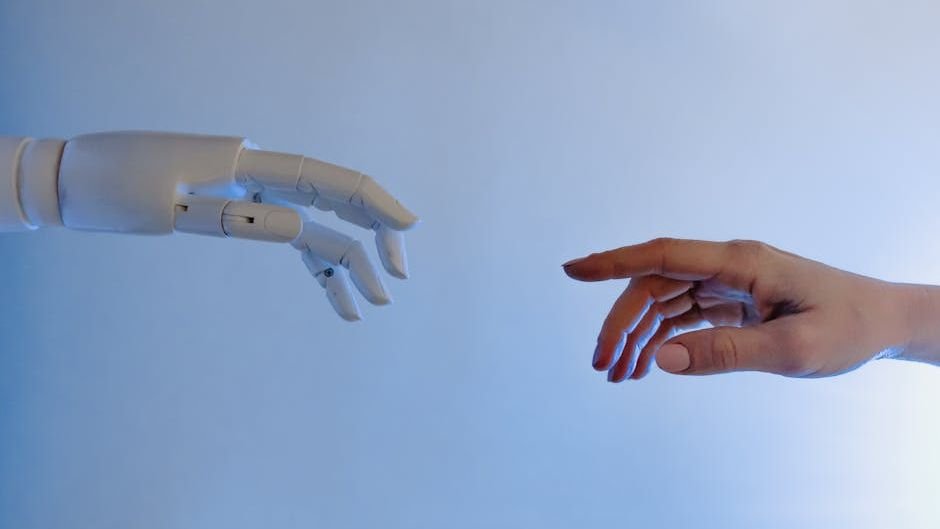


The Quantum-Classical Divide (Image Credits: Unsplash)
Models addressing the transition from quantum superposition to classical reality now suggest inherent constraints on achieving flawless time measurements.
The Quantum-Classical Divide
Quantum mechanics portrays particles as existing in superpositions, occupying multiple states simultaneously through a wavefunction. This framework excels at describing the subatomic realm. Yet it conflicts sharply with the macroscopic world, where objects hold definite positions and forms.
Everyday observations demand resolution for this discrepancy. Traditional interpretations invoke measurement-induced collapse, but alternative models propose objective mechanisms. These approaches aim to bridge the gap without relying solely on observation.
Understanding Wavefunction Collapse
Collapse models modify standard quantum theory by introducing spontaneous wavefunction reduction. Such processes occur probabilistically, favoring definite outcomes over prolonged superpositions. Researchers developed these ideas to explain why large-scale superpositions remain unobserved.
Key variants include continuous spontaneous localization and gravitational collapse theories. Each posits subtle deviations from pure quantum evolution. These modifications, though minute, accumulate over time in sensitive systems.
Impacts on Timekeeping Precision
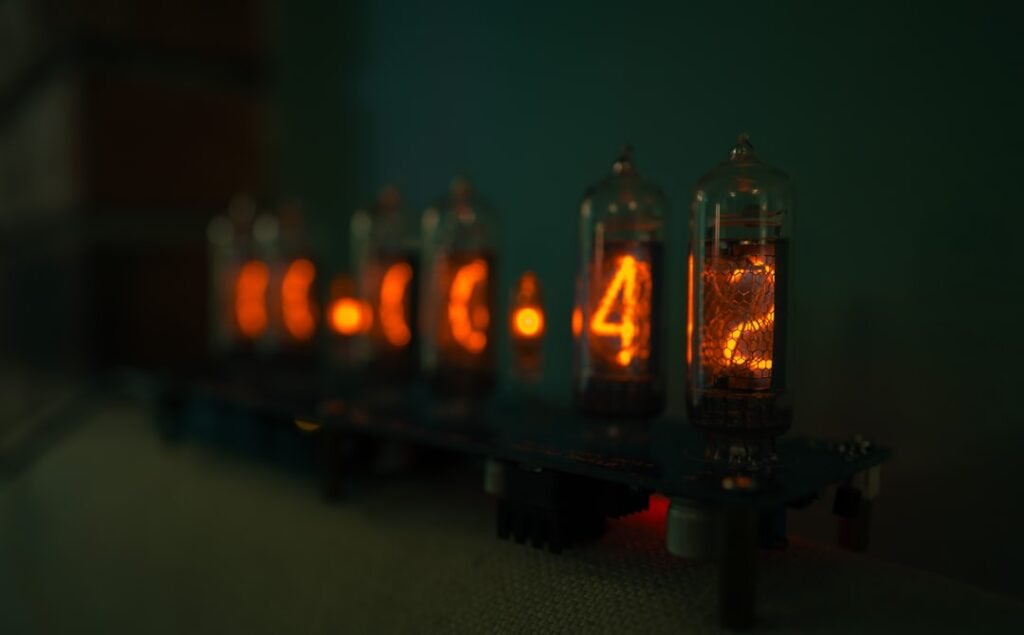
Atomic clocks rely on stable quantum transitions for their unmatched accuracy. Quantum collapse introduces noise that disrupts coherence in these devices. Over extended periods, this effect manifests as unpredictable drifts in time readout.
Studies indicate these limits become relevant at scales beyond current technology. For instance, clocks probing fundamental constants face inherent uncertainty. The subtlety arises because collapse rates scale with system size and complexity.
Astronomical Observations at Risk
Astronomy demands exquisite timing for phenomena like pulsar signals and gravitational waves. Pulsar timing arrays track millisecond pulsars to detect low-frequency waves. Any fundamental timing jitter from quantum effects could mask such signals.
Telescopes and space probes also depend on synchronized clocks for data correlation. Collapse-induced limits challenge efforts to refine these instruments further. Scientists must now weigh whether observed anomalies stem from these models or other sources.
| Factor | Standard Quantum | Collapse Models |
|---|---|---|
| Superposition Duration | Indefinite | Limited by collapse rate |
| Timekeeping Noise | Negligible | Inherent and cumulative |
| Macroscopic Behavior | Requires measurement | Spontaneous resolution |
Future Directions in Research
Experiments test collapse predictions using ultra-cold atoms and optomechanical systems. These setups amplify potential deviations from quantum norms. Results so far remain consistent with standard theory, but higher sensitivities loom.
Theoretical refinements continue to explore parameter spaces. Astronomy offers natural laboratories through long-baseline interferometry. Collaboration between quantum physicists and astronomers accelerates progress.
Key Takeaways
- Quantum collapse resolves superposition but adds timing uncertainty.
- Effects intensify in precision instruments like atomic clocks.
- Astronomical timing arrays may encounter these limits soon.
These models redefine the quest for perfect timekeeping, urging a reevaluation of quantum foundations. What implications do you see for future technologies? Share your thoughts in the comments.