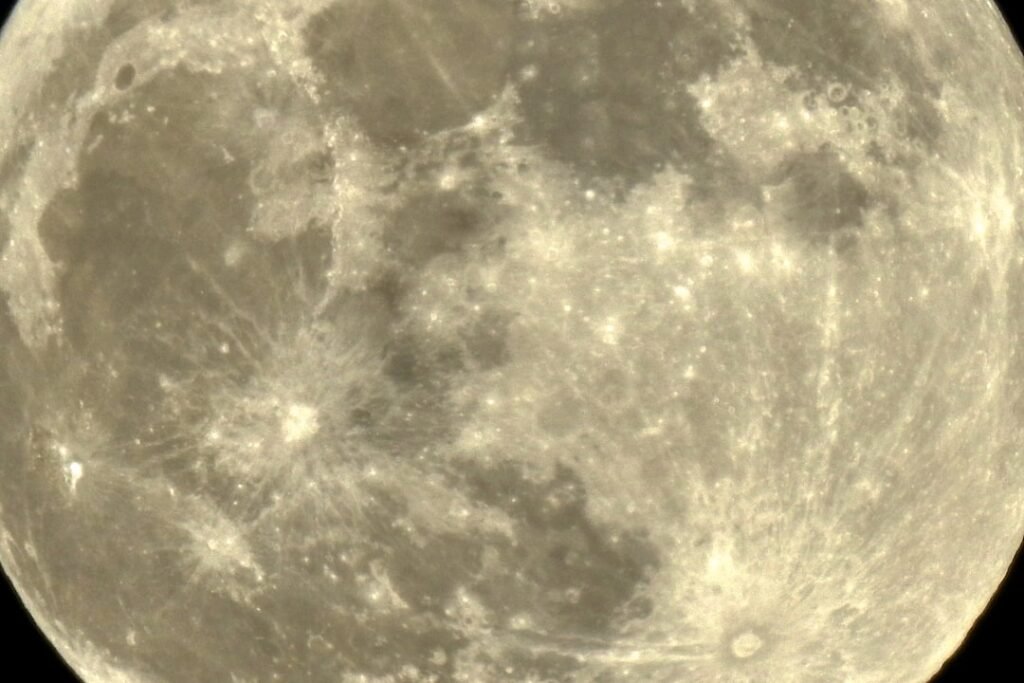

Thousands of Overlooked Features Come into Focus (Image Credits: Unsplash)
Planetary scientists recently completed the first global survey of small mare ridges dotting the Moon’s vast basaltic plains, uncovering signs of tectonic forces that persist to this day.
Thousands of Overlooked Features Come into Focus
Researchers at the National Air and Space Museum’s Center for Earth and Planetary Studies identified 1,114 previously undocumented segments of small mare ridges, bringing the total cataloged to 2,634 across the lunar nearside maria. Lead author Cole Nypaver, a postdoctoral research geologist, along with senior scientist emeritus Tom Watters, meticulously mapped these low, sinuous ridges using high-resolution imagery.
The effort built on prior work that spotted lobate scarps – thrust faults – in the highlands, but extended the search into the smoother maria terrains. Transitions between scarps and ridges suggest shared origins tied to the Moon’s gradual contraction.
Geologically Youthful Amid Billions of Years
Crater counting placed the average age of these ridges at 124 million years, positioning them among the Moon’s youngest surface features. Lobate scarps clock in slightly younger at 105 million years on average, with both forming within the past billion years – roughly the final 20 percent of lunar history.
Such youth challenges views of the Moon as a geologically dormant world, highlighting ongoing stresses in its cooling interior.
| Feature | Primary Location | Average Age (million years) |
|---|---|---|
| Small Mare Ridges (SMRs) | Maria | 124 |
| Lobate Scarps | Highlands | 105 |
Extensional Forces in the Maria
Unlike the compressional lobate scarps, small mare ridges arise from extension, yet both stem from the same crustal shrinkage. These features cluster in regions like Mare Humorum and the northern part of Mare Imbrium, where meter-scale extensional cracks align perpendicular to main ridges.
Impact craters as small as 20 meters across show deformation by ridge formation, confirming their recency.
- North-south oriented ridge clusters in Mare Humorum.
- Crater alterations from 100- to 250-meter impacts.
- Adjacent positioning to larger lunar ridges in Mare Imbrium.
- Perpendicular extensional features at meter scales.
Moonquakes and Missions in the Balance
The ridges point to potential new moonquake sources in the maria, expanding risks beyond known highland faults. “This work helps us gain a globally complete perspective on recent lunar tectonism,” Nypaver stated, emphasizing links to the Moon’s thermal and seismic history.
Watters added, “Our detection of young, small ridges in the maria completes a global picture of a dynamic, contracting moon.” Such activity holds direct relevance for NASA’s Artemis program, where landing sites in the maria could face elevated seismic hazards.
Key Takeaways
- The Moon contracts, producing both compressional scarps and extensional ridges.
- Ridges average 124 million years old, signaling recent activity.
- New quake risks inform safer future explorations.
This discovery reframes the Moon not as a relic but as a subtly active body, with its shrinkage driving surface changes detectable even now. Greater insight into these processes promises to safeguard astronauts and deepen our grasp of planetary cooling. What implications do you see for upcoming lunar missions? Tell us in the comments.