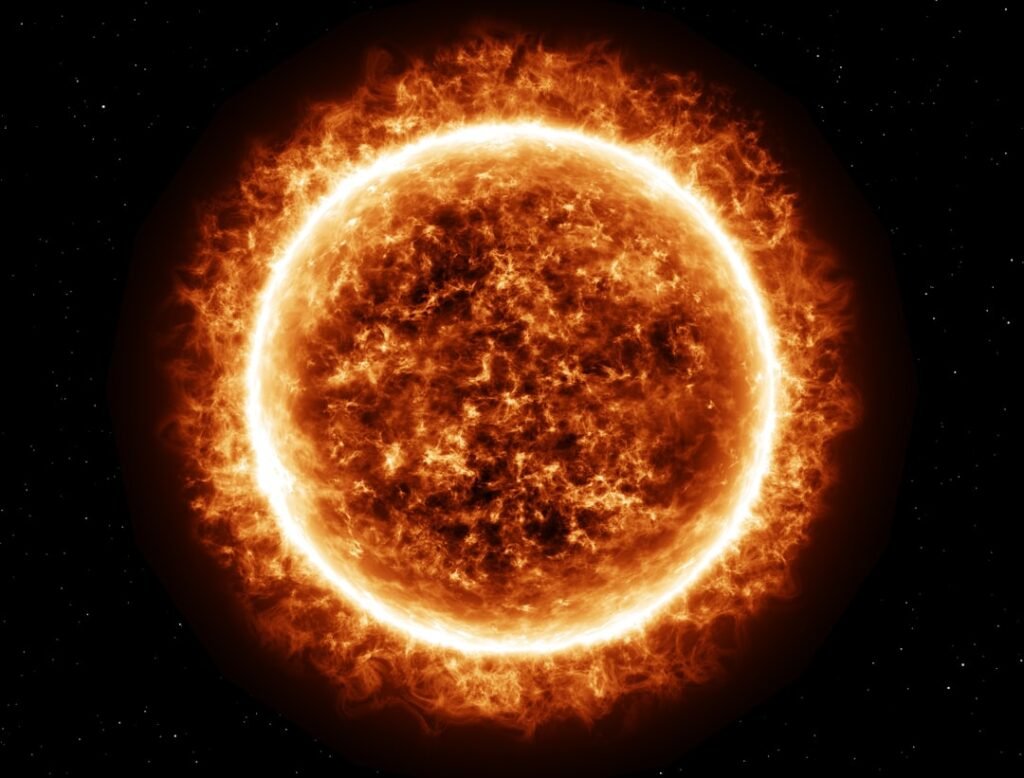

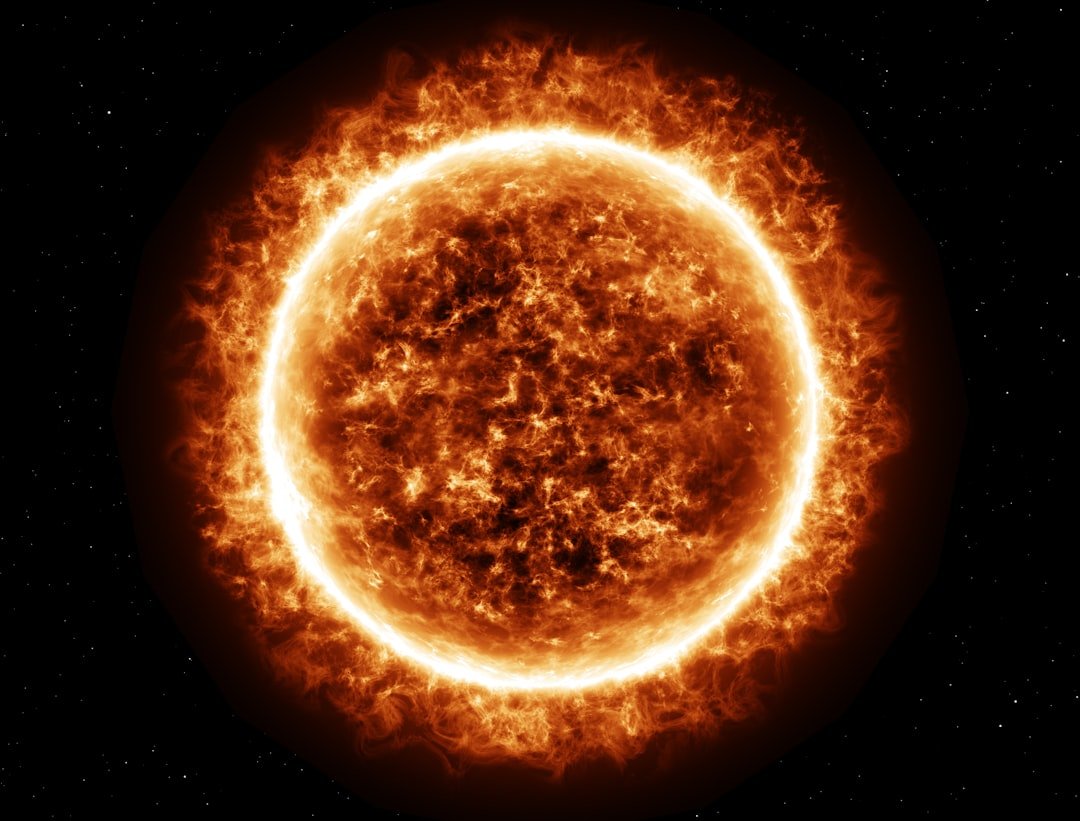
Far-Side Flares Provide Stunning Confirmation (Image Credits: Unsplash)
Mexico City, Mexico – Researchers worldwide have introduced a pioneering forecasting system that identifies periods and solar regions prone to superflares, the Sun’s most intense outbursts.[1]
Far-Side Flares Provide Stunning Confirmation
Solar Orbiter observations revealed massive eruptions on the Sun’s hidden side during the model’s development phase. These included an X11.1 flare on May 14, 2024, X9.5 and X9.7 events the next day, and an X16.5 blast on May 20.[1] The discoveries occurred as the research team submitted their paper between October and December 2025.
Lead researcher Dr. Victor M. Velasco Herrera called the alignment remarkable. The events matched predicted patterns precisely, even though the team lacked prior knowledge of them. This independent validation strengthened confidence in the approach’s reliability across the entire solar surface.[1]
Decoding Patterns from Decades of Data
The system draws from nearly 50 years of satellite measurements tracking the Sun’s X-ray emissions, spanning 1975 to 2025. Analysts pinpointed zones where magnetic energy accumulates, heightening eruption risks. They also detected rhythmic influences from a 1.7-year cycle and a 7-year cycle.
Advanced mathematics and machine learning integrated these elements into probabilistic forecasts. Rather than pinpointing exact moments, the tool highlights extended high-risk windows lasting months to a year. Specific latitudes emerge as hotspots during peak alignments.[1]
The findings appeared in the Journal of Geophysical Research: Space Physics.[1]
Solar Cycle 25’s Forewarned Danger Zones
For the ongoing Solar Cycle 25, the model flags two primary risk phases. The first spans mid-2025 through mid-2026, centered on the southern hemisphere between 5°S and 25°S latitude. A second window targets early to mid-2027 in the northern hemisphere from 10°N to 30°N.
Operators now possess one to two years of lead time, according to Dr. Velasco Herrera of Mexico’s National Autonomous University. Co-author Dr. Willie Soon of the Center for Environmental Research and Earth Sciences emphasized the real-time proof from far-side events.[1]
- Southern focus: Mid-2025 to mid-2026
- Northern shift: Early-mid 2027
- Key driver: Cycle synchronization
- Validation: 2024 far-side X-class flares
Shielding Infrastructure and Missions from Solar Wrath
Superflares surpass X10 intensity and unleash coronal mass ejections capable of widespread disruption. Power grids face blackouts, satellites risk failure, and GPS signals falter. Radio communications suffer, while radiation spikes threaten astronauts and high-altitude flights.
Space agencies gain time to adjust orbits, activate backups, or delay launches. Dr. Velasco Herrera suggested NASA might wisely postpone Artemis II beyond March into late 2026 amid current solar vigor. Utilities and managers can now plan defenses proactively.[1]
Key Takeaways
- 50 years of X-ray data reveal cycle-driven risks.
- Model offers months-to-years advance notice.
- Far-side flares independently confirmed accuracy.
This advance marks a leap in space weather preparedness as Solar Cycle 25 peaks. Reliable forecasts empower protection of vital systems and human endeavors beyond Earth. What steps should agencies take next? Share your thoughts in the comments.