
Picture this: a monster lurking inside the sun, invisible, twisting and turning with unimaginable violence. For decades, scientists knew it existed but could never actually see it. Now, for the first time, researchers have managed to photograph this plasma beast in stunning detail, revealing secrets about how our star truly works.
Using a cutting-edge X-ray imaging platform, scientists have finally captured direct images of a plasma instability that’s been theorized for years but never witnessed until now. This breakthrough doesn’t just satisfy scientific curiosity. It could fundamentally change how we understand solar flares, fusion energy, and the chaotic behavior of superheated matter throughout the universe. Let’s dive into what they found and why it matters more than you might think.
What Makes This Plasma Instability So Elusive
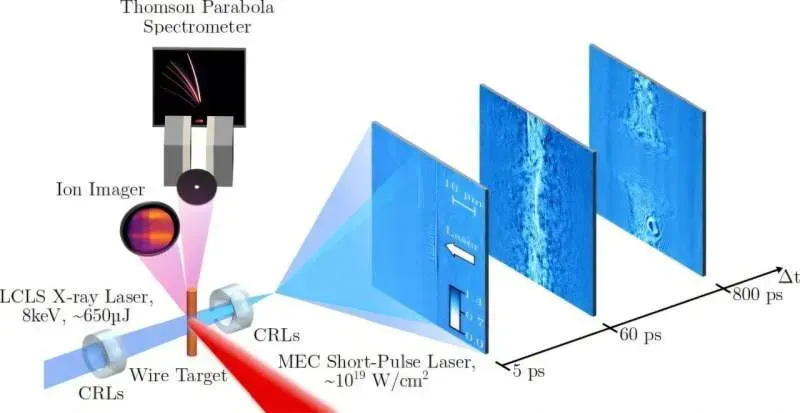
The instability in question happens at scales so tiny and timescales so rapid that traditional imaging methods simply can’t keep up. We’re talking about processes occurring in billionths of a second within plasma heated to millions of degrees. It’s like trying to photograph a hummingbird’s wings in complete darkness while the bird moves at supersonic speed.
What makes this particular phenomenon fascinating is its role in disrupting plasma flows. Think of it as the universe’s way of stirring cosmic soup violently enough to create entirely new patterns. Previous experiments could only infer its existence through indirect measurements, like detecting the aftereffects of an explosion without ever seeing the blast itself. Now, scientists can watch the monster move in real time.
The X-Ray Platform That Changed Everything
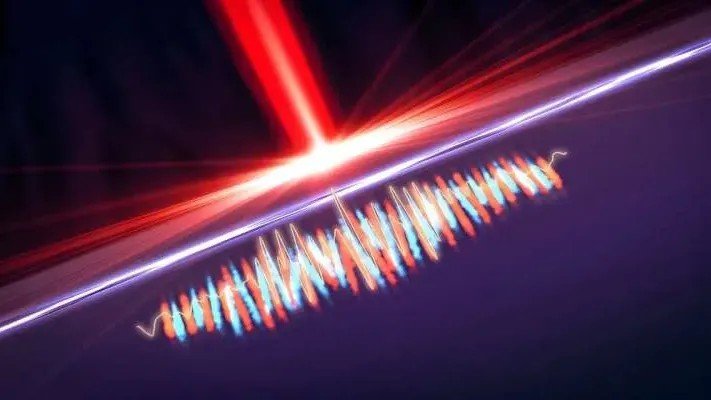
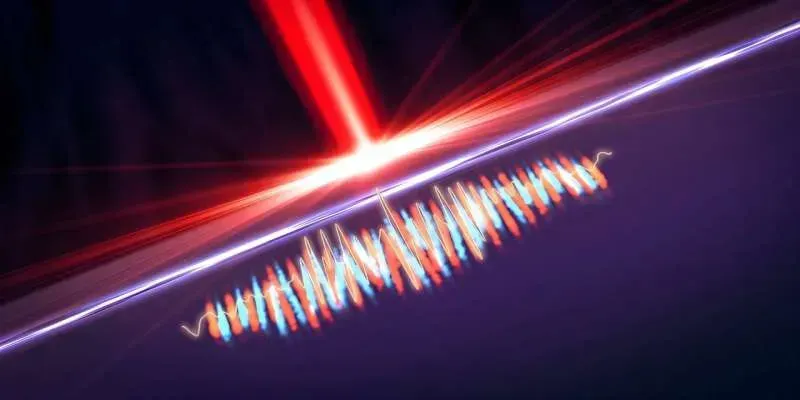
The imaging platform uses incredibly intense X-ray pulses to freeze motion that would otherwise blur into uselessness. These aren’t your dentist’s X-rays. We’re talking about radiation so powerful and precisely timed that it can capture snapshots of matter behaving in ways that seem almost supernatural.
The platform operates at facilities capable of generating these specialized X-ray bursts with surgical timing. By synchronizing the X-ray pulse with the exact moment when the plasma instability reaches its peak chaos, researchers created images with unprecedented clarity. It’s like having a camera shutter that can open and close in the time it takes light to cross a human hair.
Why Plasma Instabilities Matter Beyond the Lab
You might wonder why anyone should care about some exotic physics happening in a laboratory chamber. Here’s the thing: these instabilities occur everywhere in the cosmos. They’re happening right now in the sun’s corona, in distant nebulae, and inside experimental fusion reactors trying to recreate stellar energy on Earth.
Understanding how these instabilities form and evolve helps scientists predict solar weather that can knock out satellites and power grids. It also directly impacts the quest for fusion energy, where controlling plasma is the difference between limitless clean power and an expensive science experiment. The stakes are genuinely massive, affecting everything from space exploration to our energy future.
The Surprising Patterns Hidden in Chaos
When the researchers analyzed their images, they discovered something unexpected. The plasma instability didn’t just create random turbulence. Instead, it formed intricate, almost geometric patterns that repeated in predictable ways. It’s hard to say for sure, but these patterns might reveal fundamental rules governing how energy cascades through superheated matter.
These structures appear and disappear faster than most people can blink, yet they follow mathematical principles that scientists are only beginning to decode. Some sections of the plasma develop finger-like projections while others form spiraling vortices reminiscent of hurricanes. The visual data is honestly breathtaking, even if you’re not a plasma physicist.
Implications for Fusion Energy Research
Fusion reactors have struggled for decades with a central problem: keeping plasma stable long enough for nuclear reactions to generate more energy than they consume. These new images provide a roadmap for where things go wrong. By seeing exactly how instabilities develop, engineers can design better magnetic containment strategies.
Let’s be real, fusion energy has been “just twenty years away” for about sixty years now. But this breakthrough offers something previous research couldn’t: a direct visual understanding of the enemy. It’s the difference between fighting a monster in the dark versus finally turning on the lights. Whether this accelerates the timeline for practical fusion power remains uncertain, but it’s undeniably a significant step forward.
What This Means for Solar Physics
The sun’s atmosphere is a chaotic realm where plasma instabilities trigger solar flares and coronal mass ejections. These eruptions can flood Earth’s magnetosphere with charged particles, creating beautiful auroras but also potentially catastrophic damage to technology. Now scientists have a clearer picture of the fundamental processes driving these events.
The images captured in the laboratory closely mirror theoretical models of what happens in solar plasma. This validation means that computer simulations of solar behavior are on the right track. More importantly, it suggests that predicting dangerous solar weather might become significantly more accurate as researchers refine their models using this new visual data.
The Roadmap for Future Discoveries
This breakthrough opens doors that were previously locked tight. With proven imaging techniques, scientists can now investigate other plasma phenomena that have remained mysterious due to technical limitations. The research team is already planning follow-up experiments examining different types of instabilities under varying conditions.
The platform itself will likely be refined and improved, capturing even faster processes at smaller scales. We’re standing at what feels like the beginning of a golden age for plasma physics, where phenomena once relegated to theoretical discussions become observable reality. Honestly, it’s exciting to think about what the next few years might reveal as this technology matures and spreads to other research facilities worldwide.
Looking Ahead at an Illuminated Universe
Capturing these first images represents more than just technological achievement. It’s a reminder that the universe still holds fundamental mysteries waiting to be unveiled through human ingenuity and persistence. The plasma instability photographed in these experiments is just one thread in an enormous cosmic tapestry we’re only beginning to see clearly.
As imaging technology continues advancing, we’ll likely witness other previously invisible processes throughout physics and astronomy. This particular achievement demonstrates that with the right tools and determination, even the fastest and most chaotic natural phenomena can be frozen, studied, and ultimately understood. What other cosmic monsters are waiting to be photographed? What do you think this breakthrough will lead to next? Tell us in the comments.