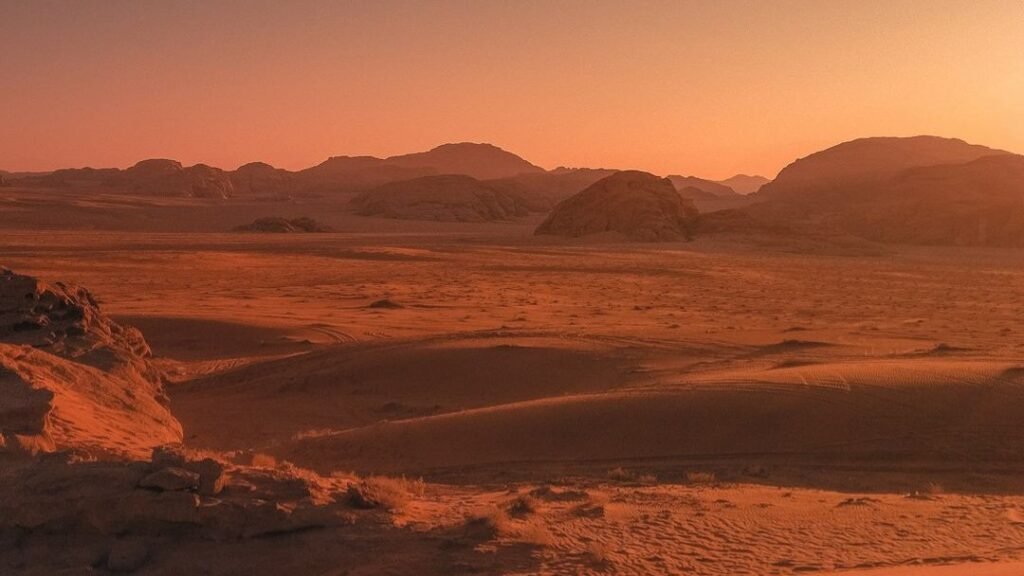

Mars has always been the mysterious neighbor we thought we understood. Dusty, cold, barren, and geologically dead – or so the textbooks told us. Turns out, that assumption may need a serious revision.
Recent findings are shaking up everything scientists thought they knew about the Red Planet. There’s something stirring beneath the surface of Mars, and the implications are genuinely mind-bending. Let’s dive in.
The Discovery That Caught Everyone Off Guard
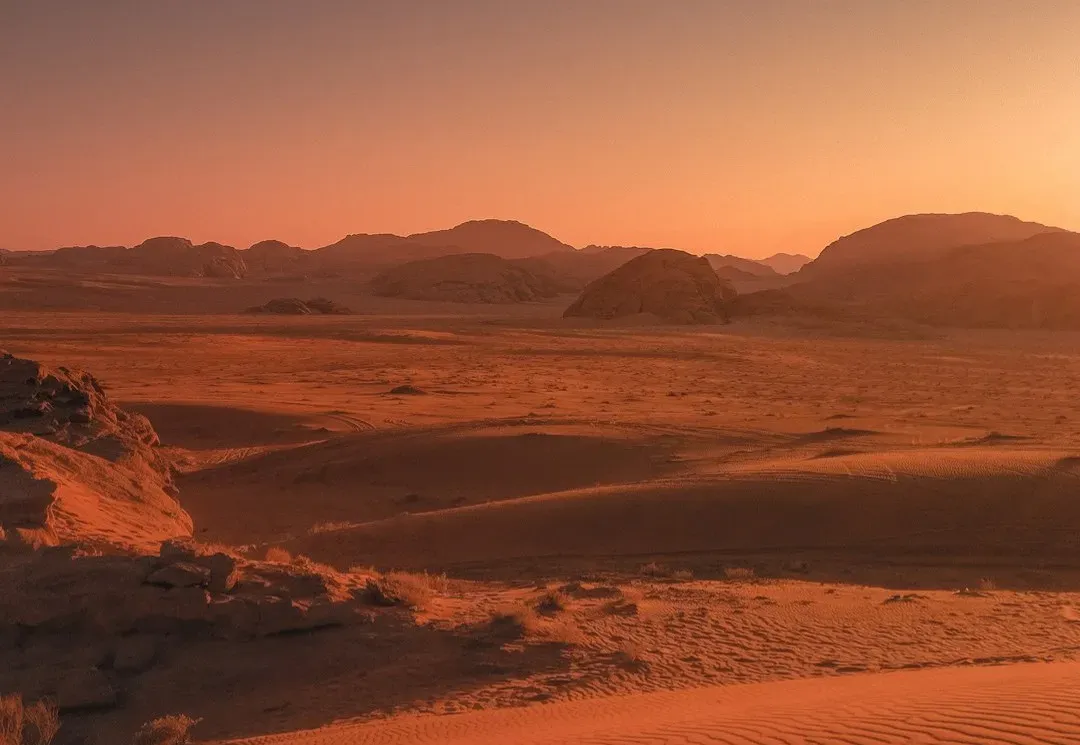
Here’s the thing about Mars – we’ve been sending rovers and orbiters there for decades, and we still keep getting surprised. Scientists analyzing data from NASA’s InSight lander have found compelling evidence suggesting that a volcanic region called Tharsis may still be geologically active. Not just warm underneath, but actively moving and influencing the planet in ways no one fully anticipated.
What makes this especially striking is the scale of the effect being observed. Researchers believe that magma movement beneath the Martian surface could actually be altering how fast the planet rotates. If that sounds like something out of a science fiction plot, honestly, it kind of does.
What Is Tharsis and Why Does It Matter
Tharsis is no small feature on Mars. It’s a massive volcanic plateau roughly the size of North America, home to some of the largest volcanoes in the entire solar system, including the towering Olympus Mons. For a long time, scientists assumed that most volcanic activity on Tharsis had gone quiet billions of years ago.
New geological and seismic evidence is challenging that view in a big way. The region may be harboring active magma reservoirs beneath its surface, making it the most likely candidate for ongoing volcanic processes anywhere on Mars today. That changes the entire conversation about what Mars currently is, not just what it used to be.
How a Volcano Could Possibly Speed Up a Planet
This is where things get genuinely fascinating, and admittedly a little hard to wrap your head around. The basic idea is rooted in physics – specifically, the conservation of angular momentum. When mass redistributes itself on or within a rotating body, the rotation rate of that body can change. Think of a figure skater pulling their arms in and suddenly spinning faster.
When magma migrates beneath Mars’s crust, it shifts mass around within the planet. Scientists believe that a large-scale movement of molten material toward or away from the poles could subtly but measurably alter the planet’s spin rate. It’s the same principle, just playing out on a planetary scale over thousands of years rather than a few seconds on an ice rink.
The Role of NASA’s InSight Lander in This Research
NASA’s InSight lander, which touched down on Mars in 2018 and operated until late 2022, was essentially a giant ear pressed against the Martian ground. It carried an incredibly sensitive seismometer designed to detect marsquakes and internal planetary activity. The data it sent back is still being analyzed today, and researchers are finding new gold in it regularly.
One of the most valuable contributions InSight made was revealing that Mars’s interior is far more complex and dynamic than previously modeled. The seismic signals picked up during its operational lifetime showed that Mars is not simply a cold, inert rock. There’s internal activity happening, and scientists are now piecing together how it connects to the volcanic structures on the surface.
What Faster Rotation Actually Means for Mars
Let’s be real – when we say “faster rotation,” we’re not talking about anything dramatic enough to shorten Martian days in any noticeable human timeframe. The changes being discussed are extremely subtle, measured in fractions of a millisecond over very long periods. Still, in planetary science, even tiny shifts carry enormous meaning.
A measurable change in Mars’s rotation rate could offer scientists a kind of window into the planet’s internal processes. It’s a bit like diagnosing an engine problem by listening to a faint ticking sound – the symptom is small, but what it points to is significant. Tracking these rotational changes could help scientists map out where magma is moving and how active those systems truly are.
Could Mars Really Still Be Volcanically Alive
This question is more loaded than it seems. For years, the scientific consensus leaned heavily toward Mars being a dead world in geological terms. The lack of a strong magnetic field and the apparent stillness of its surface made that a reasonable conclusion. Yet the evidence has been quietly piling up against that assumption for some time now.
Orbital imaging has previously revealed features that look suspiciously fresh in geological terms, and now the seismic and rotational data is adding another layer to that story. It’s hard to say for sure how active Tharsis really is compared to, say, Earth’s volcanic systems, but the idea that Mars might still be twitching with geological life is not fringe science anymore. It’s becoming a serious, mainstream discussion among planetary researchers.
What This Means for the Future of Mars Exploration
If Mars does host an active volcanic system, the implications for future exploration are enormous. Active geology means heat, and heat beneath the surface means the possibility of liquid water in localized environments. That connection to water makes this far more than just an interesting geological curiosity – it touches directly on the question of whether Mars could support microbial life today.
From a mission planning perspective, this discovery pushes Tharsis higher up on the list of scientifically compelling targets. Future landers and orbiters will almost certainly be designed with this region in mind. Honestly, the idea that Mars might not be the dead, passive world we long assumed it to be is one of the most exciting shifts in planetary science in recent memory.
Conclusion
Mars keeps rewriting its own story. Every time we think we’ve figured it out, it throws something new at us – and a potentially active volcano quietly nudging the planet to spin faster might be the most dramatic plot twist yet.
I think this discovery matters beyond science headlines. It forces us to reconsider the comfortable narrative that Mars is simply Earth’s ancient, exhausted cousin. It might be older than us, yes. Quieter, certainly. But dead? That verdict is looking shakier by the year. What do you think – does a potentially volcanic Mars change how you see the possibility of life beyond Earth? Drop your thoughts in the comments.