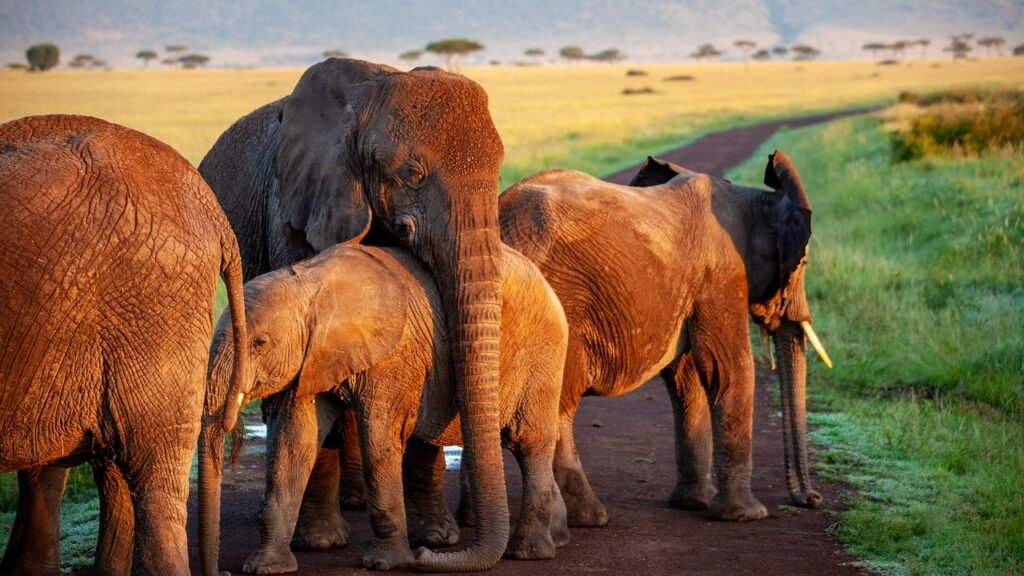

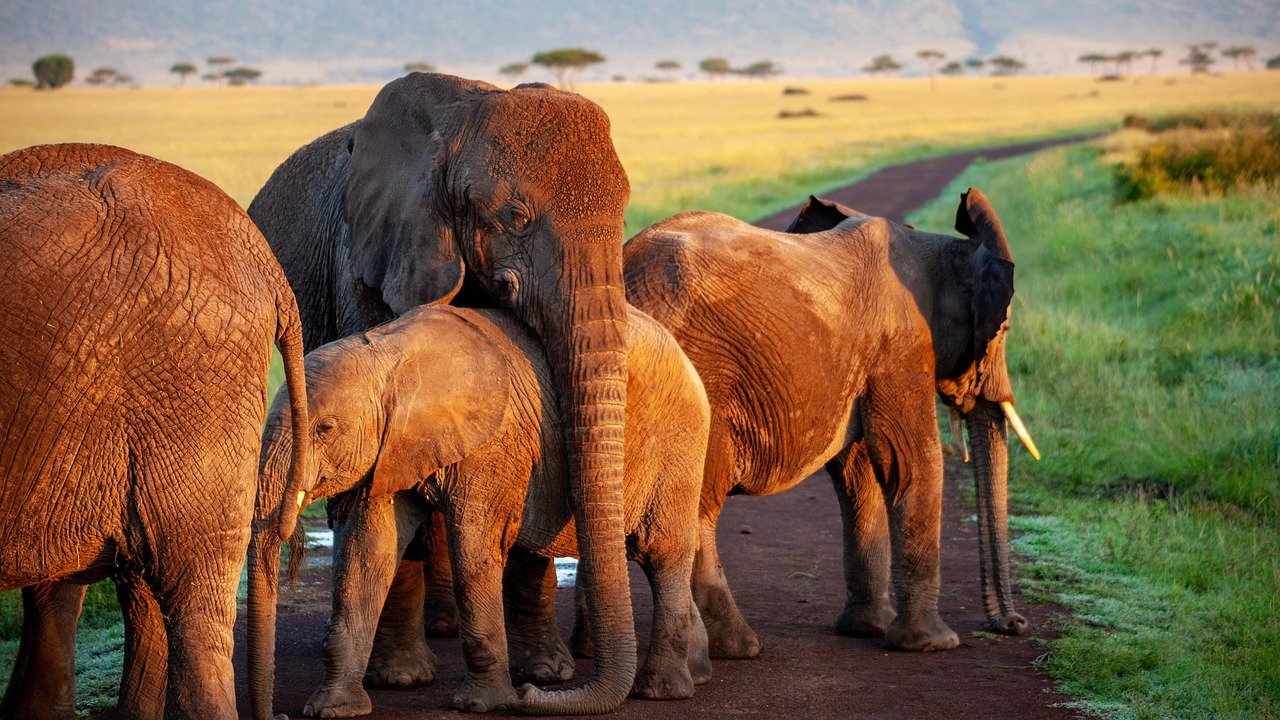
A Built-In Map for Touch Detection (Image Credits: Pixabay)
Elephants rely on their trunk whiskers to achieve remarkable tactile precision, compensating for thick skin and limited vision in ways that scientists have only recently decoded.[1]
A Built-In Map for Touch Detection
Scientists discovered that the trunk whiskers of elephants possess a stiffness gradient that acts like a sensory map, pinpointing exactly where contact occurs along their length. This design allows the animals to grasp fragile items, such as peanuts or tortilla chips, with finesse. The base of each whisker remains rigid, akin to plastic, while the tip softens to a rubbery texture. Such variation enables the elephant to sense proximity and adjust its movements accordingly.
Unlike typical hairs, these whiskers feature a flattened, blade-like shape with a hollow base and porous structure. This architecture reduces weight and enhances durability, crucial since the whiskers do not regrow and endure constant wear from foraging. The gradient provides what researchers term “embodied intelligence,” where the material itself processes sensory information without heavy reliance on neural computation.[1]
Advanced Techniques Reveal Whisker Secrets
A team from the Max Planck Institute for Intelligent Systems employed cutting-edge methods to analyze these whiskers. They used nanoindentation to measure stiffness at the nanometer scale and micro-CT scans for detailed 3D imaging. Advanced microscopy highlighted the internal channels and material transitions. To test functionality, researchers created a 3D-printed model scaled up for human handling.
Katherine J. Kuchenbecker, a key collaborator, described the experience: “I noticed that tapping the railing with different parts of the whisker wand felt distinct – soft and gentle at the tip, and sharp and strong at the base. I didn’t need to look to know where the contact was happening; I could just feel it.”[1]
Computational simulations further validated how the gradient creates distinct vibrational signals based on contact location. The study appeared in the journal Science on February 12, 2026.[1]
Unique Among Animals
Elephant trunk whiskers stand apart from those of other species. Rodent whiskers maintain uniform stiffness, limiting their ability to localize touch points precisely. In contrast, cats exhibit a similar gradient, aiding their exploratory behaviors. Asian elephant body hairs, however, remain stiff from base to tip, suited more for protection than manipulation.
| Whisker Type | Stiffness Profile | Primary Function |
|---|---|---|
| Elephant Trunk | Stiff base to soft tip | Precise tactile sensing |
| Elephant Body | Uniformly stiff | Protection |
| Rodent | Uniformly stiff | Basic detection |
| Cat | Gradient similar to elephant | Exploration |
Andrew K. Schulz, lead researcher, noted: “The hairs on the head, body and tail of Asian elephants are stiff from base to tip, which is what we were expecting when we found the surprising stiffness gradient of elephant trunk whiskers.”[1]
Broader Implications for Sensing Technology
This finding opens doors to bio-inspired sensors. Artificial whiskers mimicking the gradient could deliver precise data with minimal processing power. Dr. Lena V. Kaufmann emphasized: “Our findings contribute to our understanding of the tactile perception of these fascinating animals and open up exciting opportunities to further study the relation of whisker material properties and neuronal computation.”[1]
- Stiffness gradients reduce computational demands in robotics.
- Enhanced prosthetics could incorporate similar designs for better touch feedback.
- Wildlife studies gain new tools to assess elephant sensory behaviors.
- might inspire lightweight, durable sensors for harsh environments.
Key Takeaways
- Elephant trunk whiskers use a material gradient for touch localization.
- Research combined engineering and neuroscience for breakthroughs.
- Potential applications span robotics to animal cognition.
Elephants demonstrate nature’s elegant solutions to sensory challenges, reminding us that intelligence often resides in clever design. What aspects of animal adaptations intrigue you most? Share in the comments.