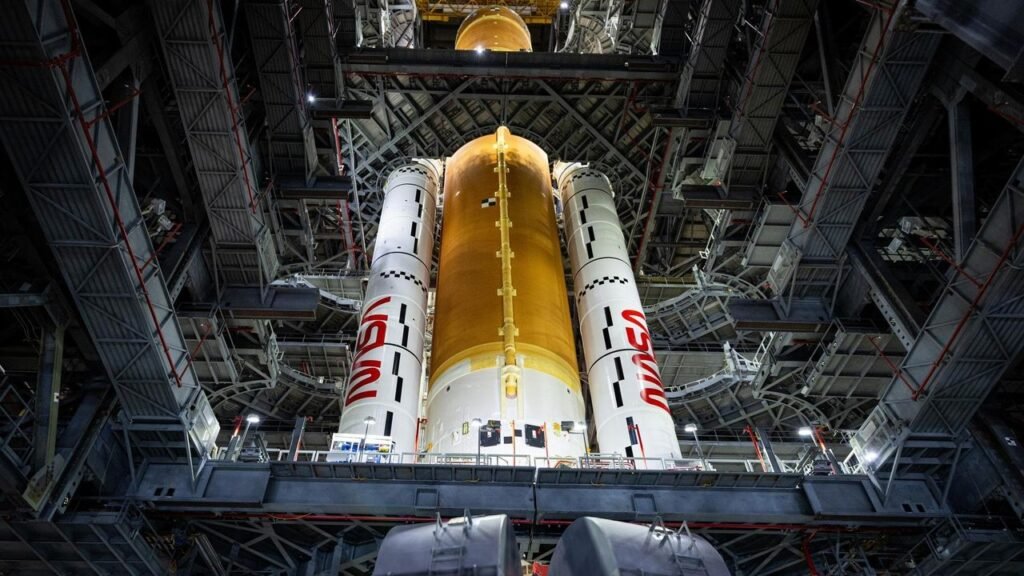

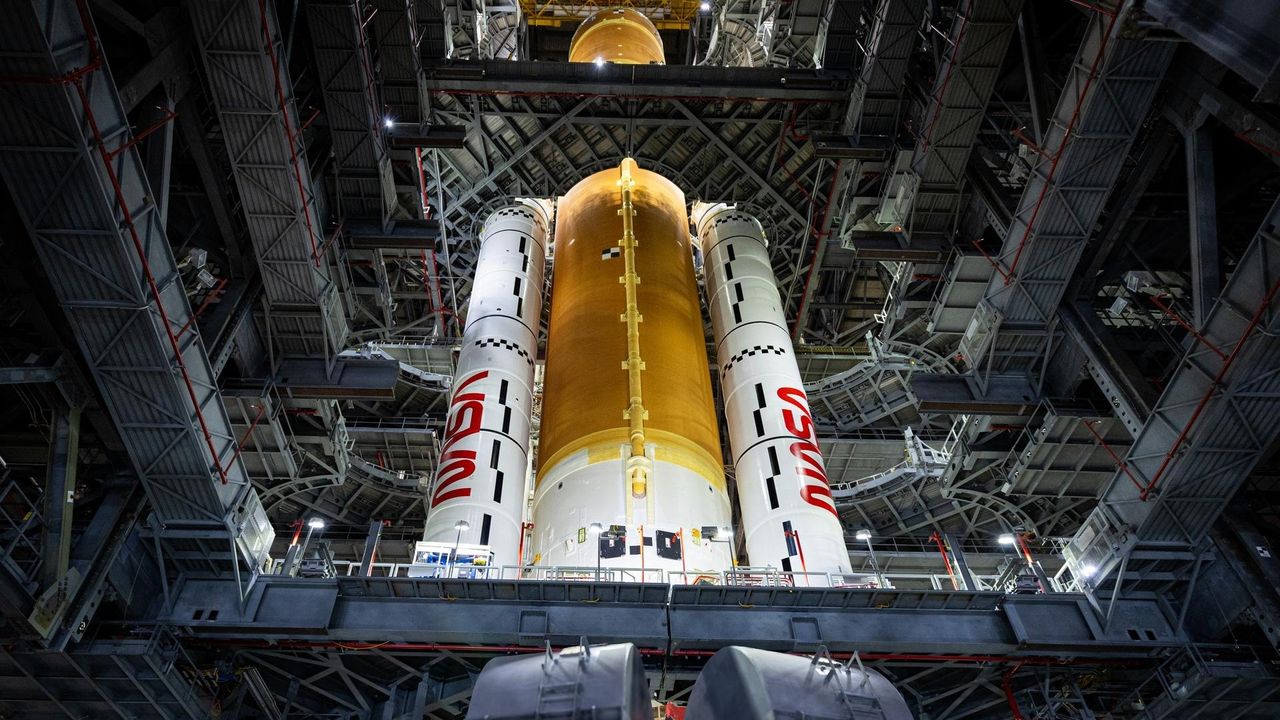
A Monumental Move Forward (Image Credits: Cdn.mos.cms.futurecdn.net)
Kennedy Space Center, Florida – NASA’s towering Space Launch System rocket, stacked with the Orion spacecraft for the Artemis II mission, reached Launch Pad 39B after a deliberate trek across the spaceport grounds.
A Monumental Move Forward
The rollout marked a pivotal milestone in preparations for the first crewed Artemis flight. Teams at the Kennedy Space Center initiated the process early on January 17, 2026, when the integrated rocket began its slow journey from the Vehicle Assembly Building. This 11-million-pound behemoth traveled four miles atop the crawler-transporter-2, a massive platform designed for such heavy loads. The operation, which lasted nearly 12 hours, concluded with the rocket’s arrival at the pad around 6:42 p.m. ET. Engineers monitored every inch of the path to ensure stability and precision.
Weather conditions cooperated throughout the day, allowing the move to proceed without major delays. NASA officials had targeted no earlier than that Saturday for the rollout, but final checks extended the timeline slightly. The event drew attention from space enthusiasts worldwide, who followed live updates from the agency. This step signals that the mission edges closer to reality, with final integrations and tests now underway at the pad.
Inside the Rollout Process
Before the rocket could depart the assembly building, technicians completed a series of verifications on the SLS core stage, solid rocket boosters, and Orion capsule. Platforms surrounding the stack retracted one by one, clearing the way for the crawler-transporter to position itself beneath. Once secured, the entire assembly lifted slightly off its supports and began the gradual roll outward. Speeds rarely exceeded one mile per hour, prioritizing safety over haste.
The path to Pad 39B, a site with a storied history from Apollo and space shuttle eras, includes a gentle slope that tests the transporter’s capabilities. Ground crews flanked the procession, ready to address any issues. NASA provided real-time coverage through its official channels, highlighting the engineering feats involved. This rollout differs from previous uncrewed tests by incorporating crew-specific preparations from the start.
The Artemis II Mission Ahead
Artemis II will send four astronauts on a lunar flyby, the first human venture beyond low-Earth orbit since Apollo 17 in 1972. The crew, including commander Reid Wiseman, pilot Victor Glover, mission specialist Christina Koch, and Canadian Space Agency astronaut Jeremy Hansen, expressed readiness for the journey. Their 10-day mission aims to test Orion’s systems during deep space travel. Launch preparations now focus on fueling rehearsals and interface checks between the rocket and spacecraft.
Officials emphasized the collaborative effort across NASA centers. “We are moving closer to Artemis II, with rollout just around the corner,” said Lori Glaze, acting associate administrator for NASA’s Exploration Systems Development Mission Directorate, in a recent update. The target liftoff date stands at no earlier than February 6, 2026, pending successful pad activities. This flight paves the way for future lunar landings under the broader Artemis program.
Engineering Marvels and Challenges
The SLS rocket represents the most powerful launch vehicle ever built for human spaceflight. Its design draws on decades of shuttle program heritage, with enhancements for reliability. Key components include the core stage powered by four RS-25 engines and twin solid boosters that provide initial thrust. Orion, perched atop, features advanced life support and heat shield technology for reentry.
Teams anticipate several weeks of work at the pad, including a wet dress rehearsal to simulate fueling. Past missions faced hurdles like technical glitches, but current progress appears steady. For more details on the rollout, NASA documented the event extensively on its site (NASA Coverage).
- The rollout covered four miles in under 12 hours.
- It involved retracting 20 platforms in the Vehicle Assembly Building.
- Launch Pad 39B has hosted iconic missions since the 1960s.
- The crew will orbit the moon without landing on this flight.
- Future Artemis missions aim for sustainable lunar presence.
Key Takeaways
- Artemis II advances NASA’s goal of returning humans to the moon.
- The SLS-Orion stack weighs over 11 million pounds fully assembled.
- Launch preparations now shift to on-pad testing and rehearsals.
As the Artemis II rocket stands sentinel at Launch Pad 39B, it embodies humanity’s enduring quest to explore the cosmos anew. This achievement not only honors past triumphs but ignites anticipation for the crew’s lunar voyage. What aspects of the Artemis program excite you most? Share your thoughts in the comments below.