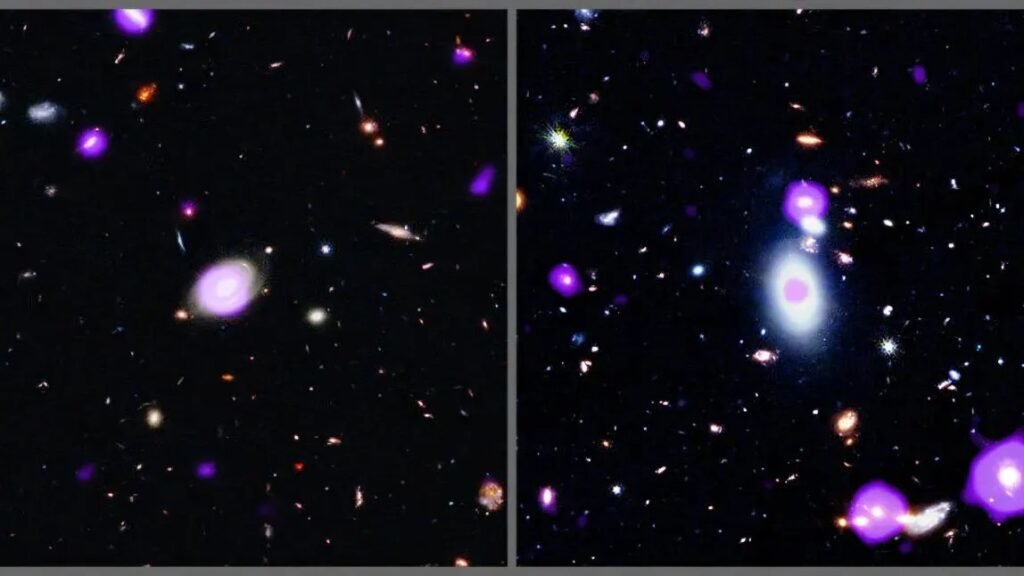

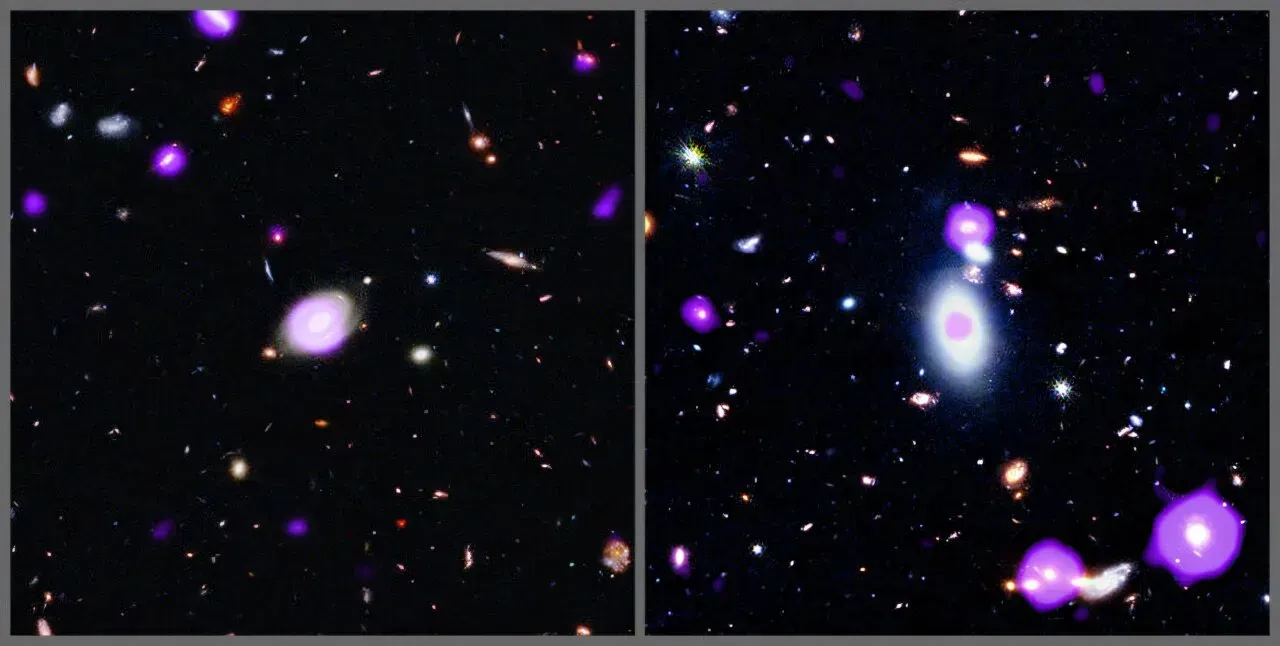
Black holes have always had a way of making us feel small. These cosmic giants swallow light, bend spacetime, and somehow manage to grow to sizes that should, by most calculations, be nearly impossible. So when NASA’s Chandra X-ray Observatory catches them in the act of doing something unexpected, scientists pay very close attention.
Recent findings from Chandra are reshaping what astronomers thought they understood about black hole growth. The data is surprising, the implications are far-reaching, and the story is honestly one of the more fascinating things coming out of astrophysics right now. Let’s dive in.
The Mystery That Started It All
Here’s the thing about supermassive black holes – they’re enormous. We’re talking about objects millions or even billions of times more massive than our Sun. The puzzle that has haunted astronomers for decades is simple to state but brutally hard to solve: how did they get that big, that fast?
The universe is roughly 13.8 billion years old, which sounds like a long time. Yet we’ve found fully formed supermassive black holes existing when the universe was less than a billion years old. That’s like finding a fully grown adult in a kindergarten class photo. Something had to speed up the process dramatically.
Chandra’s new observations are pointing toward specific feeding mechanisms and environmental conditions that may finally explain the rapid growth. The findings are not just academically interesting – they challenge some foundational assumptions in modern astrophysics.
What Chandra Actually Observed
NASA’s Chandra X-ray Observatory has been one of the most productive scientific instruments ever launched. It detects X-ray emissions that are invisible to optical telescopes, giving astronomers a window into some of the most extreme environments in the universe. Black holes, when actively consuming matter, produce enormous amounts of X-ray radiation – which makes Chandra perfectly suited for this kind of research.
In this study, researchers used Chandra data to examine black holes in the early universe, looking specifically at how they were accumulating mass. The observations revealed that some black holes appear to be feeding in ways that are more efficient and more sustained than previously modeled.
What stood out was not just the rate of growth but the conditions surrounding these black holes. The data suggests that the environment around early black holes was far more “cooperative,” so to speak, than astronomers had assumed.
Super-Eddington Accretion: Eating Beyond the Speed Limit
Let’s be real – most people haven’t heard of the Eddington limit. Think of it like a natural speed limit for how fast a black hole can consume matter. When a black hole eats too aggressively, the radiation it produces pushes back against the infalling gas, essentially throttling the feeding process.
The classical assumption was that black holes generally respected this limit. What Chandra’s observations suggest, however, is that early black holes may have regularly exceeded it – a process called super-Eddington accretion. It’s a bit like discovering that cars on the highway are routinely traveling twice the speed limit and somehow not crashing.
This is a genuinely big deal. If super-Eddington accretion was common in the early universe, it provides a plausible pathway for black holes to balloon to enormous sizes within a relatively short cosmic timeframe. I think this might be one of the most important pieces of the puzzle that researchers have been missing.
The Role of Dense Gas Environments
Growth doesn’t happen in a vacuum – or rather, it happens better when there’s less of a vacuum. One of the key factors Chandra’s data highlights is the role of dense surrounding gas in enabling rapid black hole growth. Early galaxies were rich in gas clouds, and those clouds appear to have funneled material toward central black holes with remarkable efficiency.
Imagine trying to fill a bucket using a garden hose versus a fire hose. The early universe essentially handed black holes a fire hose. Dense gas environments meant there was simply more material available, more consistently, and with less disruption.
This finding also helps explain why modern black holes seem to grow more slowly. As the universe aged, gas supplies thinned out, star formation consumed much of that material, and the cosmic buffet became considerably less generous.
Obscured Black Holes: Hidden Feeders
One of the more surprising elements in the Chandra findings involves black holes that are obscured by thick columns of gas and dust. These hidden black holes are difficult to detect in optical wavelengths, but X-ray observations can pierce through the obscuring material. Chandra was specifically able to identify black holes that were actively growing while being shielded from direct view.
This matters enormously for our census of black hole growth across cosmic history. If a significant population of growing black holes has been hidden from previous surveys, then researchers have been underestimating just how much black hole growth was occurring in the early universe. Honestly, it’s a bit like discovering a whole shadow economy operating right under everyone’s nose.
The obscured fraction may be substantial. Accounting for these hidden feeders could significantly revise upward the total amount of black hole growth that happened in the first few billion years after the Big Bang.
What This Means for Galaxy Formation
Black holes don’t exist in isolation, and this is one of those points that is easy to overlook. The growth of a supermassive black hole and the evolution of its host galaxy are deeply intertwined. When a black hole feeds aggressively, it releases enormous energy into the surrounding galaxy – energy that can heat gas, suppress star formation, and even drive material out of the galaxy entirely.
Understanding the pace and efficiency of early black hole growth therefore has direct consequences for understanding how early galaxies developed their shapes, sizes, and star formation histories. The two stories are inseparable. You can’t fully understand one without the other.
Chandra’s findings suggest that the feedback from rapidly growing black holes may have been even more powerful and more widespread in the early universe than current galaxy formation models account for. That means those models likely need revising.
What Comes Next for Black Hole Research
Chandra has been operational since 1999, which is an extraordinary run for any space telescope. Researchers are now working to combine Chandra’s X-ray data with observations from other observatories, including the James Webb Space Telescope, which offers complementary infrared capabilities for peering deep into the early universe.
The combination of X-ray and infrared data is expected to paint an even more detailed picture of black hole environments, accretion behavior, and host galaxy conditions. It’s genuinely exciting to think about what that combined view might reveal. Science rarely hands you a clean answer – it usually gives you three new questions for every one it resolves – but the current trajectory of research feels genuinely promising.
There’s also growing interest in finding even more of those obscured, rapidly growing black holes from the early universe. The more of them researchers can identify and characterize, the more confidently they can build and test models of early cosmic growth.
A Universe Still Full of Surprises
The universe, it turns out, has been doing things behind our backs for billions of years. What Chandra’s latest findings underscore is that our models of black hole growth, while useful, were built on incomplete information. The early universe was wilder, denser, and more productive than we gave it credit for.
I find something almost humbling about that. We’ve built entire theoretical frameworks around these objects, and now the data is telling us we need to expand those frameworks significantly.
The real takeaway here is not just about black holes. It’s about the importance of observational astronomy continuing to push into new wavelengths, new sensitivities, and new cosmic depths. Every time we look harder, we find something that surprises us. These latest Chandra results are a powerful reminder that the cosmos is still revealing its deepest secrets, one X-ray photon at a time. What do you think – did you expect black holes to be even more extreme than the textbooks suggested? Drop your thoughts in the comments.