
It’s one of the oldest questions humans have ever asked. Are we alone out here? With hundreds of billions of stars in our galaxy alone, and billions of galaxies beyond that, the sheer scale of the universe makes it feel almost statistically impossible that Earth is the only place where something got up and walked around. So where is everybody?
That question, famously posed decades ago by physicist Enrico Fermi over lunch, still doesn’t have a clean answer. Scientists have since developed dozens of theories, some deeply unsettling, others almost poetic in their strangeness. The more we look, the more complicated the silence becomes. Let’s dive in.
The Fermi Paradox Still Has No Clean Answer
Here’s the thing about the Fermi Paradox: it’s not really a paradox in the mathematical sense. It’s more of a gut punch. If the conditions for life seem so common across the cosmos, and if civilizations have had billions of years to spread and signal their existence, the radio silence we observe is genuinely baffling.
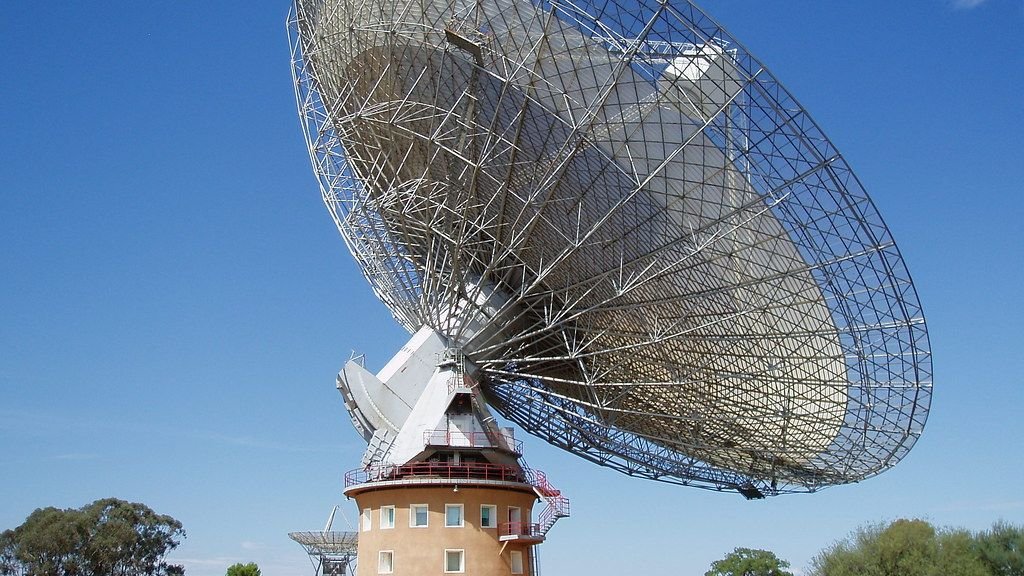
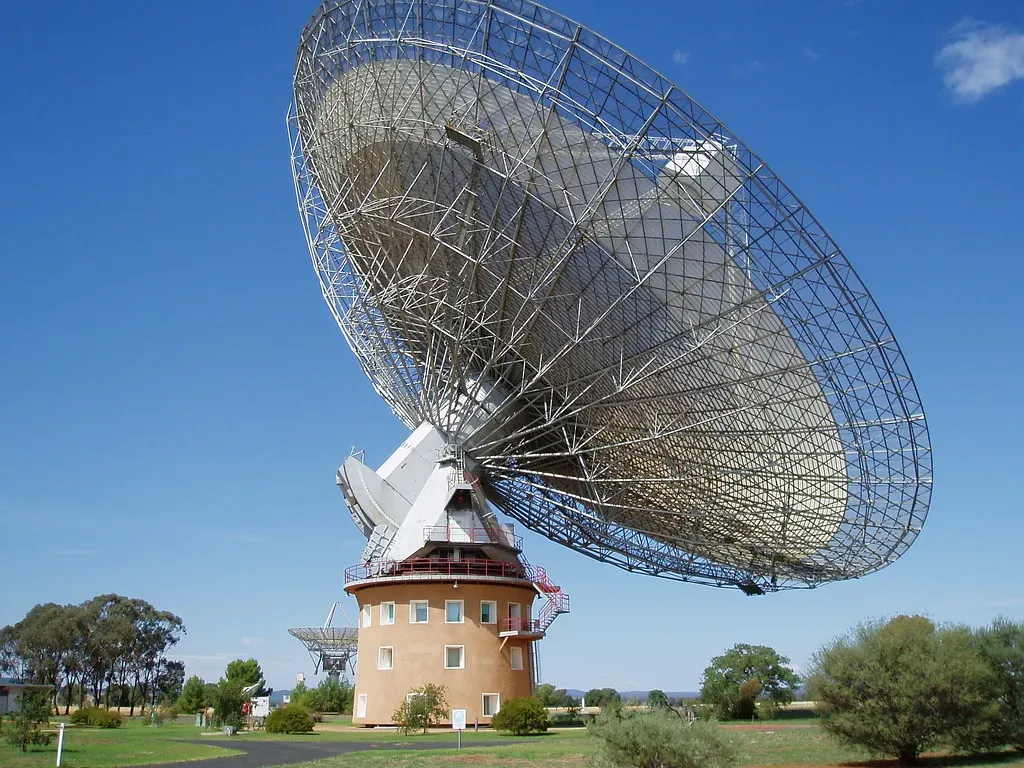
Scientists and astronomers have been wrestling with this since the mid twentieth century. We’ve pointed radio telescopes at the sky, scanned for unusual light patterns around distant stars, and listened for anything that didn’t sound like natural cosmic noise. Still nothing that conclusively says “hello from another civilization.”
What makes this so strange is that we know life doesn’t need much. Water, carbon, energy, a bit of time. The universe seems to have all of those things in abundance. Honestly, the silence feels louder the more you think about it.
The “Great Filter” Theory Is the One That Should Keep You Up at Night
Of all the explanations for why we haven’t heard from any alien civilizations, the Great Filter is arguably the most chilling. The theory, developed by economist Robin Hanson in 1998, suggests that somewhere along the path from simple chemistry to a space faring civilization, there’s a nearly impossible barrier that almost nothing gets through.
The terrifying question is whether that filter is behind us or ahead of us. If the emergence of complex life itself is extraordinarily rare, we may have already passed through the filter and gotten lucky. That would actually be the good news version.
The bad news version is worse. If simple microbial life is common throughout the universe but complex civilizations consistently destroy themselves before reaching interstellar capability, then the filter might still be in our future. A self inflicted extinction event, whether through climate collapse, biological warfare, or artificial intelligence, could be what wipes out every civilization before it gets a chance to say hello.
Maybe They’re Already Here and We’re Just Not Looking Right
Let’s be real, the search for extraterrestrial intelligence has mostly focused on radio waves. That’s the technology we understood when SETI was first established. But thinking that advanced alien civilizations would communicate through radio is a bit like assuming the only way anyone sends messages is through telegram.
A civilization even a few thousand years ahead of us might be using communication methods we haven’t even theorized yet. Neutrino beams, gravitational wave manipulation, quantum entanglement at scale. We genuinely don’t know what we don’t know, and that’s a humbling thing to sit with.
There’s also the von Neumann probe concept. The idea is that a truly advanced civilization might send self replicating robotic probes across the galaxy to explore and communicate. These probes would multiply and spread without the parent civilization even needing to still exist. We haven’t found any of those either, though some researchers argue we haven’t looked carefully enough in our own solar system.
The “Dark Forest” Hypothesis Suggests Silence Is Strategic
One of the more philosophically unsettling ideas comes from science fiction, specifically the work of Chinese author Liu Cixin, though the core concept has been discussed in astrobiological circles too. The Dark Forest hypothesis proposes that the universe is full of civilizations, and every single one of them is deliberately staying silent.
The logic goes like this: resources are finite, survival is the prime directive, and you can never fully trust another civilization’s intentions. So the rational move for any intelligent species is to hide, and to eliminate any civilization that reveals itself before it becomes a threat.
Under this framework, broadcasting our location with radio waves and radar signals for the past century wasn’t just naive, it was potentially dangerous. Some scientists take this seriously enough to argue against active SETI programs that deliberately beam powerful signals into space. It’s hard to say for sure whether the silence of the cosmos is peaceful or predatory.
Rare Earth Theory: What If We Really Are the Freaks of the Universe
Here’s a perspective that gets less attention than it deserves. The Rare Earth hypothesis, put forward by paleontologist Peter Ward and astronomer Joe Kirschvink, argues that the conditions that produced complex life on Earth are so specific and so improbable that they may have almost never occurred anywhere else.
Think about everything that had to go right. Earth sits in a narrow habitable zone around a stable star. We have a large moon that stabilizes our axial tilt, preventing chaotic climate swings. Jupiter acts like a gravitational shield, absorbing comet impacts that might otherwise sterilize our planet regularly. The plate tectonics on Earth recycle carbon in a way that keeps temperatures livable over geological time.
Change any one of those variables significantly and you might end up with a sterile world. This theory doesn’t say life is impossible elsewhere, but it does suggest that complex, multicellular, intelligent life might be extraordinarily rare. We might be something like cosmic lottery winners without even realizing it.
The Zoo Hypothesis: What If They’re Watching and Waiting
This one is either deeply comforting or deeply disturbing, depending on your personality. The Zoo hypothesis suggests that advanced alien civilizations are aware of us but have collectively decided not to make contact. We’re essentially in a protected reserve, observed but not interfered with.
The idea was first formally proposed by astronomer John Ball in 1973. The reasoning is similar to how we observe endangered species or isolated indigenous communities, sometimes the most ethical thing is to step back and not disrupt a developing ecosystem. Maybe there’s a kind of galactic Prime Directive at work.
The unsettling flip side is the question of what happens when we graduate, if we ever do. Maybe contact only comes once a civilization proves it can survive its own technological adolescence. Given what the world looked like for much of the twentieth century and where things stand now, passing that test isn’t guaranteed. I think about that more than I probably should.
What Modern Science Is Actually Doing About It
The search has evolved dramatically in the past decade. The James Webb Space Telescope, operational since 2022, can now analyze the atmospheric composition of exoplanets in ways that were previously impossible. Scientists can look for biosignatures: oxygen, methane, water vapor, and other chemical combinations that suggest biological processes.
The Breakthrough Listen initiative, one of the largest and most well funded SETI efforts in history, has been systematically scanning millions of stars across multiple radio frequency ranges. By 2026, the program has accumulated more observational data than all previous SETI efforts combined, and the analysis is increasingly aided by machine learning systems designed to catch anomalies humans might miss.
There’s also serious scientific discussion now about Technosignatures, evidence not of life itself but of technology. Industrial pollution in an alien atmosphere, artificial light on the night side of a planet, megastructures around a star. The Dyson sphere concept, once purely theoretical, is now something astronomers actively scan for. No confirmed detection yet, but the methodology is becoming more sophisticated every year.
Conclusion: The Silence Might Be Telling Us Something We’re Not Ready to Hear
After all of this, what do we actually know? We know the universe is enormous and ancient. We know the ingredients for life appear to be widespread. We know we’ve been listening, imperfectly and briefly, and heard nothing definitive back.
What I find genuinely haunting is the possibility that the silence itself is data. Every theory we’ve explored, from the Great Filter to the Dark Forest, has one thing in common: they all suggest something profound about the nature of intelligence, survival, and the universe’s indifference to both.
Maybe we’re early. Maybe we’re rare. Maybe everyone is hiding. Or maybe, and this is the thought I can’t quite shake, the universe has already seen this story play out countless times, and it knows how it ends. The question isn’t just where the aliens are. It’s what their absence is trying to tell us.
What do you think about it? Tell us in the comments.