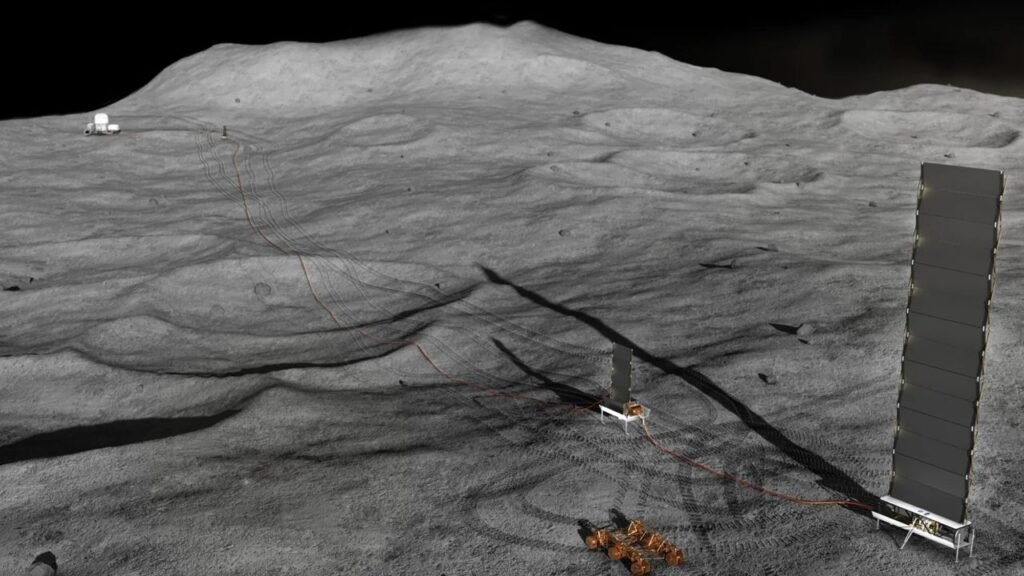

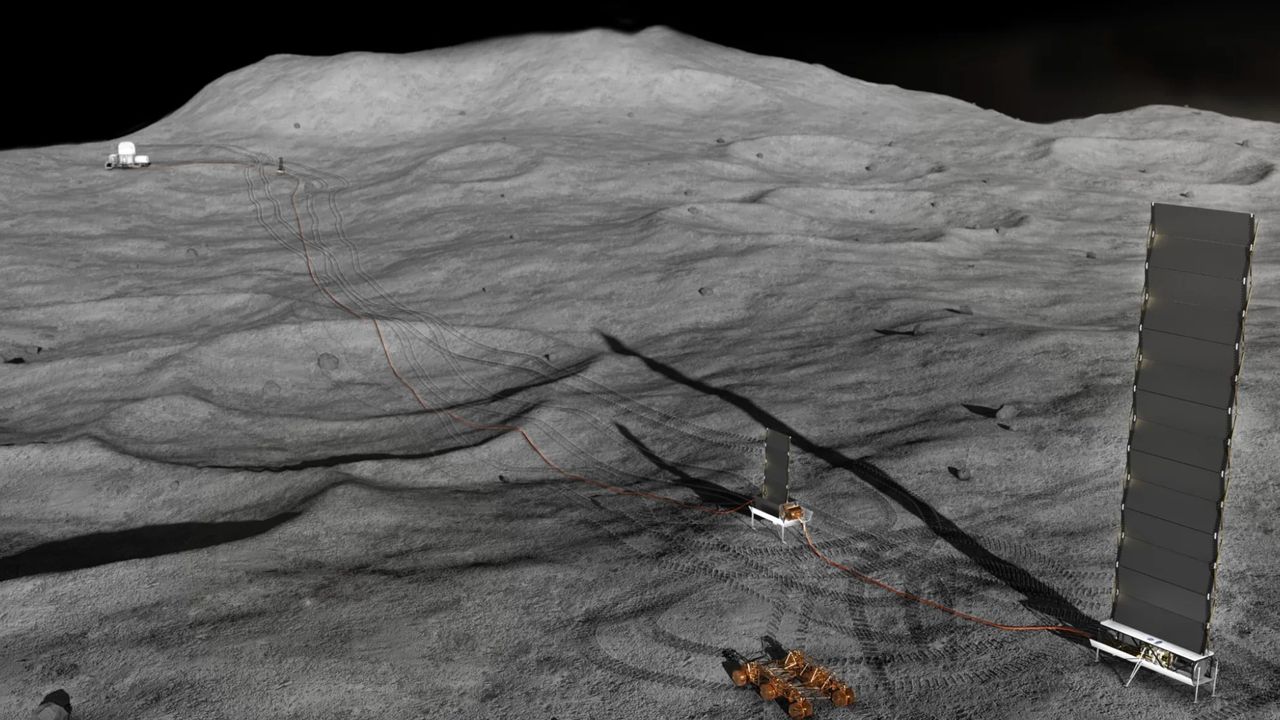
A Renewed Commitment Ignites Lunar Dreams (Image Credits: Cdn.mos.cms.futurecdn.net)
NASA and the U.S. Department of Energy have solidified their collaboration to deliver nuclear energy to the lunar surface, marking a pivotal step in America’s space ambitions.
A Renewed Commitment Ignites Lunar Dreams
The partnership between NASA and the Department of Energy took a firm turn on January 13, 2026, when the two agencies signed a memorandum of understanding aimed at developing a fission surface power system for the moon by 2030.
This agreement builds on years of joint efforts to harness nuclear technology for space exploration. Officials emphasized the need for reliable power sources to support sustained human presence on the lunar surface. The initiative aligns with broader goals under the Artemis program, which seeks to establish bases for astronauts. NASA Administrator Bill Nelson highlighted the urgency, stating that achieving this future requires harnessing nuclear power. The memorandum reaffirms a shared vision to launch a reactor toward the moon by the end of the decade. Such a system would provide continuous energy, essential for long-term missions.
Why Nuclear Fission Beats Solar on the Moon
Nuclear reactors offer a game-changing advantage over solar panels in the moon’s harsh environment, where long nights and dust storms disrupt sunlight for weeks at a time.
Engineers have designed the proposed reactor to generate about 40 kilowatts of power, enough to sustain life support, scientific experiments, and habitat operations without interruption. Unlike solar arrays, which falter during the lunar night’s two-week duration, a nuclear system operates autonomously for up to 10 years without refueling. This reliability proves crucial for powering rovers, communication equipment, and resource extraction tools. The technology draws from advanced fission designs that minimize size and weight for space travel. Deployment would involve launching the compact unit from Earth, followed by robotic assembly on the surface. Experts note that this approach not only ensures energy security but also paves the way for similar systems on Mars.
Navigating Challenges in the Global Space Race
While the U.S. accelerates its timeline, international competitors like China and Russia pursue parallel nuclear plans, raising stakes in what could become a new frontier of geopolitical tension.
The Trump administration’s executive order earlier directed NASA to prepare for lunar base construction by 2030, with nuclear power as a cornerstone. However, budget constraints and technical hurdles have sparked concerns among scientists about feasibility. Recent NASA funding cuts complicate the path forward, yet the memorandum signals strong political backing. China has advanced its own lunar reactor concepts, aiming for deployment by the decade’s end, while Russia collaborates on similar initiatives. U.S. officials worry that the first nation to establish such infrastructure might claim strategic advantages, potentially creating restricted zones on the moon. To counter this, NASA focuses on international cooperation under existing space treaties.
The competition underscores the need for clear rules on lunar resource use. Nations including India and Japan also eye permanent settlements, intensifying the rush.
Key Milestones and Technological Foundations
NASA’s pursuit of lunar nuclear power traces back to demonstrations planned as early as 2023, evolving from initial concepts in 2021.
- 2021: NASA and DOE first announced collaboration for a moon-based nuclear plant.
- 2023: Agency outlined a 40-kilowatt system with a 10-year lifespan for various lunar sites.
- 2025: Acting NASA head accelerated plans amid rivalry with China and Russia.
- 2026: MoU signed to meet the 2030 launch deadline.
These steps reflect incremental progress in fission technology tailored for space. The reactor’s design emphasizes safety, with features to contain radiation and withstand lunar conditions. Testing on Earth will precede any launch, ensuring operational readiness. This foundation supports not just immediate Artemis missions but also deeper exploration into the solar system.
Key Takeaways
- The U.S. aims to launch a 40-kilowatt nuclear reactor to the moon by 2030 for reliable power.
- Partnership with DOE addresses solar limitations during lunar nights.
- Global race with China and Russia heightens urgency for international guidelines.
As NASA pushes toward a nuclear-powered lunar future, the success of this endeavor could redefine human expansion beyond Earth, offering a blueprint for sustainable off-world living. What aspects of lunar exploration excite you most? Share your thoughts in the comments.