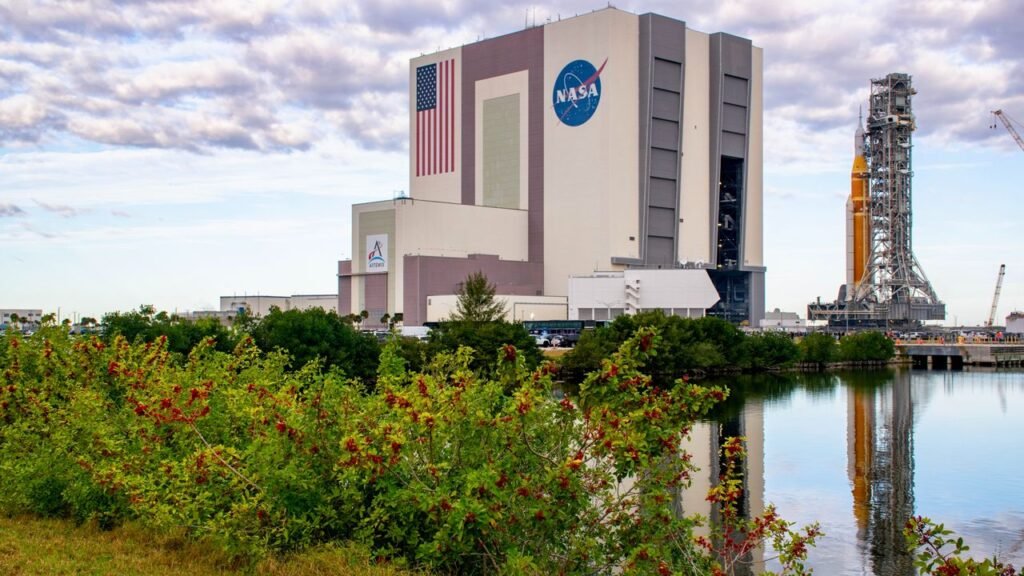

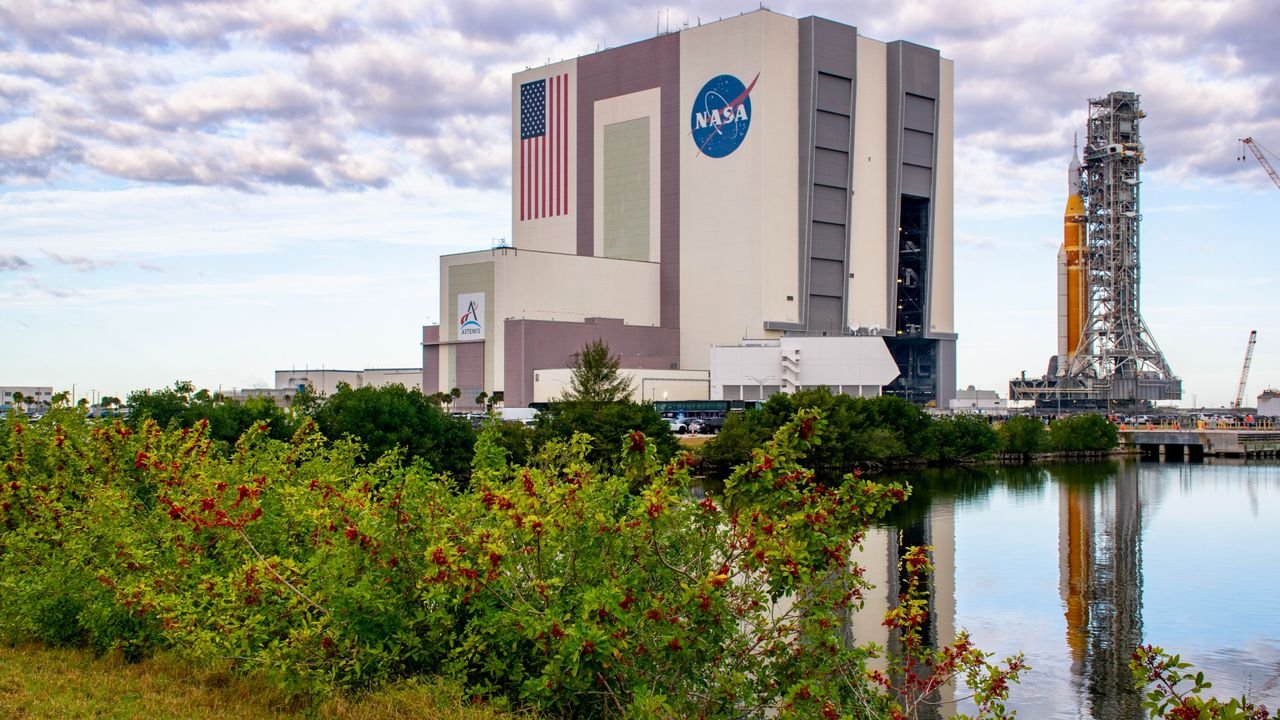
Rocket Reaches Launch Pad on Fast Track (Image Credits: Cdn.mos.cms.futurecdn.net)
Kennedy Space Center, Florida – NASA engineers progressed ahead of schedule toward a pivotal fueling test for the Artemis II Space Launch System rocket, now set for as early as January 31.[1][2]
Rocket Reaches Launch Pad on Fast Track
The fully stacked SLS rocket and Orion spacecraft rolled out from the Vehicle Assembly Building to Launch Complex 39B on January 17. Teams quickly secured the mobile launch platform and integrated it with ground infrastructure. Recent activities included servicing the solid rocket boosters with hydrazine, checking the core stage’s four RS-25 engines, and preparing Orion’s systems.[3]
Engineers also addressed minor issues, such as adjusting brakes on the emergency crew escape baskets after tests showed incomplete descents. Pad electrical tests and hypergolic propellant loading proceeded smoothly. These steps positioned the program for the wet dress rehearsal well ahead of initial projections, which targeted no later than February 2.[2]
Inside the High-Stakes Wet Dress Rehearsal
Ahead-of-schedule preparations mark a bold step for Artemis II, the first crewed SLS flight since the program’s inception. The wet dress rehearsal simulates a full launch countdown without astronauts aboard. Technicians will load more than 700,000 gallons of cryogenic propellants—liquid hydrogen and liquid oxygen—into the core stage and boosters, bringing the rocket’s weight to about 5.75 million pounds.[1]
Operations begin around January 29, aiming for a simulated liftoff at 9 p.m. EST on January 31. The countdown runs to T-33 seconds, holds, then resets for additional practice runs to T-30 seconds, testing holds, scrubs, and recycles in the terminal count phase. NASA will stream the event live.[3]
- Fuel loading starts roughly 49 hours before simulated T-0.
- First run proceeds to T-1:30, holds three minutes, resumes to T-33.
- Second run recycles to T-10, holds, advances to T-30.
- Propellants offloaded safely post-test.
- Multiple iterations verify team readiness.
Overcoming Past Hurdles and Cold Weather
Artemis I encountered fueling leaks during its four wet dress rehearsals, prompting three rollbacks to the assembly building for fixes. NASA addressed those challenges for this mission, instilling confidence in the current stack. Still, success remains crucial, as any issues could require similar rollbacks.[1]
Unusually cold temperatures gripped Florida this week, dipping near freezing at the space center. Technicians bolstered environmental controls to protect Orion and SLS components, recalling the 1986 Challenger disaster tied to cold-compromised seals. These precautions underscore NASA’s focus on safety amid atypical weather.[2]
Artemis II Crew Gears Up for Historic Flight
The four-astronaut crew entered quarantine in Houston on January 23 to prepare for launch. Commander Reid Wiseman, pilot Victor Glover, mission specialist Christina Koch, and Canadian Space Agency mission specialist Jeremy Hansen will fly a 10-day lunar flyby. This marks humanity’s return to the moon’s vicinity since Apollo 17 in 1972, with potential to venture farther from Earth than any prior crew.[3]
A successful test could clear the path for liftoff no earlier than February 6, within early February windows or later backups. The free-return trajectory ensures a safe loop around the moon back to Earth. Ongoing checks, like Orion’s potable water sampling, confirm crew readiness.[1]
Key Takeaways
- Wet dress rehearsal tests fueling and countdown for Artemis II’s SLS rocket.
- Targets January 31, loading over 700,000 gallons of cryogenics.
- Paves way for crewed lunar flyby potentially in early February.
A flawless rehearsal would propel NASA toward resuming lunar exploration, building momentum for Artemis III’s surface landing in 2028. As teams monitor weather and systems closely, the agency’s methodical approach prioritizes precision over haste. What do you think about the Artemis program’s progress? Tell us in the comments.