
There is something almost cinematic about the idea of the ground simply opening up beneath your feet and exposing a world that nobody alive has ever seen. Sinkholes, long dismissed as geological inconveniences or roadway hazards, have quietly been doing something far more extraordinary across the Americas. They are pulling back a curtain on ancient civilizations, sacred rituals, and even the very first humans to walk the continent.
From the jungle-draped Yucatán Peninsula in Mexico to the limestone plateaus stretching across Belize and beyond, these dramatic ruptures in the earth are forcing archaeologists to completely rethink what they thought they knew about ancient American life. Some of what you’re about to read will genuinely surprise you. Let’s dive in.
What Exactly Are Sinkholes, and Why Are the Americas Full of Them?
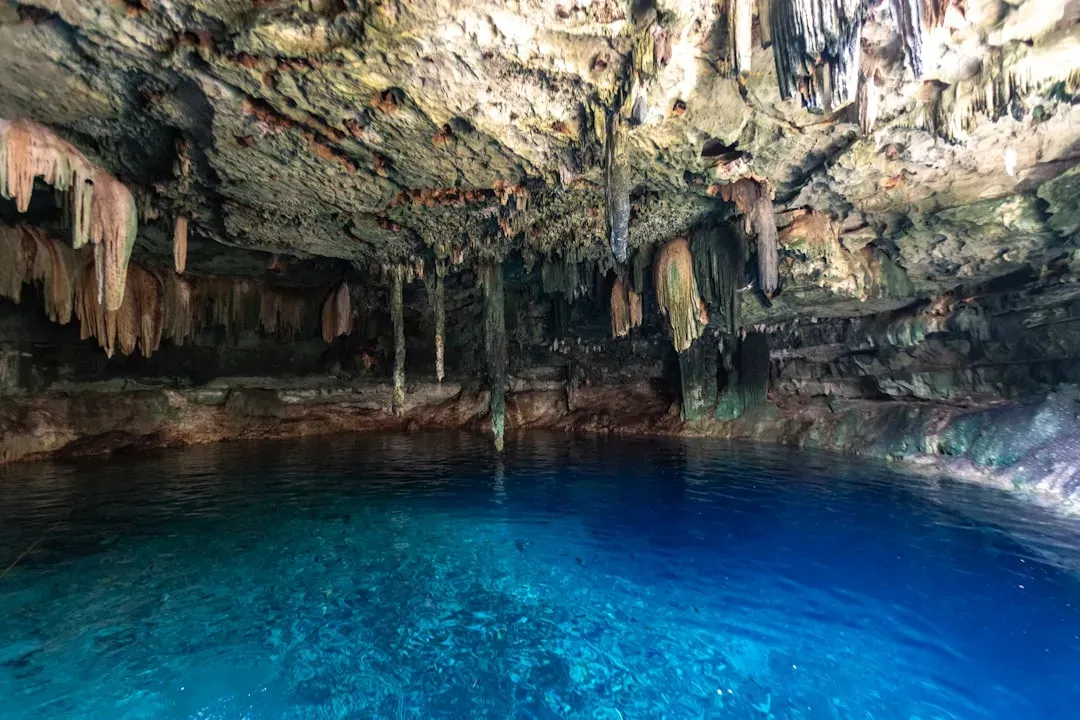
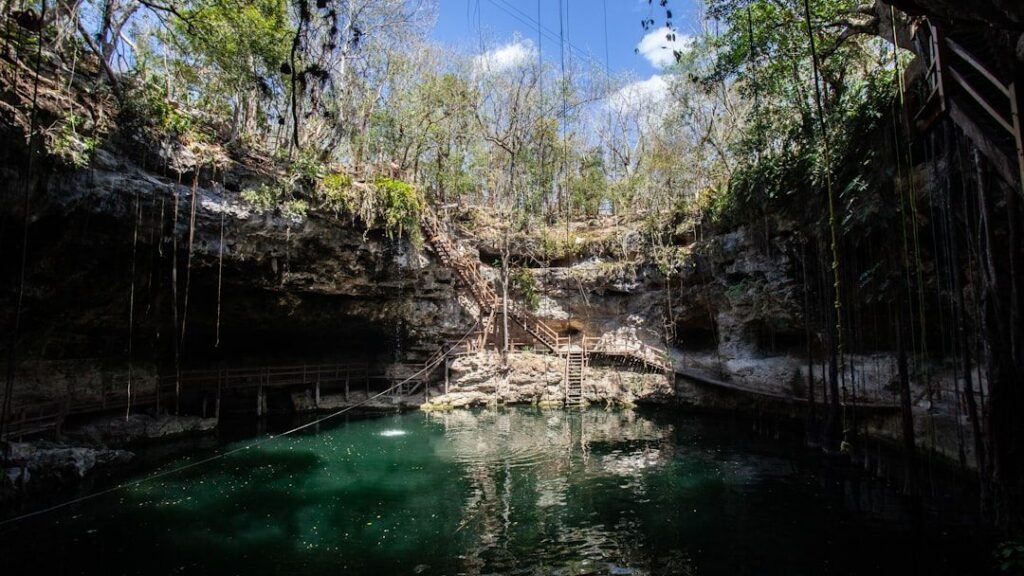
You might picture a sinkhole as the sort of thing that swallows a parked car whole on a Tuesday morning in Florida, and, honestly, that is not entirely wrong. A cenote, which is essentially a natural sinkhole, results when a collapse of limestone bedrock exposes groundwater beneath the surface. It sounds simple enough, but the consequences of that geological event are staggering.
The Yucatán Peninsula alone has an estimated 10,000 cenotes, water-filled sinkholes naturally formed by the collapse of limestone and located across the peninsula. Think about that number for a moment. Ten thousand natural openings into the underworld, each one potentially holding secrets that have been sealed in perfect cold darkness for thousands of years. It’s like having ten thousand locked vaults scattered across the jungle.
Millions of years ago, the Yucatán Peninsula was a giant reef set under several feet of ocean water. During the ice ages, the ocean level dropped, exposing the reef to the surface. The coral died, and jungle grew over the mile-thick limestone platform created by the reef. That ancient limestone, riddled with pores and underground rivers, became the perfect foundation for one of the most extraordinary natural sinkhole systems on Earth.
Massive cave systems were formed by the gradual dissolving of the highly porous coral limestone. When the sea level went down due to the ice ages, the aquifer level fell as well, leaving behind a cavity or cave filled with air. Some sections of the rock roof collapsed due to a lack of strength, forming a cenote. Cenotes are the windows formed in the caves to the outside.
The Asteroid That Accidentally Built a Civilization’s Water Supply
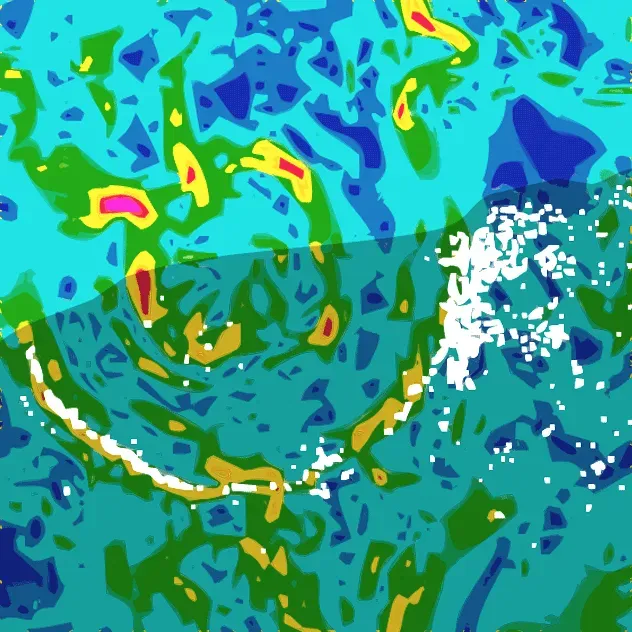
Here’s the thing that I genuinely find mind-bending. The very event that wiped out the dinosaurs roughly 66 million years ago also, indirectly, created the water network that allowed one of the greatest ancient civilizations of the Americas to flourish. Around 66 million years ago, the asteroid that formed the Chicxulub Crater not only triggered a mass extinction but also played a key role in shaping one of the most iconic geological features of the Yucatán Peninsula: the cenotes. These stunning natural sinkholes, which dot the landscape of the peninsula, are a direct consequence of the asteroid’s impact.
One of the most fascinating features left by the Chicxulub impact is the Ring of Cenotes, a semicircular alignment of cenotes that closely follows the outer rim of the crater. This ring is believed to have formed because the asteroid impact fractured the ground in a circular pattern. Scientists working alongside NASA confirmed that these formations trace the very edge of the ancient crater. You are, quite literally, looking at the fingerprint of an apocalypse.
The resultant crater, called the Chicxulub crater, is a 180-kilometer-wide sedimentary basin, which appears to have contributed to the development of a highly desirable environment for living in a region where easily accessible surface water would otherwise be all but nonexistent. For the Maya, this was not a geological curiosity. It was survival itself.
The ancient Maya who occupied much of Mesoamerica were no exception to the universal rule that civilizations follow water. They located settlements near rivers, caves, and cenotes, and modified the landscape by creating wells, cisterns, and culturally modified lakes. An asteroid killed the dinosaurs, fractured the ground, and, millions of years later, handed the Maya a water system. You really could not make that up.
Sacred Portals to the Underworld: How the Maya Saw These Sinkholes
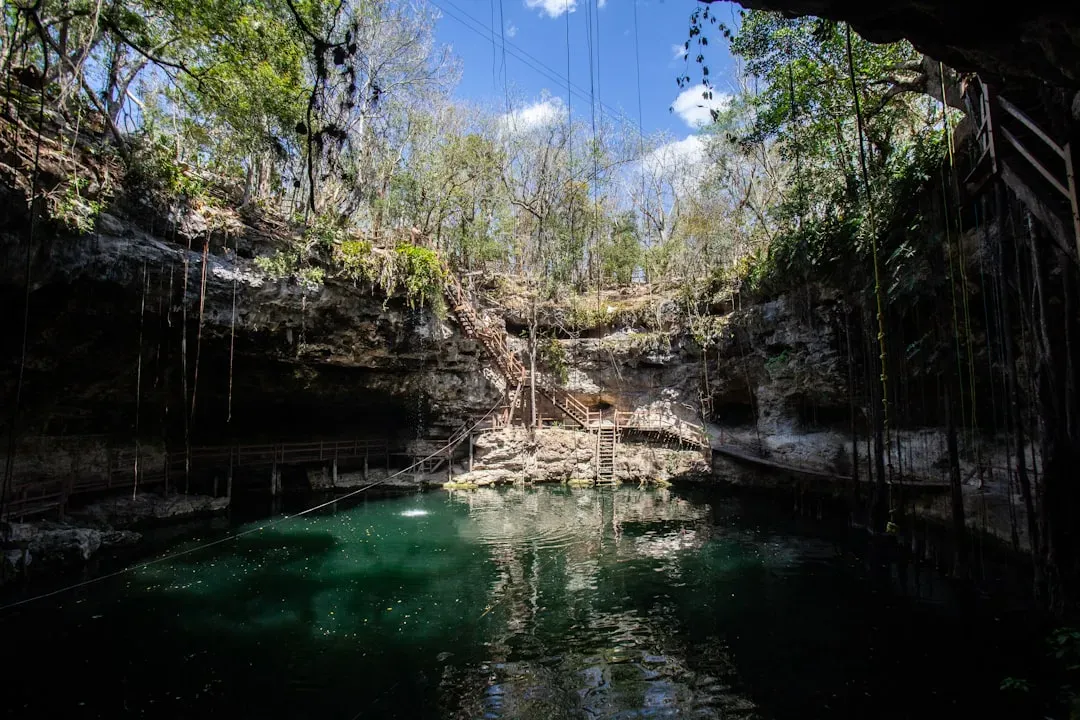
The Maya believed that cenotes were portals to Xibalba or the afterlife, and home to the rain god, Chaac. The Maya often deposited human remains as well as ceremonial artifacts in these cenotes. This wasn’t just metaphor or poetic belief. It shaped the physical layout of entire cities, the direction of walls, and the location of temples.
Cenotes were important to the Maya from the earliest times until the present, both as water sources and as places charged with symbolic meaning. The variety of water symbolism and gods associated with cenotes shows that the ancient Maya viewed water ritual as central to their belief system, and practiced their rituals at specific areas like cenotes where underworld connections would be the most potent.
The most famous cenote is the Sacred Cenote at the Maya site of Chichén Itzá, located in the state of Yucatan, Mexico. Chichén Itzá dates from the Late or Terminal Classic period of Maya prehistory, circa A.D. 800, to the end of the Early Postclassic, circa A.D. 1250. For centuries, pilgrims traveled across the entire Maya world to reach this particular sinkhole. That tells you something profound about how seriously these people took what lay beneath their feet.
The Sacred Cenote was a pilgrimage destination for many centuries, and has yielded large quantities of artifacts and human remains that were offered to the cenote by the ancient Maya people who practiced rituals there. Archaeologist Edward Herbert Thompson began dredging the Sacred Cenote back in 1904 and the sheer volume of what he pulled up confirmed local legends that had been whispered for generations.
A 12,000-Year-Old Girl and What Her Bones Told the World
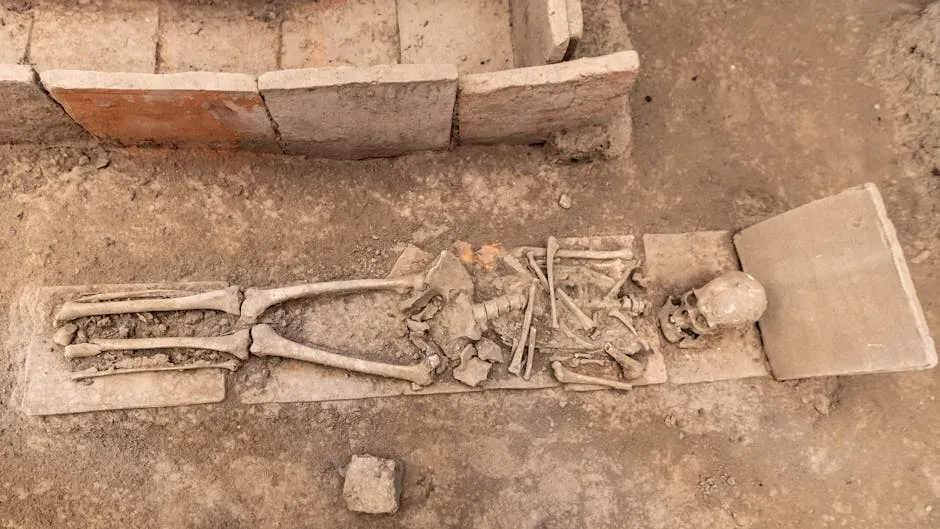
If you want a single discovery that demonstrates just how transformative sinkhole archaeology can be, the story of Naia is it. Naia is the name given to a 12,000 to 13,000-year-old Paleo-Indian teenage girl whose skeleton was found in the Yucatán Peninsula, Mexico. Her bones were part of a 2007 discovery in a cenote called Hoyo Negro, Spanish for “Black Hole.” At the time of Naia’s death, the cave system was mostly dry, and she likely died falling into Hoyo Negro.
The remains have been described as the “oldest, most complete and genetically intact human skeleton in the New World.” That is not a small claim. That is the kind of claim that reshapes entire academic fields overnight. In addition to the near-complete human skeleton, the researchers found the remains of 26 large mammals, including sabertooths and elephant-like animals called gomphotheres. Imagine diving into darkness and finding that.
Scientists were able to analyze mitochondrial DNA taken from one of Naia’s wisdom teeth to reveal that her ancestry derived from an Asian genetic lineage only seen in Native Americans. For the first time, Naia’s remains presented hard evidence to support the theory that Native Americans descended from Siberians who crossed into America via a land bridge over the Bering Strait. A teenage girl who fell into a sinkhole twelve millennia ago answered one of archaeology’s most contested debates.
Deep beneath the tropical forests of the Yucatán Peninsula lies a vast subterranean domain few people can explore. Accessible by sinkholes known as cenotes and potentially stretching across thousands of kilometers underground, these are the world’s most extensive underwater cave systems. Their tunnels are dark and flooded now, but they were dry at times during the Late Pleistocene, roughly 126,000 to 11,700 years ago. Proof that humans and animals once roamed deep within these tunnels rests in fossils and traces of human activity that have been undisturbed for millennia.
Hidden Canoes, Murals, and Ritual Knives Beneath the Surface
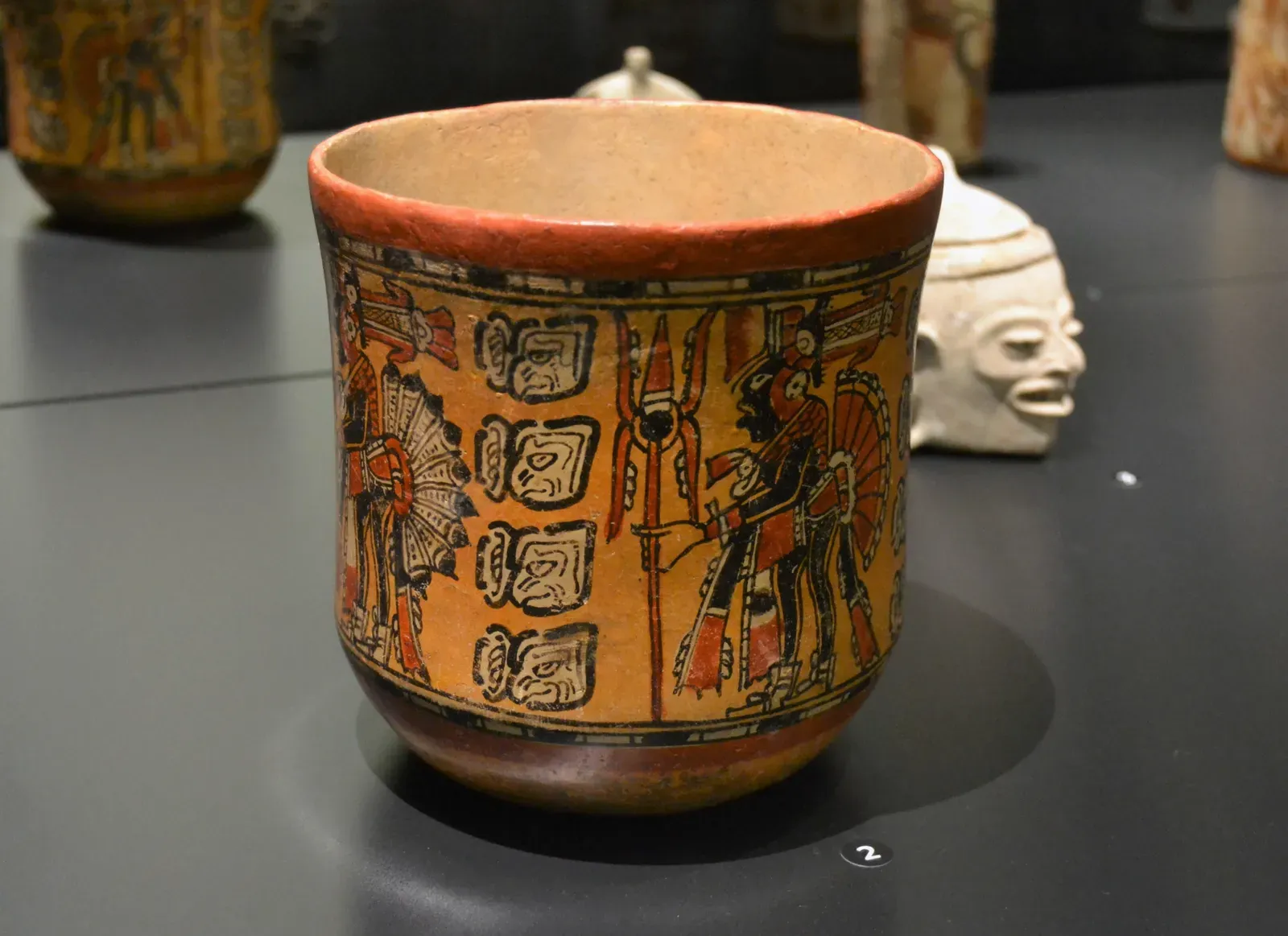
The Hoyo Negro discovery was extraordinary, but it is far from the only remarkable find pulled from these submerged worlds. Submerged at the bottom of a cenote in an archaeological site called San Andrés near the ancient Maya city of Chichen Itza, divers with the National Institute of Anthropology and History found an intact and well-preserved Maya canoe, estimated to be over 1,000 years old. A thousand-year-old wooden boat, perfectly preserved, sitting silently at the bottom of a sinkhole. That is the kind of discovery that makes archaeologists stop breathing for a second.
In addition to the canoe, recent explorations of the San Andrés site’s water bodies revealed a number of other finds, including skeletal remains, a mural painted on the walls of the cavern, a rocky monument called a stele, broken pottery fragments, and a ritual knife. Taken together, these objects paint a picture of a place where ceremony and reverence were deeply embedded into Maya life. This was not just a water source. It was a cathedral.
The wooden canoe was partially buried in the sand at the bottom of the sinkhole under 15 feet of water. Microplastic contamination at the site complicated radiocarbon dating, which is a sobering reminder that even in seemingly untouched places, the modern world eventually seeps in. The researchers have been studying 3D models of the canoe to learn more about its design characteristics, making sure to only extract tiny samples of wood for analysis.
Particularly in the area of the Ring of Cenotes, many sacrificial cenotes hold skulls of the higher-ranking Maya families. Along with modified front teeth to host ornaments, these skulls were artificially deformed to create a physical distinction. Even in death, social hierarchy was preserved in stone-dark water. The detail is both fascinating and quietly unsettling.
The Elongated Skulls and Haunted Cenotes That Still Raise Questions
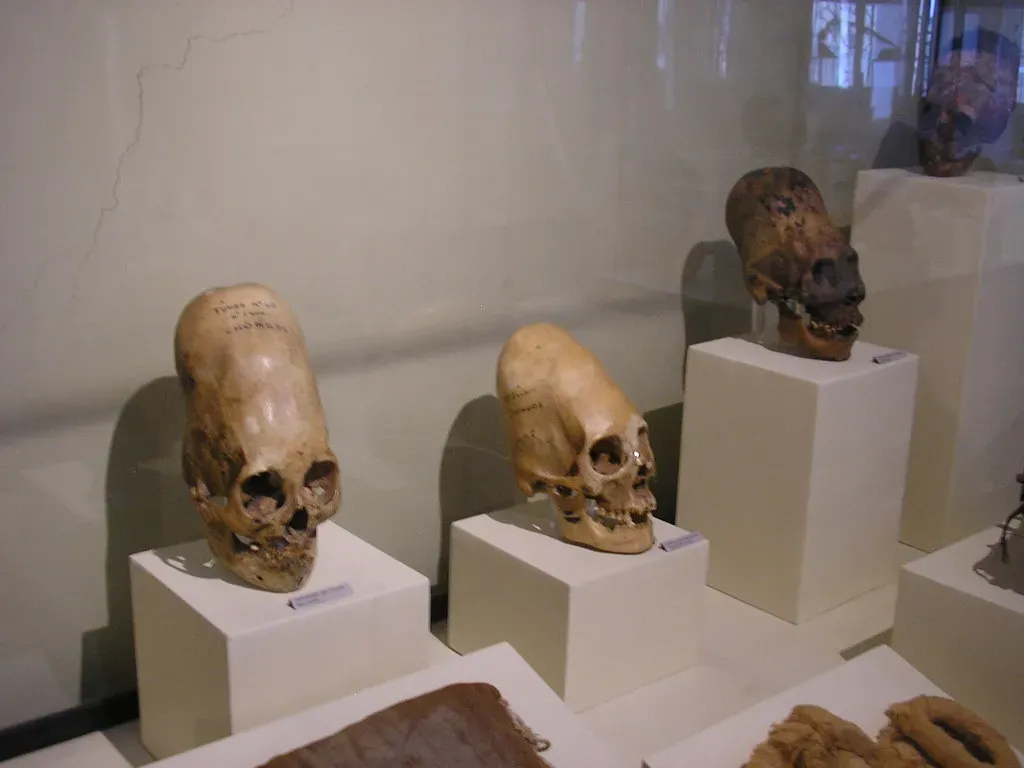
Not every discovery from these sinkholes fits neatly into our existing understanding of ancient Maya life. Some discoveries raise questions that researchers are still working hard to answer. A flooded sinkhole in southern Mexico that terrifies local villagers was recently explored by underwater archaeologists, who found the submerged cavern littered with elongated skulls and human bones. The underwater cavern, known as Sac Uayum, is a cenote located in Mexico’s Yucatán Peninsula.
The skulls and remains have been found to belong to males and females, adults and teenagers, but the question that still remains unanswered is what were they doing there? Most residents of Mayapán were buried under or near their houses, so this wasn’t a normal cemetery. This wasn’t a random dumping ground either. The location itself seems deliberate and charged with meaning.
The cenote lies to the south of Mayapán, the direction that the Maya associated with the underworld, humankind’s mythical place of origin, known as Xibalba. The dead might have been buried here to await the next cycle of creation. Alternatively, researchers suggest they could have been plague victims. Two radically different explanations, separated by ritual belief on one side and biological catastrophe on the other. It’s hard to say for sure which is correct, and perhaps that ambiguity is exactly what makes sinkhole archaeology so endlessly compelling.
The cenote sits just outside the ruins of the ancient Maya city of Mayapán, about 25 miles south of Mérida, the capital of the Mexican state of Yucatán. In its heyday, between 1150 and 1450, Mayapán was a major political center with at least 17,000 residents. A city of seventeen thousand people, and somebody deliberately built their walls to exclude this particular sinkhole. That is not an accident. That is a statement.
Conclusion: The Ground Beneath Our Feet Still Has Stories to Tell
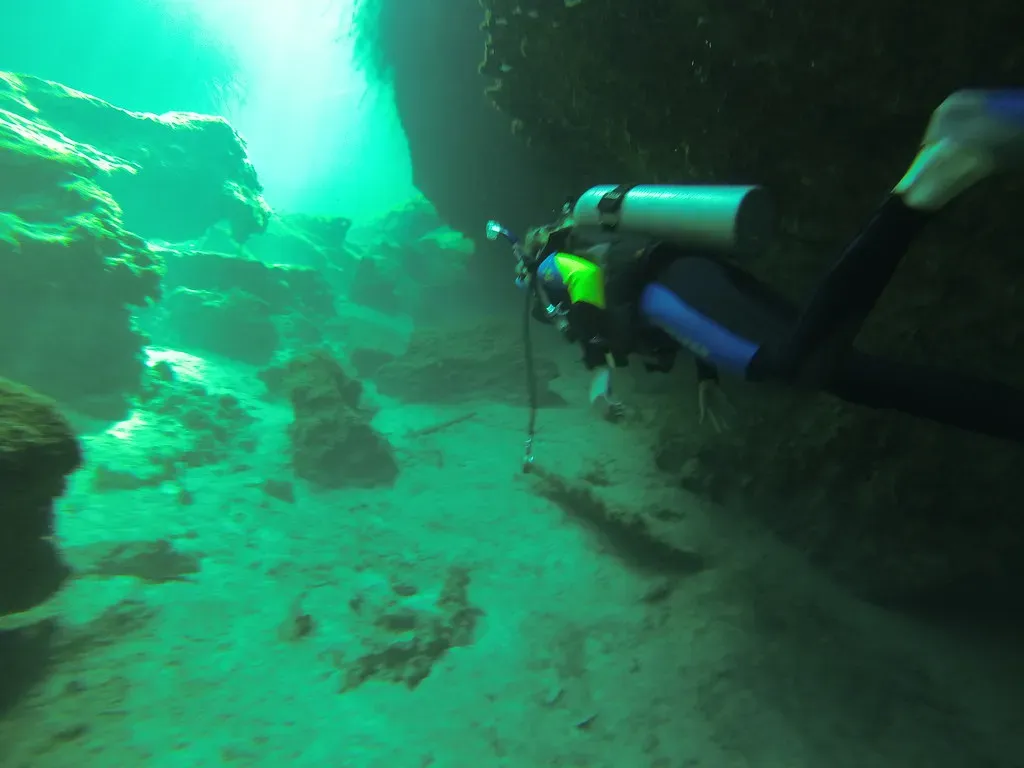
What is genuinely remarkable about sinkhole archaeology in the Americas is that we are still very much at the beginning. Researchers at Mexico’s National Institute of Anthropology and History have expressed hope that discoveries like Hoyo Negro will set an example on how to approach, respectfully and professionally, the thousands of sinkholes and inundated caves that exist across the Yucatán Peninsula. “Many of them contain invaluable prehistoric and pre-Hispanic remains.”
Deep beneath the tropical forests of the Yucatán Peninsula lies a vast subterranean domain few people can explore, accessible by sinkholes known as cenotes and potentially stretching across thousands of kilometers underground. Every new dive, every 3D scan, every DNA extraction pulls another fragment of truth from the darkness. LiDAR keeps scanning jungles, drones dive ever deeper, and DNA analysis rewrites the genealogy of ancient peoples.
Let’s be real. The idea that a collapsed ceiling of limestone could preserve a teenager from the Ice Age, a thousand-year-old wooden canoe, and the skulls of an ancient civilization all at once is almost too extraordinary to absorb sitting at a desk. These sinkholes are not just geological features. They are time capsules, and we are only just learning how to open them carefully.
The next great chapter in understanding who first walked the Americas may not come from a hillside dig or a jungle survey. It may come from a diver descending into the cool, crystalline darkness of a sinkhole nobody has touched in centuries. What do you think they will find next? Drop your thoughts in the comments.