
Ever catch yourself staring at the night sky, wondering if everything you know about reality is just a tiny fraction of what’s actually out there? Here’s the thing: the universe operates in ways that challenge our most basic assumptions about existence. Physics has uncovered concepts so bizarre that they make science fiction look tame.
The rules governing the cosmos at its most fundamental levels are nothing like the predictable world we experience every day. From particles that refuse to follow common sense to the very fabric of reality bending under the weight of massive objects, these discoveries force us to rethink everything. You’re about to encounter ideas that might make you uncomfortable. Good. That discomfort means you’re grappling with how strange our universe truly is.
Wave-Particle Duality: When Reality Refuses to Pick a Side
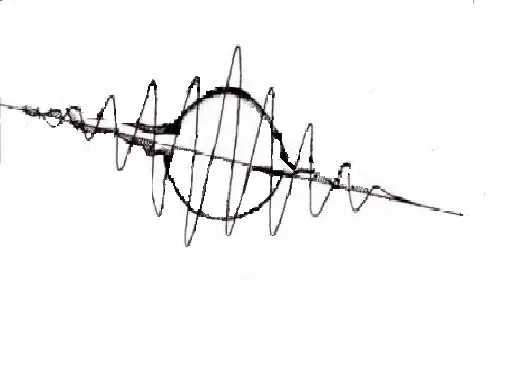
You might assume that things in nature are either particles or waves, but quantum mechanics reveals that fundamental entities like photons and electrons exhibit properties of both, depending on how you observe them. This wave-particle duality is the most fundamental description of the nature of a quantum object, which behaves like a classical particle or wave depending on the measurement apparatus. It’s not that we haven’t figured out which one they really are. They genuinely are both.
Think about light passing through water droplets to create a rainbow versus light hitting a solar panel. When light passes through water droplets, it acts like waves that form beautiful patterns of a rainbow, but when light hits a solar panel, it acts like a particle. The famous double-slit experiment drives this home in an unsettling way. The electron double slit experiment demonstrates wave interference revealed a single particle at a time, showing that quantum mechanical electrons display both wave and particle behavior.
Quantum Entanglement: Einstein’s Spooky Action That Actually Exists
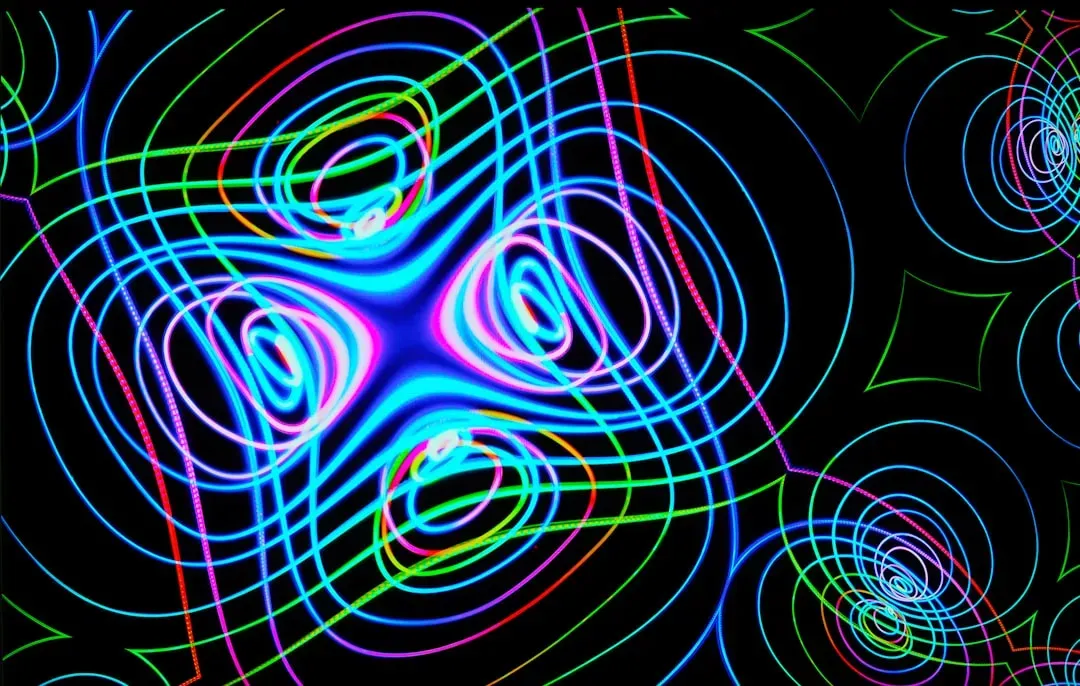
One of the strangest predictions of quantum mechanics is that particles can become entangled so that even after they are separated in space, when an action is performed on one particle, the other particle responds immediately. Einstein himself was deeply uncomfortable with this, famously calling it spooky action at a distance. Yet experiments have repeatedly confirmed its reality.
When quantum particles become entangled, the state of one particle instantaneously influences another, no matter the distance. Imagine two coins that always land on opposite sides, even if you flip one on Earth and the other on Mars. Entanglement and superposition are used in many newer quantum technologies, and quantum bits that are entangled with each other have a potential quantum advantage that can allow them to solve calculations much faster than classical computers. The implications for technology are staggering, but the philosophical implications? Even more so.
Superposition: The Universe’s Refusal to Make Up Its Mind
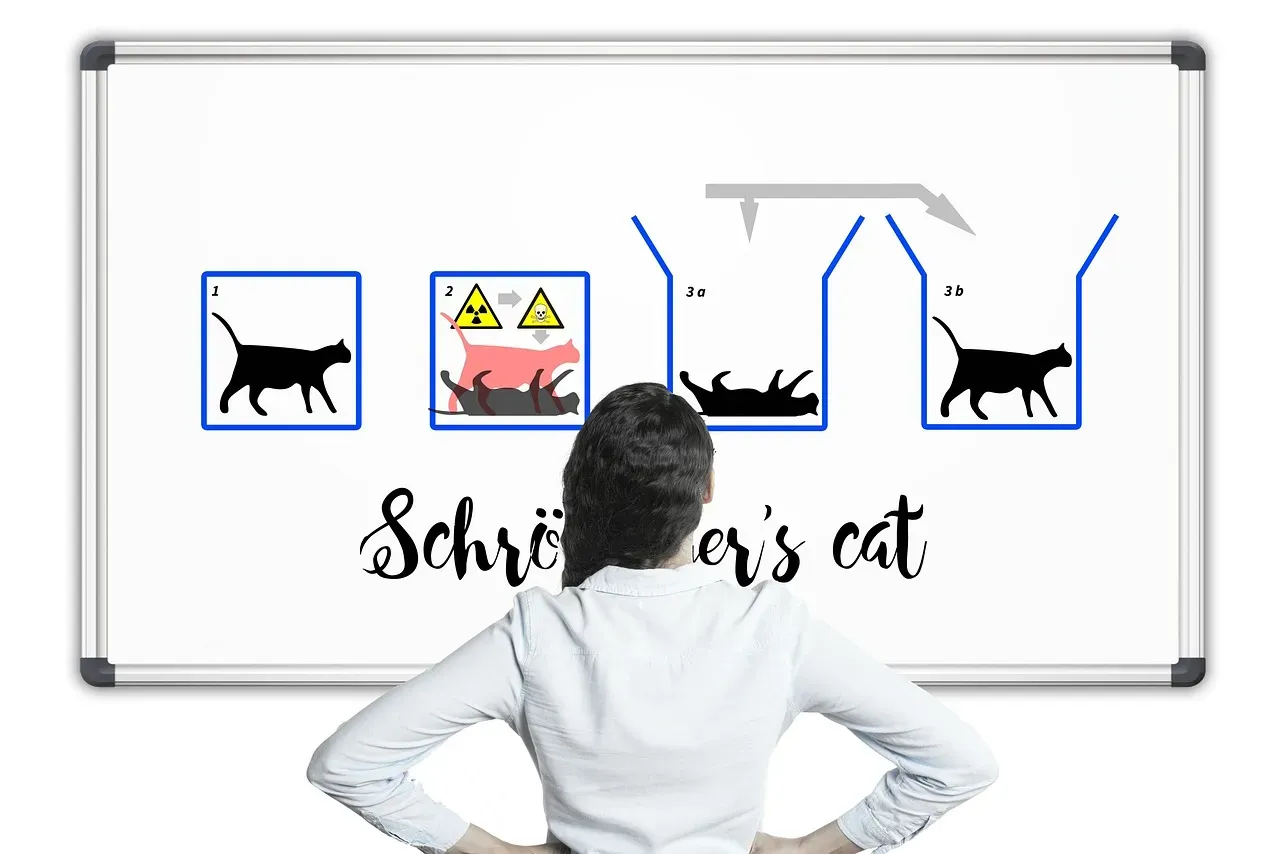
Honestly, superposition might be the concept that best captures quantum weirdness. Quantum particles can exist in multiple states or positions simultaneously, a phenomenon known as superposition that leads to bizarre scenarios where particles seem to be in multiple places at once until observed. Let’s be real: this sounds like nonsense. Yet it’s been verified countless times.
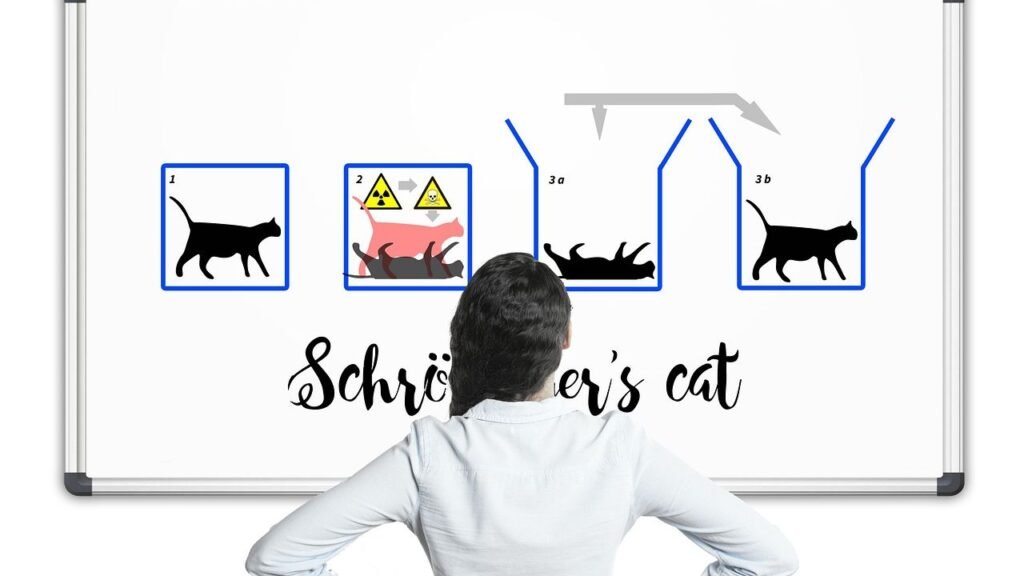
Superposition is famously illustrated by Schrödinger’s Cat thought experiment, where a cat in a box is both alive and dead at once until you open the box. Only when observed does the quantum system collapse into one state. At the quantum level, particles like electrons or photons can exist in multiple states at once, and for example, a particle can be in two different energy states simultaneously until it is measured. The measurement itself fundamentally changes reality.
The Fabric of Spacetime: Reality Isn’t a Stage, It’s a Player
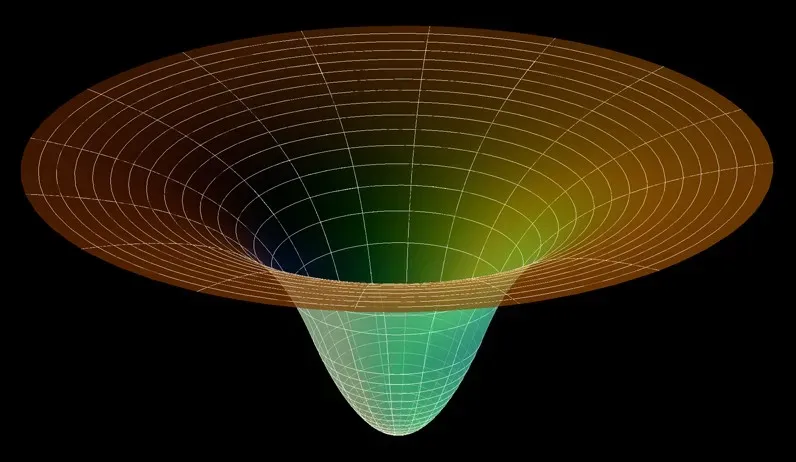
Albert Einstein’s theory of general relativity is based on the idea that massive objects cause a distortion in space-time, which is felt as gravity. Stop thinking of space as an empty container where events happen. Spacetime is a mathematical model that fuses the three dimensions of space and the one dimension of time into a single four-dimensional continuum.
Objects like stars, planets, and black holes make space-time curve in upon itself, just as an elastic fabric holding a ball would do, with more massive objects creating deeper curves. Picture a trampoline with a bowling ball in the center. Smaller objects roll toward it not because the ball is pulling them, but because the trampoline’s surface is warped. Einstein realized that the force of gravity was due to curves in the fabric of space-time, and massive objects create distortions that cause it to bend. Your weight right now is you following the curved geometry of spacetime.
Quantum Tunneling: Breaking Through Impossible Barriers
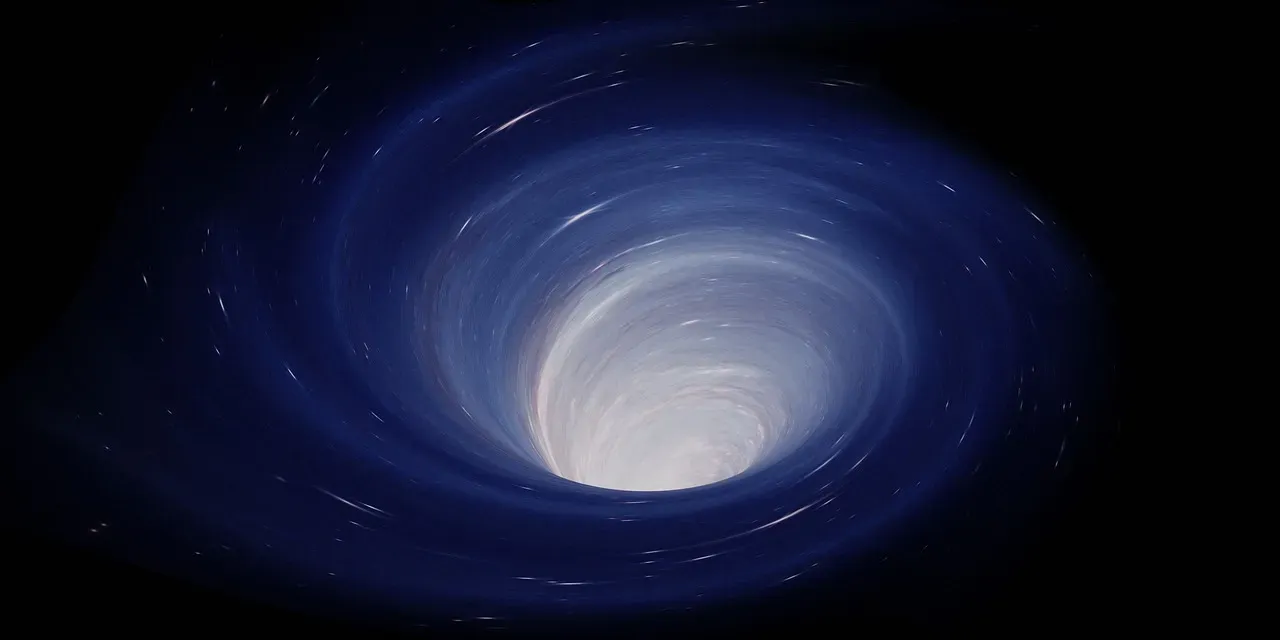
Classical physics says if you don’t have enough energy to climb over a wall, you’re stuck. Quantum mechanics laughs at that limitation. Quantum particles can tunnel through energy barriers that classical physics suggests should be impenetrable, a phenomenon critical in explaining how particles like protons can fuse in the sun despite lacking sufficient kinetic energy.
It’s hard to say for sure, but quantum tunneling might be one of the most consequential quantum effects in everyday life. A quantum particle described by a wave function has a non-zero probability of crossing a classically impossible barrier, and natural systems in plant biology, human physiology, stellar physics and much more are reliant on tunneling. Without this bizarre rule, the sun wouldn’t shine. Your existence depends on particles routinely achieving the impossible.
The Heisenberg Uncertainty Principle: Nature’s Built-In Fuzziness
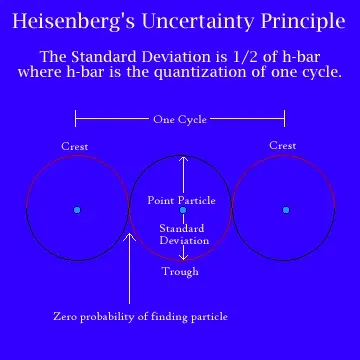
The Heisenberg Uncertainty Principle states that we cannot simultaneously know a particle’s exact position and momentum, with the more precisely we measure one, the less precisely we can measure the other. This isn’t about our measuring instruments being imperfect. It’s a fundamental limit built into reality itself.
The energy is in constant translation between space and time components and does not exist simultaneously in either one, and this complementarity is what Quantum Mechanics recognizes as uncertainty. Nature refuses to let us pin down certain pairs of properties simultaneously. If you travel near the speed of light or experience intense gravity, time will move slower for you compared to someone else, and this has been proven using highly accurate atomic clocks. The universe seems designed to keep some secrets, no matter how clever our experiments become.
Conclusion: Reality Is Stranger Than We Imagined
These six concepts represent more than just abstract physics equations. They fundamentally reshape our understanding of what reality is. The universe doesn’t operate according to the intuitive rules we’ve developed from everyday experience. Particles are simultaneously waves. Distant objects remain mysteriously connected. Things exist in multiple states until we look at them.
General relativity teaches us that the geometry of space and time is determined by gravity, so when we talk about the quantum behavior of gravity, we’re really talking about the quantum behavior of spacetime. The deeper physicists probe into the fundamental nature of reality, the weirder it gets.
Here’s the truly mind-bending part: these aren’t philosophical musings or mathematical curiosities. Every one of these concepts has been experimentally verified and forms the foundation for technologies you use daily. Your smartphone, GPS, medical imaging, and countless other innovations rely on physics that defies common sense. What does that tell you about how much we still don’t understand? The universe has shown us repeatedly that it’s far stranger than we could have imagined. What do you think we’ll discover next?