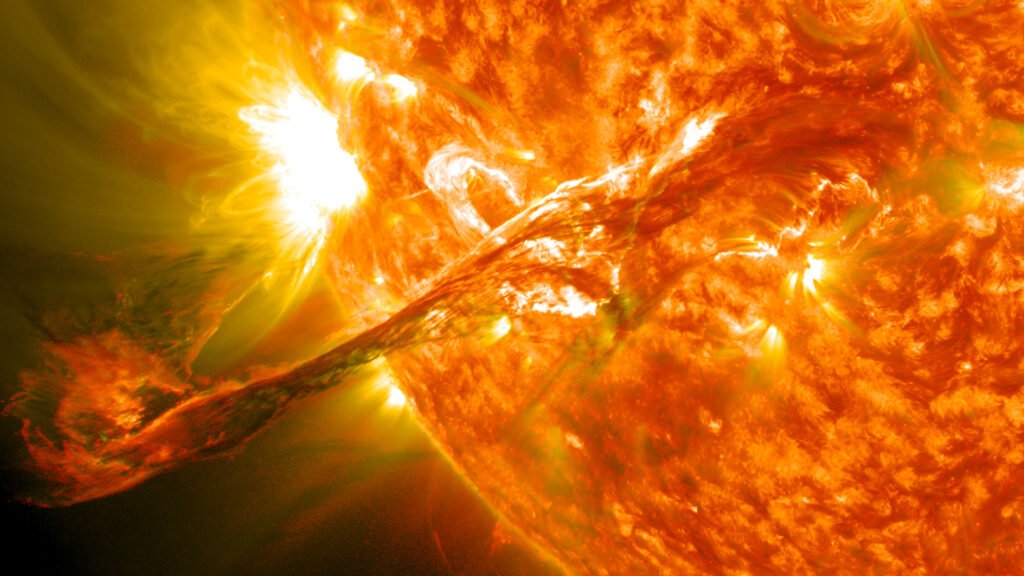

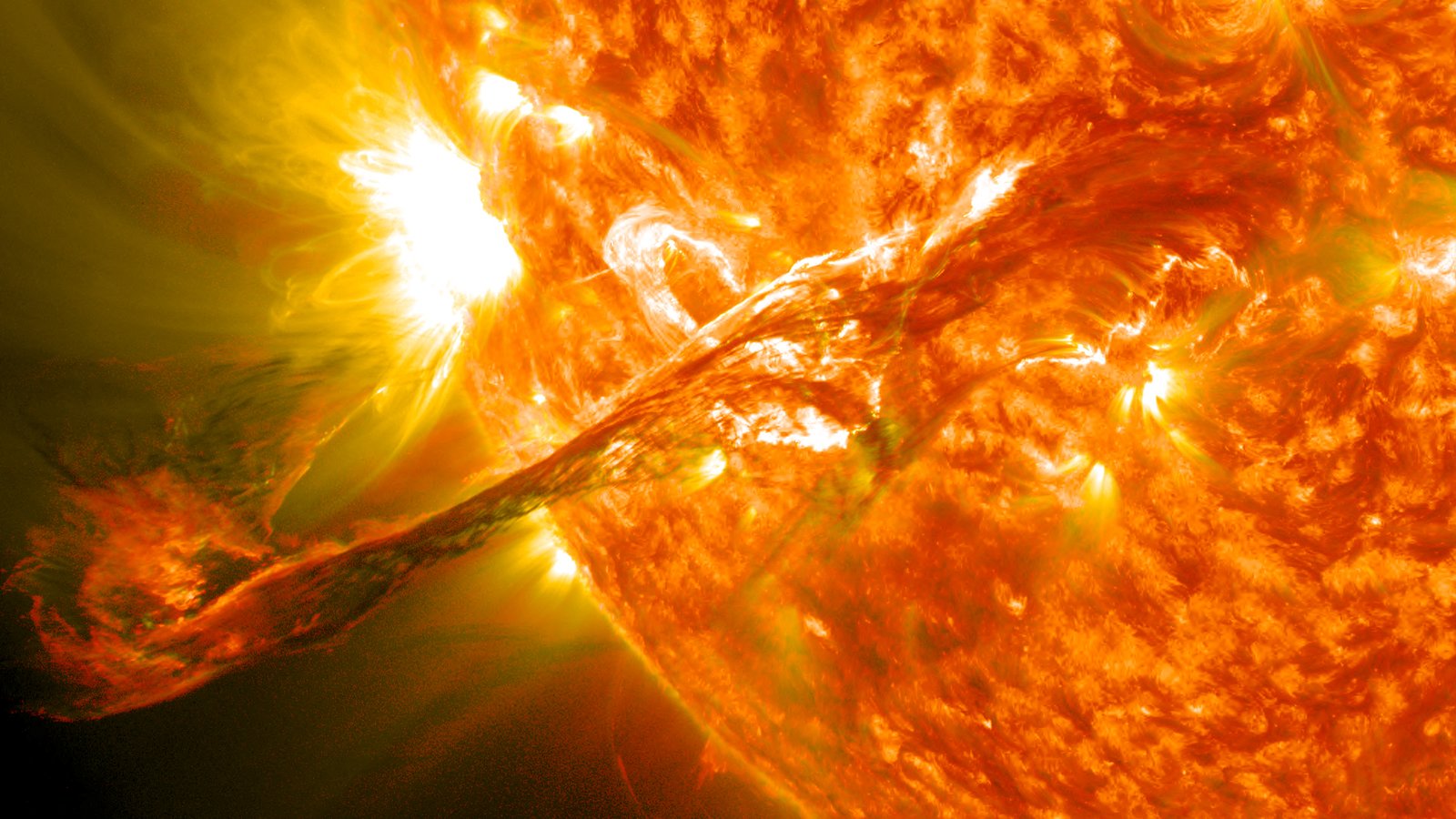
Sunspot AR4366 Emerges as a Solar Titan (Image Credits: Upload.wikimedia.org)
February 3, 2026 marked another intense chapter in the Sun’s ongoing display of power as sunspot region AR4366 dominated activity with a barrage of eruptions.
Sunspot AR4366 Emerges as a Solar Titan
The massive sunspot region AR4366 grabbed attention upon rotating into view on the Sun’s Earth-facing side. Nearly 10 times wider than Earth, it featured a complex beta-gamma-delta magnetic configuration that fueled explosive instability. Observers noted its rapid growth and prominent dark core, signaling high potential for significant flares.
This region quickly overshadowed other solar features. Detailed imagery captured intricate structures, including fine details visible in specialized wavelengths. Activity peaked dramatically over the prior day, underscoring AR4366’s role as the primary driver of solar unrest.
A Flare Fest in Under 24 Hours
Sunspot AR4366 produced 26 flares between February 1 and 2, blending sheer volume with extreme intensity. The standout event came on February 1 at 23:44 UTC with an X8.1 flare, the third-strongest of Solar Cycle 25. This eruption unfolded in a triple-peaked sequence lasting over six hours.
Four additional X-class flares followed swiftly: X2.9 at 00:42 UTC on February 2, X2.8 at 00:31 UTC, X1.7 at 07:39 UTC, and X1.5 at 00:15 UTC. Complementing these were 21 M-class flares, ranging from M1.1 to M5.2. Here is a selection of the notable M-class events:
- M5.2
- M5.1
- M4.4
- M3.0
- M2.5
- M2.3
- M2.2
- M2.1
Earth-Directed Ripples and Disruptions
The flares triggered immediate effects on our planet. The X8.1 event sparked an R3 strong radio blackout across the sunlit hemisphere, disrupting high-frequency communications for aviation, maritime operations, and amateur radio users, particularly over the Pacific east of Australia. Subsequent X-class flares amplified these disturbances through extreme ultraviolet radiation and prolonged atmospheric ionization.
Coronal mass ejections (CMEs) accompanied some blasts. A potential CME from the X8.1 flare, linked to coronal dimming, may head toward Earth around February 5 at 23 UTC, though models indicate a slow trajectory with limited confidence. Earth’s magnetic field stayed quiet in the interim, registering Kp indices of 0 to 2, with no major geomagnetic storms or widespread auroras.
Forecast Points to Continued Vigilance
Forecasters anticipate moderate-to-high flare risks persist. AR4366 holds a 75 percent chance of additional M-class flares and 25 percent for another X-class event within the next 24 to 48 hours. Its large, complex state keeps eruption potential elevated as it rotates further into a geoeffective position.
Geomagnetic conditions should remain quiet through February 4. However, unsettled activity up to Kp 3-4 could emerge on February 5 if the suspected CME arrives. Space weather experts urge monitoring for new developments.
Key Takeaways
- AR4366 produced 5 X-class and 21 M-class flares in 24 hours, led by an X8.1 powerhouse.
- Radio blackouts affected global communications; no major storms yet.
- 75% M-flare risk and 25% X-flare odds loom for days ahead.
As sunspot AR4366 commands the solar stage, its outbursts remind us of the Sun’s dynamic influence on Earth. What impacts do you expect next? Share your thoughts in the comments.