
AR4366’s Explosive Legacy (Image Credits: Pixabay)
Near the peak of solar cycle 25, a sprawling sunspot region dominated the sun’s Earth-facing side through early February 2026, fueling intense space weather even as its outbursts diminished.
AR4366’s Explosive Legacy
One sunspot region outshone all others last week. Active Region AR4366 erupted with 10 X-class flares between February 1 and 5, marking a rare display of solar power.[1][2]
This magnetically complex beta-gamma-delta structure expanded rapidly to cover an area comparable to 6.5 Earths. It triggered radio blackouts across the Pacific, southern Atlantic, Africa, and Europe. Observers noted its growth from the east limb, where it first appeared, building tension as it rotated toward center disk.
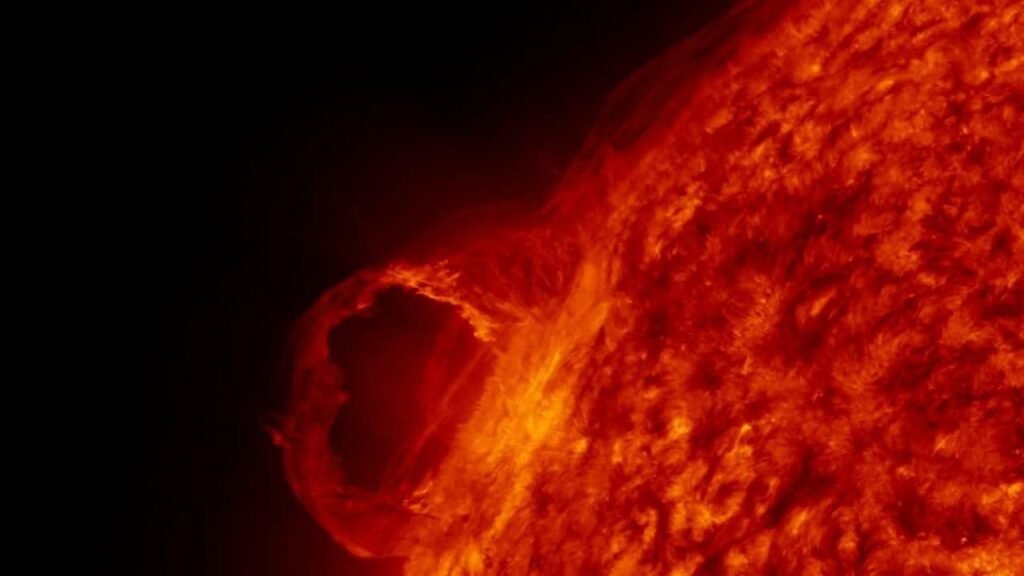
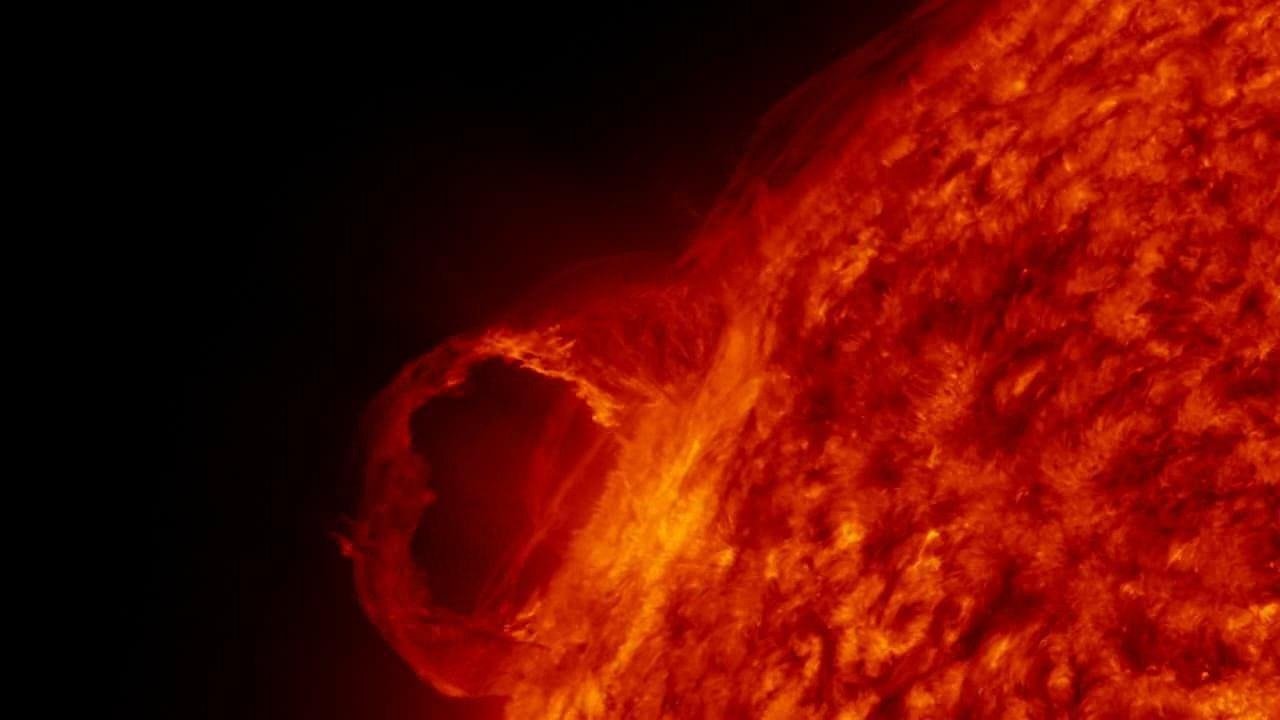
Prominences – vast arcs of cooler plasma – framed its western edge by February 6 and 7, captured in extreme ultraviolet imagery. These features signaled ongoing magnetic restructuring. Community astronomers shared hydrogen-alpha views highlighting filaments and the region’s intricate details.
Shift to Quieter Skies on February 7
Solar activity eased significantly by February 7. The strongest events dropped to C-class flares, with 10 recorded from active regions including AR4366 and AR4362.[1]
A C7.3 flare peaked at 8:19 UTC from AR4362, followed by others up to C2.0 from emerging AR4371. AR4366, now nearing the sun’s west limb, contributed seven C flares but showed decay signs. Up to nine active regions dotted the disk, yet none matched the prior frenzy.
Solar wind speeds hovered at 500-600 km/s, influenced by coronal hole streams and prior coronal mass ejections (CMEs). The interplanetary magnetic field occasionally turned southward, nudging geomagnetic activity to Kp 4 levels.
Oncoming CMEs Stir Space Weather
Several CMEs approached Earth from recent eruptions. One from February 3 neared on February 7-8, potentially delivering a glancing blow with Kp 3-4 effects.[1]
- February 5 M1.8 flare from AR4362: Expected arrival February 8, Kp 3-5, minor G1 storm risk.
- South limb event February 5: Due February 9, Kp 3-4.
- Post-X4.2 from AR4366 February 4: Possible glancing impact February 8.
Forecasters monitored these for auroral enhancements. Radio emissions faded, but the sun’s overall flare potential stayed moderate-to-high, with AR4371 gaining delta complexity.
Aurora Prospects Through the Weekend
High-latitude skywatchers eyed possible displays. Southward magnetic fields favored auroras over February 7-9, though confined mostly to polar regions.
Geomagnetic conditions ranged quiet-to-active on February 7, with G1 storms earlier in the week. A new coronal hole edged into geoeffective position, promising unsettled fields ahead.
Key Takeaways
- AR4366 produced 10 X-flares and numerous M-flares before quieting to C-class by February 7.
- Multiple CMEs target Earth through February 9, boosting aurora chances.
- Space weather stays active despite eased solar output; monitor for updates.
AR4366’s retreat underscores the sun’s unpredictable nature during solar maximum. While the flare fireworks subside, lingering effects remind us of our star’s influence on Earth. What solar spectacles have you witnessed lately? Share in the comments.