
Space has never been a friendly place for humans. Radiation, micrometeoroids, vacuum, temperature extremes – the list of hazards is genuinely terrifying. Yet somehow, scientists keep finding new surprises tucked inside a region we thought we already understood fairly well.
A recent discovery from a Chinese lunar mission has flipped some assumptions about the space between Earth and the Moon. There’s a massive cavity of intense radiation sitting in that gap, and honestly, nobody saw it coming quite like this. What it means for future lunar exploration is something every space enthusiast, scientist, and astronaut candidate should pay close attention to. Let’s dive in.
A Discovery That Caught Scientists Off Guard
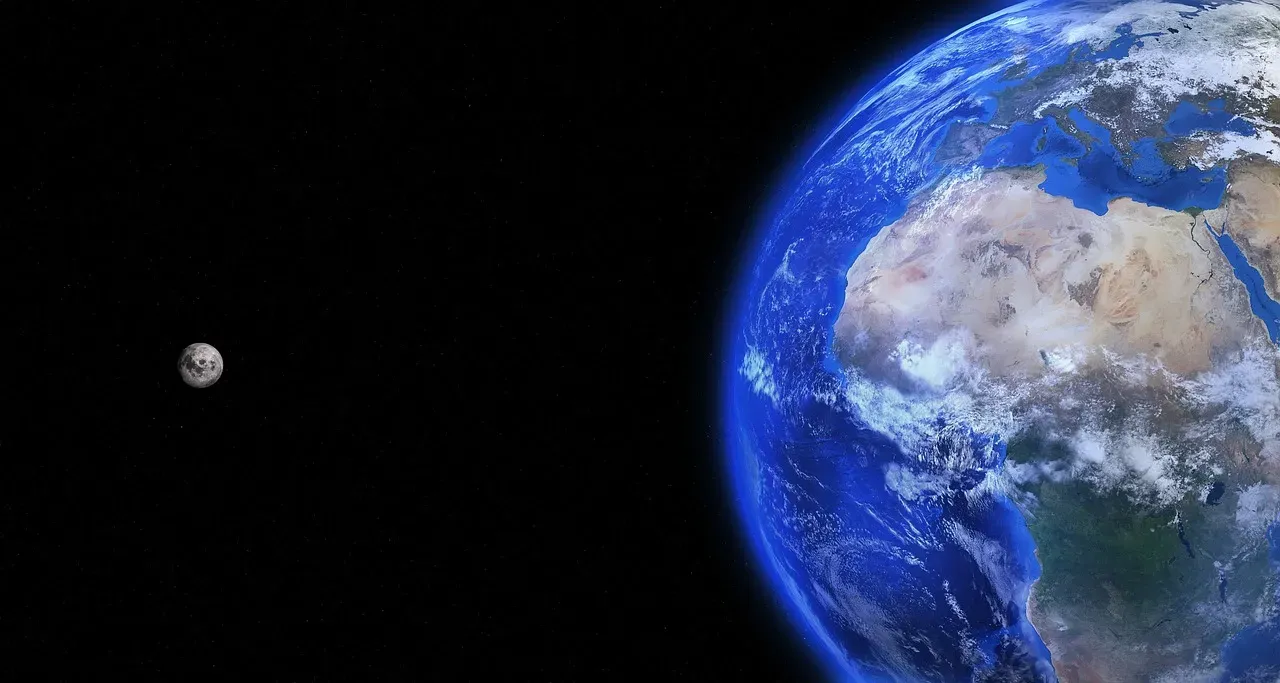
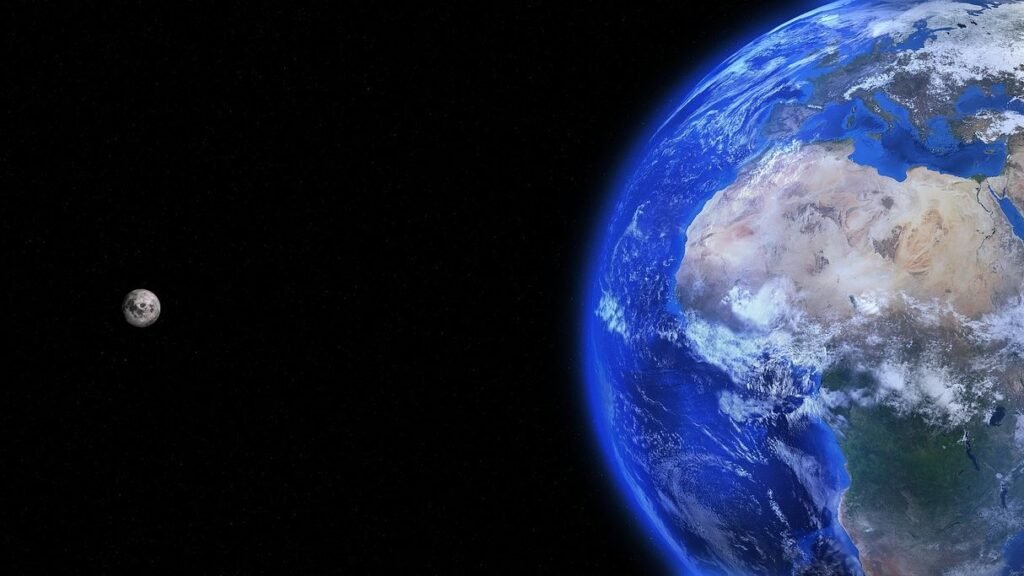
Here’s the thing – the space between Earth and the Moon is not empty. It’s threaded with magnetic fields, solar wind particles, and radiation belts that can be brutally dangerous. What the Chinese Chang’e 6 mission detected, however, was something far more structured and intense than researchers anticipated finding in that particular region.
The lander’s instruments picked up evidence of a giant cavity packed with high-energy radiation, essentially a pocket of trapped particle energy sitting between Earth’s outer radiation belt and the lunar surface environment. Think of it like discovering an unexpected storm cell inside what you thought was a calm weather corridor. It changes every flight plan you had in mind.
Scientists had long mapped the Van Allen radiation belts that surround Earth, but this cavity appears to occupy a distinct zone in cislunar space, which is the region between Earth and the Moon. The data suggests it’s not a minor fluctuation – it’s a significant, structured feature of that environment.
What the Chang’e 6 Mission Actually Measured
Chang’e 6 was primarily designed as a sample-return mission targeting the far side of the Moon, which already made it historic. Alongside its primary scientific goals, the spacecraft carried radiation detection instruments that continuously logged the particle environment during its transit through cislunar space.
Those readings revealed a zone of elevated radiation intensity that doesn’t neatly fit into existing models of the Earth-Moon radiation environment. The energy levels recorded were notably higher than what current models had predicted for that particular stretch of space. I think that detail alone deserves more attention than it’s getting in mainstream coverage.
The measurements weren’t a one-off anomaly either. The data showed consistent patterns suggesting a persistent structural feature rather than a temporary solar event. That kind of consistency is what transforms an interesting data point into a genuine scientific finding worth taking seriously.
Why Cislunar Space Is More Complicated Than We Thought
Cislunar space sounds like a clean, well-understood corridor. After all, humans traveled through it during the Apollo missions in the late 1960s and early 1970s. The reality is that our monitoring of this region has historically been sparse, and most radiation modeling relied on limited observational data rather than continuous in-transit measurements.
The cavity identified by Chang’e 6 sits in a region influenced by both Earth’s magnetosphere and the Moon’s own minimal magnetic environment. The interaction between these two fields, combined with solar wind dynamics, can create complex particle trapping zones that existing models undersimplify. It’s a bit like assuming a river flows in a straight line just because you’ve only ever looked at it from one spot on the bank.
Honestly, the fact that this was found by a lander passing through rather than a dedicated monitoring satellite says a lot about how under-observed this region really is. There’s a strong argument to be made that cislunar space deserves its own dedicated network of radiation-monitoring probes before humans start making regular trips back to the Moon.
The Real Radiation Risk for Astronauts
Let’s be real about what this means for human space travel. Astronauts traveling to the Moon would pass directly through this radiation cavity. Unlike the International Space Station, which sits within the protective bubble of Earth’s magnetosphere at low Earth orbit, a lunar-bound crew would be fully exposed during transit.
Radiation exposure in space is cumulative and deeply serious. It raises cancer risk, can damage the central nervous system, and in extreme cases can cause acute radiation syndrome. The newly identified cavity doesn’t necessarily make a Moon trip impossible, but it does mean mission planners need much better data to calculate accurate dose projections for crewed lunar missions.
Current shielding technologies used on spacecraft like Orion were designed using older radiation models. If those models didn’t account for this cavity properly, then existing shielding designs may need to be reviewed or upgraded. That’s not a small ask when you’re building hardware worth billions of dollars.
How This Could Reshape Lunar Mission Planning
Mission architecture for lunar exploration has been advancing quickly. NASA’s Artemis program, commercial lunar landers, and China’s own crewed lunar ambitions all involve transiting cislunar space multiple times. The discovery of this radiation cavity has direct implications for how transit trajectories are designed and how long astronauts spend in that zone.
One logical response is trajectory optimization. If the cavity has a defined geometry, mission planners could theoretically route spacecraft through lower-intensity regions or minimize time spent in the highest-radiation zones. It’s the same logic used when air traffic is rerouted around intense storm systems. You don’t always avoid the weather entirely, but you can absolutely make smarter choices about how you move through it.
Beyond trajectory planning, the finding reinforces the need for real-time radiation monitoring aboard crewed missions. Having astronauts rely on pre-mission forecasts alone is no longer good enough if the environment is more variable and complex than models suggested.
What This Means for Robotic Missions Too
It’s easy to focus on human health risks, but robotic spacecraft are not immune to radiation damage either. High-energy particle environments can degrade solar panels, corrupt onboard memory, and damage sensitive electronic components. A radiation cavity of the kind described here could accelerate wear on spacecraft electronics in ways that shorten mission lifespans.
Future robotic landers, rovers, and orbital platforms heading to or around the Moon will need to be designed with this newly characterized environment in mind. Radiation hardening of components is an engineering discipline that exists precisely for this reason, though it adds cost and mass to any mission. The Chang’e 6 data gives engineers something concrete to design against rather than relying purely on conservative estimates.
There’s also an interesting angle here for data relay satellites planned for lunar orbit. Several space agencies and private companies are planning communication infrastructure in cislunar space. Those assets need to be durable, and this discovery adds a new variable to their design requirements.
The Broader Scientific Value of the Finding
Beyond the immediate engineering implications, this discovery opens up genuinely exciting questions about the physics of cislunar space. Why does this cavity form and persist? How does it interact with variations in solar activity? Does it change in size or intensity over the course of a solar cycle? These are not trivial questions.
Understanding the detailed structure of radiation environments between planets is fundamental to humanity’s long-term ambitions in space. If we’re eventually going to send people to Mars, the lessons learned from properly characterizing the Earth-Moon radiation environment will directly inform planning for the far more dangerous Earth-Mars transit. The Moon is, in many ways, our proving ground.
It’s hard to say for sure how quickly follow-up studies will emerge, but the scientific community’s response to this finding will likely accelerate calls for dedicated cislunar space weather monitoring. China’s willingness to share this data is itself a notable development in an era of competitive space exploration.
A Finding That Changes More Than We Expected
Discoveries like this one are a reminder that space exploration is as much about learning what we don’t know as it is about reaching new destinations. The Chang’e 6 mission set out to bring back Moon samples, and it delivered on that goal. But the radiation data it collected along the way may ultimately prove just as consequential for the future of space travel.
The cavity isn’t a death sentence for lunar exploration. It’s a challenge, and challenges in space have a long history of driving human ingenuity forward. However, ignoring this finding or treating it as a footnote would be a serious mistake. The difference between a successful crewed lunar mission and a catastrophic one often comes down to exactly this kind of environmental knowledge.
I think the most important takeaway is this: cislunar space is not the well-understood highway we sometimes assume it to be. It has structure, hazard, and surprises still waiting to be found. Every mission that passes through it is a chance to learn something that could make the next mission safer, smarter, and more successful.
What do you think – does this change how you feel about sending humans back to the Moon? Drop your thoughts in the comments.