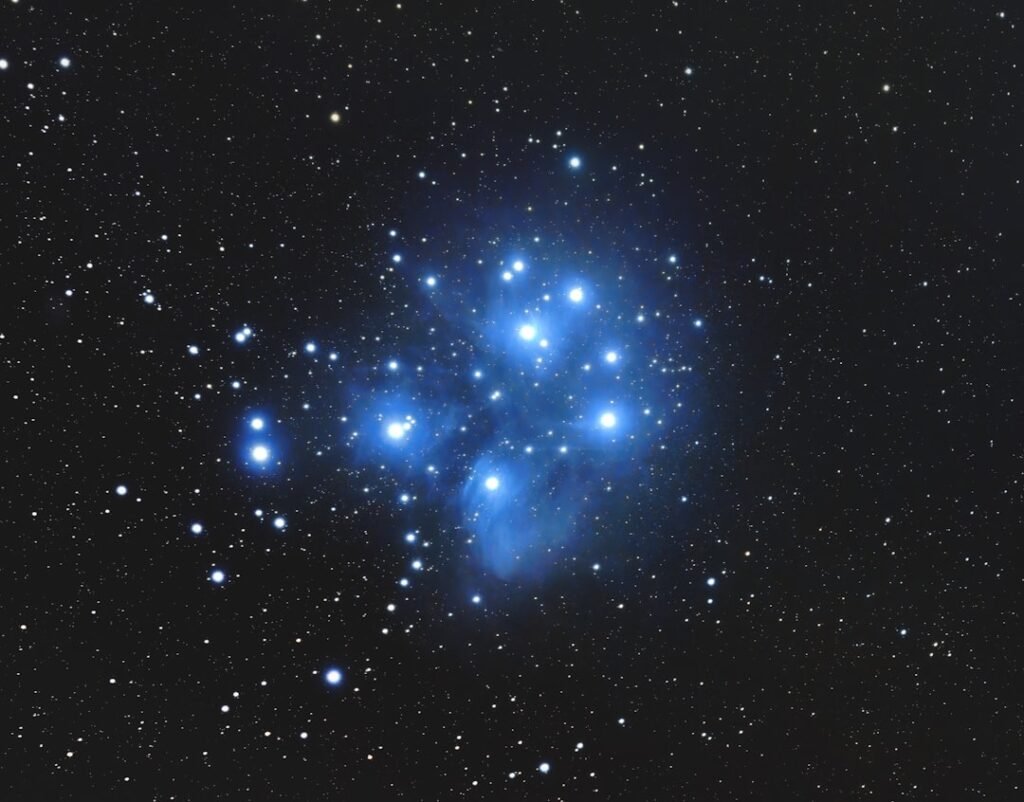

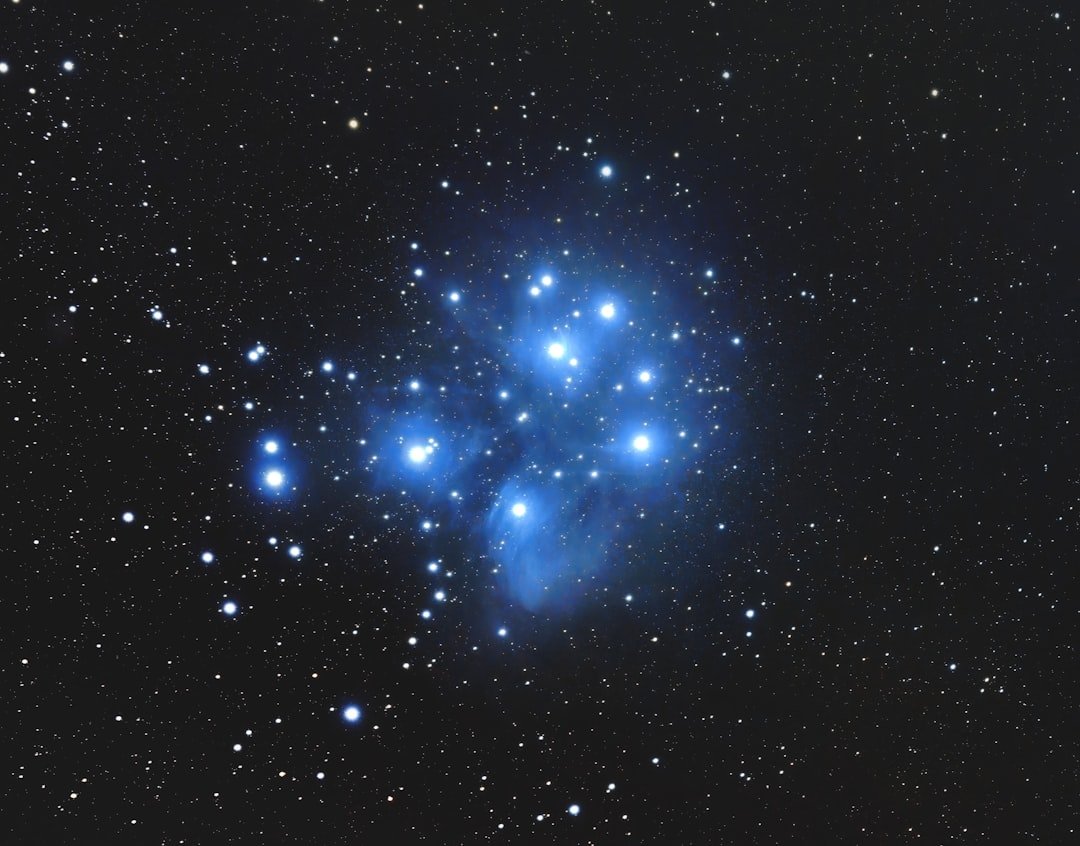
A Celestial Jewel on the Edge of Visibility (Image Credits: Unsplash)
The Pleiades star cluster, often called the Seven Sisters, offers one of the most striking sights in the early evening sky during spring. As March progresses into late 2026, this compact group of brilliant blue stars dips lower toward the western horizon after sunset, challenging observers to catch it before twilight overwhelms its glow.[1][2] On March 24, clear skies across much of the Northern Hemisphere provide a prime opportunity for stargazers to bid farewell to this winter-spring favorite.
A Celestial Jewel on the Edge of Visibility
Imagine a tight knot of sparkling diamonds suspended just above the horizon – that’s the Pleiades in action. This open star cluster in the constellation Taurus stands out as one of the nearest to Earth at about 440 light-years away, with its light taking over four centuries to reach us.[3] Young by stellar standards, the cluster formed roughly 100 million years ago and features hot, blue stars enveloped in a faint reflection nebula visible through binoculars.
Even to the naked eye, it appears as a hazy patch resembling a miniature Big Dipper, typically showing six or seven stars to most viewers. Astronomers have long prized it for its accessibility and beauty, making it a staple for beginners and experts alike.[4]
The Race Against the Setting Sun
Spring skies shift rapidly as Earth orbits the sun, pulling constellations like Taurus westward earlier each night. In late March 2026, the Pleiades emerges briefly after sunset but sets before full darkness settles in many locations.[1] By early April, it will vanish entirely from evening view, lost in the brightening twilight.
This annual departure marks the transition from winter’s prominent stars to summer’s offerings. Recent lunar close approaches, such as the one on March 23, heightened interest, but dedicated skywatchers know the cluster’s solo performance demands prompt action.[5]
Step-by-Step: Locating the Pleiades Tonight
Timing proves crucial – head outside 30 to 60 minutes after sunset when the sky turns dusky blue. Face west and scan low on the horizon for a distinctive V-shaped pattern marking the Hyades cluster, topped by the reddish star Aldebaran, Taurus’s eye.
The Pleiades sits just above and to the right of Aldebaran, resembling a small, glowing swarm. If Orion remains visible farther south, extend an imaginary line from its belt stars through Aldebaran straight to the cluster.[6][7] Here’s a quick guide:
- Wait until after local sunset (check apps like Stellarium for exact times).
- Find Orion’s Belt if prominent; draw a line upward.
- Spot Aldebaran as the orange-red beacon.
- Look slightly higher for the hazy Pleiades patch.
- Use a landmark like a hill or tree to block horizon glare.
Maximizing Your View with Simple Tools
While naked-eye spotting works well from dark sites, binoculars reveal dozens more stars and the subtle blue nebula dust. A 7×50 pair offers the ideal wide field to frame the entire cluster without distortion.[8] Avoid city lights; rural spots or elevated viewpoints yield sharper contrasts.
Patience pays off as your eyes adapt to the dimming sky. Steady hands or a tripod prevent shake, unveiling fainter members. Recent events like Uranus lurking nearby on March 21 added intrigue for telescope users.[9]
Legends Etched in the Stars
Across cultures, the Pleiades inspired enduring myths. In Greek lore, they represented the seven daughters of Titan Atlas and nymph Pleione, pursued by hunter Orion and placed in the sky for refuge.[10] Polynesian navigators tracked their rising for seasonal voyages, while many traditions link them to rain or planting times.
This global renown underscores humanity’s ancient gaze toward the same sparkling group. The cluster’s prominence ensured its place in folklore from Europe to the Americas.[7]
Key Takeaways
- The Pleiades shines brightest low west after sunset in late March.
- Follow Orion’s Belt to Aldebaran, then up to the cluster.
- Binoculars unlock hidden stars and nebula; act soon before it fades.
The Pleiades reminds us of the sky’s fleeting beauties, urging a pause amid spring’s rush. Step outside tonight and connect with this timeless wonder before it retreats until autumn. What do you think about it? Tell us in the comments.