
Louisiana’s swamps don’t whisper; they thrum. The trouble is, most of the action happens when we’re not looking and in places we can’t easily reach. For decades, these forests of cypress and tupelo were painted as gloomy, fading backwaters, a green blur glimpsed through car windows on the causeway. But new tools are catching what our eyes miss: the soft footsteps, the midnight breaths, the tiny DNA breadcrumbs. What’s emerging is a far richer, wilder story – one in which a supposedly tired landscape hides a living archive of species, behaviors, and migrations that matter far beyond state lines.
The Hidden Clues

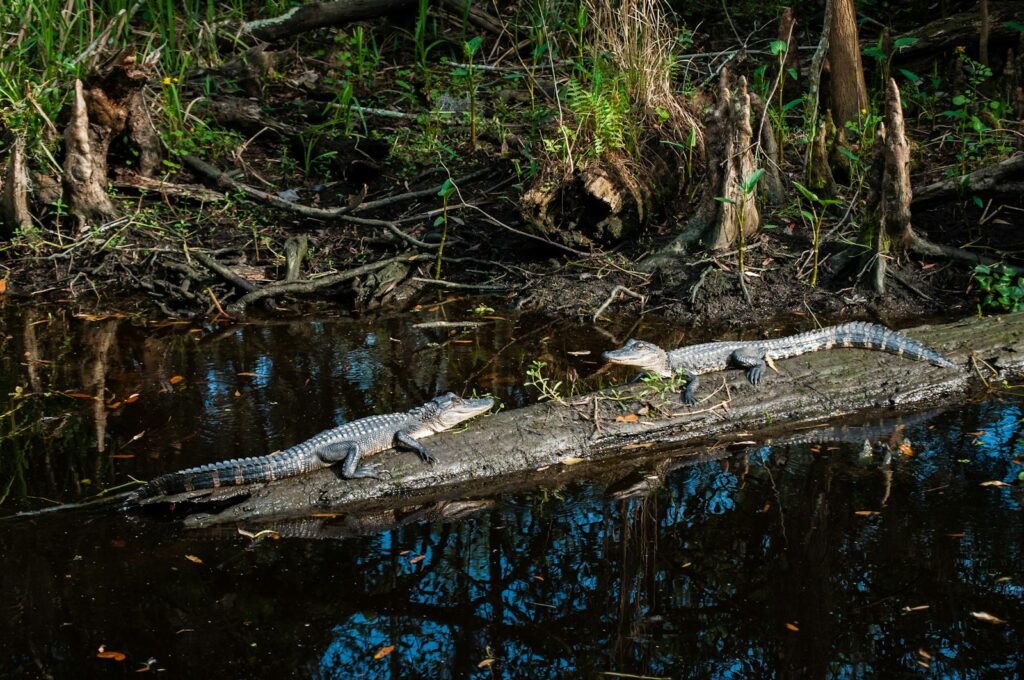
Peer into a swamp at noon and you might catch a heron or an alligator, but the real census happens in the lab and after dark. Environmental DNA – minute genetic traces shed by skin, scales, and spores – now lets researchers map life from a bottle of water, revealing fish, amphibians, and even elusive salamanders without a single net thrown. Passive acoustic recorders keep listening after we go home, picking up the insect-saw buzz of treefrogs, the rattle of rails, and the wingbeat signatures of night migrants. Low-and-slow drones skim canopy-level, mapping microhabitats we used to miss, while side-scan sonar paints ghostly portraits of gar and bowfin cruising the channels.
The first time I joined a night survey, I expected silence and got a symphony – bellowing gators beneath a Milky Way of fireflies. It felt like opening a door in a familiar house and discovering a hidden wing, fully furnished and lively. That’s the point: these swamps aren’t emptying; they’re overflowing with signals we’ve only just learned to read.
From Ancient Waterways to Modern Science

These wetlands are not accidents; they’re handiwork, sculpted by the Mississippi and Atchafalaya rivers dumping silt over centuries. Levees and cutoffs re-routed that silt, starving some basins and feeding others, which is why wildlife can be abundant one bayou over and scarce the next. Today’s scientists treat the landscape like a living puzzle, pairing canoe-based surveys with laser-guided elevation maps and satellite time series to see where water lingers just long enough to nurture nurseries. The results turn old assumptions upside down, showing that a “muddy” swamp is often a precision machine, tuned by millimeters of elevation and hours of flood pulse.
That blend of old-school fieldcraft and high-tech sleuthing is paying off. Crews still push pirogues into buttonbush thickets, but they also carry data loggers and thermal cameras to catch the heat signatures of turtles basking beneath lily pads. It’s field biology with a dashboard, and it’s changing where, when, and how we look.
Creatures of the Night You’ve Likely Missed

When the sun drops, a different cast steps into the spotlight. Sirens – eel-like amphibians with feathery gills – snake through leaf litter, while waterdogs nose along the bottom, stirring up silt the way you’d shake a rug. Mud snakes and ribbon snakes lace the shallows, nearly invisible until a head lifts like a punctuation mark. On rotting logs, bioluminescent fungi glow faintly, a living ember in deep shade, and the forest floor crawls with giant water bugs and fishing spiders big enough to make you blink twice.
Above the waterline, barred owls patrol and prothonotary warblers thread gold through the green. Even the fish come up for air – gar and bowfin gulp oxygen at the surface, a survival trick in warm, still backwaters. Stand quietly and you’ll hear the swamp breathe, the exhale of a system that never truly sleeps.
Global Perspectives

What happens here echoes far beyond Louisiana. These swamps are a crucial stopover on the Mississippi Flyway, feeding birds that winter in Central and South America and breed near the Arctic, turning bayous into international pit stops. Their nursery role for fish and crustaceans links them to Gulf fisheries, where livelihoods and cultural traditions depend on what grows in submerged grass beds and brackish edges. In a warming world, healthy wetlands blunt storm surge and store carbon in waterlogged soils, a service shared by deltas from the Mekong to the Niger.
That makes Louisiana an outdoor laboratory with global relevance. The same eDNA kits, acoustic arrays, and restoration playbooks tested here can be deployed to mangroves, peatlands, and floodplain forests on other continents. Lessons learned in Spanish moss translate surprisingly well to places with palm fronds and papyrus.
Invasive Intruders vs. Native Holdouts

Not every new arrival is welcome. Nutria chew marsh edges to mud, feral hogs rototill the understory, and giant apple snails bulldoze aquatic plants, leaving nurseries bare. In connected waterways, invasive carp siphon plankton that native fish and young waterfowl depend on, and their wake can undo years of careful planting. Against that pressure, the old guard hangs on: alligator snapping turtles in dark runs, alligator gar patrolling like living relics, cypress knees bracing the shoreline.
Biologists are testing smarter traps, egg-mass removal for snails, and community hunts for hogs, while restoring freshwater flow that favors native plants. Some swamps bounce back faster than expected once the pressure eases, especially where shade, depth, and flow create refuge pockets. The fight isn’t glamorous, but it’s winnable in the places that still have the bones of a functioning system.
Why It Matters

Strip away the romance and you’ve got critical infrastructure built by biology. Swamps slow floods, filter pollutants, and soften the punch of hurricanes, buying time for towns and farms downstream. They also lock away carbon in soils that stay wet enough to keep decay on pause – a quiet climate service that gets stronger as vegetation thickens. And then there’s the human side: crawfish boils, birding weekends, and family trips on cypress-lined boardwalks that stitch culture to place.
Consider a few grounding facts that rarely make the billboard:
- The Atchafalaya Basin is the largest river swamp in North America, a 1.4 million-acre classroom for natural flood management.
- Louisiana has lost approximately 1,900 square miles of coastal wetlands since the nineteen-thirties, making what remains even more precious.
- The state’s restoration blueprint invests about fifty billion dollars over five decades to rebuild land and re-balance water.
- Red swamp crayfish – native here – now underpin aquaculture and cuisine around the world.
The Future Landscape

Tomorrow’s swamp science looks surprisingly nimble. Picture autonomous skiffs that sip water for eDNA every mile, drone swarms stitching thermal mosaics to spot stressed trees, and AI that flags frog choruses going quiet before we notice. Restoration is getting bolder too: reconnecting rivers to floodplains to feed sediment, planting cypress where salinity is retreating, and building oyster reefs that act like zipper teeth along fragile edges. The trick is timing – move too slowly and saltwater wins; move too fast and you can drown seedlings or strand fish.
Expect more community science baked in from the start, with anglers, birders, and boaters feeding real-time observations into open dashboards. The biggest challenges will be predictable and thorny: funding that keeps pace with sea-level rise, coordinating across parishes and private lands, and planning for extremes that don’t look like the past. The window is open, but it won’t stay open by accident.
How You Can Help Now

You don’t need a lab to make a dent. Start by choosing swamp-friendly tours that stick to marked channels and keep a respectful distance from wildlife; good operators set the example. Join a weekend planting day or trash sweep with local conservation groups – small wins add up quickly where roots hold soil. If you fish or paddle, clean boots and gear between trips so hitchhiking snails, plants, or algae don’t spread to new bayous.
On the home front, skip releasing aquarium pets into the wild, report invasive apple snail egg masses to local authorities, and consider citizen-science apps to log birds, frogs, and plants. Donations or volunteer hours with land trusts and restoration coalitions help keep projects moving during lean budget years. The swamp gives a lot; a little steady attention keeps it doing what it does best.
Suhail Ahmed is a passionate digital professional and nature enthusiast with over 8 years of experience in content strategy, SEO, web development, and digital operations. Alongside his freelance journey, Suhail actively contributes to nature and wildlife platforms like Discover Wildlife, where he channels his curiosity for the planet into engaging, educational storytelling.
With a strong background in managing digital ecosystems — from ecommerce stores and WordPress websites to social media and automation — Suhail merges technical precision with creative insight. His content reflects a rare balance: SEO-friendly yet deeply human, data-informed yet emotionally resonant.
Driven by a love for discovery and storytelling, Suhail believes in using digital platforms to amplify causes that matter — especially those protecting Earth’s biodiversity and inspiring sustainable living. Whether he’s managing online projects or crafting wildlife content, his goal remains the same: to inform, inspire, and leave a positive digital footprint.